What role does ball milling play in B6O-TiB2 preparation? Enhance Homogeneity and Reaction Kinetics
Updated 4 months ago
Ball milling serves as the critical mechanical activation stage in the synthesis of Boron Suboxide-Titanium Diboride ($B_6O-TiB_2$) composites. By subjecting Titanium Dioxide ($TiO_2$) and amorphous boron to high-intensity shear and impact forces, the process achieves extreme particle refinement and increases the reactive surface area. This preparation ensures that the subsequent borothermal reduction reaction occurs efficiently, resulting in a highly uniform distribution of $TiB_2$ within the $B_6O$ matrix.
Core Takeaway: Ball milling is not merely a mixing step; it is a high-energy mechanical treatment that lowers the kinetic barriers for chemical reactions by reducing diffusion distances and introducing lattice defects, which is essential for creating a homogenous composite microstructure.
The Mechanics of Material Transformation
Particle Refinement and Surface Area Expansion
High-energy ball milling utilizes grinding media to crush and shear raw $TiO_2$ and amorphous boron particles. This process dramatically reduces particle size, which exponentially increases the effective specific surface area available for chemical interaction.
Larger surface areas facilitate better contact between reactants. This contact is a prerequisite for the high-efficiency synthesis required in advanced ceramic composites.
Reduction of Diffusion Distances
By physically forcing the different powder components together at a sub-micron scale, ball milling minimizes the diffusion distance between reactants. In solid-state reactions like borothermal reduction, shorter distances mean the reaction can proceed faster and at potentially lower temperatures.
This proximity ensures that as the reaction begins, the formation of $TiB_2$ is not localized but occurs evenly throughout the precursor mix.
Driving Chemical Synthesis through Mechanical Activation
Optimizing Borothermal Reduction Kinetics
The "mechanical activation" mentioned in the primary reference refers to the storage of energy within the powder in the form of structural defects and lattice distortions. These defects increase the internal energy of the $TiO_2$ and boron, making them more chemically reactive.
This optimized kinetic state allows the borothermal reduction reaction to achieve higher completion rates. Without this activation, the reaction might remain incomplete or require excessively high sintering temperatures.
Achieving Microstructural Homogeneity
A primary challenge in composite preparation is the agglomeration of secondary phases. Ball milling eliminates these clusters, ensuring that the $TiB_2$ reinforcement phase is generated uniformly within the $B_6O$ matrix.
This uniform dispersion is critical for the final material's mechanical properties. It prevents "weak spots" and ensures that the reinforcement phase effectively strengthens the entire ceramic body.
Understanding the Trade-offs and Risks
Potential for Material Contamination
The high-energy nature of planetary ball milling can lead to media wear, where small amounts of the grinding balls (e.g., silicon nitride or tungsten carbide) chip off into the powder. This introduces impurities that can negatively affect the final properties of the $B_6O-TiB_2$ composite.
Energy Intensity and Thermal Management
Intense mechanical friction generates significant heat within the milling vial. If not managed through cooling cycles or low-speed intervals, this heat can cause premature, uncontrolled reactions or unwanted phase changes in the amorphous boron.
How to Apply This to Your Process
Making the Right Choice for Your Goal
- If your primary focus is Maximum Reaction Efficiency: Utilize high-speed planetary milling to maximize mechanical activation and reduce diffusion distances to the absolute minimum.
- If your primary focus is Phase Purity: Select high-hardness grinding media (like $B_4C$ or $Si_3N_4$) and use lower rotation speeds to minimize contamination from media wear.
- If your primary focus is Microstructural Uniformity: Prioritize longer milling durations at moderate speeds to ensure the amorphous boron is deeply mixed and coated onto the $TiO_2$ surfaces.
Properly executed ball milling provides the essential foundational state required to transform raw precursors into high-performance, homogenized ceramic composites.
Summary Table:
| Key Phase | Mechanism of Action | Impact on B6O-TiB2 Composite |
|---|---|---|
| Particle Refinement | High-intensity shear & impact | Increases reactive surface area for faster synthesis. |
| Mechanical Activation | Lattice defects & structural energy | Lowers kinetic barriers for borothermal reduction. |
| Homogenization | Sub-micron component blending | Eliminates TiB2 agglomeration for a uniform matrix. |
| Diffusion Control | Minimizing particle distance | Accelerates solid-state reactions at lower temperatures. |
Elevate Your Material Synthesis with Professional Laboratory Solutions
Precision in the preparation of advanced ceramics like B6O-TiB2 requires more than just mixing—it demands controlled mechanical activation and high-performance compaction. We provide complete laboratory sample preparation solutions tailored for material science, specializing in the powder processing and compaction equipment essential for your research success.
Our extensive product line includes:
- Advanced Milling: High-energy planetary ball mills, jet mills, and cryogenic grinders for superior particle refinement.
- Powder Processing: Sieve shakers, powder mixers, and defoaming mixers to ensure microstructural uniformity.
- Compaction & Sintering: A full spectrum of hydraulic presses, including Cold/Warm Isostatic Presses (CIP/WIP), vacuum hot presses, and XRF pellet presses.
Whether you are focusing on reaction kinetics or phase purity, our equipment is designed to minimize contamination and maximize efficiency. Contact our technical team today to find the perfect equipment configuration for your lab's specific material challenges!
References
- Tuba Karamete, Hasan Göçmez. The effect of the synthesis temperature and time on the formation of boron suboxide. DOI: 10.1007/s41779-025-01147-6
Mentioned Products
- Vertical Production Planetary Ball Mill for High Throughput Powder Processing
- High Energy Omnidirectional Planetary Ball Mill 16L
- High Energy Omnidirectional Planetary Ball Mill 20L
- High Energy Laboratory Planetary Ball Mill for Nano Grinding and Material Science Sample Preparation
- 8L Planetary Ball Mill for Laboratory Grinding and Sample Preparation
People Also Ask
- What is the function of a high-performance planetary ball mill in AMZ laminates? Master Ceramic Homogenization.
- What is the role of a planetary ball mill in Al–Si3N4 nanocomposite prep? Achieve Uniform Homogenization
- What is the function of a planetary ball mill in lanthanum hexaaluminate synthesis? Master Micron-Level Homogenization
- What role does a planetary ball mill play in the synthesis of Er-doped PMN-PT ceramics? Enhancing Homogeneity & Purity
- What are the advantages of using a planetary ball mill for the fine grinding of barium silicate glass powder? Peak Results

Tech Team · PowderPreparation
Last updated on May 14, 2026
Related Products
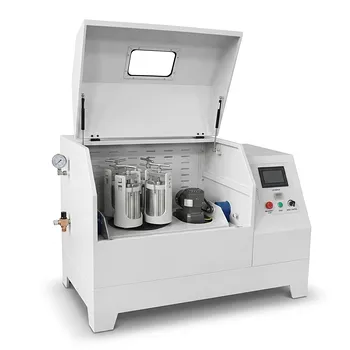
Vertical Production Planetary Ball Mill for High Throughput Powder Processing
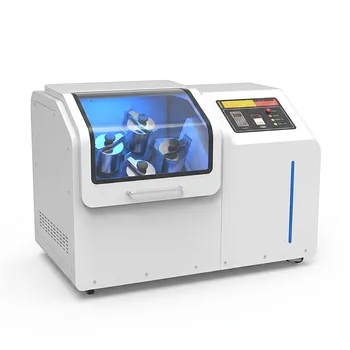
High Energy Omnidirectional Planetary Ball Mill 16L
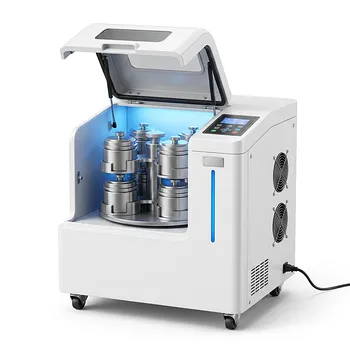
High Energy Omnidirectional Planetary Ball Mill 20L

High Energy Laboratory Planetary Ball Mill for Nano Grinding and Material Science Sample Preparation

8L Planetary Ball Mill for Laboratory Grinding and Sample Preparation

Nano High Energy Vibratory Ball Mill for Laboratory Sample Preparation

Vertical Square Planetary Ball Mill for Laboratory Sample Preparation and Nanoscale Grinding
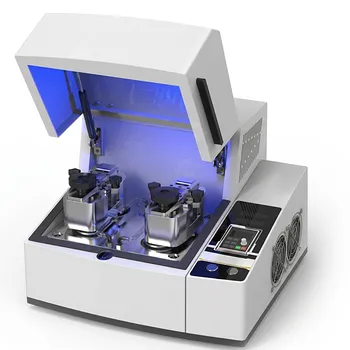
Laboratory Nano High Energy Ball Mill Ultrafine Grinding Mechanical Alloying

High Energy Hybrid Vibratory Ball Mill for Grinding Mixing and Cell Disruption
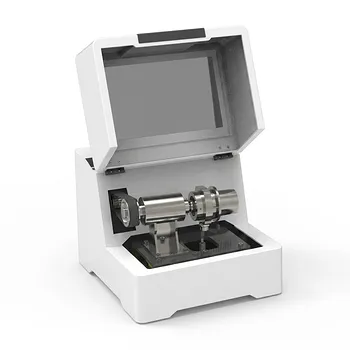
Single Tank High Energy Vibratory Ball Mill for Laboratory Grinding and Mixing
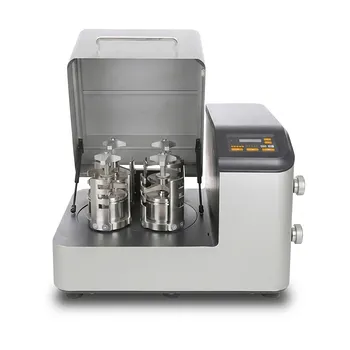
High Energy Planetary Ball Mill for Nano Scale Grinding and Colloidal Mixing in Material Science Research
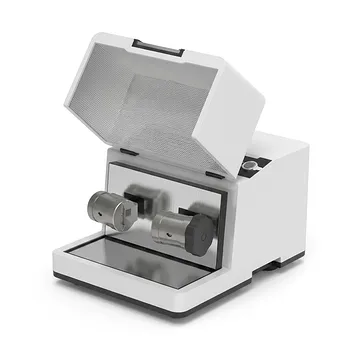
Heating Temperature Controlled High Energy Vibratory Ball Mill
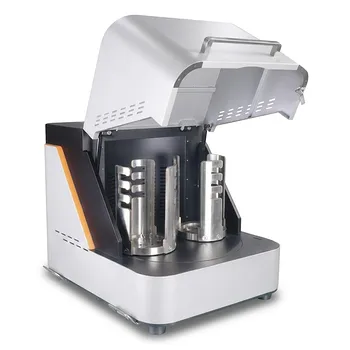
High Energy Laboratory Planetary Ball Mill for Nano Grinding and Colloidal Mixing of Hard and Brittle Materials

High Energy Planetary Ball Mill for Nano Scale Grinding and Mechanical Alloying
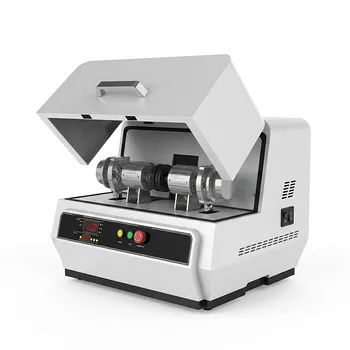
Dual Jar High Energy Vibratory Ball Mill
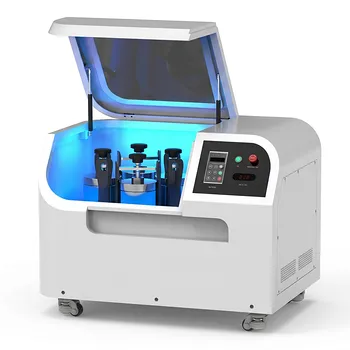
Planetary Ball Mill 12L

Miniature Planetary Ball Mill with Vacuum Grinding and High Efficiency for Laboratory Sample Preparation
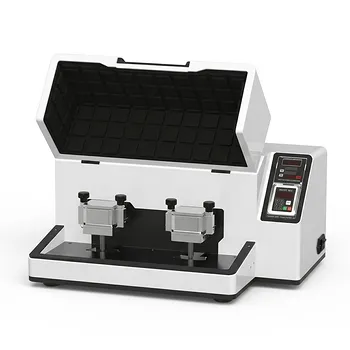
Nanoscale High Energy Vibratory Ball Mill Low Temperature
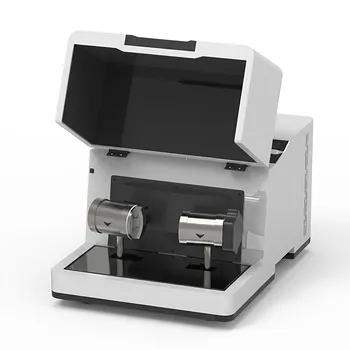
Ultra-Low Temperature Cryogenic High-Energy Vibratory Ball Mill