What is the function of a planetary ball mill in lanthanum hexaaluminate synthesis? Master Micron-Level Homogenization
Updated 4 months ago
The planetary ball mill serves as a high-energy mechanical processor that performs micron-level refinement and ultra-uniform homogenization of raw materials. By utilizing high-speed rotation and intense impact forces, it transforms precursors like lanthanum oxide and aluminum hydroxide into a high-activity state. This precise preparation is the critical prerequisite for the subsequent solid-state reaction required to form a pure lanthanum hexaaluminate phase.
The planetary ball mill is the engine for "mechanical activation," reducing particle sizes and ensuring microscopic contact between different chemical species. This maximizes ion diffusion paths, which is essential for synthesizing a stable, single-phase ceramic pigment during high-temperature calcination.
Mechanical Refining and Homogenization
Micron-Level Particle Reduction
The primary function of the mill is to break down raw material agglomerates through high-energy impact and shear forces. This process reduces particles to the micron or sub-micron level, significantly increasing the specific surface area of the powders.
Deep Microscopic Mixing
The mill ensures that lanthanum, aluminum, and dopants (such as nickel oxide) are distributed with microscopic uniformity. Achieving this level of homogeneity is vital to prevent phase segregation, where local clusters of a single element fail to react with others.
Preparation of the Precursor Paste
In many synthesis routes, the mill uses an anhydrous ethanol medium to create a uniform slurry or paste. This liquid medium facilitates better grinding efficiency and prevents the raw materials from re-agglomerating during the long-duration milling process.
Facilitating Solid-State Reaction Kinetics
Enhancing Ion Diffusion
Solid-state synthesis relies on the movement of ions across grain boundaries, a process that is notoriously slow. By refining particles to a micron level, the mill reduces the diffusion distance that ions must travel, allowing the reaction to proceed more completely at lower temperatures.
Achieving Single-Phase Structures
The ultimate goal of using a planetary ball mill is to ensure the formation of a single-phase lanthanum hexaaluminate structure. Without the high-energy mixing provided by the mill, the final pigment might contain unreacted oxides or undesirable secondary phases that degrade color quality.
Increasing Chemical Reactivity
The mechanical energy transferred during milling can induce lattice distortions and defects in the raw material crystals. These "activated" particles possess higher internal energy, which lowers the activation energy barrier for the subsequent calcination reaction.
Understanding the Trade-offs
Risk of Metallic Contamination
The high-intensity grinding process can cause wear on the milling jars and balls, potentially introducing impurities into the pigment. To maintain high purity, technical advisors recommend using alumina or zirconia-lined equipment rather than stainless steel.
Heat Generation and Control
Planetary milling generates significant thermal energy through friction, which can lead to the evaporation of liquid media or unwanted pre-reactions. Managing rotational speeds and incorporating cooling intervals is often necessary to maintain the chemical integrity of the precursor.
Processing Time vs. Refinement
There is a point of diminishing returns where extended milling no longer reduces particle size but increases the risk of contamination. Optimizing the ball-to-powder ratio (often 10:1) and milling duration is essential for cost-effective and clean production.
How to Apply This to Your Synthesis Project
When integrating planetary ball milling into your production workflow, your technical parameters should align with your specific material requirements:
- If your primary focus is phase purity: Prioritize longer milling durations at moderate speeds to ensure every ion has a neighboring reactant, facilitating a complete solid-state reaction.
- If your primary focus is color consistency: Focus on the uniformity of the dopant (e.g., nickel or cobalt) distribution to ensure the ceramic pigment displays a homogeneous hue without spotting.
- If your primary focus is avoiding impurities: Utilize grinding media and jars made of the same material as your primary oxide (e.g., alumina) to ensure any wear debris is chemically compatible with the final product.
Properly executed planetary milling transforms raw chemical components into a highly reactive, homogenous precursor ready for high-performance ceramic synthesis.
Summary Table:
| Key Function | Technical Benefit | Impact on Ceramic Pigment |
|---|---|---|
| Mechanical Refining | Micron-level particle reduction | Increases surface area & chemical reactivity |
| Microscopic Mixing | Uniform distribution of dopants | Prevents phase segregation & color spotting |
| Mechanical Activation | Induces lattice defects/distortions | Lowers activation energy for solid-state reaction |
| Precursor Preparation | Creates high-activity slurry/paste | Ensures the formation of a stable, single-phase structure |
Elevate Your Material Synthesis with Precision Powder Processing
Achieving high-purity lanthanum hexaaluminate requires perfect homogenization and precise particle control. We provide complete laboratory sample preparation solutions for material science, specializing in high-performance powder processing and compaction equipment.
Our extensive product line is designed to streamline your workflow and ensure repeatable results:
- Advanced Milling: Planetary ball mills, jet mills, and cryogenic grinders for ultra-fine refinement.
- Compaction Excellence: A full spectrum of hydraulic presses, including Cold/Warm Isostatic Presses (CIP/WIP), vacuum hot presses, and XRF pellet presses.
- Material Preparation: Jaw/roll crushers, vibratory sieve shakers, and high-efficiency powder or defoaming mixers.
Whether you are synthesizing advanced ceramic pigments or researching novel alloys, our equipment minimizes contamination and maximizes chemical reactivity. Contact our technical experts today to optimize your lab's performance!
References
- Jun-feng GAO, Q Wang. Preparation and Performance Study of ZrO<sub>2</sub>/LaAl<sub>11-3</sub><italic><sub>x</sub></italic>Ni<sub>3</sub><italic><sub>x</sub></italic>O<sub>18</sub> Composite Ceramic Materials. DOI: 10.3724/s1004-0277.202402006
Mentioned Products
- Vertical Semi Circular Planetary Ball Mill for Laboratory Precision Grinding
- High Energy Planetary Ball Mill for Nano Scale Grinding and Mechanical Alloying
- Heavy Duty Horizontal Planetary Ball Mill for Efficient Industrial Grinding and Sample Preparation
- Vertical Production Planetary Ball Mill for High Throughput Powder Processing
- 360° Rotating Omnidirectional Laboratory Planetary Ball Mill for Homogeneous Ultra-Fine Grinding and Mixing
People Also Ask
- What role does a planetary ball mill play in the synthesis of Li6PS5Cl (LPSCl)? Unlock High Ionic Conductivity
- Why is a planetary ball mill essential for SiBCN-rGO wet-spinning? Achieve Superior Dispersion and Spinnability
- Why is an intermittent grinding process required for perovskites in a planetary ball mill? Ensure Stability & Purity
- Why is a planetary ball mill required for PET micronization? Ensure Accurate Chemical Analysis of Reprocessed PET
- How does mechanized planetary ball milling compare to manual agate grinding? Optimize sulfide standard material precision.

Tech Team · PowderPreparation
Last updated on Jun 03, 2026
Related Products
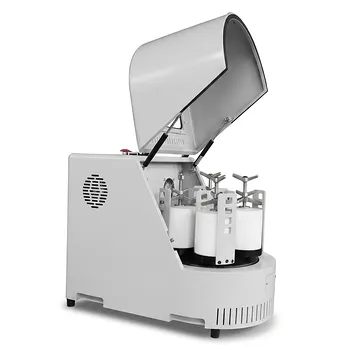
Vertical Semi Circular Planetary Ball Mill for Laboratory Precision Grinding
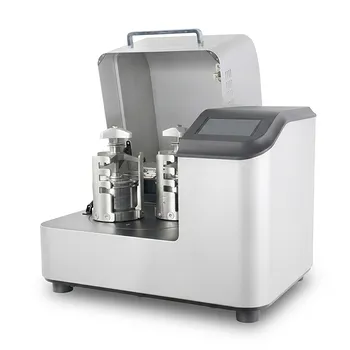
High Energy Planetary Ball Mill for Nano Scale Grinding and Mechanical Alloying
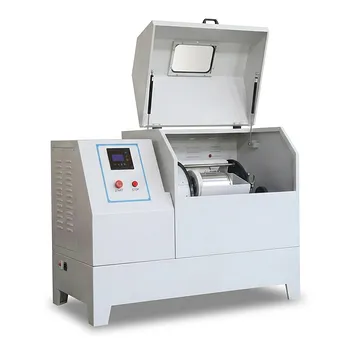
Heavy Duty Horizontal Planetary Ball Mill for Efficient Industrial Grinding and Sample Preparation

Vertical Production Planetary Ball Mill for High Throughput Powder Processing
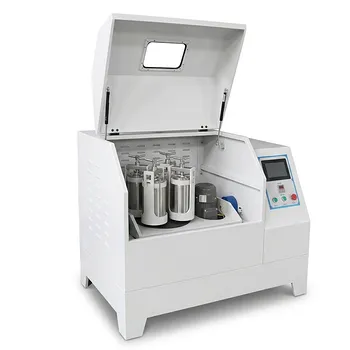
360° Rotating Omnidirectional Laboratory Planetary Ball Mill for Homogeneous Ultra-Fine Grinding and Mixing
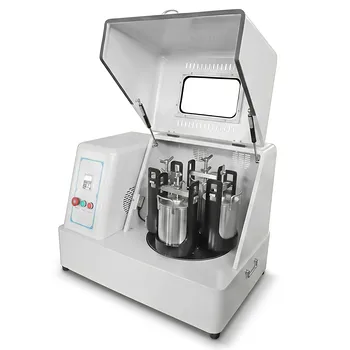
Vertical Square Planetary Ball Mill for Laboratory Sample Preparation and Nanoscale Grinding
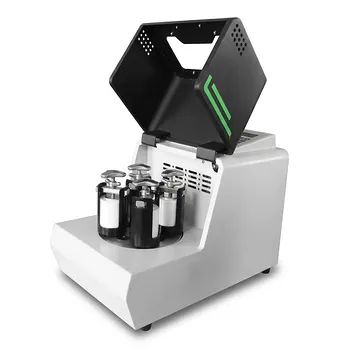
Miniature Planetary Ball Mill with Vacuum Grinding and High Efficiency for Laboratory Sample Preparation

High Energy Omnidirectional Planetary Ball Mill 16L
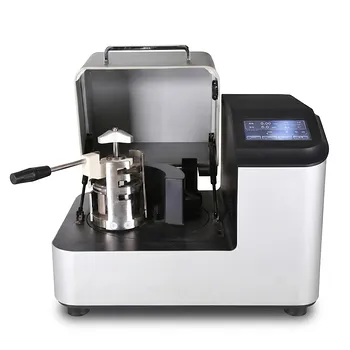
High Energy Laboratory Planetary Ball Mill for Nano Grinding and Material Science Sample Preparation
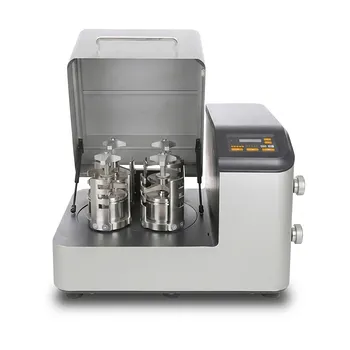
High Energy Planetary Ball Mill for Nano Scale Grinding and Colloidal Mixing in Material Science Research
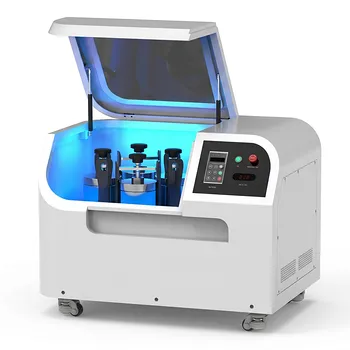
Planetary Ball Mill 12L
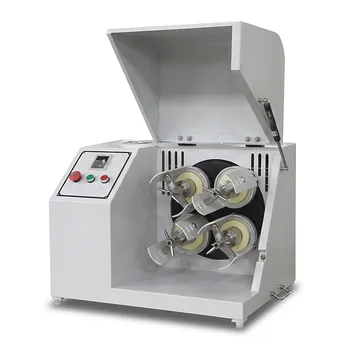
Horizontal Light Duty Planetary Ball Mill for Laboratory Sample Preparation
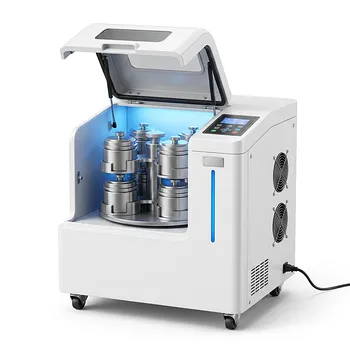
High Energy Omnidirectional Planetary Ball Mill 20L
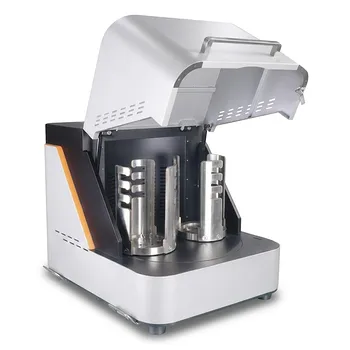
High Energy Laboratory Planetary Ball Mill for Nano Grinding and Colloidal Mixing of Hard and Brittle Materials

8L Planetary Ball Mill for Laboratory Grinding and Sample Preparation
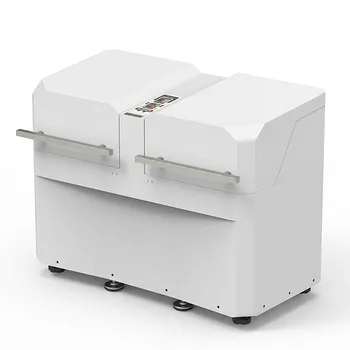
Dual Station Planetary Ball Mill 24L

Multi-Platform Nanoscale High-Energy Vibratory Ball Mill

Nano High Energy Vibratory Ball Mill for Laboratory Sample Preparation
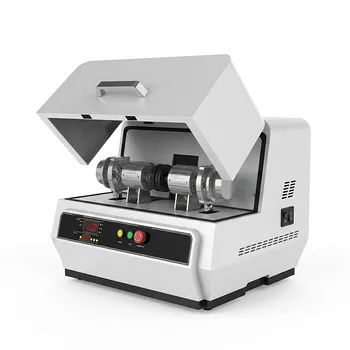
Dual Jar High Energy Vibratory Ball Mill