What role does a planetary ball mill play in the synthesis of Er-doped PMN-PT ceramics? Enhancing Homogeneity & Purity
Updated 4 months ago
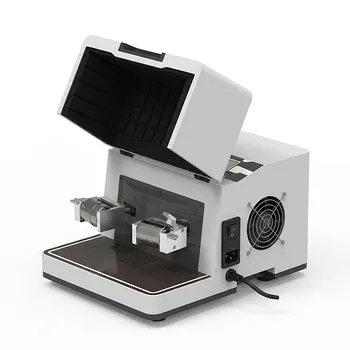
The planetary ball mill is the engine of high-energy refinement and homogenization. In the synthesis of Er-doped PMN-PT ceramics, it utilizes intense mechanical forces to reduce raw oxide powders—including lead, magnesium, niobium, titanium, and erbium—to sub-micron sizes. This process ensures that the erbium dopant is distributed with atomic-level uniformity, which is critical for lowering the diffusion distance and achieving a pure perovskite phase during subsequent thermal processing.
The planetary ball mill transforms raw precursors into a highly reactive, homogeneous powder through mechanical alloying. This step is the foundation for successful synthesis, as it minimizes chemical gradients and lowers the energy required for solid-state reactions.
The Mechanics of Powder Refinement
A planetary ball mill operates through high-speed rotation that generates powerful impact and shear forces. These forces are essential for breaking down the diverse physical structures of the starting materials.
High-Energy Impact and Attrition
The milling media (typically zirconia balls) collide with the powder and the container walls at high velocities. This constant bombardment fractures large particles of magnesium oxide, niobium pentoxide, and lead oxide, forcing them into a finer, more uniform state.
Increasing Surface Energy and Reactivity
By reducing the average particle size, the mill significantly increases the specific surface area of the powder. This elevated surface energy acts as a stored potential that drives the chemical reactions during the calcination stage.
Achieving Sub-Micron Uniformity
The mill often utilizes a liquid medium, such as anhydrous ethanol, to facilitate wet grinding. This prevents particle agglomeration and allows the mixture to reach sub-micron levels, ensuring a consistent raw material base for high-density ceramics.
Homogenization and Chemical Stoichiometry
In complex multi-component systems like Er-doped PMN-PT, the precise distribution of elements determines the final ferroelectric and optical properties.
Atom-Level Distribution of Erbium
As a dopant, erbium must be integrated perfectly into the crystal lattice. The high-energy milling process ensures mechanical alloying, where the erbium oxide is forced into intimate contact with the PMN-PT precursors, preventing localized concentrations that could lead to secondary phases.
Maintaining Chemical Stoichiometry
The mill provides the rigorous physical mixing required to ensure the chemical stoichiometry is accurate across the entire batch. This microscopic uniformity is a prerequisite for forming a single-phase perovskite structure rather than undesirable pyrochlore phases.
Reducing Diffusion Distances
In solid-state synthesis, reactions occur where particles touch. By creating a fine, well-mixed powder, the planetary ball mill minimizes the diffusion distance that ions must travel, allowing the reaction to complete faster and at potentially lower temperatures.
Understanding the Trade-offs
While high-energy milling is essential, it introduces specific technical challenges that must be managed to maintain material integrity.
Risks of Media Contamination
The intense friction and impact can cause wear on the milling jars and balls. This often introduces impurities (such as Zirconia) into the ceramic powder, which can degrade the dielectric and piezoelectric performance of the PMN-PT.
Over-Milling and Surface Damage
Excessive milling time can lead to "dead" powder or unwanted amorphous phases. If the milling energy is too high, it may cause the premature volatilization of lead oxide or alter the reactivity in a way that makes subsequent sintering unpredictable.
Challenges with Scalability
Planetary ball milling is highly effective for laboratory-scale synthesis but can be difficult to scale. Maintaining the same energy density and cooling efficiency in larger batches is a common hurdle for industrial production.
How to Apply This to Your Project
To achieve the best results in Er-doped PMN-PT synthesis, your milling strategy must balance energy input with material purity.
- If your primary focus is Phase Purity: Prioritize longer milling times at moderate speeds to ensure the erbium is fully homogenized without introducing excessive heat or wear-related impurities.
- If your primary focus is High Density: Use a high-energy setting with a high ball-to-powder ratio to achieve the smallest possible particle size, which facilitates better packing during pressing.
- If your primary focus is Chemical Precision: Use high-purity milling media (99.9% Alumina or Zirconia) and account for potential material loss on the container walls when calculating your initial stoichiometry.
The planetary ball mill is the critical link between raw chemical precursors and a high-performance, single-phase functional ceramic.
Summary Table:
| Function | Mechanism | Impact on Er-doped PMN-PT |
|---|---|---|
| Powder Refinement | High-energy impact & shear | Reduces oxides to sub-micron sizes; increases reactivity. |
| Homogenization | Mechanical alloying | Ensures atomic-level distribution of Erbium dopants. |
| Phase Control | Intense physical mixing | Minimizes diffusion distance to achieve pure perovskite phase. |
| Wet Grinding | Liquid medium (Ethanol) | Prevents particle agglomeration for higher sintering density. |
Optimize Your Ceramic Synthesis with [Our Brand]
Achieving the perfect perovskite phase in Er-doped PMN-PT requires precision at every step of sample preparation. [Our Brand] provides complete laboratory solutions tailored for material science, specializing in high-performance powder processing and compaction equipment.
Our extensive range includes:
- Advanced Milling: Planetary ball mills, jet mills, and cryogenic grinders for superior refinement.
- Precision Mixing: Powder mixers and defoaming mixers to ensure chemical stoichiometry.
- Compaction Excellence: A full spectrum of hydraulic presses, including Cold/Warm Isostatic Presses (CIP/WIP), vacuum hot presses, and XRF pellet presses.
Whether you are refining raw precursors or pressing high-density pellets, our equipment is designed to minimize contamination and maximize material integrity.
Ready to enhance your lab's research capabilities? Contact our technical team today for a tailored solution!
References
- Hangfeng Zhang, Lei Su. Phase transformation in lead titanate based relaxor ferroelectrics with ultra-high strain. DOI: 10.1038/s41467-025-56920-9
Mentioned Products
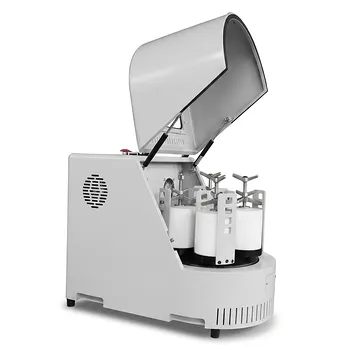
- Vertical Semi Circular Planetary Ball Mill for Laboratory Precision Grinding
- High Energy Planetary Ball Mill for Nano Scale Grinding and Mechanical Alloying
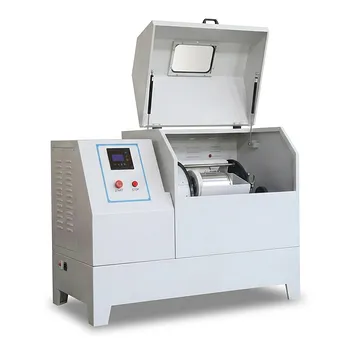
- Heavy Duty Horizontal Planetary Ball Mill for Efficient Industrial Grinding and Sample Preparation
- Vertical Production Planetary Ball Mill for High Throughput Powder Processing
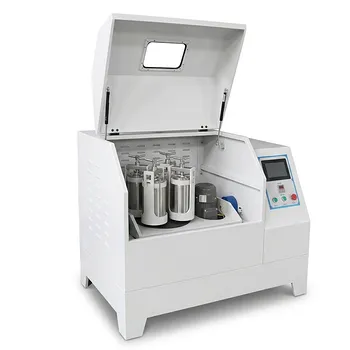
- 360° Rotating Omnidirectional Laboratory Planetary Ball Mill for Homogeneous Ultra-Fine Grinding and Mixing
People Also Ask
- What role does a planetary ball mill play in the synthesis of Li6PS5Cl (LPSCl)? Unlock High Ionic Conductivity
- Why is a planetary ball mill essential for SiBCN-rGO wet-spinning? Achieve Superior Dispersion and Spinnability
- Why is an intermittent grinding process required for perovskites in a planetary ball mill? Ensure Stability & Purity
- Why is a planetary ball mill required for PET micronization? Ensure Accurate Chemical Analysis of Reprocessed PET
- How does mechanized planetary ball milling compare to manual agate grinding? Optimize sulfide standard material precision.

Tech Team · PowderPreparation
Last updated on May 14, 2026
Related Products
Vertical Semi Circular Planetary Ball Mill for Laboratory Precision Grinding

High Energy Planetary Ball Mill for Nano Scale Grinding and Mechanical Alloying
Heavy Duty Horizontal Planetary Ball Mill for Efficient Industrial Grinding and Sample Preparation

Vertical Production Planetary Ball Mill for High Throughput Powder Processing
360° Rotating Omnidirectional Laboratory Planetary Ball Mill for Homogeneous Ultra-Fine Grinding and Mixing

Vertical Square Planetary Ball Mill for Laboratory Sample Preparation and Nanoscale Grinding

Miniature Planetary Ball Mill with Vacuum Grinding and High Efficiency for Laboratory Sample Preparation

High Energy Omnidirectional Planetary Ball Mill 16L

High Energy Laboratory Planetary Ball Mill for Nano Grinding and Material Science Sample Preparation
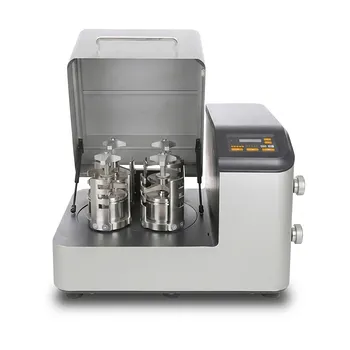
High Energy Planetary Ball Mill for Nano Scale Grinding and Colloidal Mixing in Material Science Research
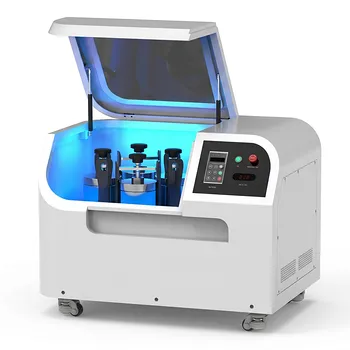
Planetary Ball Mill 12L
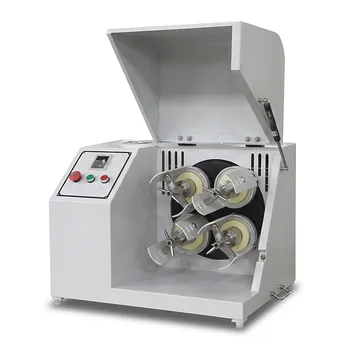
Horizontal Light Duty Planetary Ball Mill for Laboratory Sample Preparation

High Energy Omnidirectional Planetary Ball Mill 20L
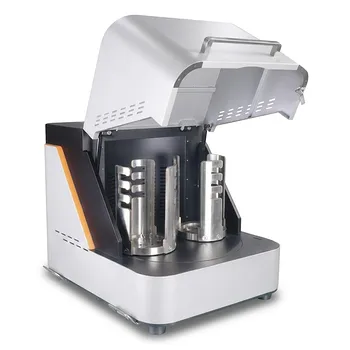
High Energy Laboratory Planetary Ball Mill for Nano Grinding and Colloidal Mixing of Hard and Brittle Materials
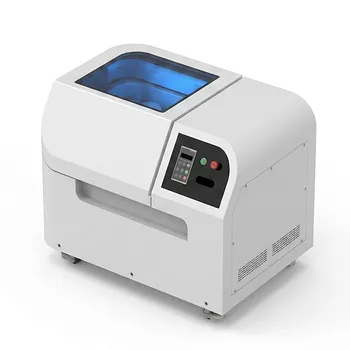
8L Planetary Ball Mill for Laboratory Grinding and Sample Preparation
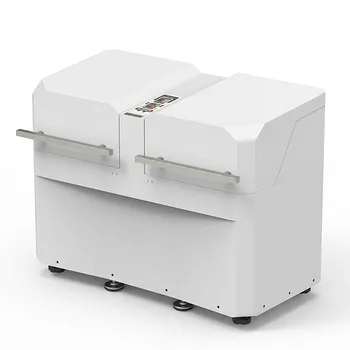
Dual Station Planetary Ball Mill 24L
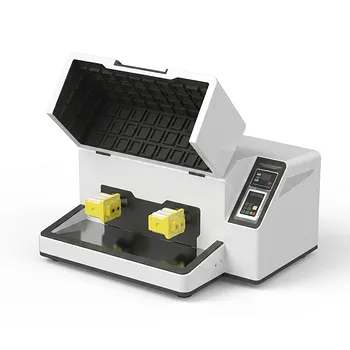
Multi-Platform Nanoscale High-Energy Vibratory Ball Mill

Nano High Energy Vibratory Ball Mill for Laboratory Sample Preparation
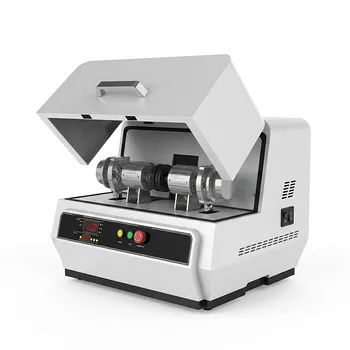
Dual Jar High Energy Vibratory Ball Mill