What are the advantages of using a planetary ball mill for the fine grinding of barium silicate glass powder? Peak Results
Updated 3 months ago
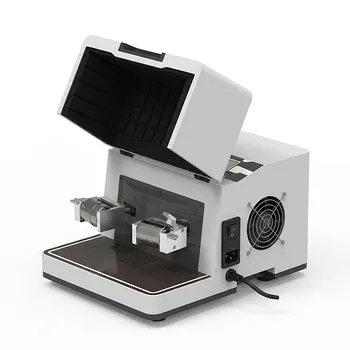
Planetary ball mills provide a high-energy environment that efficiently refines barium silicate glass into micron-sized particles while simultaneously enhancing the powder's chemical reactivity. This specialized equipment utilizes the dual-action motion of revolution and rotation to generate intense centrifugal and shear forces, allowing for rapid particle size reduction that outperforms traditional grinding methods.
Core Takeaway: The use of a planetary ball mill for barium silicate glass ensures a high-purity, micron-level powder with superior flowability and increased surface area, which is critical for optimizing downstream sintering and solid-state reaction kinetics.
High-Energy Grinding and Efficiency
The Impact of Composite Motion
A planetary ball mill operates on the principle of revolution and rotation in opposite directions. This dual-axis movement creates a "sun wheel" effect, generating high-energy impacts and intense frictional forces between the grinding media and the glass.
Rapid Micrometer Refinement
Because of these concentrated forces, the mill can refine hard glass cullet to a micrometer or sub-micron scale in a significantly shorter period than manual or low-energy methods. This efficiency is vital for maintaining productivity in industrial and laboratory settings.
Overcoming Lattice Energy
The powerful kinetic energy output is sufficient to overcome the lattice energy of silica-based structures. This ensures that even resilient materials like barium silicate are effectively pulverized into a fine, consistent powder.
Enhancing Material Properties
Increased Specific Surface Area
By reducing the glass to a fine powder, the mill dramatically increases the specific surface area of the material. This is a critical factor for glass powders used in applications where high reactivity is required, such as bioactive glass or sintering processes.
Improving Solid-State Reaction Kinetics
For systems involving barium compounds, high-energy milling ensures a higher reaction contact area. This accelerates solid-state reaction kinetics during subsequent sintering, helping to overcome the reaction delays common in barium-based glass systems.
Optimizing Particle Morphology
Unlike jaw crushers that produce angular, sharp-edged particles, planetary ball mills tend to produce rounded particle edges. This rounding reduces inter-particle friction, which directly improves the flowability and spreading uniformity of the powder.
Precision and Purity Control
Achieving Uniform Dispersibility
The consistency of the milling process ensures a high degree of mixing uniformity at the microscopic scale. This is particularly beneficial when the barium silicate glass must be dispersed within a matrix or used as a consistent printing ink.
Minimizing Impurity Introduction
By using high-density, wear-resistant media such as silicon nitride or tungsten carbide, users can significantly reduce media loss. This prevents the introduction of unwanted metal ions, ensuring the chemical cleanliness and intended physical properties of the glass powder.
Controlled Micron-Level Output
The predictable nature of planetary milling allows for a controlled particle size distribution. This results in powders that can easily pass through specific mesh sieves, meeting strict requirements for thermogravimetric analysis or additive manufacturing.
Understanding the Trade-offs
Thermal Management Issues
The high-energy impacts that make planetary mills efficient also generate significant heat during operation. For certain glass compositions, excessive heat can lead to material softening or sticking to the grinding jar walls, requiring intermittent cooling cycles.
Media Wear and Contamination
While high-quality jars and balls reduce risk, media wear is inevitable over long periods. Choosing a grinding media that is chemically compatible with barium silicate—such as using zirconia or silicon nitride—is essential to avoid altering the glass's final properties.
Complexity and Scaling
Planetary ball mills are sophisticated machines that require precise balancing of jars to prevent mechanical vibration. Additionally, while they are excellent for research and small-batch production, scaling these high-energy environments to massive industrial volumes can be technically challenging and energy-intensive.
How to Apply This to Your Project
Making the Right Choice for Your Goal
To achieve the best results with barium silicate glass, your milling strategy should align with your final application requirements.
- If your primary focus is high chemical purity: Use silicon nitride or zirconia grinding jars and balls to prevent metal ion contamination.
- If your primary focus is superior powder flowability: Opt for longer milling times at moderate speeds to promote the rounding of particle edges and reduce the avalanche angle.
- If your primary focus is rapid sintering or reactivity: Maximize the rotation speed to increase specific surface area, ensuring you use cooling intervals to prevent the glass from fusing.
By leveraging the high-energy dynamics of a planetary ball mill, you can transform raw barium silicate into a high-performance, reactive powder tailored for advanced material applications.
Summary Table:
| Key Feature | Advantage for Barium Silicate | Final Impact |
|---|---|---|
| Dual-Axis Motion | Generates intense centrifugal & shear forces | Rapid refinement to micrometer scale |
| High-Energy Impact | Overcomes silica-based lattice energy | Consistent, fine powder distribution |
| Morphology Control | Produces rounded particle edges | Improved flowability and spreading |
| Purity Management | Use of wear-resistant media (e.g., Zirconia) | Minimized contamination & metal ions |
| Surface Engineering | Dramatically increased specific surface area | Accelerated solid-state reaction kinetics |
Elevate Your Material Research with Expert Sample Preparation
At [Your Brand Name], we provide complete laboratory sample preparation solutions tailored for material science. We specialize in high-performance powder processing and compaction equipment designed to meet the most rigorous research standards.
Whether you are refining barium silicate glass or developing advanced ceramics, our extensive product line includes:
- Advanced Milling: Planetary ball mills, jet mills, cryogenic grinders, and rotor mills.
- Size Reduction: Jaw and roll crushers for primary processing.
- Precision Analysis: Vibratory and air-jet sieve shakers with various test meshes.
- Compaction Solutions: A full spectrum of hydraulic presses, including Cold/Warm Isostatic Presses (CIP/WIP), vacuum hot presses, and XRF pellet presses.
- Mixing Technology: Specialized powder and defoaming mixers for uniform dispersion.
Unlock superior powder quality and reaction kinetics today. Contact our experts now to find the perfect equipment for your laboratory!
References
- Boris Agea‐Blanco, Ralf Müller. Sintering and Foaming of Barium Silicate Glass Powder Compacts. DOI: 10.3389/fmats.2016.00045
Mentioned Products
- Vertical Semi Circular Planetary Ball Mill for Laboratory Precision Grinding
- High Energy Planetary Ball Mill for Nano Scale Grinding and Mechanical Alloying
- Heavy Duty Horizontal Planetary Ball Mill for Efficient Industrial Grinding and Sample Preparation
- Vertical Production Planetary Ball Mill for High Throughput Powder Processing
- 360° Rotating Omnidirectional Laboratory Planetary Ball Mill for Homogeneous Ultra-Fine Grinding and Mixing
People Also Ask
- What role does a planetary ball mill play in the synthesis of Li6PS5Cl (LPSCl)? Unlock High Ionic Conductivity
- Why is a planetary ball mill essential for SiBCN-rGO wet-spinning? Achieve Superior Dispersion and Spinnability
- Why is an intermittent grinding process required for perovskites in a planetary ball mill? Ensure Stability & Purity
- Why is a planetary ball mill required for PET micronization? Ensure Accurate Chemical Analysis of Reprocessed PET
- How does mechanized planetary ball milling compare to manual agate grinding? Optimize sulfide standard material precision.

Tech Team · PowderPreparation
Last updated on Jun 03, 2026
Related Products
Vertical Semi Circular Planetary Ball Mill for Laboratory Precision Grinding
High Energy Planetary Ball Mill for Nano Scale Grinding and Mechanical Alloying
Heavy Duty Horizontal Planetary Ball Mill for Efficient Industrial Grinding and Sample Preparation

Vertical Production Planetary Ball Mill for High Throughput Powder Processing

360° Rotating Omnidirectional Laboratory Planetary Ball Mill for Homogeneous Ultra-Fine Grinding and Mixing

Vertical Square Planetary Ball Mill for Laboratory Sample Preparation and Nanoscale Grinding

Miniature Planetary Ball Mill with Vacuum Grinding and High Efficiency for Laboratory Sample Preparation

High Energy Omnidirectional Planetary Ball Mill 16L
High Energy Laboratory Planetary Ball Mill for Nano Grinding and Material Science Sample Preparation
High Energy Planetary Ball Mill for Nano Scale Grinding and Colloidal Mixing in Material Science Research
Planetary Ball Mill 12L
Horizontal Light Duty Planetary Ball Mill for Laboratory Sample Preparation
High Energy Omnidirectional Planetary Ball Mill 20L
High Energy Laboratory Planetary Ball Mill for Nano Grinding and Colloidal Mixing of Hard and Brittle Materials
8L Planetary Ball Mill for Laboratory Grinding and Sample Preparation
Dual Station Planetary Ball Mill 24L
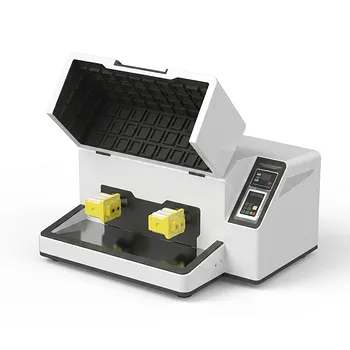
Multi-Platform Nanoscale High-Energy Vibratory Ball Mill

Nano High Energy Vibratory Ball Mill for Laboratory Sample Preparation
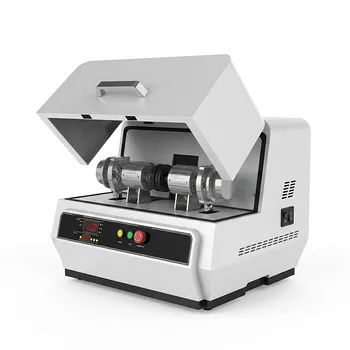
Dual Jar High Energy Vibratory Ball Mill