What role does a high-frequency vibratory ball mill play in the secondary grinding phase of biomass pretreatment? Guide
Updated 5 months ago
The high-frequency vibratory ball mill serves as the critical bridge between raw mechanical crushing and chemical/biological conversion. In the secondary grinding phase, it refines pre-crushed biomass powder down to a 20–30μm particle size while simultaneously inducing an "amorphous modification" of the cellulose. This dual action destroys the natural crystalline structure of the biomass, creating the high surface area and accessible chemical sites necessary for efficient downstream processing.
By combining micron-level particle refinement with the mechanical reduction of cellulose crystallinity, high-frequency vibratory ball milling transforms recalcitrant biomass into a highly reactive substrate, significantly boosting the speed and yield of enzymatic hydrolysis and chemical treatments.
The Mechanics of Secondary Grinding
High-Frequency Impact and Shear Forces
The mill operates by subjecting pre-crushed woody powder to intense high-frequency vibrations. These vibrations drive grinding media to generate a combination of high-energy impact, friction, and compression stresses.
Achieving Micron-Level Refinement
Unlike primary crushing which handles large wood chips, secondary grinding targets a specific finish. The process consistently refines particles to a range of 20–30μm, ensuring the material is uniform and ready for molecular-level interactions.
Co-Grinding and Mineral Integration
For biomass with high ash content, such as green algae, the mill induces a co-grinding effect. This process blends minerals and organic components, which further disrupts the structural integrity of the plant cell walls.
Overcoming Biomass Recalcitrance
Amorphous Modification of Cellulose
The most significant role of this mill is the mechanical reduction of cellulose crystallinity. By forcing a transition from a crystalline to an amorphous state, the mill breaks the physical barriers that naturally protect the sugar polymers.
Increasing Specific Surface Area
As the fibers are pulverized into fine powder, their specific surface area increases dramatically. This provides significantly more active sites for chemical reagents to penetrate and for enzymes to bind.
Breaking Down Stubborn Fibers
In materials like solid anaerobic digestate, the mill exerts strong mechanical destruction on stubborn, leftover fibers. This helps recover remaining sugars that would otherwise be lost in the waste stream.
Impact on Downstream Processing
Accelerating Enzymatic Saccharification
By reducing crystallinity and increasing contact sites, the mill substantially enhances the saccharification rate. Enzymes can more easily access the cellulose chains, leading to higher sugar yields in shorter timeframes.
Facilitating Chemical and Ionic Liquid Treatment
The amorphization induced by the mill increases the dissolution rate of biomass in specialized solvents like ionic liquids. This is essential for processes that require the rapid breakdown of rice straw or other agricultural residues.
Ensuring Analytical Uniformity
For laboratory settings, high-frequency grinding ensures sample representativeness. This uniformity is vital for accurate elemental and thermogravimetric analyses, where inconsistent particle size could lead to skewed results.
Understanding the Trade-offs
Energy Intensity and Heat Generation
High-frequency milling is an energy-intensive process compared to primary crushing. The mechanical energy converted into friction can also generate significant heat, which may require cooling (such as cryogenic systems) to prevent the thermal degradation of sensitive biomass components.
Equipment Wear and Contamination
The high-energy impacts required for secondary grinding lead to accelerated wear on grinding media and jars. If using stainless steel media, there is a potential for trace metal contamination, which must be accounted for in high-purity chemical extractions.
Processing Throughput Limits
While excellent for refinement, these mills often have lower throughput capacities than industrial hammer mills. This makes them ideal for specialized pretreatment or high-value extraction rather than bulk, low-margin processing.
How to Apply This to Your Project
When integrating a high-frequency vibratory ball mill into your workflow, align your grinding parameters with your final conversion goal:
- If your primary focus is Biofuel Production: Prioritize the reduction of cellulose crystallinity to maximize the efficiency of enzymatic hydrolysis and sugar recovery.
- If your primary focus is Chemical Extraction: Optimize for the highest specific surface area to allow chemical reagents and solvents to penetrate the lignin-carbohydrate complex rapidly.
- If your primary focus is Analytical Preparation: Focus on achieving a uniform particle size below 100μm to ensure reaction uniformity and high sample representativeness for thermogravimetric analysis.
Strategic use of high-frequency milling effectively "unlocks" the energy potential of biomass by neutralizing its natural physical defenses.
Summary Table:
| Key Mechanism | Role in Biomass Pretreatment | Downstream Benefit |
|---|---|---|
| Micron Refinement | Reduces particles to a uniform 20–30μm range | Increases surface area for chemical reactions |
| Amorphous Modification | Breaks down the crystalline structure of cellulose | Accelerates enzymatic hydrolysis & saccharification |
| Mechanical Destruction | Pulverizes recalcitrant fibers and cell walls | Enhances sugar recovery from waste streams |
| Co-Grinding Effect | Integrates minerals with organic components | Facilitates rapid dissolution in ionic liquids |
Optimize Your Biomass Research with Precision Sample Prep
Unlock the full potential of your materials with our comprehensive laboratory solutions. Whether you are aiming to reduce cellulose crystallinity or achieve ultra-fine particle refinement, we provide the specialized equipment needed for high-yield material science research.
Our Expertise Includes:
- Advanced Milling: Planetary ball mills, jet mills, and high-energy vibratory mills for micron-level processing.
- Primary Crushing: Durable jaw and roll crushers for initial biomass reduction.
- Sample Compaction: A full spectrum of hydraulic presses, including Cold/Warm Isostatic Presses (CIP/WIP), XRF pellet presses, and vacuum hot presses.
- Support Equipment: Liquid nitrogen cryogenic grinders, sieve shakers, and high-efficiency powder mixers.
Ready to enhance your lab's efficiency and analytical accuracy? Contact our experts today to find the perfect configuration for your biomass pretreatment and powder processing needs.
References
- Arata Ito, Yukio ENDA. A Study on Milling Pretreatment for Ethyl Alcohol Production from Cellulosic Woody Biomass. DOI: 10.2473/journalofmmij.123.413
Mentioned Products
- Nano High Energy Vibratory Ball Mill with Heating and Temperature Control
- Single Tank High Energy Vibratory Ball Mill for Laboratory Grinding and Mixing
- High Energy Hybrid Vibratory Ball Mill for Grinding Mixing and Cell Disruption
- Nano High Energy Vibratory Ball Mill for Laboratory Sample Preparation
- Dual Jar High Energy Vibratory Ball Mill
People Also Ask
- How does a high-energy vibratory ball mill improve the performance of MgH2? Optimize Hydrogen Storage Kinetics
- What is the purpose of adding alcohol as a PCA during titanium ball milling? Prevent Cold Welding & Enhance Refinement
- What is the Role of HEBM in High-Entropy H-SOFC Cathode Prep? Achieving Atomic-Level Homogenization
- What is the function of high-energy ball milling in ZnO membrane slurry prep? Optimize Homogenization & Dispersion
- What is the importance of using a high-purity argon atmosphere during the high-energy ball milling of ceramic particles?

Tech Team · PowderPreparation
Last updated on May 14, 2026
Related Products

Nano High Energy Vibratory Ball Mill with Heating and Temperature Control

Single Tank High Energy Vibratory Ball Mill for Laboratory Grinding and Mixing
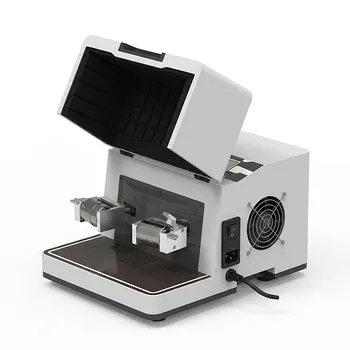
High Energy Hybrid Vibratory Ball Mill for Grinding Mixing and Cell Disruption
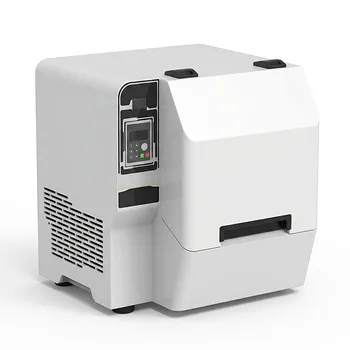
Nano High Energy Vibratory Ball Mill for Laboratory Sample Preparation
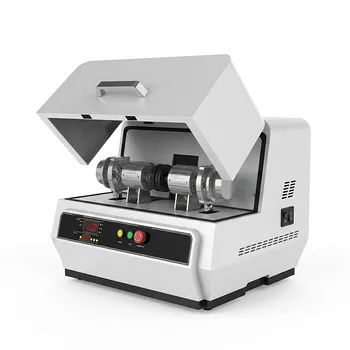
Dual Jar High Energy Vibratory Ball Mill
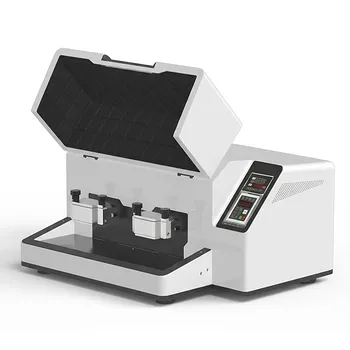
Nanoscale High-Energy Vibratory Ball Mill for Laboratory Sample Preparation, Mechanochemistry, and Mechanical Alloying
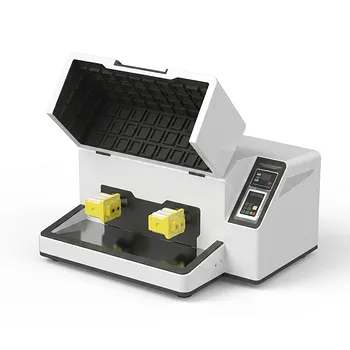
Multi-Platform Nanoscale High-Energy Vibratory Ball Mill
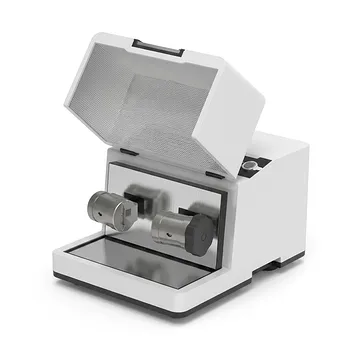
Heating Temperature Controlled High Energy Vibratory Ball Mill
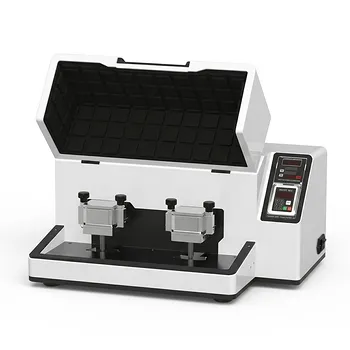
Nanoscale High Energy Vibratory Ball Mill Low Temperature
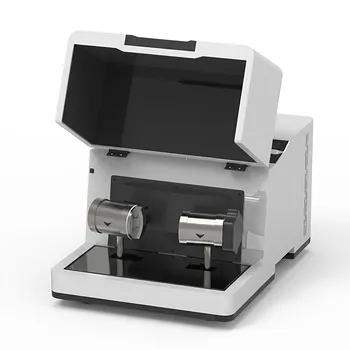
Ultra-Low Temperature Cryogenic High-Energy Vibratory Ball Mill
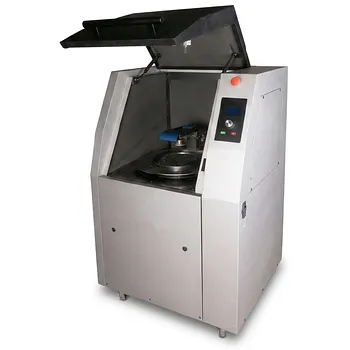
High Speed Vibratory Disc Mill for Spectral Analysis Sample Preparation and Rapid Powder Grinding
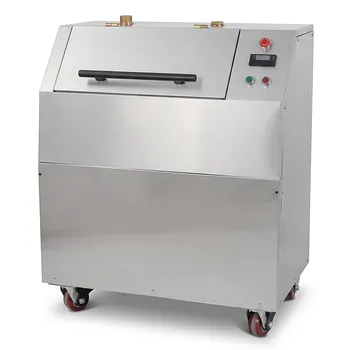
Vibratory Disc Mill for Rapid Fine Grinding and High Throughput Sample Preparation of Hard and Brittle Materials
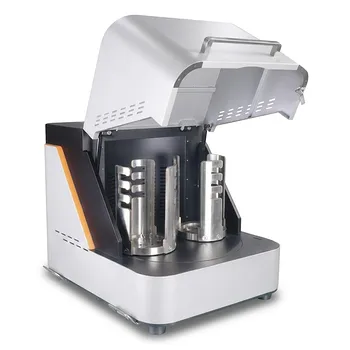
High Energy Laboratory Planetary Ball Mill for Nano Grinding and Colloidal Mixing of Hard and Brittle Materials
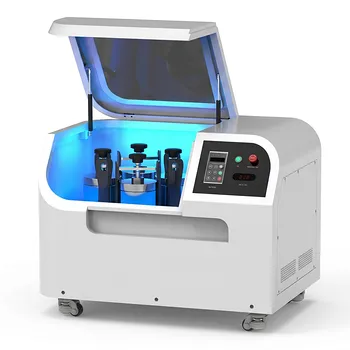
Planetary Ball Mill 12L

High Energy Laboratory Planetary Ball Mill for Nano Grinding and Material Science Sample Preparation
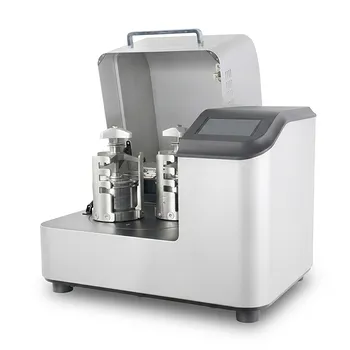
High Energy Planetary Ball Mill for Nano Scale Grinding and Mechanical Alloying

Vertical Square Planetary Ball Mill for Laboratory Sample Preparation and Nanoscale Grinding
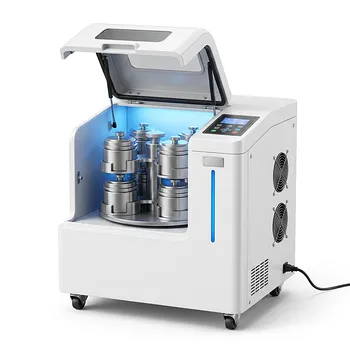
High Energy Omnidirectional Planetary Ball Mill 20L

High Throughput Micro Ball Mill for Cryogenic Grinding and Laboratory Cell Disruption
