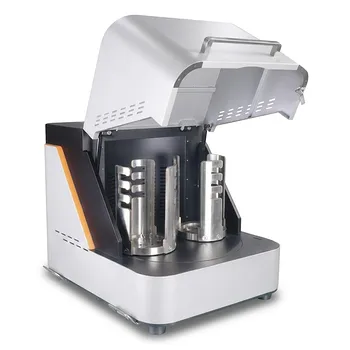
What role does a high-frequency vibratory ball mill play in the dry milling process of Simvastatin? Amorphization Power
Updated 5 months ago
In the dry milling of Simvastatin, a high-frequency vibratory ball mill acts as the primary source of mechanical activation energy required to transform the drug's physical and chemical state. This equipment utilizes intense collision, shear, and friction forces to disrupt the long-range ordered crystal structure, leading to lattice defects and amorphization. While this process is essential for enhancing the drug's physical activity and dissolution potential, it also triggers free radical reactions that can cause concurrent oxidative degradation.
Core Takeaway: The high-frequency vibratory ball mill serves as a dual-purpose tool that physically transforms Simvastatin into a more soluble amorphous state while simultaneously acting as a catalyst for mechanochemical reactions and potential oxidative instability.
The Mechanism of Mechanical Activation
Generating Intense Kinetic Energy
The mill operates by imparting extreme acceleration to the grinding media through high-frequency oscillations. This kinetic energy is transferred to the Simvastatin particles via frequent and high-energy impacts and shear forces.
Overcoming Lattice Energy
The primary role of this energy is to overcome the internal lattice energy of the Simvastatin crystals. By forcing molecular displacement and rearrangement, the mill breaks down the constraints of the solid particles.
Creating Molecular Contact
In addition to physical breakdown, the mill facilitates effective molecular contact through constant particle breakage and rearrangement. This is particularly critical in solvent-free environments where diffusion is otherwise limited.
Physical Transformation and Amorphization
Inducing Lattice Defects
As the grinding media strikes the drug, it generates widespread lattice defects. These imperfections are the first step in transitioning the material from a stable crystalline state to a disordered state.
Reducing Crystallinity (Disordering)
The high-energy grinding process provides the mechanical force necessary to destroy long-range ordered structures. This leads to the generation of a metastable amorphous state, which lacks the rigid structure of the original crystal.
Enhancing Physical Activity
By converting Simvastatin into an amorphous form, the mill significantly increases the drug's physical activity. This transformation is often targeted to improve dissolution characteristics and bioavailability compared to simple physical mixtures.
Mechanochemical Reactions and Chemical Impact
Triggering Free Radical Reactions
The mechanical energy provided by the mill does more than change the drug's shape; it triggers free radical reactions within the Simvastatin molecules. These radicals are highly reactive species that can alter the chemical integrity of the drug.
Inducing Oxidative Degradation
When the milling process occurs in the presence of oxygen, these free radicals induce concurrent oxidative chemical degradation. This means the very process intended to improve the drug's performance may simultaneously degrade its chemical purity.
Driving Solid-State Synthesis
Beyond simple milling, the high-frequency vibratory ball mill can drive complex chemical reactions, such as the preparation of co-amorphous mixtures. This allows for the combination of Simvastatin with other components to overcome thermodynamic incompatibilities.
Understanding the Trade-offs
Solubility vs. Chemical Stability
The most significant trade-off in using a high-frequency vibratory ball mill is the balance between enhanced dissolution and chemical degradation. While amorphization makes the drug easier for the body to absorb, the resulting free radicals can lead to a less stable final product.
Energy Input vs. Material Integrity
Excessive mechanical energy can lead to over-processing. While high-frequency impacts are necessary to refine particle size (often down to the 20–30μm range), they also increase the risk of triggering unwanted chemical side reactions.
How to Apply This to Your Process
Recommendations for Implementation
- If your primary focus is improving dissolution rates: Utilize high-frequency milling to maximize amorphization and disrupt the crystal lattice, ensuring the drug reaches a long-range disordered state.
- If your primary focus is maintaining chemical purity: Control the milling duration and consider processing under an inert atmosphere to prevent the free radicals generated by the mill from causing oxidative degradation.
- If your primary focus is creating stable co-amorphous mixtures: Leverage the mill’s ability to overcome thermodynamic barriers (Flory-Huggins parameters) to force molecular displacement between Simvastatin and other active ingredients.
The high-frequency vibratory ball mill is a powerful instrument for mechanical activation, but its use requires a careful balance between achieving physical disorder and preventing chemical breakdown.
Summary Table:
| Feature | Impact on Simvastatin Processing | Key Benefit / Risk |
|---|---|---|
| Mechanical Activation | Overcomes lattice energy via high-frequency impact | Triggers transition to metastable state |
| Physical State | Converts crystalline structure to amorphous | Dramatically increases dissolution rates |
| Chemical Impact | Induces free radical reactions | Risk of concurrent oxidative degradation |
| Particle Control | Intensive shear and friction | Precise refinement to 20–30μm range |
Optimize Your Pharmaceutical Milling with Precision Equipment
Achieving the perfect balance between drug solubility and chemical stability requires advanced processing technology. At [Brand Name], we provide complete laboratory sample preparation solutions for material science, specializing in high-performance powder processing and compaction equipment.
Our extensive range includes high-frequency vibratory ball mills, planetary ball mills, jet mills, and rotor mills designed to handle delicate pharmaceutical transitions like Simvastatin amorphization. Beyond milling, we offer a full spectrum of hydraulic presses, including Cold/Warm Isostatic Presses (CIP/WIP) and hot presses, to support your material development from powder to final form.
Maximize your research outcomes and ensure material integrity—Contact our technical team today for a tailored solution!
References
- Dattatray Modhave, Amrit Paudel. Understanding Concomitant Physical and Chemical Transformations of Simvastatin During Dry Ball Milling. DOI: 10.1208/s12249-020-01687-z
Mentioned Products
- Nanoscale High-Energy Vibratory Ball Mill for Laboratory Sample Preparation, Mechanochemistry, and Mechanical Alloying
- Ultra-Low Temperature Cryogenic High-Energy Vibratory Ball Mill
- Multi-Platform Nanoscale High-Energy Vibratory Ball Mill
- Nano High Energy Vibratory Ball Mill with Heating and Temperature Control
- Nano High Energy Vibratory Ball Mill for Laboratory Sample Preparation
People Also Ask
- How does a high-energy vibratory ball mill improve the performance of MgH2? Optimize Hydrogen Storage Kinetics
- What is the purpose of adding alcohol as a PCA during titanium ball milling? Prevent Cold Welding & Enhance Refinement
- What is the Role of HEBM in High-Entropy H-SOFC Cathode Prep? Achieving Atomic-Level Homogenization
- What is the function of high-energy ball milling in ZnO membrane slurry prep? Optimize Homogenization & Dispersion
- What is the role of high-energy ball milling in antibacterial ceramic powders? Boost Reactivity & Homogeneity

Tech Team · PowderPreparation
Last updated on May 14, 2026
Related Products
Nanoscale High-Energy Vibratory Ball Mill for Laboratory Sample Preparation, Mechanochemistry, and Mechanical Alloying
Ultra-Low Temperature Cryogenic High-Energy Vibratory Ball Mill
Multi-Platform Nanoscale High-Energy Vibratory Ball Mill
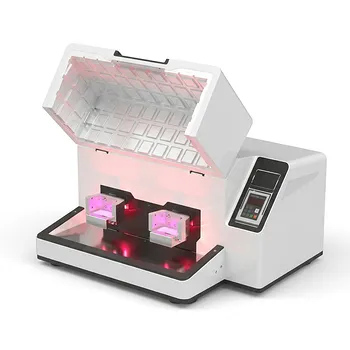
Nano High Energy Vibratory Ball Mill with Heating and Temperature Control
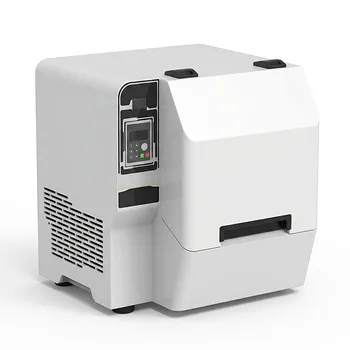
Nano High Energy Vibratory Ball Mill for Laboratory Sample Preparation
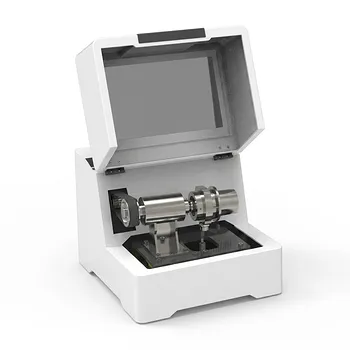
Single Tank High Energy Vibratory Ball Mill for Laboratory Grinding and Mixing
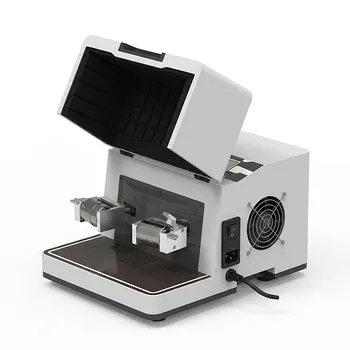
High Energy Hybrid Vibratory Ball Mill for Grinding Mixing and Cell Disruption
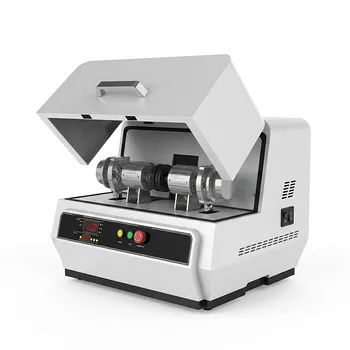
Dual Jar High Energy Vibratory Ball Mill
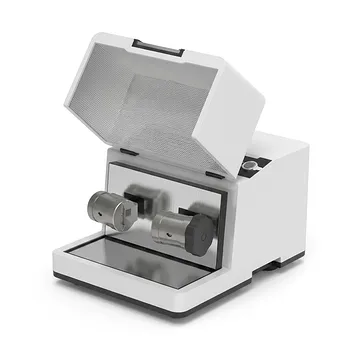
Heating Temperature Controlled High Energy Vibratory Ball Mill
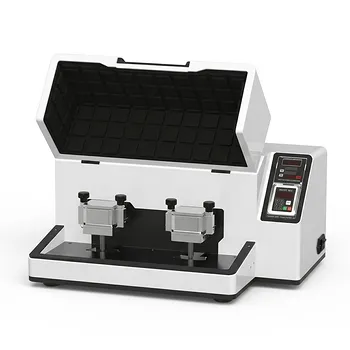
Nanoscale High Energy Vibratory Ball Mill Low Temperature
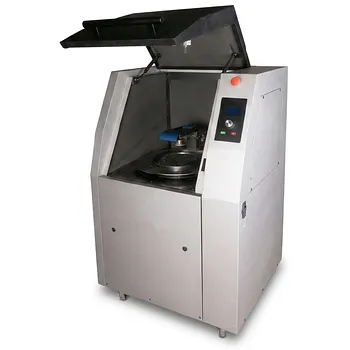
High Speed Vibratory Disc Mill for Spectral Analysis Sample Preparation and Rapid Powder Grinding
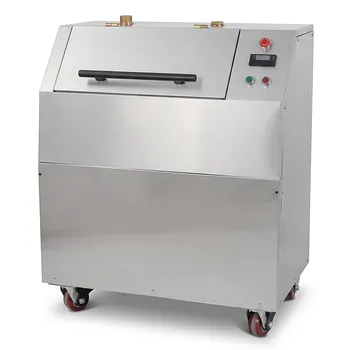
Vibratory Disc Mill for Rapid Fine Grinding and High Throughput Sample Preparation of Hard and Brittle Materials
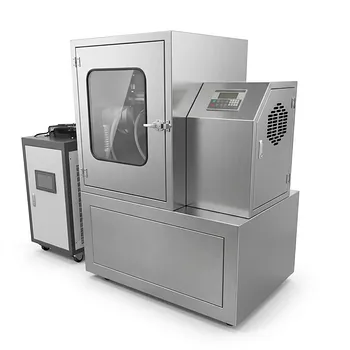
Vibratory Superfine Grinder for Ultra Fine Laboratory Powder Milling

High Energy Planetary Ball Mill for Nano Scale Grinding and Mechanical Alloying
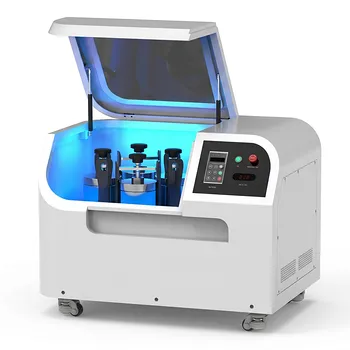
Planetary Ball Mill 12L

Vertical Production Planetary Ball Mill for High Throughput Powder Processing

High Energy Laboratory Planetary Ball Mill for Nano Grinding and Material Science Sample Preparation

Miniature Planetary Ball Mill with Vacuum Grinding and High Efficiency for Laboratory Sample Preparation
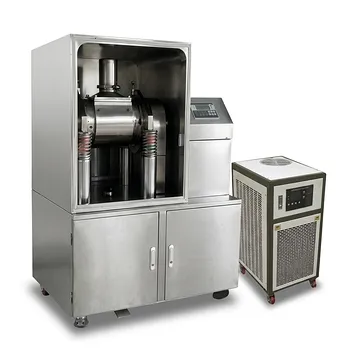
Small Vibrating Ultrafine Grinder for Traditional Chinese Medicine