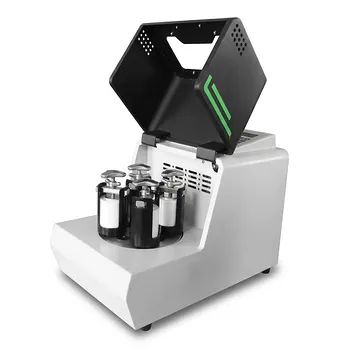
What role does a high-energy ball mill play in ODS steel preparation? Key to Mechanical Alloying & Nano-Oxide Dispersion
Updated 5 months ago
The high-energy ball mill is the primary engine for mechanical alloying (MA), a process that ensures the uniform distribution of nano-scale oxides within a metallic matrix. By subjecting metal and oxide powders to intense kinetic energy, the mill facilitates the transition of raw materials into a homogenized, high-activity precursor. This step is indispensable for creating the dispersion-strengthening effect that gives ODS steels their characteristic high-temperature stability and creep resistance.
The core role of the high-energy ball mill is to utilize mechanical forces to "dissolve" oxide particles into the metal lattice at an atomic level. This creates a refined, solid-solution powder that serves as the critical microstructural foundation for all subsequent manufacturing stages.
The Mechanism of Mechanical Alloying
The milling process is not merely a mixing step; it is a transformative mechanical process that alters the physical and chemical state of the powders.
Impact and Shear Forces
The mill uses high-speed rotation—often in a planetary configuration—to drive grinding media against the powder. These grinding balls generate intense impact and shear forces that crush brittle oxide particles, such as yttria (Y2O3), into nano-scale fragments.
Repeated Cold Welding and Fracturing
As the process continues, the metal powders (such as iron, chromium, and tungsten) undergo a cycle of sustained plastic deformation. The powders are repeatedly fractured by impacts and then cold-welded back together, trapping the fine oxide particles within the newly formed interfaces.
Formation of Solid Solutions
Through high-frequency impacts, the mill induces lattice distortion and atomic-level chemical homogenization. This "forces" elements like yttrium and oxygen into a solid solution within the iron-based matrix, a state that cannot be achieved through traditional melting or simple blending.
Impact on Microstructure and Performance
The ball mill fundamentally reconfigures the internal structure of the steel powder to prepare it for the final consolidation phase.
Grain Refinement and Activity
The mechanical energy promotes extreme grain refinement, often reducing the matrix grains to the sub-micron or nano-scale. This increases the internal energy and surface activity of the powder, which is vital for the efficiency of the subsequent sintering or hot-pressing steps.
Creation of Nano-Particle Precursors
By embedding the oxides uniformly, the mill creates nano-particle precursors. During later heat treatments, these "dissolved" elements precipitate back out as stable nano-oxides, which pin grain boundaries and block dislocation movement.
Enhancing High-Temperature Creep Resistance
The uniform dispersion achieved in the mill is the direct cause of the steel's high-temperature creep resistance. Without the thorough mechanical alloying provided by the ball mill, the oxides would cluster, leading to structural weak points and premature material failure under stress.
Understanding the Trade-offs
While high-energy ball milling is essential, it introduces specific technical challenges that must be managed to ensure material quality.
Contamination from Milling Media
The intense friction and impact often cause wear and tear on the grinding balls and mill liner. This can introduce impurities, such as carbon or extra iron, into the powder, potentially altering the intended chemical composition of the ODS steel.
Atmosphere Control and Oxidation
Mechanical alloying generates significant heat and exposes fresh metal surfaces, making the powder highly reactive. If the milling atmosphere is not strictly controlled (usually using high-purity argon), unintended oxidation can occur, compromising the precision of the oxide dispersion.
Processing Time and Energy Costs
Achieving a true solid solution requires long milling durations, often ranging from several hours to days. This high energy consumption and lengthy processing cycle represent a significant bottleneck in the industrial-scale production of ODS materials.
How to Apply This to Your Project
To optimize the preparation of ODS steel, the milling parameters must be aligned with your specific performance requirements and material composition.
- If your primary focus is maximum high-temperature strength: Prioritize longer milling times and higher ball-to-powder ratios to ensure a complete solid solution and the finest possible oxide dispersion.
- If your primary focus is minimizing material contamination: Utilize grinding media and liners made of the same base material as your powder (e.g., hardened steel) and maintain a high-purity inert gas environment.
- If your primary focus is production throughput: Use high-energy planetary mills or attritor mills that offer higher collision frequencies to reduce the time required to reach a steady-state mechanical alloy.
The high-energy ball mill is the definitive tool for engineering the atomic architecture of ODS steels, turning a simple powder mixture into a high-performance structural material.
Summary Table:
| Stage | Mechanism | Impact on ODS Steel |
|---|---|---|
| Mechanical Alloying | Repeated Cold Welding & Fracturing | Homogenized solid-solution precursor |
| Nano-Refinement | High-Energy Impact & Shear | Matrix grain refinement to sub-micron scale |
| Dispersion Control | Lattice Distortion | Uniformly distributed nano-scale oxides |
| Performance Boost | Atomic-Level Mixing | High creep resistance & thermal stability |
Elevate Your Material Research with Precision Sample Preparation
Achieving the perfect oxide dispersion in ODS steel requires more than just mixing—it demands high-precision engineering. [Your Brand Name] provides complete laboratory sample preparation solutions tailored for advanced material science and powder processing.
Our extensive equipment range is designed to optimize every stage of your workflow:
- Advanced Milling & Grinding: High-energy planetary ball mills, jet mills, and cryogenic grinders for superior mechanical alloying and grain refinement.
- Precision Consolidation: A full spectrum of hydraulic presses, including Cold/Warm Isostatic Presses (CIP/WIP), vacuum hot presses, and standard lab presses for high-density sintering.
- Sizing & Mixing: Sieve shakers (vibratory/air-jet), powder mixers, and defoaming mixers to ensure material consistency.
Whether you are refining nano-scale precursors or seeking specialized powder processing equipment, our solutions empower you to achieve the critical microstructural foundations required for high-performance materials.
Contact our technical experts today to optimize your ODS steel production!
References
- С. В. Рогожкин, Liying Sun. Study of Precipitates in Oxide Dispersion-Strengthened Steels by SANS, TEM, and APT. DOI: 10.3390/nano14020194
Mentioned Products
- High Energy Planetary Ball Mill for Nano Scale Grinding and Mechanical Alloying
- High Energy Hybrid Vibratory Ball Mill for Grinding Mixing and Cell Disruption
- High Energy Laboratory Planetary Ball Mill for Nano Grinding and Material Science Sample Preparation
- High Energy Omnidirectional Planetary Ball Mill 16L
- Ultra-Low Temperature Cryogenic High-Energy Vibratory Ball Mill
People Also Ask
- Why is a high-energy planetary ball mill used for nano-milling As4Se3? Achieve Expert Structural Transformation
- What role do high-energy planetary ball mills play in FDM composite filament preparation? Optimize Material Performance
- What is the role of a high-energy planetary ball mill in the exfoliation of modified WSe2? Achieve Nano-Precision
- What is the function of a planetary ball mill in glass-ceramic sintering? Optimize Reactivity and Uniformity
- What is the role of a high-energy planetary ball mill in the preparation of high-performance nano-ceramics? Key Guide

Tech Team · PowderPreparation
Last updated on May 14, 2026
Related Products
High Energy Planetary Ball Mill for Nano Scale Grinding and Mechanical Alloying

High Energy Hybrid Vibratory Ball Mill for Grinding Mixing and Cell Disruption

High Energy Laboratory Planetary Ball Mill for Nano Grinding and Material Science Sample Preparation

High Energy Omnidirectional Planetary Ball Mill 16L
Ultra-Low Temperature Cryogenic High-Energy Vibratory Ball Mill
High Energy Planetary Ball Mill for Nano Scale Grinding and Colloidal Mixing in Material Science Research

Nano High Energy Vibratory Ball Mill with Heating and Temperature Control
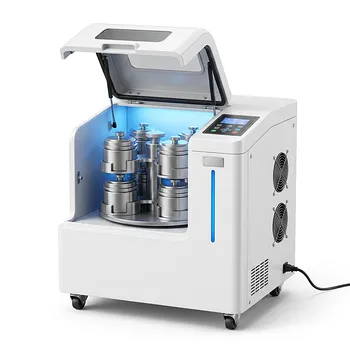
High Energy Omnidirectional Planetary Ball Mill 20L
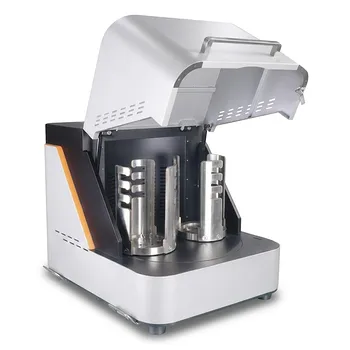
High Energy Laboratory Planetary Ball Mill for Nano Grinding and Colloidal Mixing of Hard and Brittle Materials
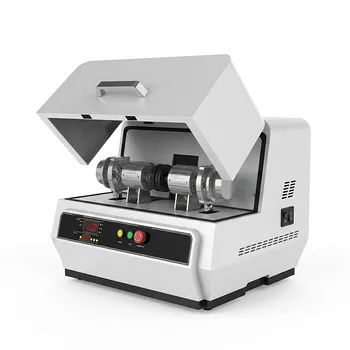
Dual Jar High Energy Vibratory Ball Mill

Multi-Platform Nanoscale High-Energy Vibratory Ball Mill

Single Tank High Energy Vibratory Ball Mill for Laboratory Grinding and Mixing
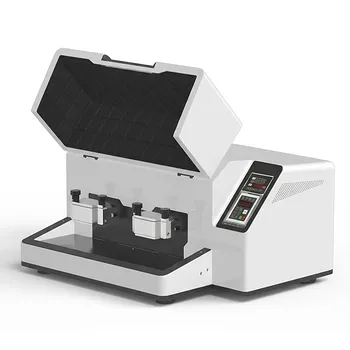
Nanoscale High-Energy Vibratory Ball Mill for Laboratory Sample Preparation, Mechanochemistry, and Mechanical Alloying

Heating Temperature Controlled High Energy Vibratory Ball Mill

Nano High Energy Vibratory Ball Mill for Laboratory Sample Preparation

Vertical Square Planetary Ball Mill for Laboratory Sample Preparation and Nanoscale Grinding
Nanoscale High Energy Vibratory Ball Mill Low Temperature

8L Planetary Ball Mill for Laboratory Grinding and Sample Preparation
Dual Station Planetary Ball Mill 24L