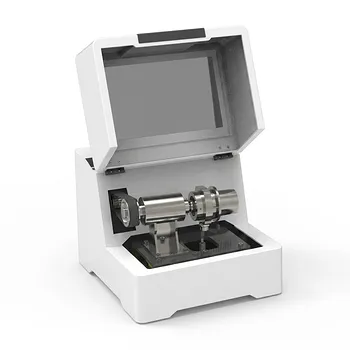
What is the role of a high-energy planetary ball mill in SiC/Cf Gel-casting? Achieve High-Performance Composites
Updated 4 months ago
The high-energy planetary ball mill is the critical processing engine used to refine SiC matrix powders to micron or nanometer scales and achieve molecular-level dispersion within gelling agents. This mechanical action ensures the resulting ceramic slurry possesses the high solid loading and low viscosity necessary to uniformly infiltrate carbon fiber (Cf) skeletons while minimizing internal structural defects.
Core Takeaway: In the Gel-casting of SiC/Cf composites, the planetary ball mill transforms raw ceramic powders into highly reactive, sub-micron precursors. This process is essential for creating a uniform, fluid slurry that drives densification and ensures the structural integrity of the final composite.
Ultra-Fine Refining and Particle Size Control
Achieving Sub-Micron Scales
High-energy planetary ball mills utilize intense impact and shear forces generated by high-speed rotation to break down raw materials. In SiC processing, this can refine powders from an average size of approximately 50 μm down to as small as 420 nm (0.42 μm).
Optimizing Particle Size Distribution (PSD)
Beyond simple reduction, the mill allows for precise adjustment of the Particle Size Distribution. A well-managed PSD is vital for achieving high-density ceramics, as it allows smaller particles to fill the interstices between larger ones during the Gel-casting process.
Increasing Specific Surface Area
As particle size decreases, the specific surface area of the SiC powder increases dramatically. This enhancement raises the powder's surface energy and chemical reactivity, which is necessary for the subsequent sintering stages.
Ensuring Slurry Uniformity and Fluidity
Molecular-Level Dispersion
The planetary ball mill ensures molecular-level uniform mixing between ceramic powders, gelling agents, and polymer binders. This level of homogeneity prevents the "clumping" or agglomeration that often plagues manual or low-energy mixing methods.
Achieving High Solid Content with Low Viscosity
By eliminating particle agglomeration, the milling process maintains the fluidity of the slurry even at high solid loadings. This is a critical requirement for Gel-casting, as the slurry must remain pourable and capable of filling complex molds or fiber architectures.
Infiltration of Carbon Fiber Skeletons
In SiC/Cf composites, the slurry must penetrate dense carbon fiber skeletons. The ultra-fine particle size and excellent fluidity produced by the ball mill allow the matrix to fully surround each fiber, reducing the presence of voids and structural defects in the final part.
Promoting Reactivity and Sintering Performance
Mechanical Alloying and Chemical Homogeneity
The mill can be used for mechanical alloying, such as mixing silicon and carbon black to produce nano-scale beta-SiC powder. This high-quality solid-phase source provides the reactivity needed for efficient phase transformation during heat treatment.
Uniform Distribution of Sintering Additives
Covalent carbides like SiC have low diffusion mobility, making sintering difficult. The planetary ball mill ensures that eutectic additives (like Al2O3 and Y2O3) are distributed with high micro-scale uniformity, promoting the formation of a consistent liquid phase that accelerates densification.
Enhancing Mechanical Properties
The combination of fine particles and uniform additive distribution leads to better grain bonding. This directly results in improved hardness, compressive strength, and fracture toughness in the finished SiC/Cf composite.
Understanding the Trade-offs and Risks
Potential for Media Contamination
The high-energy nature of the process can lead to wear on the grinding jars and balls. If the milling media is not chemically compatible with the SiC matrix (e.g., using steel balls for high-purity ceramics), it can introduce metallic impurities that degrade the composite's high-temperature performance.
Over-Processing and Structural Damage
Excessive milling time or energy can lead to amorphization or unwanted phase changes in the ceramic powder. Over-processed powders may also become overly reactive, leading to uncontrolled grain growth during the sintering process.
Thermal Management Challenges
The friction and impact within a planetary ball mill generate significant heat. This can cause the premature polymerization of some gelling agents or binders if the temperature is not carefully monitored or if the milling is not performed in intervals.
How to Apply This to Your Project
Making the Right Choice for Your Goal
- If your primary focus is maximizing composite density: Prioritize longer milling times or higher speeds to achieve a D50 below 500 nm, which increases the driving force for sintering.
- If your primary focus is deep fiber infiltration: Focus on achieving a narrow particle size distribution and using the mill to fully de-agglomerate the powder to keep slurry viscosity at its lowest possible point.
- If your primary focus is material purity: Utilize jars and grinding media made of the same material as the matrix (e.g., SiC-coated media) to prevent the introduction of foreign contaminants.
- If your primary focus is cost-efficiency: Optimize the milling duration to reach the "plateau of refinement," where further milling no longer significantly reduces particle size but continues to consume energy and wear down equipment.
By mastering the high-energy planetary ball milling stage, you lay the necessary foundation for a high-performance SiC/Cf composite that balances structural precision with exceptional mechanical strength.
Summary Table:
| Key Function | Technical Benefit | Impact on SiC/Cf Composite |
|---|---|---|
| Particle Refining | Achieves sub-micron scales (<500 nm) | Increases sintering reactivity and density |
| Molecular Dispersion | Uniform mixing of gelling agents | Eliminates clumping and internal defects |
| PSD Optimization | Controlled particle size distribution | Improves packing density and lowers porosity |
| Slurry Fluidity | High solid loading with low viscosity | Ensures deep infiltration of carbon fiber skeletons |
| Additive Distribution | Homogeneous sintering aid placement | Enhances grain bonding and mechanical strength |
Elevate Your Material Research with Expert Sample Prep Solutions
At the forefront of material science, we provide complete laboratory sample preparation solutions tailored for advanced composite manufacturing. Our high-energy planetary ball mills are engineered to achieve the precise sub-micron refining and molecular-level dispersion required for high-performance SiC/Cf composites.
Beyond milling, we offer a comprehensive spectrum of equipment to support your entire workflow:
- Powder Processing: Crushers, liquid nitrogen cryogenic grinders, jet mills, and vibratory sieve shakers.
- Mixing Excellence: Precision powder mixers and vacuum defoaming mixers for air-free slurries.
- Advanced Compaction: A full range of hydraulic presses, including Cold/Warm Isostatic Presses (CIP/WIP), vacuum hot presses, and XRF pellet presses.
Ready to eliminate structural defects and optimize your sintering performance? Contact our technical team today to find the perfect equipment configuration for your laboratory.
References
- Aicha Metehri, Ilias-Mohammed-Amine Ghermaoui. Tensile examination of progressive damage and failure in porous ceramic composite materials using the XFEM. DOI: 10.5937/vojtehg72-50091
Mentioned Products
- High Energy Planetary Ball Mill for Nano Scale Grinding and Mechanical Alloying
- High Energy Laboratory Planetary Ball Mill for Nano Grinding and Colloidal Mixing of Hard and Brittle Materials
- High Energy Planetary Ball Mill for Nano Scale Grinding and Colloidal Mixing in Material Science Research
- High Energy Omnidirectional Planetary Ball Mill 16L
- High Energy Laboratory Planetary Ball Mill for Nano Grinding and Material Science Sample Preparation
People Also Ask
- Why is a high-energy planetary ball mill used for nano-milling As4Se3? Achieve Expert Structural Transformation
- What role do high-energy planetary ball mills play in FDM composite filament preparation? Optimize Material Performance
- What is the role of a high-energy planetary ball mill in the exfoliation of modified WSe2? Achieve Nano-Precision
- What is the function of a planetary ball mill in glass-ceramic sintering? Optimize Reactivity and Uniformity
- What is the role of a high-energy planetary ball mill in the preparation of high-performance nano-ceramics? Key Guide

Tech Team · PowderPreparation
Last updated on Jun 03, 2026
Related Products

High Energy Planetary Ball Mill for Nano Scale Grinding and Mechanical Alloying
High Energy Laboratory Planetary Ball Mill for Nano Grinding and Colloidal Mixing of Hard and Brittle Materials
High Energy Planetary Ball Mill for Nano Scale Grinding and Colloidal Mixing in Material Science Research

High Energy Omnidirectional Planetary Ball Mill 16L
High Energy Laboratory Planetary Ball Mill for Nano Grinding and Material Science Sample Preparation
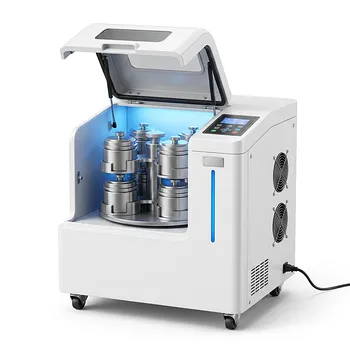
High Energy Omnidirectional Planetary Ball Mill 20L

Vertical Square Planetary Ball Mill for Laboratory Sample Preparation and Nanoscale Grinding

8L Planetary Ball Mill for Laboratory Grinding and Sample Preparation

Miniature Planetary Ball Mill with Vacuum Grinding and High Efficiency for Laboratory Sample Preparation

Vertical Production Planetary Ball Mill for High Throughput Powder Processing
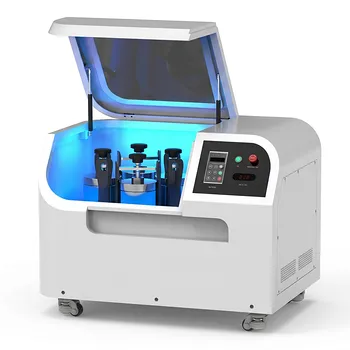
Planetary Ball Mill 12L
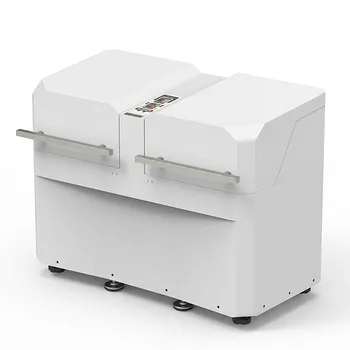
Dual Station Planetary Ball Mill 24L

Heavy Duty Horizontal Planetary Ball Mill for Efficient Industrial Grinding and Sample Preparation

High Energy Hybrid Vibratory Ball Mill for Grinding Mixing and Cell Disruption

Multi-Platform Nanoscale High-Energy Vibratory Ball Mill

Ultra-Low Temperature Cryogenic High-Energy Vibratory Ball Mill

Nano High Energy Vibratory Ball Mill with Heating and Temperature Control
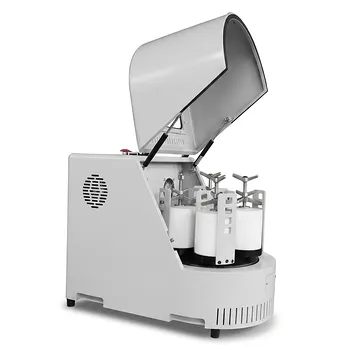
Vertical Semi Circular Planetary Ball Mill for Laboratory Precision Grinding
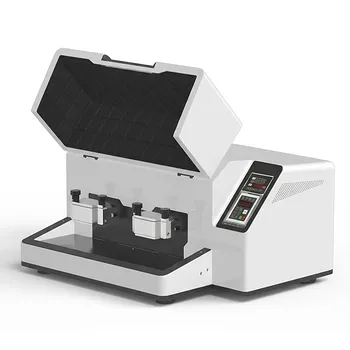
Nanoscale High-Energy Vibratory Ball Mill for Laboratory Sample Preparation, Mechanochemistry, and Mechanical Alloying