What is the role of industrial ball mills in the preparation of reinforcements for aluminum matrix composites? Key Prep Guide
Updated 5 months ago
Industrial ball mills are the primary engine for mechanical refinement and homogenization in the production of aluminum matrix composites (AMCs). By subjecting raw reinforcement materials to high-energy impact, friction, and shear forces, these mills reduce coarse materials to micron or nanometer scales while ensuring they are uniformly dispersed throughout the aluminum matrix powder. This process is essential for creating the structural uniformity required to achieve superior mechanical properties in the final composite.
Core Takeaway: Industrial ball mills transform coarse or agglomerated reinforcements into high-surface-area powders, facilitating a uniform distribution and strong interfacial bonding within the aluminum matrix that is impossible to achieve through simple mixing.
Achieving Particle Refinement and Specific Surface Area
Conversion of Coarse Materials to Micron Scales
Industrial ball mills utilize high-speed operation over extended periods—sometimes ranging from 50 to 60 hours—to grind raw materials like eggshells, graphite, and coconut shell charcoal.
Through powerful mechanical impact and friction, these mills break down the crystalline structure of reinforcements, refining them into micron-sized or even nanometer-sized powders.
Maximizing Specific Surface Area
Reducing the particle size significantly increases the specific surface area of the reinforcement phase.
This increased surface area is critical because it maximizes the contact points between the reinforcement and the aluminum matrix, establishing the physical foundation for structural uniformity.
Homogenization and De-agglomeration of Nano-Reinforcements
Breaking Up Nano-Scale Agglomerates
Reinforcements such as carbon nanotubes, nano-boron carbide (nB4C), and boron nitride nanosheets (BNNP) naturally tend to clump together due to Van der Waals forces.
Planetary and high-energy ball mills use high-speed impact to effectively break up these agglomerations, ensuring that nano-phases do not create weak points in the final material.
Achieving Uniform Dispersion
By utilizing high-energy mechanical mixing, ball mills ensure that reinforcement particles are evenly distributed across the surfaces of the aluminum powder.
In the case of graphene, the mill’s shear forces can even deform aluminum particles into flake shapes, facilitating a more effective "coating" of the reinforcement onto the matrix surface.
Mechanical Alloying and Interfacial Bonding
Embedding Reinforcements through Mechanical Alloying
High-energy ball milling facilitates mechanical alloying, where reinforcement particles are repeatedly extruded and fractured alongside the aluminum powder.
This process actually embeds nano-scale reinforcements directly into the aluminum matrix particles, creating a composite feedstock that is ideal for advanced manufacturing processes like cold spraying.
Enhancing Interfacial Bonding Strength
The refinement of grains and the increase in surface area fostered by the ball mill lead to stronger interfacial bonding between the reinforcement and the matrix.
This robust bond is the primary driver behind the enhanced tensile strength and hardness observed in high-performance aluminum matrix composites.
Understanding the Trade-offs and Pitfalls
The Risk of Material Contamination
Prolonged milling durations can lead to contamination of the composite powder from the wear and tear of the grinding media (the balls) and the mill vial.
It is critical to select grinding media that are either chemically compatible with the matrix or wear-resistant enough to prevent the introduction of unwanted impurities.
Balancing Energy Input and Cold Welding
Excessive milling energy or duration can lead to cold welding, where aluminum particles fuse together into large, unusable chunks rather than refining into a fine powder.
Technicians must often introduce process control agents (PCAs), such as stearic acid, to maintain a balance between the fracturing of particles and the welding of the matrix.
How to Apply Ball Milling to Your Project
Selecting the Right Approach for Your Goal
To maximize the effectiveness of your reinforcement preparation, consider the specific requirements of your reinforcement type and the intended final application.
- If your primary focus is grain refinement of organic reinforcements: Utilize industrial-grade ball mills for long-duration cycles (up to 60 hours) to ensure coarse materials like eggshells or charcoal reach micron dimensions.
- If your primary focus is preventing nano-particle clumping: Use a planetary ball mill with high-speed impact settings to provide the shear forces necessary to de-agglomerate carbon nanotubes or graphene.
- If your primary focus is maximizing mechanical properties: Prioritize high-energy mechanical alloying to embed reinforcements directly into the matrix, which ensures superior interfacial bonding during subsequent sintering or densification.
By precisely controlling the mechanical energy and duration of the milling process, manufacturers can transform raw constituents into high-performance composite materials with predictable and superior physical properties.
Summary Table:
| Key Process | Role in AMC Preparation | Core Benefit |
|---|---|---|
| Particle Refinement | Breaks coarse materials (graphite, eggshells) into micron/nano scales | Increases surface area for maximum matrix contact |
| Homogenization | De-agglomerates nano-phases like CNTs and graphene | Ensures uniform dispersion and eliminates weak points |
| Mechanical Alloying | Embeds reinforcements directly into aluminum powder | Facilitates superior interfacial bonding and strength |
| Grain Refinement | High-energy impact reduces internal grain size | Increases the final composite's hardness and tensile strength |
Elevate Your Material Research with Expert Sample Prep Solutions
Achieving the perfect aluminum matrix composite requires precision at the powder level. At [Brand Name], we provide complete laboratory sample preparation solutions for material science, specializing in advanced powder processing and compaction equipment.
Whether you need high-energy planetary ball mills, jet mills, or disc mills for reinforcement refinement, or robust jaw and roll crushers for initial processing, our technology ensures your materials meet the highest standards of uniformity. To finalize your samples, we offer a full spectrum of compaction tools, including Cold/Warm Isostatic Presses (CIP/WIP), vacuum hot presses, and XRF pellet presses.
Ready to optimize your composite production? Contact us today to find the right equipment for your lab!
References
- Stella Isioma Monye, Lukeman Lawal. Corrosion and Tribology- Interaction Between Wear and Environmental Degradations. DOI: 10.37933/nipes/7.4.2025.si499
Mentioned Products
- Heavy Duty Horizontal Planetary Ball Mill for Efficient Industrial Grinding and Sample Preparation
- Vertical Production Planetary Ball Mill for High Throughput Powder Processing
- Dual Station Planetary Ball Mill 24L
- Single Tank High Energy Vibratory Ball Mill for Laboratory Grinding and Mixing
- High Energy Hybrid Vibratory Ball Mill for Grinding Mixing and Cell Disruption
People Also Ask
- Why grind lime-pozzolan specimens for TG/DTA for 3 mins? Master sample prep for high-precision thermal analysis.
- What is the role of a planetary ball mill in the mechanical activation of ZTA powder? Boost Sintering Performance
- What is the function of a planetary ball mill in wollastonite ceramic prep? Achieve Molecular Homogenization & Reactivity
- How does a planetary ball mill contribute to the homogenization of trace elements? Achieve Sub-Micron Uniformity
- What is the function of a high-performance planetary ball mill in AMZ laminates? Master Ceramic Homogenization.

Tech Team · PowderPreparation
Last updated on May 14, 2026
Related Products
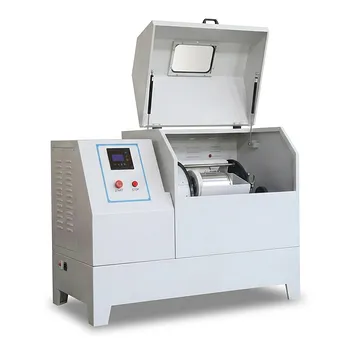
Heavy Duty Horizontal Planetary Ball Mill for Efficient Industrial Grinding and Sample Preparation

Vertical Production Planetary Ball Mill for High Throughput Powder Processing
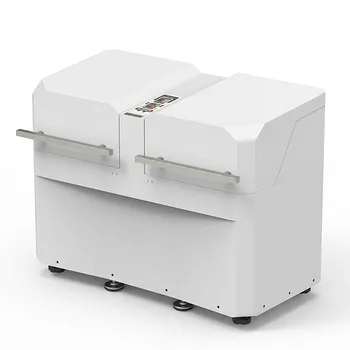
Dual Station Planetary Ball Mill 24L
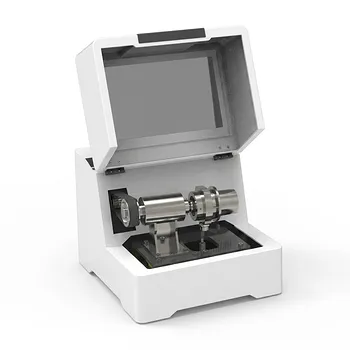
Single Tank High Energy Vibratory Ball Mill for Laboratory Grinding and Mixing

High Energy Hybrid Vibratory Ball Mill for Grinding Mixing and Cell Disruption

Vertical Square Planetary Ball Mill for Laboratory Sample Preparation and Nanoscale Grinding

Vertical Semi Circular Planetary Ball Mill for Laboratory Precision Grinding

High Energy Planetary Ball Mill for Nano Scale Grinding and Mechanical Alloying

High Energy Omnidirectional Planetary Ball Mill 16L

High Energy Omnidirectional Planetary Ball Mill 20L
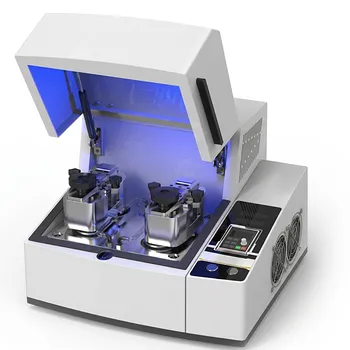
Laboratory Nano High Energy Ball Mill Ultrafine Grinding Mechanical Alloying
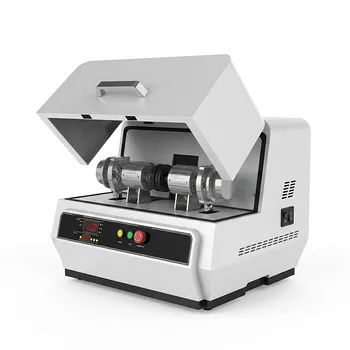
Dual Jar High Energy Vibratory Ball Mill

Heating Temperature Controlled High Energy Vibratory Ball Mill

Nano High Energy Vibratory Ball Mill for Laboratory Sample Preparation

High Energy Laboratory Planetary Ball Mill for Nano Grinding and Colloidal Mixing of Hard and Brittle Materials

8L Planetary Ball Mill for Laboratory Grinding and Sample Preparation

Multi-Platform Nanoscale High-Energy Vibratory Ball Mill
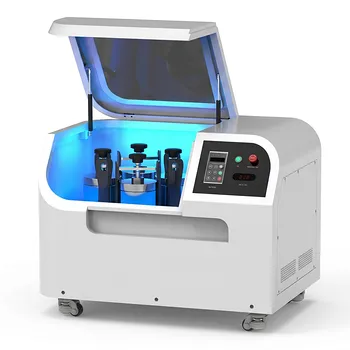
Planetary Ball Mill 12L

Miniature Planetary Ball Mill with Vacuum Grinding and High Efficiency for Laboratory Sample Preparation
