What is the role of a planetary ball mill in the mechanical activation of ZTA powder? Boost Sintering Performance
Updated 4 months ago
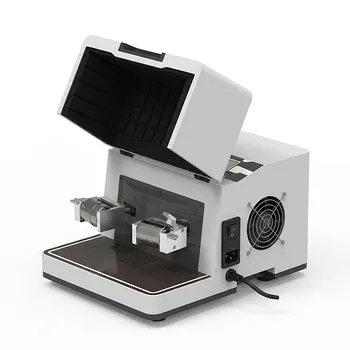
A planetary ball mill serves as the primary engine for high-energy mechanical activation in Zirconia Toughened Alumina (ZTA) powder processing. By applying intense impact and shear forces, it breaks hard agglomerates, refines particles to sub-micron scales, and significantly increases the surface activation energy of the material. These structural changes are vital for accelerating the densification rate and enabling high-performance ceramic properties during the sintering process.
The role of the planetary ball mill is to convert mechanical energy into chemical and structural changes within the ZTA powder. This process lowers the energy barrier for sintering, ensuring a dense, uniform microstructure that is otherwise difficult to achieve with standard mixing.
The Mechanics of High-Energy Activation
High-Frequency Impact and Shearing
The planetary ball mill operates through simultaneous revolution and rotation, generating high-energy impact and shear forces. These forces are applied to the alumina and zirconia particles at high frequencies, forcing mechanical deformation and particle fracture.
Multi-Stage Processing
Effective mechanical activation often requires a two-stage milling process. In the first stage, co-precipitated primary powder is typically milled with a solvent like ethanol to break initial bonds, followed by a second, shorter milling period to finalize the activation before sintering.
Controlling Rotational Speed
The intensity of the activation is governed by the rotational speed, often optimized around 160 rpm for specific composite blends. This speed ensures enough kinetic energy is transferred to the powder to achieve micro- or nanoscale uniform dispersion without excessive heat buildup.
Transforming Powder Properties
Refining Particle Size to the Sub-Micron Level
One of the most critical roles of the mill is reducing powder size from the micron level to the sub-micron level. It is common to achieve an average particle size of approximately 0.34 μm, which drastically increases the total number of particle-to-particle contacts.
Breaking Agglomerates and Increasing Specific Surface Area
During co-precipitation, ZTA powders often form hard agglomerates that inhibit uniform densification. The planetary ball mill utilizes physical grinding to eliminate these clusters, significantly increasing the specific surface area available for chemical reaction.
Introduction of Lattice Stress and Surface Energy
Beyond simple size reduction, high-energy milling introduces lattice stress into the crystal structure. This increases the internal stored energy of the powder, making the atoms more mobile and reactive during the subsequent thermal treatment.
Impact on Sintering and Microstructure
Promoting Low-Temperature Densification
By increasing the surface activation energy, the planetary ball mill allows for low-temperature sintering, sometimes as low as 1050 °C. This is a significant advantage for maintaining fine grain structures and reducing the energy costs of manufacturing.
Achieving Uniform Homogenization
The mill ensures a microscopic uniform dispersion of zirconia particles within the alumina matrix. This high level of homogenization is essential for creating an interconnected ceramic network that can effectively transfer loads and resist fracturing.
Inhibiting Abnormal Grain Growth
A well-milled, highly dispersed powder helps inhibit abnormal grain growth of alumina during sintering. By maintaining a fine-grained, reinforced microstructure, the resulting ZTA ceramic exhibits superior thermal shock resistance and mechanical strength.
Understanding the Trade-offs
Contamination and Media Wear
The high-energy nature of planetary milling inevitably leads to wear of the grinding media and the mill jar. If the balls and lining are not made of high-purity alumina or zirconia, impurities can be introduced into the ZTA powder, potentially degrading its final mechanical properties.
Energy Intensity and Heat Management
The process is highly energy-intensive and generates significant frictional heat. Excessive heat during long milling cycles can lead to unwanted phase transformations or the re-agglomeration of fine particles if not managed through cooling cycles or wet milling techniques.
How to Apply This to Your Project
Implementation Guidelines
Successful mechanical activation requires balancing the duration of milling with the desired reactivity of the powder.
- If your primary focus is maximum densification at low temperatures: Prioritize a two-stage milling process with high-speed rotation to maximize surface energy and lattice stress.
- If your primary focus is preventing material contamination: Use high-purity grinding media matching your powder composition and utilize wet milling to reduce the wear rate of the equipment.
- If your primary focus is structural uniformity in large parts: Focus on achieving a sub-micron average particle size (approx. 0.3-0.4 μm) to ensure consistent dispersion and prevent abnormal grain growth.
Properly calibrated planetary milling is the foundation of high-performance ZTA ceramics, bridging the gap between raw chemical synthesis and a fully densified, high-strength material.
Summary Table:
| Feature | Mechanical Impact on ZTA Powder | Benefit to Final Ceramic |
|---|---|---|
| Particle Size | Refines to sub-micron level (~0.34 μm) | Increases particle-to-particle contact |
| Agglomeration | Breaks hard clusters from co-precipitation | Ensures uniform powder densification |
| Surface Energy | Increases specific surface area & lattice stress | Enables lower sintering temperatures (1050°C) |
| Dispersion | Microscopic uniform zirconia distribution | Inhibits abnormal alumina grain growth |
Elevate Your Advanced Ceramic Processing with Precision Equipment
Achieving high-performance Zirconia Toughened Alumina (ZTA) requires more than just mixing—it demands precise mechanical activation. [Company Name] provides complete laboratory sample preparation solutions tailored for material science research. We specialize in high-energy powder processing and compaction equipment designed to bridge the gap between raw synthesis and high-strength final materials.
Our extensive product lines include:
- Advanced Milling: Planetary ball mills, jet mills, cryogenic grinders, and rotor mills for sub-micron particle refinement.
- Sieving & Mixing: Vibratory sieve shakers, air-jet sieves, and high-efficiency powder/defoaming mixers.
- Compaction Solutions: A full spectrum of hydraulic presses, including Cold/Warm Isostatic Presses (CIP/WIP), standard lab presses, and vacuum hot presses.
Optimize your microstructure and enhance material properties with our specialized tools. Contact us today to find the right solution for your lab!
References
- Т. О. Оболкина, В. С. Комлев. Adding MnO to Improve the Characteristics of Zirconia-Toughened Alumina Ceramic Parts Made Using the Digital Light Processing Method. DOI: 10.3390/min15010010
Mentioned Products
- Vertical Semi Circular Planetary Ball Mill for Laboratory Precision Grinding
- High Energy Planetary Ball Mill for Nano Scale Grinding and Mechanical Alloying
- Heavy Duty Horizontal Planetary Ball Mill for Efficient Industrial Grinding and Sample Preparation
- Vertical Production Planetary Ball Mill for High Throughput Powder Processing
- 360° Rotating Omnidirectional Laboratory Planetary Ball Mill for Homogeneous Ultra-Fine Grinding and Mixing
People Also Ask
- What role does a planetary ball mill play in the synthesis of Li6PS5Cl (LPSCl)? Unlock High Ionic Conductivity
- Why is a planetary ball mill essential for SiBCN-rGO wet-spinning? Achieve Superior Dispersion and Spinnability
- Why is an intermittent grinding process required for perovskites in a planetary ball mill? Ensure Stability & Purity
- Why is a planetary ball mill required for PET micronization? Ensure Accurate Chemical Analysis of Reprocessed PET
- How does mechanized planetary ball milling compare to manual agate grinding? Optimize sulfide standard material precision.

Tech Team · PowderPreparation
Last updated on Jun 03, 2026
Related Products
Vertical Semi Circular Planetary Ball Mill for Laboratory Precision Grinding
High Energy Planetary Ball Mill for Nano Scale Grinding and Mechanical Alloying
Heavy Duty Horizontal Planetary Ball Mill for Efficient Industrial Grinding and Sample Preparation
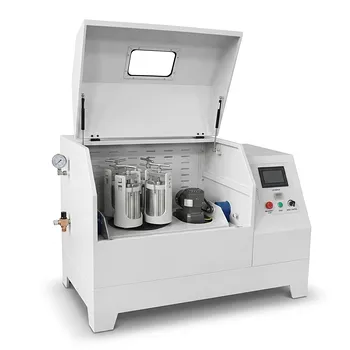
Vertical Production Planetary Ball Mill for High Throughput Powder Processing
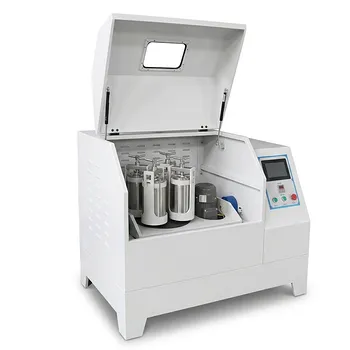
360° Rotating Omnidirectional Laboratory Planetary Ball Mill for Homogeneous Ultra-Fine Grinding and Mixing
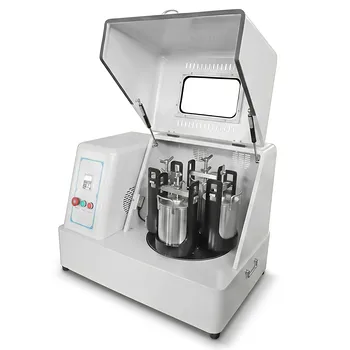
Vertical Square Planetary Ball Mill for Laboratory Sample Preparation and Nanoscale Grinding
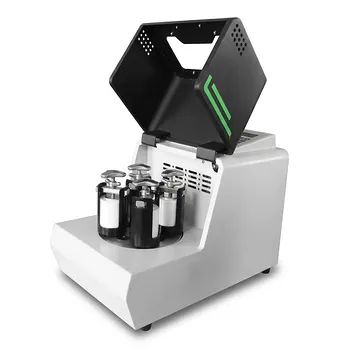
Miniature Planetary Ball Mill with Vacuum Grinding and High Efficiency for Laboratory Sample Preparation
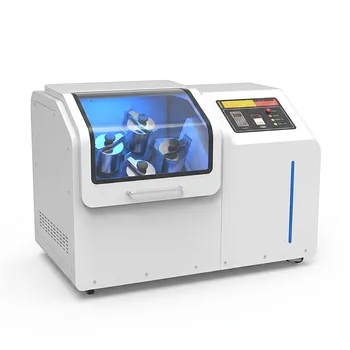
High Energy Omnidirectional Planetary Ball Mill 16L
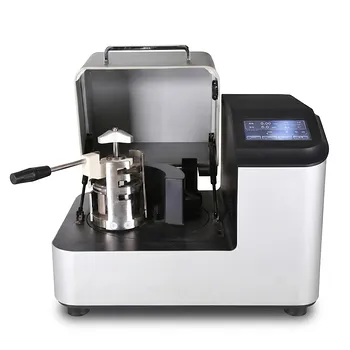
High Energy Laboratory Planetary Ball Mill for Nano Grinding and Material Science Sample Preparation
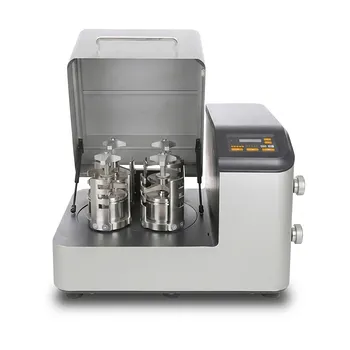
High Energy Planetary Ball Mill for Nano Scale Grinding and Colloidal Mixing in Material Science Research
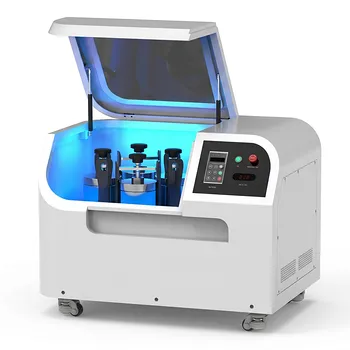
Planetary Ball Mill 12L
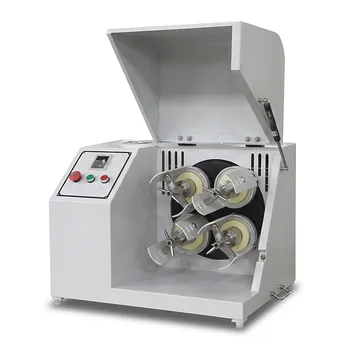
Horizontal Light Duty Planetary Ball Mill for Laboratory Sample Preparation
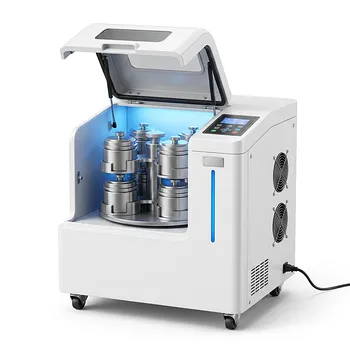
High Energy Omnidirectional Planetary Ball Mill 20L
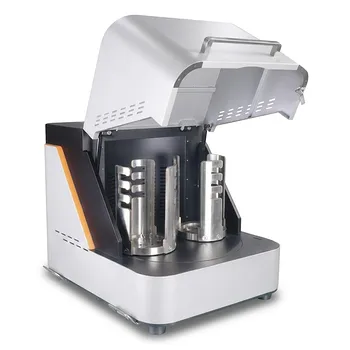
High Energy Laboratory Planetary Ball Mill for Nano Grinding and Colloidal Mixing of Hard and Brittle Materials
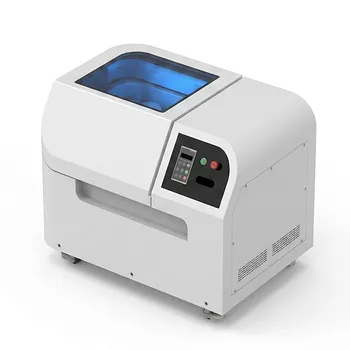
8L Planetary Ball Mill for Laboratory Grinding and Sample Preparation
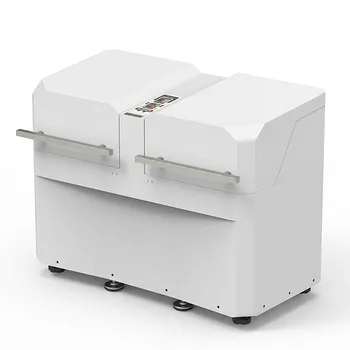
Dual Station Planetary Ball Mill 24L
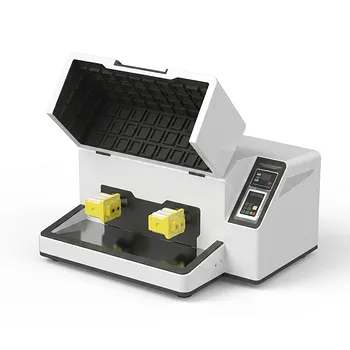
Multi-Platform Nanoscale High-Energy Vibratory Ball Mill
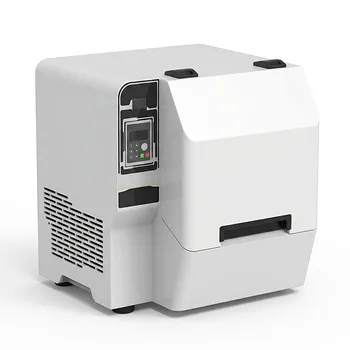
Nano High Energy Vibratory Ball Mill for Laboratory Sample Preparation
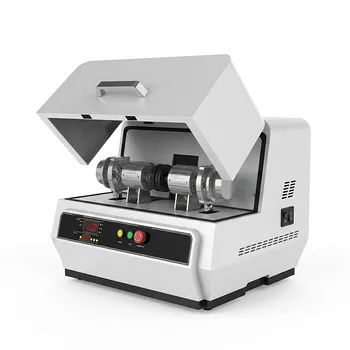
Dual Jar High Energy Vibratory Ball Mill