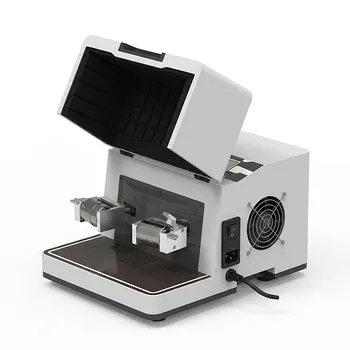
What is the primary function of a planetary ball mill in the treatment of Halloysite-Rich Soils? Boost Mineral Activity
Updated 5 months ago
The primary function of a planetary ball mill in treating halloysite-rich soils is to perform high-energy mechanochemical activation. Through intensive dry grinding, the mill applies mechanical force to physically modify soil minerals, effectively breaking down their crystal lattice structures. This process increases the specific surface area and induces mineral phase amorphization, which significantly enhances the soil's chemical reactivity and facilitates the release of trapped nutrients like potassium.
Core Takeaway: A planetary ball mill acts as a catalyst for chemical change by using mechanical energy to destabilize the mineral matrix of the soil. This transformation converts inert mineral structures into highly reactive materials, making locked nutrients accessible for environmental or agricultural applications.
The Mechanism of Mechanochemical Activation
Breaking the Crystal Lattice
The planetary ball mill utilizes high-speed rotation to generate intense centrifugal and impact forces. These forces strike the halloysite minerals, providing enough energy to rupture the crystalline bonds that hold the mineral matrix together. As the lattice breaks, the internal structure of the soil is fundamentally altered at a molecular level.
Inducing Phase Amorphization
As the grinding continues, the minerals undergo amorphization, transitioning from a highly ordered crystalline state to a disordered, non-crystalline state. This loss of structural order is a key component of mechanochemical activation. In this amorphous state, the minerals are far less stable and significantly more prone to chemical reactions.
Enhancing Specific Surface Area
By pulverizing the soil into an extremely fine and uniform powder, the mill exponentially increases the specific surface area of the particles. A higher surface area provides more contact points for chemical agents or biological processes. This eliminates particle size effects and ensures that the soil reacts consistently across the entire sample.
Impact on Nutrient and Mineral Availability
Releasing Trapped Nutrients
Many halloysite-rich soils contain essential nutrients, such as potassium, that are physically trapped within the mineral's layered matrix. The mechanical stress generated by the mill depolymerizes these structures, opening the mineral "cages." This allows previously inaccessible elements to be released into the surrounding environment.
Exposing Active Sites
In halloysite nanotubes specifically, the milling process can cause exfoliation or flattening of the tubes. This action increases surface defects and porosity, which exposes a higher density of active sites. These sites are critical for processes like carbon dioxide (CO2) adsorption or the complexation of heavy metals.
Achieving Microscopic Homogeneity
The planetary motion ensures that the energy is distributed evenly, leading to a highly uniform distribution of components. Whether the soil is being prepared for analysis or mixed with other raw materials, this homogeneity is vital. It ensures that subsequent reactions, such as solid-state synthesis or sintering, occur predictably and completely.
Understanding the Trade-offs
Thermal Effects and Energy Consumption
High-energy milling generates significant heat within the grinding jars, which can sometimes lead to unwanted phase changes if not monitored. The process is also energy-intensive, requiring a balance between the duration of milling and the desired level of activation. Over-milling can lead to excessive particle agglomeration, where fine particles begin to fuse back together.
Equipment Wear and Contamination
The intense mechanical forces required to break mineral lattices also cause wear and tear on the grinding media (balls) and jars. This can introduce trace amounts of materials from the grinding media into the soil sample. Users must carefully select materials like zirconia or tungsten carbide to minimize contamination in sensitive analytical applications.
How to Apply This to Your Project
Making the Right Choice for Your Goal
To maximize the effectiveness of a planetary ball mill, the operational parameters must align with your specific objective.
- If your primary focus is Nutrient Extraction: Utilize dry grinding at high speeds to maximize lattice breakage and amorphization, ensuring the highest possible release of trapped elements.
- If your primary focus is Analytical Precision (XRF/XRD): Focus on achieving a consistent particle size distribution to eliminate "shadowing" effects and ensure the representativeness of the sample.
- If your primary focus is Surface Adsorption: Prioritize shorter milling cycles that favor the creation of surface defects and porosity without completely destroying the nanotubes' beneficial physical structure.
- If your primary focus is Composite Synthesis: Use the mill for wet mixing to ensure microscopic homogeneity and prevent the agglomeration of particles before the sintering process.
By strategically applying mechanical energy, you can transform halloysite-rich soil from a stable mineral deposit into a dynamic, reactive resource tailored to your technical requirements.
Summary Table:
| Key Process | Mechanism | Expected Outcome |
|---|---|---|
| Mechanochemical Activation | High-energy impact and centrifugal forces | Rupture of crystalline bonds and lattice destruction |
| Phase Amorphization | Transition from ordered to disordered state | Increased chemical reactivity and instability |
| Surface Area Expansion | Pulverization into ultra-fine powder | Enhanced contact points and removal of size effects |
| Nutrient Mobilization | Depolymerization of mineral structures | Release of trapped elements like Potassium (K) |
| Homogenization | Even distribution of energy and components | Superior microscopic uniformity for synthesis |
Optimize Your Material Research with Advanced Sample Prep Solutions
Are you looking to unlock the full potential of your mineral samples or achieve superior microscopic homogeneity? At [Your Brand Name], we provide complete laboratory sample preparation solutions specifically designed for material science and soil research. We specialize in high-performance powder processing and compaction equipment that ensures your research is backed by precision and reliability.
Our extensive product range includes:
- Advanced Milling: High-energy planetary ball mills, jet mills, liquid nitrogen cryogenic grinders, and rotor mills for effective mechanochemical activation.
- Crushing & Sizing: Durable jaw/roll crushers and vibratory/air-jet sieve shakers with a full range of test sieves.
- Mixing Excellence: High-efficiency powder mixers and specialized defoaming mixers.
- Precision Compaction: A full spectrum of hydraulic presses, including Cold/Warm Isostatic Presses (CIP/WIP), standard lab presses, XRF pellet presses, and vacuum hot presses.
Whether you are focusing on nutrient extraction, surface adsorption, or composite synthesis, our equipment is engineered to provide the exact mechanical energy your project requires. Contact our technical experts today to find the perfect solution for your laboratory needs!
References
- Ahmed Said, Zaïnati Ibrahim. Effects of Soil Treatments and Grinding on Nutrient Availability in Halloysite-Rich Soils from Djando Plateau, Mohéli. DOI: 10.4236/ojss.2025.154013
Mentioned Products
- Vertical Semi Circular Planetary Ball Mill for Laboratory Precision Grinding
- High Energy Planetary Ball Mill for Nano Scale Grinding and Mechanical Alloying
- Heavy Duty Horizontal Planetary Ball Mill for Efficient Industrial Grinding and Sample Preparation
- Vertical Production Planetary Ball Mill for High Throughput Powder Processing
- 360° Rotating Omnidirectional Laboratory Planetary Ball Mill for Homogeneous Ultra-Fine Grinding and Mixing
People Also Ask
- What role does a planetary ball mill play in the synthesis of Li6PS5Cl (LPSCl)? Unlock High Ionic Conductivity
- Why is a planetary ball mill essential for SiBCN-rGO wet-spinning? Achieve Superior Dispersion and Spinnability
- Why is an intermittent grinding process required for perovskites in a planetary ball mill? Ensure Stability & Purity
- Why is a planetary ball mill required for PET micronization? Ensure Accurate Chemical Analysis of Reprocessed PET
- How does mechanized planetary ball milling compare to manual agate grinding? Optimize sulfide standard material precision.

Tech Team · PowderPreparation
Last updated on May 14, 2026
Related Products
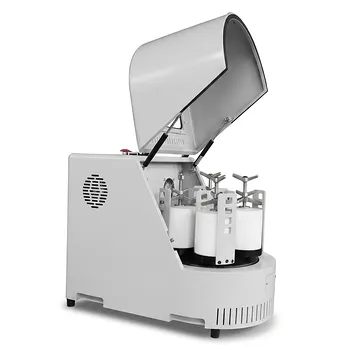
Vertical Semi Circular Planetary Ball Mill for Laboratory Precision Grinding
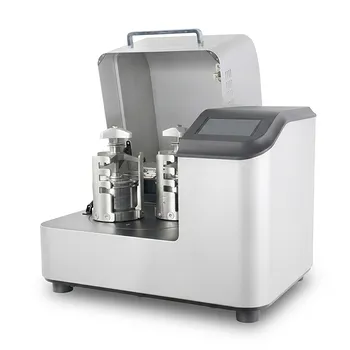
High Energy Planetary Ball Mill for Nano Scale Grinding and Mechanical Alloying
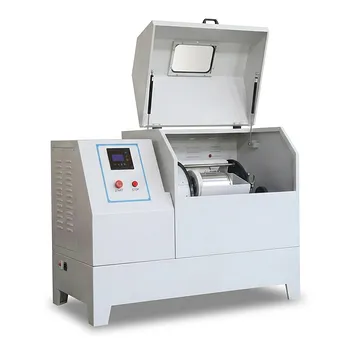
Heavy Duty Horizontal Planetary Ball Mill for Efficient Industrial Grinding and Sample Preparation
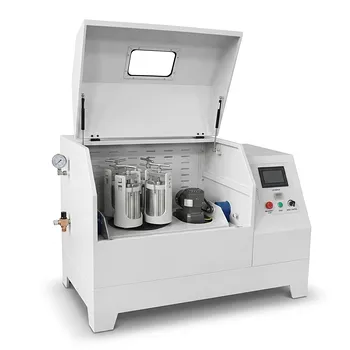
Vertical Production Planetary Ball Mill for High Throughput Powder Processing
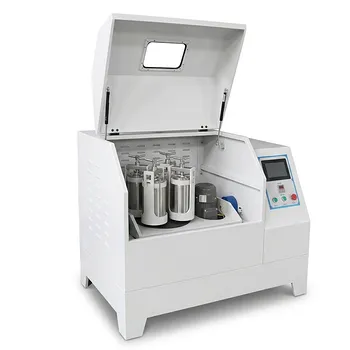
360° Rotating Omnidirectional Laboratory Planetary Ball Mill for Homogeneous Ultra-Fine Grinding and Mixing
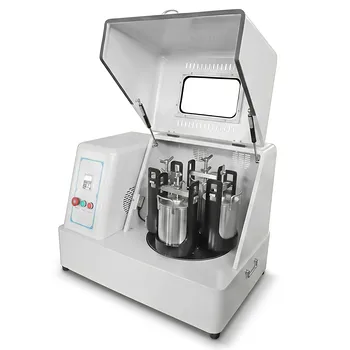
Vertical Square Planetary Ball Mill for Laboratory Sample Preparation and Nanoscale Grinding
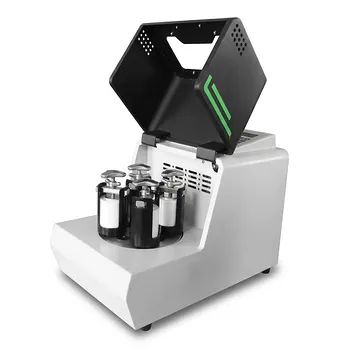
Miniature Planetary Ball Mill with Vacuum Grinding and High Efficiency for Laboratory Sample Preparation
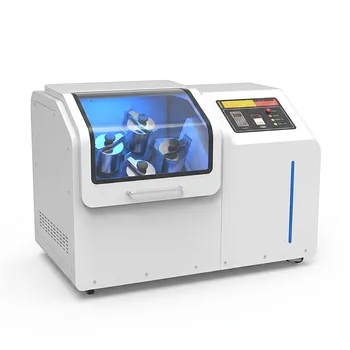
High Energy Omnidirectional Planetary Ball Mill 16L
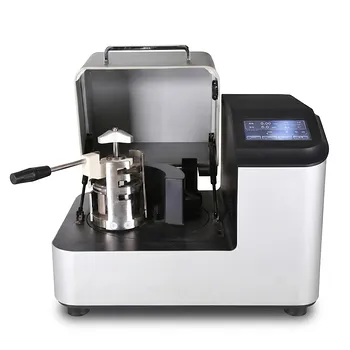
High Energy Laboratory Planetary Ball Mill for Nano Grinding and Material Science Sample Preparation
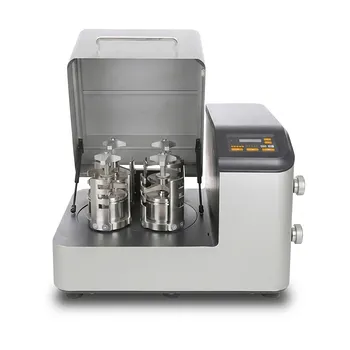
High Energy Planetary Ball Mill for Nano Scale Grinding and Colloidal Mixing in Material Science Research
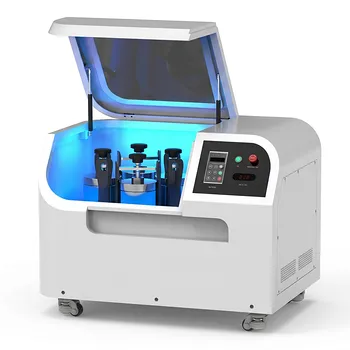
Planetary Ball Mill 12L
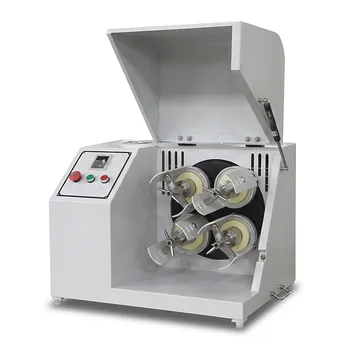
Horizontal Light Duty Planetary Ball Mill for Laboratory Sample Preparation
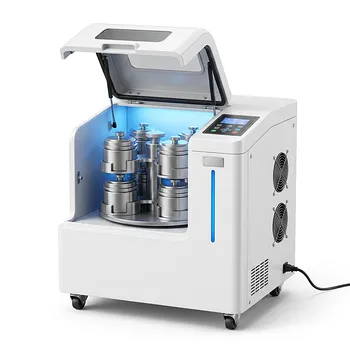
High Energy Omnidirectional Planetary Ball Mill 20L
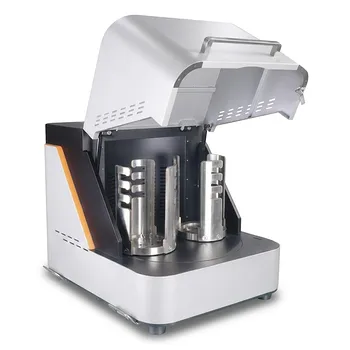
High Energy Laboratory Planetary Ball Mill for Nano Grinding and Colloidal Mixing of Hard and Brittle Materials
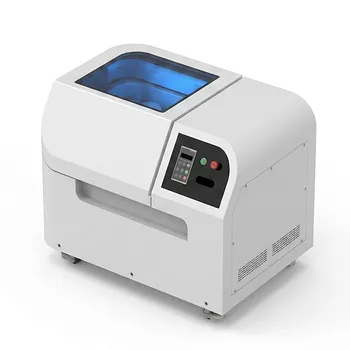
8L Planetary Ball Mill for Laboratory Grinding and Sample Preparation
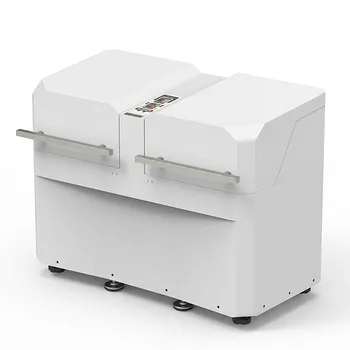
Dual Station Planetary Ball Mill 24L
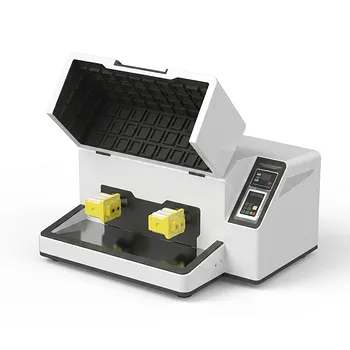
Multi-Platform Nanoscale High-Energy Vibratory Ball Mill

Nano High Energy Vibratory Ball Mill for Laboratory Sample Preparation
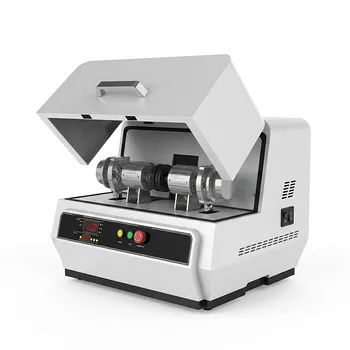
Dual Jar High Energy Vibratory Ball Mill