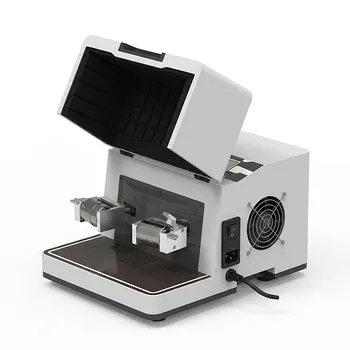
How does a planetary ball mill contribute to the homogenization of trace elements? Achieve Sub-Micron Uniformity
Updated 4 months ago
High-energy mechanical processing is the engine of sample uniformity. A planetary ball mill achieves the homogenization of trace elements in pyrrhotite by utilizing intense impact and shear forces generated through high-speed rotation. This process reduces the powder to micron or sub-micron scales and disintegrates particle agglomerates, ensuring that dopants are distributed with high spatial uniformity throughout the sulfide matrix.
The core contribution of a planetary ball mill is the conversion of mechanical energy into chemical and structural uniformity. By eliminating agglomerates and refining particle size, it creates a matrix suitable for high-precision microanalytical techniques like LA-ICP-MS.
The Mechanics of High-Energy Homogenization
Impact and Shear Force Generation
The planetary motion of the mill creates powerful centrifugal forces that drive grinding media against the pyrrhotite powder. These high-energy impacts physically crush the sulfide matrix and the trace element dopants simultaneously.
Shear forces act to smear and redistribute the materials at a granular level. This dual action ensures that trace elements are not just mixed, but integrated into the powder structure.
Elimination of Particle Agglomeration
Natural and synthetic powders often form clusters, or agglomerates, which can house "hot spots" of concentrated trace elements. The high-frequency motion of the ball mill delivers enough energy to break these bonds.
Once these clusters are destroyed, the individual components can achieve a uniform spatial distribution. This is critical for preventing the "nugget effect," where small-scale analysis yields wildly inconsistent results.
Micron-Scale Particle Refinement
The mill reduces the particle size of the pyrrhotite to the micron or sub-micron level. Smaller particles possess a higher specific surface area, which facilitates better contact between the matrix and the trace elements.
This refinement provides the optimal kinetic conditions for a stable mixture. In the context of reference materials, this fine granularity ensures that even a microscopic laser spot encounters a representative sample of the total composition.
The Role of Mechanical Alloying
Achieving Molecular-Level Distribution
While simple mixing combines components, the mechanical energy in a planetary mill can lead to mechanical alloying. This involves the repeated fracturing and re-welding of particles.
This process forces trace elements into the lattice or onto the surface of the pyrrhotite at a molecular level. The result is a chemical homogeneity that traditional blending methods cannot replicate.
Enhancing Surface Activity
The reduction in particle size significantly increases the surface activity of the powder. This high surface energy helps "lock" trace elements in place, preventing segregation during storage or handling.
For multi-component systems, this ensures that additives are uniformly coated onto the host particles. This creates a continuous and predictable matrix for analytical calibration.
Understanding the Trade-offs
Risk of Material Contamination
The primary downside of high-energy milling is the potential for contamination from grinding media. High-speed impacts can abrade the milling jars and balls, introducing elements like Tungsten, Cobalt, or Chromium into the pyrrhotite.
Thermal Sensitivity and Phase Changes
Planetary milling generates significant frictional heat during long cycles. Pyrrhotite is sensitive to oxidation and phase transitions; excessive heat can alter the mineralogy or lead to the loss of volatile trace elements.
Energy Consumption vs. Yield
Achieving sub-micron homogeneity requires high rotation speeds and extended processing times. This increases operational costs and may lead to material loss through "caking" on the walls of the milling vessel.
How to Apply This to Your Project
Optimizing Your Homogenization Strategy
To produce high-quality pyrrhotite reference materials, the milling parameters must be carefully balanced against the analytical requirements of the end-user.
- If your primary focus is spatial uniformity for microanalysis: Use high rotation speeds (above 400 rpm) to ensure sub-micron particle refinement and eliminate trace element clustering.
- If your primary focus is maintaining chemical purity: Select grinding media, such as agate or specialized ceramics, that do not contain the specific trace elements you are trying to measure.
- If your primary focus is preserving mineral phase: Implement "pause" cycles or external cooling to prevent the mill from reaching temperatures that could trigger pyrrhotite oxidation.
The planetary ball mill remains the definitive tool for transforming raw powders into the highly precise, spatially uniform standards required for modern geochemistry.
Summary Table:
| Homogenization Mechanism | Action Description | Analytical Benefit |
|---|---|---|
| High-Energy Impact | Mechanical crushing via grinding media | Integrates dopants into the sulfide matrix |
| De-agglomeration | Breaking particle cluster bonds | Eliminates "hot spots" and the nugget effect |
| Particle Refinement | Reduction to micron/sub-micron scale | Optimizes spatial distribution for microanalysis |
| Mechanical Alloying | Repeated fracturing and re-welding | Ensures molecular-level chemical consistency |
Elevate Your Sample Precision with Our Expertise
Achieving molecular-level homogeneity in reference materials requires more than just mixing—it requires high-performance engineering. As specialists in material science sample preparation, we provide complete solutions for powder processing and compaction. Our extensive product line includes high-energy planetary ball mills, jet mills, and cryogenic grinders designed to eliminate agglomeration and ensure spatial uniformity.
Beyond milling, we offer a full spectrum of laboratory equipment, from Cold/Warm Isostatic Presses (CIP/WIP) and vacuum hot presses to air-jet sieve shakers and defoaming mixers. Whether you are refining geochemical standards or developing advanced ceramics, our equipment delivers the precision your research demands.
Ready to optimize your powder processing workflow? Contact us today for a tailored solution!
References
- К. А. Кох. Contribution of Planetary Ball Milling to the Homogeneity of Pyrrhotite Reference Material for LA-ICP-MS. DOI: 10.46770/as.2025.145
Mentioned Products
- Vertical Semi Circular Planetary Ball Mill for Laboratory Precision Grinding
- High Energy Planetary Ball Mill for Nano Scale Grinding and Mechanical Alloying
- Heavy Duty Horizontal Planetary Ball Mill for Efficient Industrial Grinding and Sample Preparation
- Vertical Production Planetary Ball Mill for High Throughput Powder Processing
- 360° Rotating Omnidirectional Laboratory Planetary Ball Mill for Homogeneous Ultra-Fine Grinding and Mixing
People Also Ask
- What role does a planetary ball mill play in the synthesis of Li6PS5Cl (LPSCl)? Unlock High Ionic Conductivity
- Why is a planetary ball mill essential for SiBCN-rGO wet-spinning? Achieve Superior Dispersion and Spinnability
- Why is an intermittent grinding process required for perovskites in a planetary ball mill? Ensure Stability & Purity
- Why is a planetary ball mill required for PET micronization? Ensure Accurate Chemical Analysis of Reprocessed PET
- How does mechanized planetary ball milling compare to manual agate grinding? Optimize sulfide standard material precision.

Tech Team · PowderPreparation
Last updated on Jun 03, 2026
Related Products
Vertical Semi Circular Planetary Ball Mill for Laboratory Precision Grinding

High Energy Planetary Ball Mill for Nano Scale Grinding and Mechanical Alloying

Heavy Duty Horizontal Planetary Ball Mill for Efficient Industrial Grinding and Sample Preparation

Vertical Production Planetary Ball Mill for High Throughput Powder Processing

360° Rotating Omnidirectional Laboratory Planetary Ball Mill for Homogeneous Ultra-Fine Grinding and Mixing

Vertical Square Planetary Ball Mill for Laboratory Sample Preparation and Nanoscale Grinding

Miniature Planetary Ball Mill with Vacuum Grinding and High Efficiency for Laboratory Sample Preparation

High Energy Omnidirectional Planetary Ball Mill 16L

High Energy Laboratory Planetary Ball Mill for Nano Grinding and Material Science Sample Preparation
Planetary Ball Mill 12L
High Energy Planetary Ball Mill for Nano Scale Grinding and Colloidal Mixing in Material Science Research
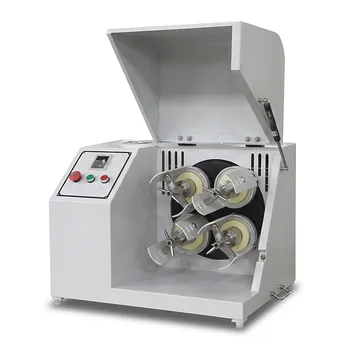
Horizontal Light Duty Planetary Ball Mill for Laboratory Sample Preparation

High Energy Omnidirectional Planetary Ball Mill 20L
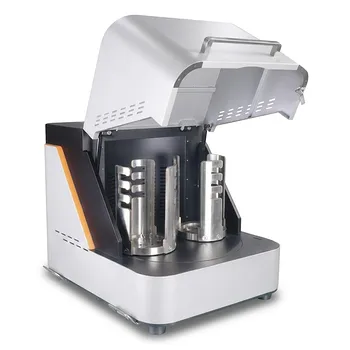
High Energy Laboratory Planetary Ball Mill for Nano Grinding and Colloidal Mixing of Hard and Brittle Materials

8L Planetary Ball Mill for Laboratory Grinding and Sample Preparation
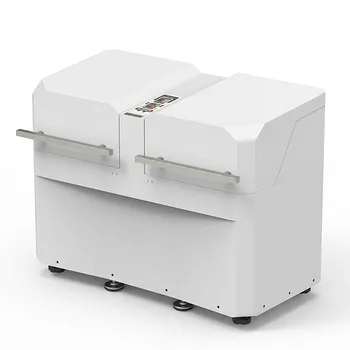
Dual Station Planetary Ball Mill 24L
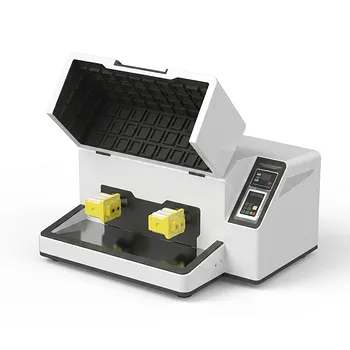
Multi-Platform Nanoscale High-Energy Vibratory Ball Mill

Nano High Energy Vibratory Ball Mill for Laboratory Sample Preparation
Dual Jar High Energy Vibratory Ball Mill