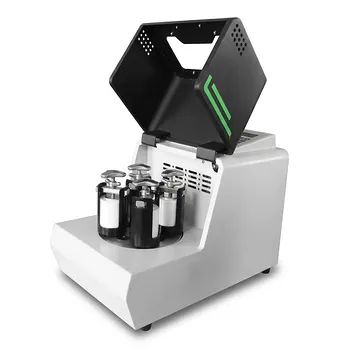
What is the role of a high-energy ball mill in SSiC preparation? Enhance Homogeneity & Reactivity
Updated 4 months ago
The high-energy ball mill is the foundational tool for achieving the microscopic homogeneity and high surface reactivity required for successful pressureless sintering. In the preparation of SSiC, these mills use intense mechanical forces to break down powder agglomerates and distribute trace additives like boron carbide and phenolic resin at a molecular level within the silicon carbide matrix. This precise mixing and particle refinement create the necessary kinetic conditions for the material to densify without the application of external pressure.
The core role of a high-energy ball mill in SSiC production is to transform raw powders into a highly reactive, uniform precursor by simultaneously reducing particle size and ensuring the atomic-level dispersion of sintering aids.
Facilitating Molecular-Level Homogenization
Dispersion of Critical Sintering Aids
Pressureless solid-state sintering relies on trace amounts of boron and carbon to facilitate densification. The high-energy ball mill uses impact and shear forces to ensure these additives reach a molecular-level distribution within the ethanol medium.
Breaking Particle Agglomerates
Raw silicon carbide powders often form clusters or agglomerates that hinder uniform packing. The high-speed operation of the mill effectively disintegrates these clusters, establishing a consistent foundation for grain size control during the high-temperature sintering stage.
Ensuring Chemical Uniformity
By mixing the SiC powder with binders, dispersants, and lubricants, the mill creates a slurry with a highly uniform chemical composition. This uniformity is critical for subsequent processes like spray granulation, which require a stable and homogenous feed material.
Optimizing Particle Morphology and Reactivity
Refinement of Primary Powders
High-energy milling can significantly reduce particle size, often refining powders from tens of micrometers down to the sub-micron or nanometer range. This reduction is achieved through repeated compression and fracturing of the particles during high-speed rotation.
Increasing Specific Surface Area
As particle size decreases, the specific surface area increases dramatically. This higher surface energy acts as the primary driving force for solid-state diffusion, allowing the ceramic to densify at lower temperatures or more efficiently during pressureless sintering.
Controlling Packing Density
By precisely adjusting the milling parameters and the ratio of different particle sizes, operators can optimize the microscopic packing density. This dense arrangement reduces initial porosity and is a fundamental step for achieving high thermal conductivity in the final ceramic part.
Creating Favorable Sintering Kinetics
Promotion of Oxide Film Reduction
Silicon carbide particles are often coated with a thin layer of silicon dioxide ($SiO_2$), which inhibits sintering. The thorough mixing of carbon black via ball milling provides the necessary contact points for the reduction reaction that removes these oxide films during heating.
Mechanical Activation of Powders
The high-energy impact does more than just break particles; it introduces structural defects and lattice distortions. This mechanical activation increases the chemical reactivity of the powder, facilitating faster phase formation and bonding between grains.
Establishing Solid-Solid Interfacial Contact
Precise control of the mill’s rotational speed allows for the creation of specific particle size distributions. This ensures maximum interfacial contact between the SiC matrix and additives, which is essential for the solid-state reaction synthesis used in advanced SSiC ceramics.
Understanding the Trade-offs and Pitfalls
The Risk of Media Contamination
Extended milling times increase the wear on the grinding balls and the mill lining. This can introduce impurities into the high-purity SiC powder, which may negatively impact the mechanical properties or thermal conductivity of the finished ceramic.
Over-milling and Particle Re-agglomeration
If the milling process continues for too long, the extremely fine particles may begin to re-agglomerate due to van der Waals forces. This results in diminishing returns, where the powder becomes harder to process and loses its reactivity benefits.
Thermal Management During Milling
The high-energy nature of these mills generates significant heat within the milling jar. Without proper cooling or the use of an appropriate liquid medium like ethanol, this heat can cause unwanted chemical reactions or degradation of the phenolic resin and binders.
Applying Milling Strategies to Your Production Goals
To achieve the best results in SSiC preparation, the milling process must be tailored to the specific requirements of the final application.
- If your primary focus is Maximum Hardness and Strength: Prioritize refining the powder to the sub-micron level (e.g., ~400 nm) to increase specific surface area and promote total densification.
- If your primary focus is High Thermal Conductivity: Focus on optimizing the particle size distribution to achieve the highest possible green body packing density while minimizing milling time to reduce impurity contamination.
- If your primary focus is Precision Grain Size Control: Use moderate milling speeds to ensure molecular dispersion of boron additives, which act as grain growth inhibitors during the sintering process.
The high-energy ball mill is not merely a mixing tool, but a sophisticated reactor that dictates the microstructural evolution and ultimate performance of SSiC ceramics.
Summary Table:
| Key Role | Milling Mechanism | Impact on SSiC Quality |
|---|---|---|
| Homogenization | Atomic dispersion of Boron/Carbon aids | Ensures uniform material density |
| Size Reduction | Sub-micron particle refinement | Increases surface energy & reactivity |
| De-agglomeration | Breaking particle clusters via impact | Improves green body packing density |
| Activation | Introducing lattice distortions/defects | Accelerates solid-state diffusion |
| Oxide Removal | Intimate contact for $SiO_2$ reduction | Facilitates pressureless sintering |
Optimize Your Advanced Ceramic Production with Precision Equipment
Achieving the perfect microstructural evolution for SSiC ceramics requires more than just raw materials—it demands precision at the microscopic level. We provide complete laboratory sample preparation solutions for material science, specializing in high-performance powder processing and compaction equipment.
Our extensive line supports your entire workflow:
- Powder Processing: High-energy planetary ball mills, jet mills, rotor mills, and crushers (jaw/roll) for achieving sub-micron particle sizes.
- Sieving & Mixing: Vibratory sieve shakers and powder mixers (including defoaming mixers) to ensure chemical uniformity.
- Advanced Compaction: A full spectrum of hydraulic presses, including Cold/Warm Isostatic Presses (CIP/WIP), standard lab presses, and vacuum hot presses for high-density green bodies.
Whether you are refining sintering aids or seeking maximum thermal conductivity, our equipment is designed to meet the rigorous demands of advanced material research.
Contact us today to find the right solution for your lab!
References
- CAO Juan, Zhengren HUANG. Influence of Grain Size on Weibull Distribution of Fracture Strength in Atmospheric-pressure Solid-phase Sintered SiC Ceramics. DOI: 10.15541/jim20250209
Mentioned Products
- High Energy Planetary Ball Mill for Nano Scale Grinding and Mechanical Alloying
- High Energy Hybrid Vibratory Ball Mill for Grinding Mixing and Cell Disruption
- High Energy Laboratory Planetary Ball Mill for Nano Grinding and Material Science Sample Preparation
- High Energy Omnidirectional Planetary Ball Mill 16L
- Ultra-Low Temperature Cryogenic High-Energy Vibratory Ball Mill
People Also Ask
- Why is a high-energy planetary ball mill used for nano-milling As4Se3? Achieve Expert Structural Transformation
- What role do high-energy planetary ball mills play in FDM composite filament preparation? Optimize Material Performance
- What is the role of a high-energy planetary ball mill in the exfoliation of modified WSe2? Achieve Nano-Precision
- What is the function of a planetary ball mill in glass-ceramic sintering? Optimize Reactivity and Uniformity
- What is the role of a high-energy planetary ball mill in the preparation of high-performance nano-ceramics? Key Guide

Tech Team · PowderPreparation
Last updated on May 14, 2026
Related Products
High Energy Planetary Ball Mill for Nano Scale Grinding and Mechanical Alloying

High Energy Hybrid Vibratory Ball Mill for Grinding Mixing and Cell Disruption
High Energy Laboratory Planetary Ball Mill for Nano Grinding and Material Science Sample Preparation

High Energy Omnidirectional Planetary Ball Mill 16L
Ultra-Low Temperature Cryogenic High-Energy Vibratory Ball Mill
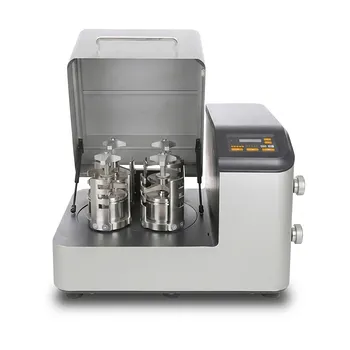
High Energy Planetary Ball Mill for Nano Scale Grinding and Colloidal Mixing in Material Science Research

Nano High Energy Vibratory Ball Mill with Heating and Temperature Control
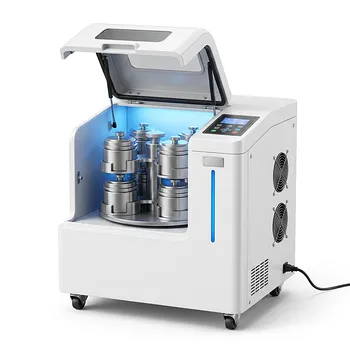
High Energy Omnidirectional Planetary Ball Mill 20L
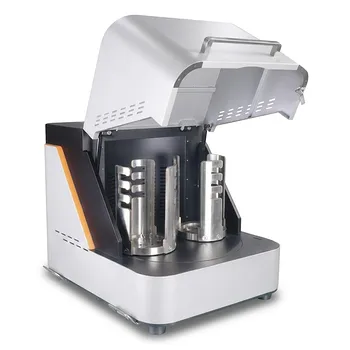
High Energy Laboratory Planetary Ball Mill for Nano Grinding and Colloidal Mixing of Hard and Brittle Materials
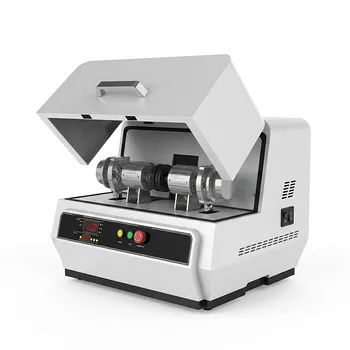
Dual Jar High Energy Vibratory Ball Mill
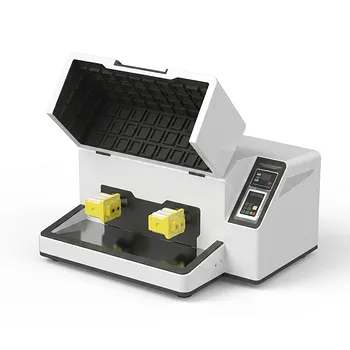
Multi-Platform Nanoscale High-Energy Vibratory Ball Mill
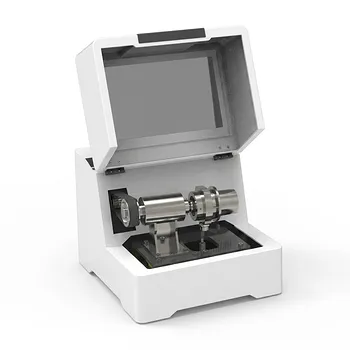
Single Tank High Energy Vibratory Ball Mill for Laboratory Grinding and Mixing
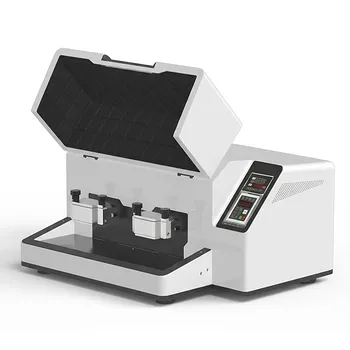
Nanoscale High-Energy Vibratory Ball Mill for Laboratory Sample Preparation, Mechanochemistry, and Mechanical Alloying
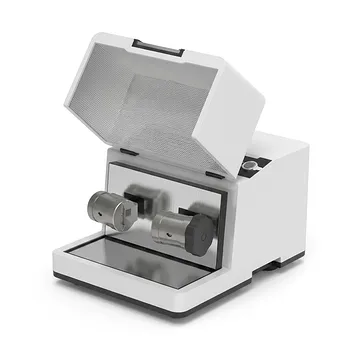
Heating Temperature Controlled High Energy Vibratory Ball Mill

Nano High Energy Vibratory Ball Mill for Laboratory Sample Preparation
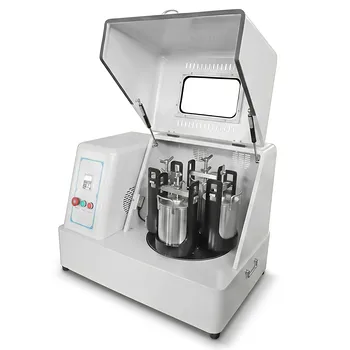
Vertical Square Planetary Ball Mill for Laboratory Sample Preparation and Nanoscale Grinding
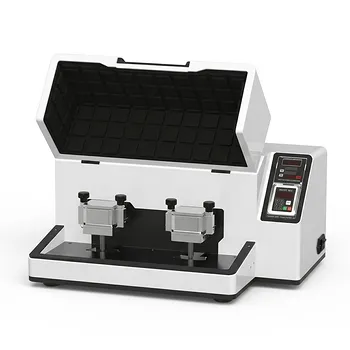
Nanoscale High Energy Vibratory Ball Mill Low Temperature

8L Planetary Ball Mill for Laboratory Grinding and Sample Preparation
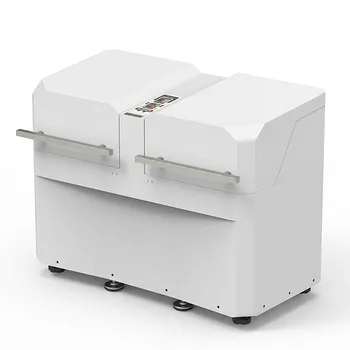
Dual Station Planetary Ball Mill 24L