What is the primary role of a mechanical ball mill in NbC cermet powder? Achieve Superior Homogeneity & Reactivity
Updated 4 months ago
The primary role of a mechanical ball mill in preparing Niobium Carbide (NbC) cermet powder is the uniform distribution of metal binder particles around the carbide hard phase. By applying high-energy mechanical force, the mill achieves tight bonding and high-level mixing of these distinct phases. This homogenization is a critical prerequisite for ensuring a balanced liquid phase during sintering and preventing the abnormal growth of NbC grains.
Core Takeaway: A mechanical ball mill serves as both a homogenization and activation engine. It ensures the metal binder and carbide phases are perfectly interleaved to prevent structural defects and promote uniform densification during the final manufacturing stages.
Achieving Microstructural Homogeneity
Uniform Phase Distribution
The ball mill uses mechanical energy to physically coat the harder Niobium Carbide particles with the more ductile metal binder. This ensures that every carbide grain is in contact with the binder, which is essential for creating a "balanced liquid phase" when the material is heated. Without this uniform coating, the resulting cermet would have "islands" of binder and brittle clusters of carbide.
Prevention of Component Segregation
Because metal binders and carbides often have significantly different densities, they tend to separate during handling. The high-frequency rotation and impact forces of a ball mill counteract this tendency by creating a cohesive composite powder. This prevents component segregation, ensuring the final product has stable, predictable performance across its entire structure.
Enhancing Material Reactivity and Refinement
Mechanical Particle Refinement
High-energy ball milling facilitates the intense fragmentation of coarse powders through impact and shear forces. This process can refine particles from a micron scale (e.g., 44 µm) down to a nanometer scale (as low as 8.5 nm) over several hours. Smaller particles provide more surface area, which is vital for the chemical reactions that occur during sintering.
Increasing Surface Energy and Reactivity
The mechanical energy transferred during milling does more than just break particles; it increases their specific surface area and surface energy. This "mechanical activation" can even induce structural defects or oxygen vacancies in the material lattice. These defects lower the energy barrier for subsequent densification, allowing for successful sintering at lower temperatures or pressures.
Understanding the Trade-offs and Pitfalls
The Risk of Media Contamination
While high-energy milling is effective, it introduces the risk of "milling-in" impurities from the grinding balls or jars. If stainless steel media is used, traces of iron or chromium may leach into the NbC powder, potentially altering the chemical purity of the cermet. Engineers must carefully select media materials (like WC-Co or zirconia) to match the desired final chemistry.
Balancing Time and Over-Milling
Extending milling time generally increases refinement, but there is a point of diminishing returns. Over-milling can lead to excessive heat generation and unwanted phase transformations or oxidation of the metallic binder. Finding the "sweet spot" in processing time is essential to maximize reactivity without compromising the powder's chemical integrity.
How to Apply This to Your Project
To achieve the best results with Niobium Carbide cermets, your milling strategy should align with your specific performance requirements.
- If your primary focus is preventing grain growth: Prioritize a milling duration that ensures a complete, uniform coating of the binder phase around the NbC particles to inhibit direct carbide-to-carbide contact.
- If your primary focus is high-density sintering: Focus on maximizing mechanical activation by using high-energy planetary milling to increase the powder's specific surface area and reactivity.
- If your primary focus is material purity: Select grinding media and jar linings that are chemically identical to one of the cermet phases (e.g., NbC or the binder metal) to eliminate foreign contamination.
By masterfully controlling the mechanical milling process, you lay the foundation for a Niobium Carbide cermet with superior hardness and structural reliability.
Summary Table:
| Key Feature | Role of Mechanical Ball Milling | Impact on Final Cermet |
|---|---|---|
| Phase Distribution | Coats NbC particles with metal binder | Prevents grain growth & structural defects |
| Particle Size | Refines particles from micron to nano-scale | Increases surface area for faster reactions |
| Surface Energy | Induces mechanical activation/defects | Lowers sintering temperature & pressure |
| Homogenization | Counteracts density-based segregation | Ensures stable, predictable performance |
Elevate Your Material Science Research with Precision Equipment
Achieving the perfect Niobium Carbide cermet requires more than just high-quality powders—it demands the right processing technology. At our laboratory equipment center, we provide complete sample preparation solutions designed for excellence in powder processing and compaction.
Our extensive product line supports your entire workflow:
- Powder Processing: High-energy planetary ball mills, jet mills, and cryogenic grinders for superior refinement.
- Mixing & Sieving: Advanced powder mixers, defoaming mixers, and vibratory sieve shakers for perfect homogeneity.
- Compaction Excellence: A full spectrum of hydraulic presses, including Cold/Warm Isostatic Presses (CIP/WIP), vacuum hot presses, and XRF pellet presses.
Whether you are refining nanometer-scale powders or pressing high-density pellets, our expertise ensures your lab achieves maximum efficiency and material purity. Contact us today to find the ideal solution for your project!
References
- Daniela Hübler, Thomas Gradt. Effect of different binders and secondary carbides on NbC cermets. DOI: 10.1007/s10010-022-00583-1
Mentioned Products
- High Energy Planetary Ball Mill for Nano Scale Grinding and Mechanical Alloying
- Laboratory Nano High Energy Ball Mill Ultrafine Grinding Mechanical Alloying
- Nanoscale High-Energy Vibratory Ball Mill for Laboratory Sample Preparation, Mechanochemistry, and Mechanical Alloying
- Heavy Duty Horizontal Planetary Ball Mill for Efficient Industrial Grinding and Sample Preparation
- Nanoscale High Energy Vibratory Ball Mill Low Temperature
People Also Ask
- Why is a high-energy planetary ball mill used for nano-milling As4Se3? Achieve Expert Structural Transformation
- What role do high-energy planetary ball mills play in FDM composite filament preparation? Optimize Material Performance
- What is the role of a high-energy planetary ball mill in the exfoliation of modified WSe2? Achieve Nano-Precision
- What is the function of a planetary ball mill in glass-ceramic sintering? Optimize Reactivity and Uniformity
- What is the role of a high-energy planetary ball mill in the preparation of high-performance nano-ceramics? Key Guide

Tech Team · PowderPreparation
Last updated on Jun 03, 2026
Related Products

High Energy Planetary Ball Mill for Nano Scale Grinding and Mechanical Alloying
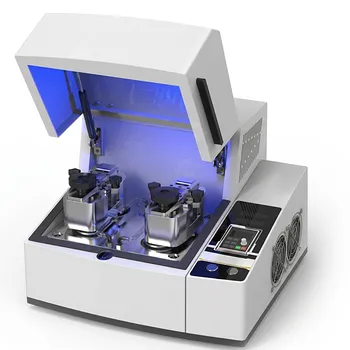
Laboratory Nano High Energy Ball Mill Ultrafine Grinding Mechanical Alloying

Nanoscale High-Energy Vibratory Ball Mill for Laboratory Sample Preparation, Mechanochemistry, and Mechanical Alloying

Heavy Duty Horizontal Planetary Ball Mill for Efficient Industrial Grinding and Sample Preparation
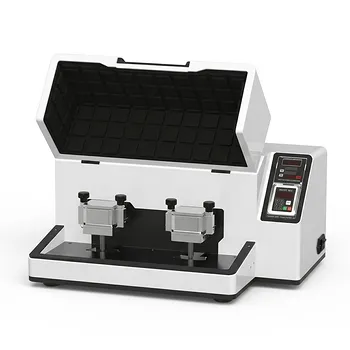
Nanoscale High Energy Vibratory Ball Mill Low Temperature

Vertical Semi Circular Planetary Ball Mill for Laboratory Precision Grinding

Vertical Production Planetary Ball Mill for High Throughput Powder Processing

Dual Station Planetary Ball Mill 24L
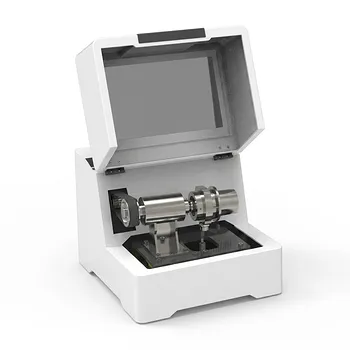
Single Tank High Energy Vibratory Ball Mill for Laboratory Grinding and Mixing

Vertical Square Planetary Ball Mill for Laboratory Sample Preparation and Nanoscale Grinding

High Energy Omnidirectional Planetary Ball Mill 16L

High Energy Omnidirectional Planetary Ball Mill 20L

Multi-Platform Nanoscale High-Energy Vibratory Ball Mill

High Energy Hybrid Vibratory Ball Mill for Grinding Mixing and Cell Disruption
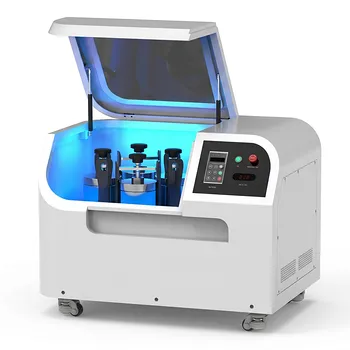
Planetary Ball Mill 12L

High Energy Laboratory Planetary Ball Mill for Nano Grinding and Colloidal Mixing of Hard and Brittle Materials

High Throughput Micro Ball Mill for Cryogenic Grinding and Laboratory Cell Disruption

Heating Temperature Controlled High Energy Vibratory Ball Mill

High Energy Planetary Ball Mill for Nano Scale Grinding and Colloidal Mixing in Material Science Research
