What is the primary role of a high-frequency vibration ball mill in the pretreatment of rice straw powder? Boost Yield
Updated 5 months ago
The primary role of a high-frequency vibration ball mill in rice straw pretreatment is to achieve simultaneous particle size refinement and the mechanical disruption of cellulose crystallinity. By utilizing high-energy impacts, the mill transforms centimeter-sized straw into micron-sized particles while inducing an amorphization transition that significantly increases chemical reactivity.
This milling process functions as a mechanochemical pretreatment that overcomes the natural recalcitrance of biomass. It ensures the material is physically and structurally optimized for rapid dissolution or enzymatic conversion in downstream processing.
Achieving Radical Particle Size Refinement
Transitioning from Strips to Microns
The mill utilizes high-frequency vibrations—often reaching 25 Hz—to drive stainless steel grinding media into violent, random collisions. This intense mechanical action rapidly pulverizes centimeter-sized straw strips into a fine powder, often reaching dimensions between 20 and 75 micrometers.
Maximizing Specific Surface Area
Reducing the straw to the micron level exponentially increases the specific surface area available for chemical or biological attack. This increased exposure ensures that subsequent reagents, such as ionic liquids or nitric acid, can penetrate the biomass uniformly and efficiently.
Ensuring Process Uniformity
In applications like biochar production or pyrolysis, fine-tuning the particle size is essential for uniform heating. Consistent particle distribution prevents localized over-processing and ensures the structural stability of the final synthesized product.
Disrupting Cellulose Crystallinity (Amorphization)
Breaking Hydrogen Bond Networks
Rice straw is naturally resistant to degradation due to the highly ordered, crystalline structure of its cellulose. The high-energy impact and shear forces generated by the mill provide the excitation energy necessary to break these internal bonds, leading to a non-crystalline, or amorphous, state.
Enhancing Dissolution and Reactivity
Once the crystalline structure is disrupted, the cellulose becomes significantly more reactive. This amorphization transition is the key factor in accelerating the dissolution rate in ionic liquids and increasing the available contact sites for enzymes during saccharification.
Overcoming Solubility Barriers
In mechanochemical applications, the mill forces contact between solid-phase reactants and catalysts at the molecular level. This allows for efficient chemical transformations without the need for high-pressure hydrogen gas or traditional solvents that struggle with poor solubility.
Understanding the Trade-offs
Energy Intensity and Thermal Management
High-frequency milling is a highly energy-intensive process compared to standard mechanical crushing. The significant kinetic energy involved also generates localized heat, which must be managed to prevent the unintended thermal degradation of the biomass during pretreatment.
Material Attrition and Contamination
The use of stainless steel balls in a high-vibration environment leads to unavoidable media wear. Over extended milling periods, trace metallic impurities from the grinding media may be introduced into the rice straw powder, which could affect sensitive downstream catalytic reactions.
How to Apply This to Your Project
Depending on your specific goals for rice straw processing, the milling parameters should be adjusted to prioritize different outcomes:
- If your primary focus is enzymatic saccharification: Prioritize longer milling times to maximize amorphization, as reducing crystallinity is more critical for enzyme access than simple size reduction.
- If your primary focus is biochar synthesis: Focus on achieving a uniform particle size distribution (approximately 75 microns) to ensure stable pyrolysis and consistent structural integrity.
- If your primary focus is ionic liquid dissolution: Utilize high-energy impacts to reach the micron level (20-30μm), as the combination of high surface area and low crystallinity yields the fastest dissolution rates.
By strategically leveraging the high-frequency vibration ball mill, you can transform raw rice straw into a highly reactive feedstock tailored for advanced biochemical or thermochemical conversion.
Summary Table:
| Key Role | Mechanical Action | Impact on Rice Straw |
|---|---|---|
| Size Refinement | Rapid pulverization to 20-75μm | Maximizes surface area for chemical/biological attack |
| Amorphization | Breaking internal hydrogen bonds | Converts crystalline cellulose to reactive amorphous state |
| Process Uniformity | High-energy random collisions | Ensures stable pyrolysis and consistent downstream conversion |
Elevate Your Material Research with Expert Sample Preparation
Unlock the full potential of your biomass and material science projects with our complete laboratory sample preparation solutions. We specialize in high-performance powder processing and compaction equipment designed for precision and reliability.
Our extensive product range includes:
- Advanced Milling & Grinding: High-frequency vibration mills, planetary ball mills, jet mills, and liquid nitrogen cryogenic grinders for ultimate fineness.
- Crushing & Sifting: Jaw/roll crushers and vibratory/air-jet sieve shakers.
- Compaction Excellence: A full spectrum of hydraulic presses, including Cold/Warm Isostatic Presses (CIP/WIP), XRF pellet presses, and vacuum hot presses.
- Mixing Solutions: High-efficiency powder mixers and vacuum defoaming mixers.
Whether you are optimizing rice straw pretreatment or developing advanced ceramics, our equipment ensures consistent, high-quality results. Contact us today to discuss your specific requirements and let our experts help you find the perfect solution!
References
- Hlaing Hlaing Myint, Hirofumi Hinode. Dissolution Model of Ball Milled Rice Straw Particles in 1-Ethyl-3-Methyl Imidazolium Acetate at Elevated Temperature. DOI: 10.4172/2155-9821.1000260
Mentioned Products
- Nano High Energy Vibratory Ball Mill with Heating and Temperature Control
- Single Tank High Energy Vibratory Ball Mill for Laboratory Grinding and Mixing
- Dual Jar High Energy Vibratory Ball Mill
- High Energy Hybrid Vibratory Ball Mill for Grinding Mixing and Cell Disruption
- Nano High Energy Vibratory Ball Mill for Laboratory Sample Preparation
People Also Ask
- How does a high-energy vibratory ball mill improve the performance of MgH2? Optimize Hydrogen Storage Kinetics
- What is the purpose of adding alcohol as a PCA during titanium ball milling? Prevent Cold Welding & Enhance Refinement
- What is the Role of HEBM in High-Entropy H-SOFC Cathode Prep? Achieving Atomic-Level Homogenization
- What is the function of high-energy ball milling in ZnO membrane slurry prep? Optimize Homogenization & Dispersion
- What is the importance of using a high-purity argon atmosphere during the high-energy ball milling of ceramic particles?

Tech Team · PowderPreparation
Last updated on May 14, 2026
Related Products

Nano High Energy Vibratory Ball Mill with Heating and Temperature Control
Single Tank High Energy Vibratory Ball Mill for Laboratory Grinding and Mixing
Dual Jar High Energy Vibratory Ball Mill

High Energy Hybrid Vibratory Ball Mill for Grinding Mixing and Cell Disruption

Nano High Energy Vibratory Ball Mill for Laboratory Sample Preparation
Nanoscale High-Energy Vibratory Ball Mill for Laboratory Sample Preparation, Mechanochemistry, and Mechanical Alloying

Multi-Platform Nanoscale High-Energy Vibratory Ball Mill

Heating Temperature Controlled High Energy Vibratory Ball Mill
Nanoscale High Energy Vibratory Ball Mill Low Temperature
Ultra-Low Temperature Cryogenic High-Energy Vibratory Ball Mill
High Speed Vibratory Disc Mill for Spectral Analysis Sample Preparation and Rapid Powder Grinding
Vibratory Disc Mill for Rapid Fine Grinding and High Throughput Sample Preparation of Hard and Brittle Materials
Planetary Ball Mill 12L
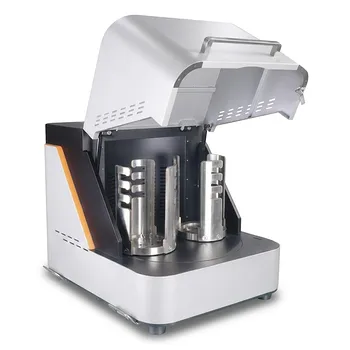
High Energy Laboratory Planetary Ball Mill for Nano Grinding and Colloidal Mixing of Hard and Brittle Materials

High Energy Planetary Ball Mill for Nano Scale Grinding and Mechanical Alloying
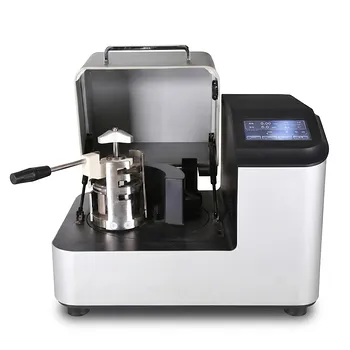
High Energy Laboratory Planetary Ball Mill for Nano Grinding and Material Science Sample Preparation
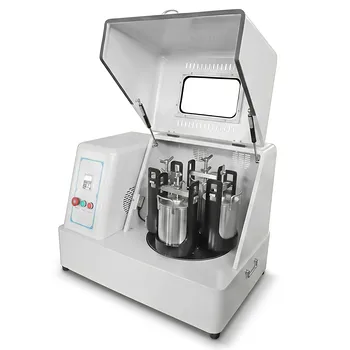
Vertical Square Planetary Ball Mill for Laboratory Sample Preparation and Nanoscale Grinding
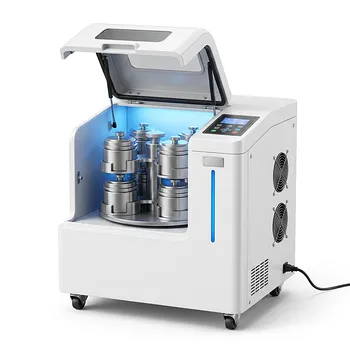
High Energy Omnidirectional Planetary Ball Mill 20L
High Energy Omnidirectional Planetary Ball Mill 16L