What is the function of a high-energy ball mill in Aluminum MMC prep? Achieve Nano-Scale Powder Uniformity.
Updated 3 months ago
The high-energy ball mill serves as the primary engine for mechanical alloying in the synthesis of Aluminum-based Metal Matrix Composites (MMCs). It utilizes intense impact and shear forces to drive a continuous cycle of cold welding and fracture, which embeds reinforcement particles—such as boron carbide or carbon nanotubes—directly into the aluminum matrix. This process transforms discrete raw materials into a homogenous, refined composite powder ready for subsequent consolidation techniques like cold spray or sintering.
Core Takeaway: A high-energy ball mill functions by using mechanical force to achieve a uniform, nano-scale distribution of reinforcements within an aluminum matrix while simultaneously refining the grain structure to enhance the final material's mechanical properties.
The Mechanism of Mechanical Alloying
The Cycle of Cold Welding and Fracture
The milling process subjects aluminum powder and reinforcements to high-speed collisions between grinding media and the container walls.
The ductile aluminum particles undergo repeated deformation and cold welding, while the harder reinforcement phases cause the matrix to fracture.
This constant cycle of breaking and re-joining ensures that the reinforcement phase is physically trapped and distributed within the aluminum particles rather than just mixed on the surface.
Achieving Uniform Dispersion
High-energy milling is essential for breaking down the natural agglomeration of fine reinforcement particles, such as nano-boron carbide (nB4C) or boron nitride nanosheets (BNNP).
By applying intense shear forces, the mill disperses these reinforcements at an atomic or nanoscale level throughout the matrix.
This uniform distribution is critical to preventing localized weak points and ensuring that the final composite exhibits consistent strength and hardness.
Microstructural Refinement and Particle Evolution
Reduction of Grain and Particle Size
The intense mechanical energy provided by the mill significantly refines the grain size of both the matrix and the reinforcement phases.
Prolonged milling can reduce aluminum grains to the nanometer scale, which contributes to the overall deformation strengthening of the composite.
Additionally, the process can be used to refine coarse reinforcements, like silicon carbide or coconut shell charcoal, into much finer dimensions to optimize the interface with the matrix.
Enhancing Surface Activity and Bonding
Mechanical alloying increases the specific surface area of the particles, which enhances their reaction activity during subsequent processing.
In some environments, the mill facilitates mechanochemical actions, such as the formation of a dispersed alumina layer on the powder surface.
These surface modifications foster stronger interfacial bonding between the aluminum and its reinforcements, leading to higher tensile strength in the final sintered body.
Understanding the Trade-offs
Contamination and Material Purity
The high-energy nature of the process often leads to wear and tear of the grinding media and the milling jar.
Small amounts of iron or other container materials can leach into the aluminum powder, potentially altering its chemical properties and corrosion resistance.
Processing Time vs. Heat Management
Achieving an ideal dispersion often requires extended milling times, sometimes ranging from 50 to 60 hours for specific reinforcements.
Excessive milling generates significant heat, which can lead to unwanted grain growth or oxidation if the temperature is not strictly controlled or if milling is not performed in an inert atmosphere.
Optimizing Your Milling Strategy
How to Apply This to Your Project
Selecting the right parameters for a high-energy ball mill depends entirely on the desired characteristics of your Aluminum-based MMC.
- If your primary focus is Maximum Strength: Use longer milling times to ensure grain refinement to the nanometer scale and a completely uniform distribution of reinforcements like NbB2.
- If your primary focus is Particle Size Control: Adjust the ball-to-powder ratio and rotation speed to focus on the fracturing phase, effectively reducing coarse additives into micron or sub-micron scales.
- If your primary focus is Minimizing Contamination: Utilize process control agents (PCAs) or milling jars lined with the same material as the matrix to prevent foreign debris from entering the mix.
By mastering the mechanical alloying process, you can create high-performance composite feedstocks that possess a superior microstructural foundation for any advanced manufacturing application.
Summary Table:
| Process Phase | Key Mechanism | Benefit to MMC Powder |
|---|---|---|
| Mechanical Alloying | Repeated cold welding and fracture | Ensures reinforcements are embedded into the matrix |
| Dispersion | Intense shear forces | Eliminates agglomeration for nano-scale distribution |
| Refinement | High-speed collisions | Reduces grain size to nanometer scale for strength |
| Surface Activation | Mechanochemical action | Enhances interfacial bonding during sintering |
Optimize Your MMC Synthesis with Precision Equipment
At [Your Brand Name], we provide complete laboratory sample preparation solutions for material science, specializing in powder processing and advanced compaction. Whether you are synthesizing Aluminum-based MMCs or developing novel alloys, our equipment ensures the microstructural foundation required for high-performance materials.
Our Comprehensive Product Range Includes:
- Powder Processing: High-energy planetary ball mills, jet mills, and rotor mills for mechanical alloying, plus powder and defoaming mixers.
- Material Preparation: Jaw/roll crushers, liquid nitrogen cryogenic grinders, and vibratory/air-jet sieve shakers.
- Consolidation Solutions: A full spectrum of hydraulic presses, including Cold/Warm Isostatic Presses (CIP/WIP), XRF pellet presses, and vacuum hot presses.
Ready to achieve superior grain refinement and uniform dispersion in your composites? Contact our experts today for a tailored solution!
References
- Kia Min Phua, Troy Y. Ansell. Effect of Heat Treatment on the Mechanical and Tribological Properties of Dual-Reinforced Cold-Sprayed Al Coatings. DOI: 10.3390/jmmp7010032
Mentioned Products
- High Energy Planetary Ball Mill for Nano Scale Grinding and Mechanical Alloying
- High Energy Hybrid Vibratory Ball Mill for Grinding Mixing and Cell Disruption
- High Energy Omnidirectional Planetary Ball Mill 16L
- High Energy Laboratory Planetary Ball Mill for Nano Grinding and Material Science Sample Preparation
- Ultra-Low Temperature Cryogenic High-Energy Vibratory Ball Mill
People Also Ask
- Why is a high-energy planetary ball mill used for nano-milling As4Se3? Achieve Expert Structural Transformation
- What role do high-energy planetary ball mills play in FDM composite filament preparation? Optimize Material Performance
- What is the role of a high-energy planetary ball mill in the exfoliation of modified WSe2? Achieve Nano-Precision
- What is the function of a planetary ball mill in glass-ceramic sintering? Optimize Reactivity and Uniformity
- What is the role of a high-energy planetary ball mill in the preparation of high-performance nano-ceramics? Key Guide

Tech Team · PowderPreparation
Last updated on Jun 03, 2026
Related Products

High Energy Planetary Ball Mill for Nano Scale Grinding and Mechanical Alloying

High Energy Hybrid Vibratory Ball Mill for Grinding Mixing and Cell Disruption
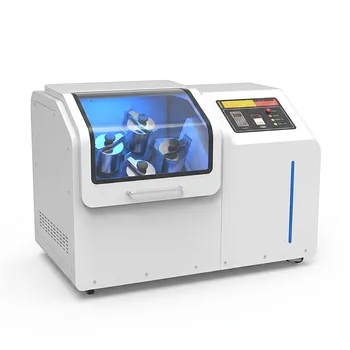
High Energy Omnidirectional Planetary Ball Mill 16L

High Energy Laboratory Planetary Ball Mill for Nano Grinding and Material Science Sample Preparation

Ultra-Low Temperature Cryogenic High-Energy Vibratory Ball Mill

Nano High Energy Vibratory Ball Mill with Heating and Temperature Control
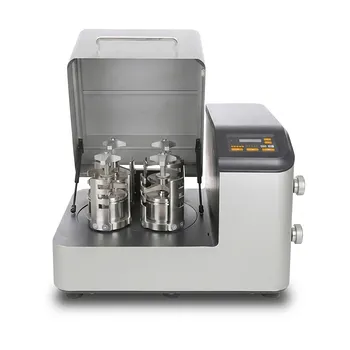
High Energy Planetary Ball Mill for Nano Scale Grinding and Colloidal Mixing in Material Science Research
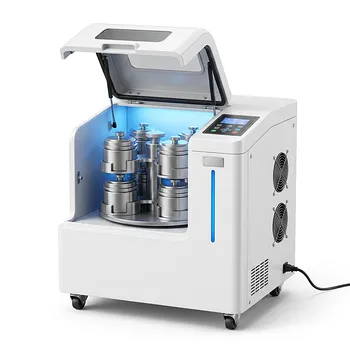
High Energy Omnidirectional Planetary Ball Mill 20L
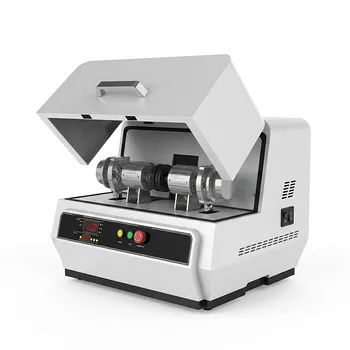
Dual Jar High Energy Vibratory Ball Mill

Multi-Platform Nanoscale High-Energy Vibratory Ball Mill

High Energy Laboratory Planetary Ball Mill for Nano Grinding and Colloidal Mixing of Hard and Brittle Materials
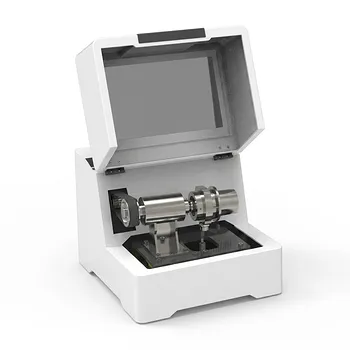
Single Tank High Energy Vibratory Ball Mill for Laboratory Grinding and Mixing

Nanoscale High-Energy Vibratory Ball Mill for Laboratory Sample Preparation, Mechanochemistry, and Mechanical Alloying

Heating Temperature Controlled High Energy Vibratory Ball Mill

Nano High Energy Vibratory Ball Mill for Laboratory Sample Preparation
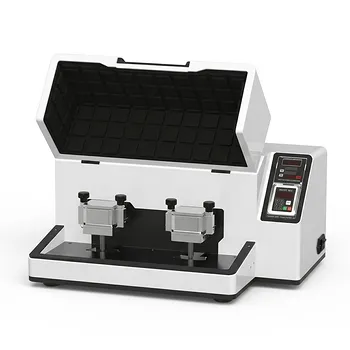
Nanoscale High Energy Vibratory Ball Mill Low Temperature
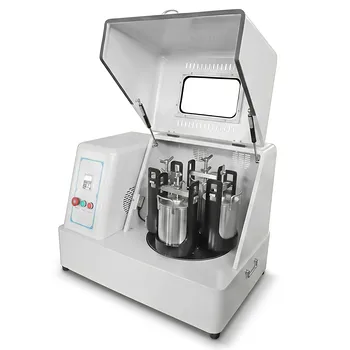
Vertical Square Planetary Ball Mill for Laboratory Sample Preparation and Nanoscale Grinding

8L Planetary Ball Mill for Laboratory Grinding and Sample Preparation
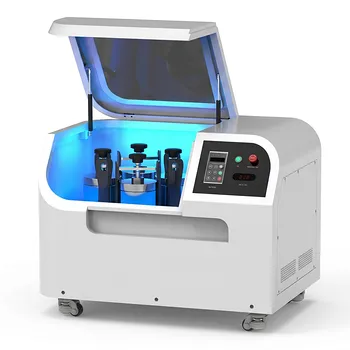
Planetary Ball Mill 12L