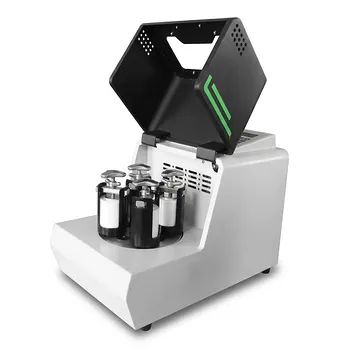
What is the primary purpose of utilizing a high-energy ball mill in (V, Nb)C powder prep? Master Mechanical Alloying
Updated 4 months ago
The high-energy ball mill is the foundational tool for atomic-level homogenization in carbide synthesis. In the preparation of (V, Nb)C composite carbide powders, its primary purpose is to execute extended fragmentation and mechanical alloying. This process utilizes intense mechanical force to ensure that disparate carbide components reach a high degree of microscopic uniform mixing, which establishes the critical foundation required for the material to sinter into a single solid solution phase.
High-energy ball milling acts as a catalyst for solid-state reactions, using mechanical energy to force chemical components into a pre-alloyed state. This ensures that the final (V, Nb)C composite achieves the phase purity and structural integrity necessary for high-performance applications.
Driving Mechanical Alloying and Homogenization
Achieving Microscopic Uniformity
In the synthesis of (V, Nb)C, simple blending is insufficient to overcome the inherent stability of individual carbides. The high-energy ball mill subjects the powder to extended milling cycles—typically lasting 36 hours—to break down molecular aggregates.
This sustained mechanical impact ensures that Vanadium and Niobium components are distributed with atomic-level precision. Without this degree of uniformity, the final product would likely suffer from phase segregation, leading to inconsistent mechanical properties.
Facilitating Solid Solution Formation
The ultimate goal of preparing these powders is to create a single-phase material during the sintering stage. The ball mill prepares the powders by inducing mechanical alloying, where the crystalline structures of the starting materials are forcibly intermixed.
By creating this "pre-alloyed" state at the microscopic scale, the energy barrier for solid solution formation is significantly lowered. This allows the powders to transition into a single phase more efficiently during subsequent thermal processing.
The Role of Fragmentation and Surface Energy
Grain Refinement and Surface Activation
Beyond mixing, high-energy milling causes deep refinement of the powder particles, significantly reducing their median diameter. This process increases the specific surface area of the (V, Nb)C components, which directly correlates to higher surface energy.
Increased surface energy makes the powders more reactive. This heightened reactivity is essential for ensuring that the particles bond effectively during high-pressure and high-temperature (HPHT) sintering.
Inducing Lattice Defects
The intense impact and shear forces generated by high-speed rotation do more than just crush material; they induce lattice distortions and defects. These structural imperfections serve as pathways for faster diffusion during the heating process.
By increasing the defect density within the powder, the high-energy mill accelerates the kinetics of the sintering process. This results in a denser, more refined crystalline structure in the final composite.
Understanding the Trade-offs
The Risk of Media Contamination
The primary drawback of extended high-energy milling is the potential for contamination from the grinding media. As the mill operates for 36 hours, the balls and the vial wall undergo wear, which can introduce unwanted elements into the (V, Nb)C mixture.
To mitigate this, technical professionals must carefully select grinding media that are either chemically compatible with the carbides or offer high wear resistance. Failure to manage this can lead to impurities that degrade the material's final hardness and thermal stability.
Energy Consumption and Processing Time
Achieving the necessary degree of mechanical alloying is a time-intensive and energy-heavy endeavor. The requirement for 36 hours of continuous milling represents a significant bottleneck in the production cycle.
Balancing the need for perfect homogenization against the practicalities of production throughput is a common challenge. Over-milling can also lead to excessive powder agglomeration, which can counteract the benefits of particle refinement.
How to Apply This to Your Production Strategy
Successful preparation of (V, Nb)C composite powders requires balancing mechanical energy input with the specific requirements of the final application.
- If your primary focus is Phase Purity: Prioritize extended milling times to ensure mechanical alloying is complete before the sintering stage begins.
- If your primary focus is Densification: Focus on maximizing rotational speed to increase lattice defects and surface energy, which facilitates faster bonding under heat.
- If your primary focus is Minimal Contamination: Utilize wet milling techniques or high-purity carbide grinding media to reduce the abrasive wear of the milling equipment.
By mastering the mechanical alloying process, you ensure that your composite powders possess the microscopic uniformity required for superior material performance.
Summary Table:
| Key Process | Mechanism | Impact on (V, Nb)C Composite |
|---|---|---|
| Mechanical Alloying | Atomic-level homogenization | Ensures a single solid solution phase |
| Grain Refinement | Particle size reduction | Increases surface energy and reactivity |
| Lattice Distortion | Inducing structural defects | Accelerates diffusion kinetics during sintering |
| Extended Milling | Breakdown of aggregates | Prevents phase segregation and inconsistency |
Elevate Your Material Synthesis with Precision Equipment
Achieving microscopic uniformity in (V, Nb)C composite carbides requires more than just standard mixing—it demands high-performance powder processing. At our core, we provide complete laboratory sample preparation solutions specifically designed for material science researchers and industrial manufacturers.
Our extensive product line supports every stage of your workflow:
- Advanced Milling: Planetary ball mills, jet mills, and liquid nitrogen cryogenic grinders for perfect mechanical alloying.
- Powder Processing: Sieve shakers, powder mixers, and defoaming mixers to ensure material purity.
- Precision Compaction: A full spectrum of hydraulic presses, including Cold/Warm Isostatic Presses (CIP/WIP), vacuum hot presses, and XRF pellet presses for superior densification.
Whether you are focusing on phase purity or maximizing densification, our equipment delivers the reliability and technical edge your research deserves.
Ready to optimize your powder metallurgy process? Contact our technical experts today for a tailored solution!
References
- Zhi‐Xuan Zhang, Wen Zhang. Breaking Hardness–Toughness Trade‐Off in Novel (V, Nb)C Carbides via Nanoscale Phase Separation and Local‐Chemical‐Order Dislocation Network. DOI: 10.1002/rar2.70006
Mentioned Products
- High Energy Planetary Ball Mill for Nano Scale Grinding and Mechanical Alloying
- High Energy Hybrid Vibratory Ball Mill for Grinding Mixing and Cell Disruption
- High Energy Laboratory Planetary Ball Mill for Nano Grinding and Material Science Sample Preparation
- High Energy Omnidirectional Planetary Ball Mill 16L
- Ultra-Low Temperature Cryogenic High-Energy Vibratory Ball Mill
People Also Ask
- Why is a high-energy planetary ball mill used for nano-milling As4Se3? Achieve Expert Structural Transformation
- What role do high-energy planetary ball mills play in FDM composite filament preparation? Optimize Material Performance
- What is the role of a high-energy planetary ball mill in the exfoliation of modified WSe2? Achieve Nano-Precision
- What is the function of a planetary ball mill in glass-ceramic sintering? Optimize Reactivity and Uniformity
- What is the role of a high-energy planetary ball mill in the preparation of high-performance nano-ceramics? Key Guide

Tech Team · PowderPreparation
Last updated on Jun 03, 2026
Related Products

High Energy Planetary Ball Mill for Nano Scale Grinding and Mechanical Alloying

High Energy Hybrid Vibratory Ball Mill for Grinding Mixing and Cell Disruption

High Energy Laboratory Planetary Ball Mill for Nano Grinding and Material Science Sample Preparation

High Energy Omnidirectional Planetary Ball Mill 16L

Ultra-Low Temperature Cryogenic High-Energy Vibratory Ball Mill
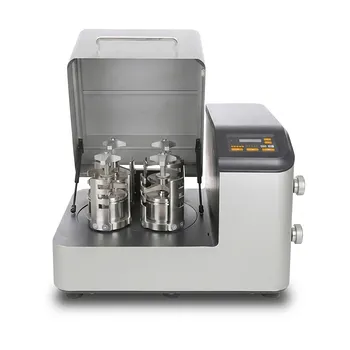
High Energy Planetary Ball Mill for Nano Scale Grinding and Colloidal Mixing in Material Science Research

Nano High Energy Vibratory Ball Mill with Heating and Temperature Control
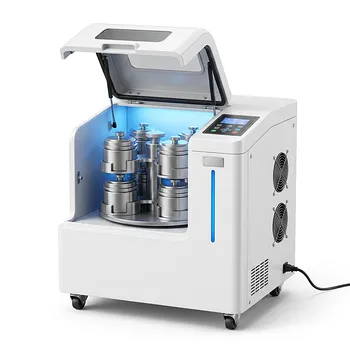
High Energy Omnidirectional Planetary Ball Mill 20L
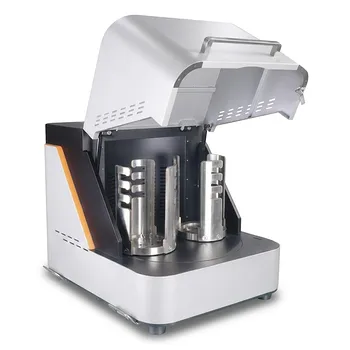
High Energy Laboratory Planetary Ball Mill for Nano Grinding and Colloidal Mixing of Hard and Brittle Materials
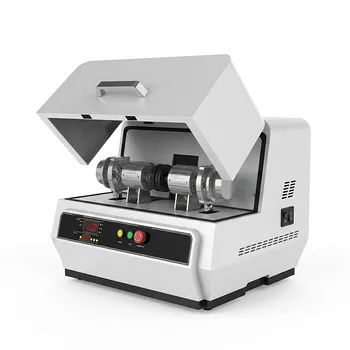
Dual Jar High Energy Vibratory Ball Mill

Multi-Platform Nanoscale High-Energy Vibratory Ball Mill
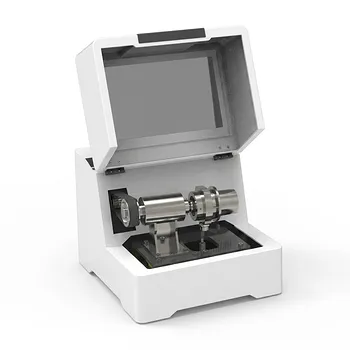
Single Tank High Energy Vibratory Ball Mill for Laboratory Grinding and Mixing

Nanoscale High-Energy Vibratory Ball Mill for Laboratory Sample Preparation, Mechanochemistry, and Mechanical Alloying

Heating Temperature Controlled High Energy Vibratory Ball Mill

Nano High Energy Vibratory Ball Mill for Laboratory Sample Preparation
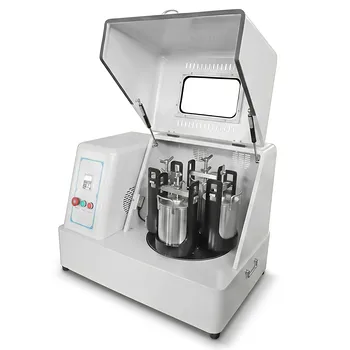
Vertical Square Planetary Ball Mill for Laboratory Sample Preparation and Nanoscale Grinding
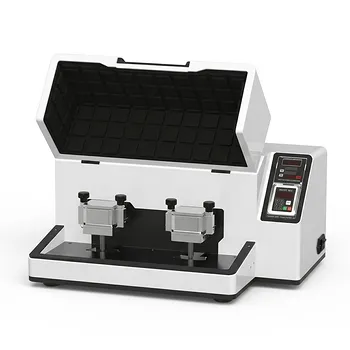
Nanoscale High Energy Vibratory Ball Mill Low Temperature

8L Planetary Ball Mill for Laboratory Grinding and Sample Preparation
Dual Station Planetary Ball Mill 24L