What is the primary purpose of configuring elastic elements in the transmission shafts of vibration mixers? - Key Role
Updated 4 months ago
The primary purpose of configuring elastic elements is to grant the oscillation system multiple degrees of freedom. By integrating these elements with kinematic excitation, the mixer can generate complex spatial movement trajectories rather than simple, linear vibrations. This multi-dimensional motion is critical for ensuring that materials undergo both thorough macro-circulation and intensive micro-diffusion.
Configuring elastic elements transforms a rigid mechanical drive into a flexible system capable of spatial movement. This shift is essential for achieving high-homogeneity mixing by facilitating complex material flow patterns that standard rigid systems cannot produce.
Achieving Multi-Dimensional Motion
Breaking the Limits of Rigid Systems
Traditional rigid drives often restrict movement to a single plane or axis, which can lead to "dead zones" in the mixing container. Elastic elements decouple the drive from the container, allowing the system to respond to excitation forces with greater flexibility.
Linear and Angular Coordination
The inclusion of these elements allows for motion along coordinate axes (linear) and rotation around those axes (angular). This combination results in a "spatial" trajectory, meaning the container moves in a way that effectively tosses and rolls the material simultaneously.
Enhancing Mixing Efficiency
The Role of Macro-Circulation
Macro-circulation refers to the large-scale movement of the material bulk throughout the entire volume of the mixer. The complex trajectories enabled by elastic elements ensure that no material remains stagnant, forcing continuous turnover from the bottom to the top of the container.
Facilitating Micro-Diffusion
On a smaller scale, micro-diffusion is the process where individual particles intermingle at high frequencies. The multiple degrees of freedom create high-intensity turbulence at the particle level, which is necessary for achieving a truly uniform mixture in shorter cycle times.
Understanding the Trade-offs
Mechanical Wear and Fatigue
While elastic elements provide the necessary flexibility, they are subject to constant cyclic loading. Over time, this can lead to material fatigue or failure of the elastic components themselves, requiring a structured maintenance schedule.
Calibration Complexity
Systems with multiple degrees of freedom are more difficult to tune than simple vibrators. Achieving the optimal trajectory requires precise balancing of the elastic stiffness and the excitation frequency to avoid resonance that could damage the machine.
How to Apply This to Your Project
When designing or selecting a vibration mixer, your choice of elastic configuration should align with your specific material requirements.
- If your primary focus is Maximum Homogeneity: Prioritize systems with high-flexibility elastic elements that maximize angular motion to ensure deep micro-diffusion.
- If your primary focus is High Throughput: Focus on stiffer elastic configurations that emphasize macro-circulation to move large volumes of material quickly through the system.
- If your primary focus is Component Longevity: Select reinforced or composite elastic elements that offer a balance between spatial movement and resistance to mechanical fatigue.
By understanding the synergy between kinematic excitation and elastic flexibility, you can achieve a superior mixing result that meets both speed and quality standards.
Summary Table:
| Feature | Impact of Elastic Elements | Mixing Benefit |
|---|---|---|
| Degrees of Freedom | Enables multiple axes of movement | Eliminates "dead zones" with spatial trajectories |
| Macro-Circulation | Drives large-scale bulk movement | Ensures continuous material turnover and flow |
| Micro-Diffusion | Creates high-intensity turbulence | Achieves rapid, uniform mixing at the particle level |
| System Dynamics | Decouples drive from container | Allows for flexible, non-linear vibration patterns |
Optimize Your Material Consistency with Expert Solutions
Achieving the perfect mix requires the right balance of engineering and high-performance equipment. At KINTEK, we provide complete laboratory sample preparation solutions tailored for material science and advanced powder processing.
Whether you need to enhance your mixing homogeneity or scale your powder compaction, our extensive product line delivers precision and reliability:
- Advanced Mixing: Specialized powder mixers and defoaming mixers designed for high-uniformity results.
- Milling & Grinding: Planetary ball mills, jet mills, and liquid nitrogen cryogenic grinders for ultrafine particle reduction.
- Sample Preparation: A full spectrum of hydraulic presses, including Cold/Warm Isostatic Presses (CIP/WIP), XRF pellet presses, and vacuum hot presses.
- Sizing & Analysis: Vibratory and air-jet sieve shakers with a wide range of test meshes.
Ready to elevate your lab's efficiency and research quality? Contact our technical specialists today to find the ideal equipment for your specific application.
References
- Igor Palamarchuk, Nataliya Slobodyanyuk. Evaluation of the energy efficiency of the process of vibratory mixing of multicomponent bulk raw material of food industries. DOI: 10.24263/edsd-2023-5-39
Mentioned Products
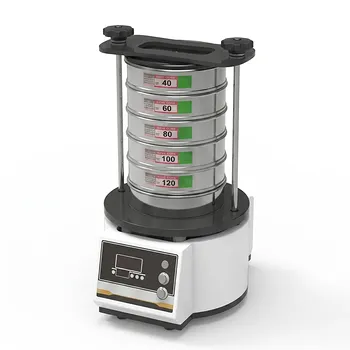
- Dry Three Dimensional Vibratory Sieve Shaker
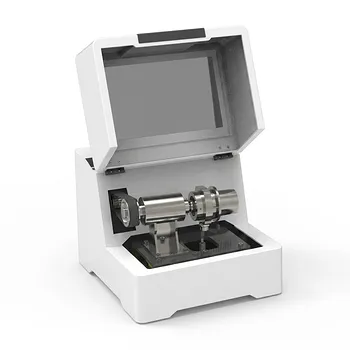
- Single Tank High Energy Vibratory Ball Mill for Laboratory Grinding and Mixing
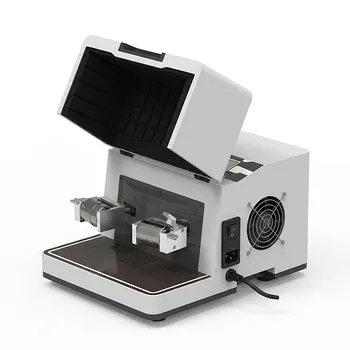
- High Energy Hybrid Vibratory Ball Mill for Grinding Mixing and Cell Disruption
- Heavy Duty Dry Three Dimensional Vibratory Sieve Shaker for Particle Separation
- Laboratory Vibratory Test Sieve Shaker for Precision Particle Size Analysis and Powder Grading
People Also Ask
- How does a vibratory sieve shaker contribute to optimizing the performance of activated carbon? Enhance Adsorption Precision
- What is the specific role of a vibratory sieve shaker in ZnO membrane ceramic support pretreatment? Ensure Uniformity.
- Why is a laboratory-grade vibratory sieve shaker critical for characterizing recycled PVC powder? Ensure Precise PSD
- Why is a high-precision vibratory sieve shaker essential for analyzing recycled inorganic sand? Ensure Consistent PSD
- What is the significance of using standard test sieves and shakers? Enhance Slow-Release Pellet Precision & Yield

Tech Team · PowderPreparation
Last updated on Jun 03, 2026
Related Products
Dry Three Dimensional Vibratory Sieve Shaker
Single Tank High Energy Vibratory Ball Mill for Laboratory Grinding and Mixing
High Energy Hybrid Vibratory Ball Mill for Grinding Mixing and Cell Disruption
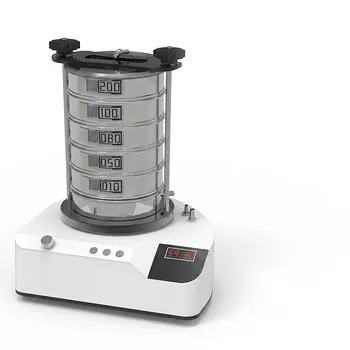
Heavy Duty Dry Three Dimensional Vibratory Sieve Shaker for Particle Separation
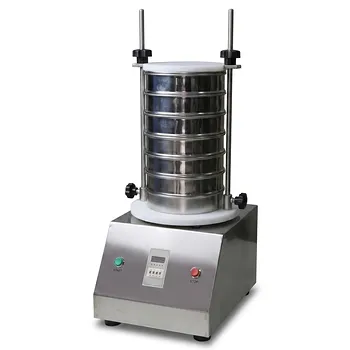
Laboratory Vibratory Test Sieve Shaker for Precision Particle Size Analysis and Powder Grading
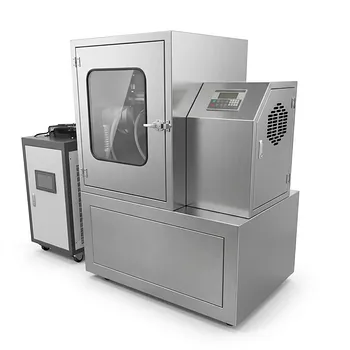
Vibratory Superfine Grinder for Ultra Fine Laboratory Powder Milling
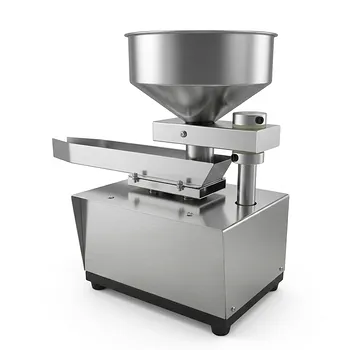
Automatic Vibrating Powder Feeder for Laboratory Material Processing Precision Vibratory Hopper Feeder for Granular and Powder Material Handling Industrial Grade Vibrating Tray Feeder for Consistent Material Sample Preparation
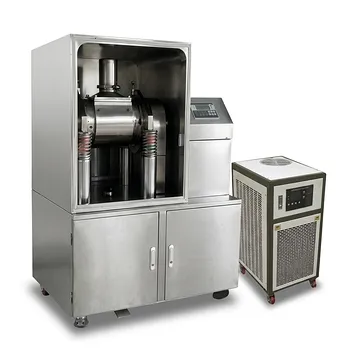
Small Vibrating Ultrafine Grinder for Traditional Chinese Medicine
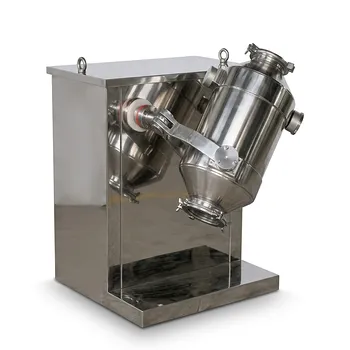
Three-Dimensional Motion Mixer for Laboratory Powder and Granule Blending
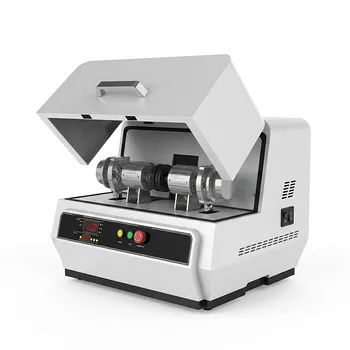
Dual Jar High Energy Vibratory Ball Mill
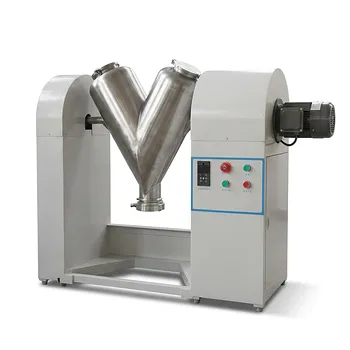
V-Type Powder Mixer for Uniform Blending of Dry Powders and Granules
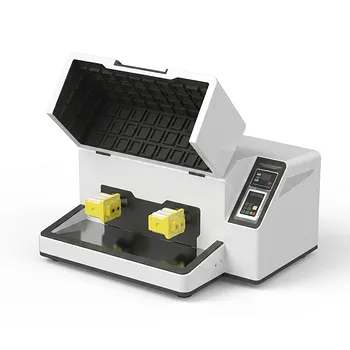
Multi-Platform Nanoscale High-Energy Vibratory Ball Mill
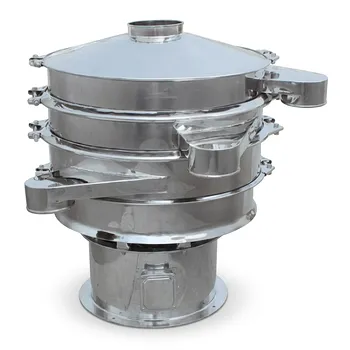
Stainless Steel Rotary Vibrating Sieve High Precision Circular Vibratory Separator Industrial Powder Grading Machine Multi Layer Sifting Equipment
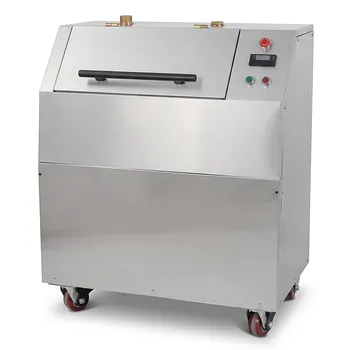
Vibratory Disc Mill for Rapid Fine Grinding and High Throughput Sample Preparation of Hard and Brittle Materials
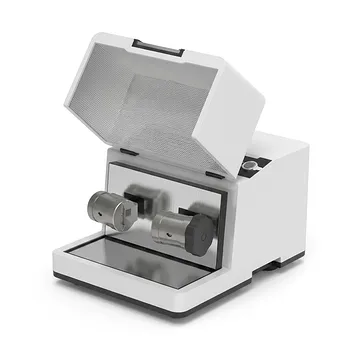
Heating Temperature Controlled High Energy Vibratory Ball Mill
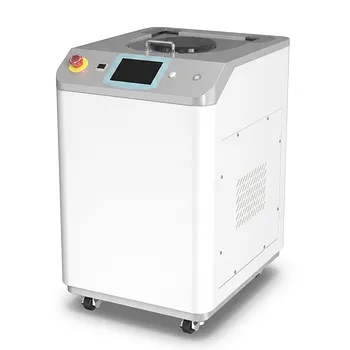
High Viscosity Planetary Centrifugal Mixing and Vacuum Defoaming Machine for Laboratory Material Preparation
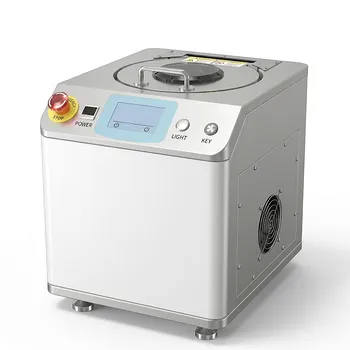
High Efficiency Vacuum Planetary Centrifugal Mixer and Defoaming Machine for Industrial Material Research and Precise Laboratory Powder Dispersion
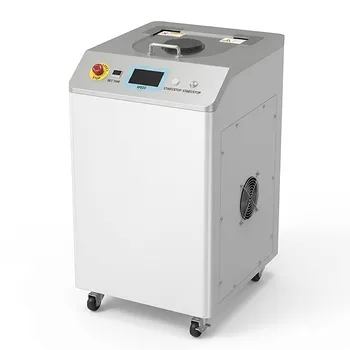
High Viscosity Planetary Centrifugal Vacuum Mixer for Material Defoaming and Uniform Mixing
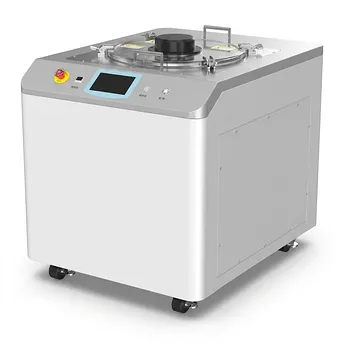
Industrial Planetary Centrifugal Vacuum Defoaming Mixer for High Viscosity Paste and Powder Homogenization