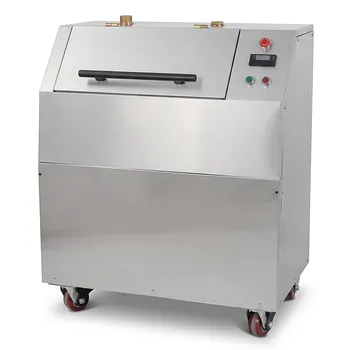
Why is a laboratory-grade vibratory sieve shaker critical for characterizing recycled PVC powder? Ensure Precise PSD
Updated 4 months ago
Characterizing recycled PVC powder requires a laboratory-grade vibratory sieve shaker to achieve precise Particle Size Distribution (PSD) metrics. This equipment provides the quantitative data necessary to control the viscosity of plastisols and the morphology of the final foaming layers. By utilizing a range of standard sieves (typically 1 mm to 0.02 mm), it allows engineers to establish repeatable recycling process parameters and definitive product grading standards.
The vibratory sieve shaker is the foundational tool for bridging the gap between raw recycled waste and high-performance PVC products. It ensures that particle size—the primary driver of chemical reactivity and mechanical integrity—is accurately mapped to meet strict industrial specifications.
The Link Between PSD and Material Performance
Influencing Plastisol Viscosity
Recycled PVC is frequently processed into plastisols, where flow behavior is the most critical variable. Particle Size Distribution (PSD) directly dictates how these powders interact with plasticizers, which significantly impacts the viscosity of the mixture. Without precise sieving, manufacturers risk unpredictable flow rates during coating, dipping, or molding processes.
Defining Final Morphology
The internal structure of the final product, particularly in foaming layers, depends on the uniformity of the PVC particles. A consistent PSD ensures even expansion and cell structure, which is vital for the thermal insulation and structural density of the material. Vibratory sieving provides the data needed to stabilize these microscopic features during the heating process.
Investigating Mechanical Degradation
In recycled composites, the size of the crushed PVC particles often limits the length of embedded reinforcements, such as glass fibers. By using a laboratory shaker to isolate specific particle sizes, researchers can investigate the correlation between size and the degradation of mechanical properties. This allows for the optimization of "experimental groups" to find the ideal balance between particle fineness and structural strength.
Process Optimization and Quality Control
Establishing Grinding Efficiency
In the recycling loop, PVC must be ground into fine powders to be reused effectively. A vibratory sieve shaker evaluates the output efficiency of various grinding stages by precisely analyzing the resulting powder. This data allows operators to fine-tune machinery to reach the target fineness without wasting energy on excessive over-processing.
Standardizing Product Grading
To commercialize recycled PVC, the material must be categorized into reliable, sellable grades. The use of standardized analysis sieves creates a reproducible "fingerprint" for each batch of material. This consistency builds trust with downstream manufacturers who require specific particle characteristics for their unique formulations.
Ensuring Chemical Reactivity
Precise classification is vital for determining the critical thresholds of material behavior. For example, in similar recycled materials like glass or polymers, particle size determines whether a powder acts as a reactive aggregate or a stabilizing filler. Accurate sieving allows researchers to calculate the Average Particle Size (APS) and the PSD span, which are essential for evaluating particle growth kinetics during reprocessing.
Understanding the Trade-offs
Frequency and Amplitude Management
While high-frequency vibration is necessary for rapid stratification, excessive amplitude can cause particle attrition. This occurs when fragile recycled particles break apart during the test itself, leading to a "fines" report that is inaccurately high. Engineers must calibrate the shaker's 3D vibration to ensure particles pass through apertures without being damaged.
Sieve Blinding and Maintenance
Fine PVC powders, especially those with residual static charges or moisture, can cause sieve blinding, where particles clog the mesh openings. This requires the use of de-blinding aids or ultrasonic attachments to maintain accuracy. Regular calibration of the sieve mesh is also necessary, as the abrasive nature of some recycled aggregates can wear down precise apertures over time.
Implementing Precise Particle Analysis
To maximize the value of recycled PVC, your sieving strategy should align with your specific manufacturing goals.
- If your primary focus is viscosity control for plastisols: Prioritize the 0.02 mm to 0.1 mm range to ensure the powder-to-plasticizer ratio remains within the target rheological window.
- If your primary focus is mechanical property retention: Focus on isolating larger particle fractions to preserve the length of internal reinforcing fibers.
- If your primary focus is regulatory or industrial compliance: Use a shaker that provides a controlled, three-dimensional frequency distribution to generate cumulative residue data that matches theoretical grading curves.
Mastering the nuances of vibratory sieving transforms recycled PVC from a variable waste stream into a precision-engineered industrial raw material.
Summary Table:
| Key Metric | Impact on Recycled PVC | Operational Benefit |
|---|---|---|
| Plastisol Viscosity | Dictates powder-plasticizer interaction | Ensures predictable flow during molding |
| Final Morphology | Determines expansion and cell structure | Guarantees thermal and structural density |
| Grinding Efficiency | Evaluates output fineness vs. energy | Prevents over-processing and waste |
| Mechanical Strength | Correlates particle size to fiber length | Optimizes reinforcement for composites |
| Product Grading | Creates a reproducible material "fingerprint" | Establishes commercial trust and standards |
Elevate Your Material Analysis with Industry-Leading Solutions
Transform recycled PVC waste into high-performance industrial raw materials with precision-engineered equipment. At [Company Name], we provide complete laboratory sample preparation solutions tailored for material science, specializing in the entire powder processing and compaction workflow.
Whether you need to reduce raw waste with our jaw and roll crushers, achieve ultra-fine powders using planetary ball, jet, or cryogenic grinders, or ensure rigorous quality control with our vibratory and air-jet sieve shakers, we have the expertise to optimize your results. For final material shaping, we manufacture a full spectrum of hydraulic presses, including Cold/Warm Isostatic Presses (CIP/WIP), vacuum hot presses, and XRF pellet presses.
Ready to achieve superior particle size distribution and mechanical integrity? Contact our technical experts today to find the perfect solution for your laboratory needs!
References
- Walid Chaouch, Slah Msahli. Recycled PVC content and particle size distribution effects on morphological and mechanical properties of expanded PVC layer for floorcoverings. DOI: 10.5802/crchim.280
Mentioned Products
- Vibratory Sieve Shaker Electromagnetic 3D Motion Powder Particle Size Analyzer for Dry and Wet Sieving
- Laboratory Dry and Wet Three Dimensional Vibratory Sieve Shaker for Particle Analysis
- Dry Three Dimensional Vibratory Sieve Shaker
- Stainless Steel Laboratory Vibratory Test Sieve Shaker
- Heavy Duty Dry Three Dimensional Vibratory Sieve Shaker for Particle Separation
People Also Ask
- How does a vibratory sieve shaker contribute to optimizing the performance of activated carbon? Enhance Adsorption Precision
- Why is a laboratory vibratory sieve shaker necessary for processing magnesium-based borate precursor powders? Boost Activity
- Why use a vibratory sieve shaker to verify coarse aggregate grading in rubberized concrete? Ensure Structural Integrity
- What function do vibratory sieve shakers and standard test sieves serve in the preparation of adsorbents? Key Guide
- What role does a vibratory sieve shaker play in the particle size analysis of ground corn products? Enhance QC Precision

Tech Team · PowderPreparation
Last updated on May 14, 2026
Related Products
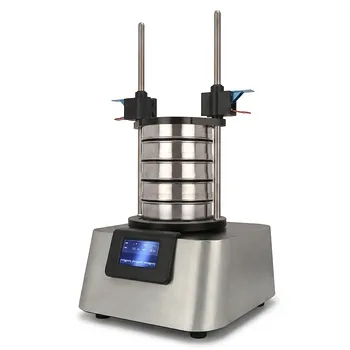
Vibratory Sieve Shaker Electromagnetic 3D Motion Powder Particle Size Analyzer for Dry and Wet Sieving
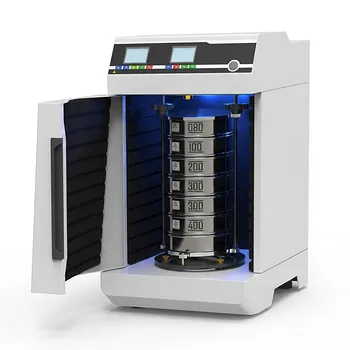
Laboratory Dry and Wet Three Dimensional Vibratory Sieve Shaker for Particle Analysis
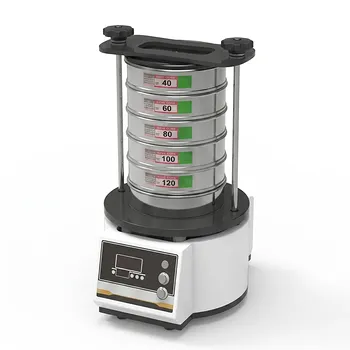
Dry Three Dimensional Vibratory Sieve Shaker
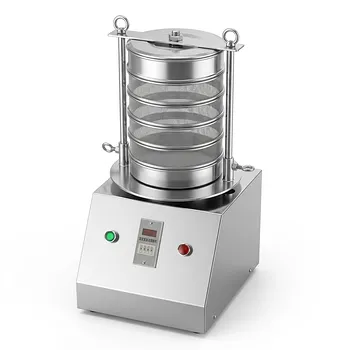
Stainless Steel Laboratory Vibratory Test Sieve Shaker
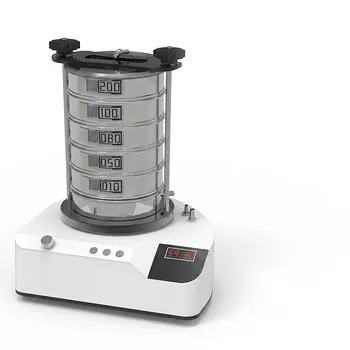
Heavy Duty Dry Three Dimensional Vibratory Sieve Shaker for Particle Separation
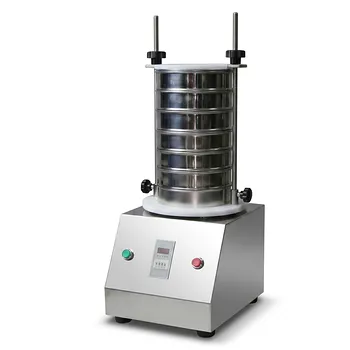
Small Laboratory Vibratory Sieve Shaker for Powder Gradation and Particle Size Analysis
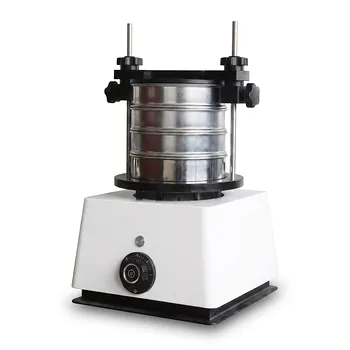
Small Laboratory Vibrating Sieve Shaker for Precise Particle Size Analysis
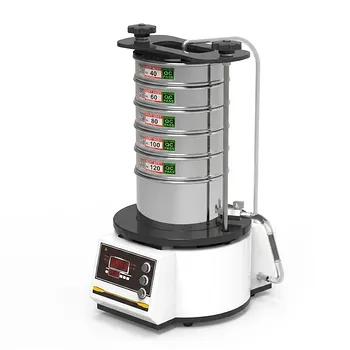
High Frequency Wet Three-Dimensional Vibrating Sieve Shaker for Dry and Wet Particle Size Analysis
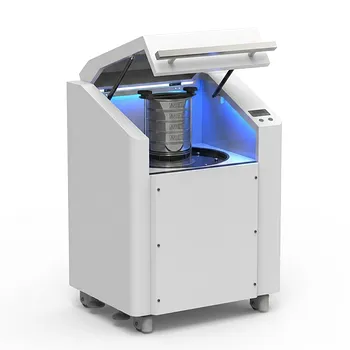
High Frequency Cabinet Type Three-Dimensional Rotary Vibrating Sieve Shaker for Dry Sieving and Particle Classification
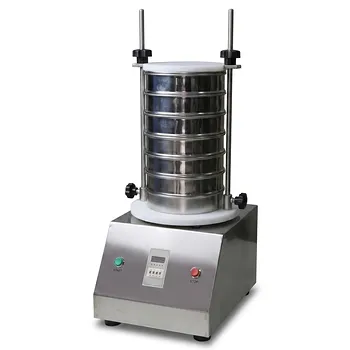
Laboratory Vibratory Test Sieve Shaker for Precision Particle Size Analysis and Powder Grading
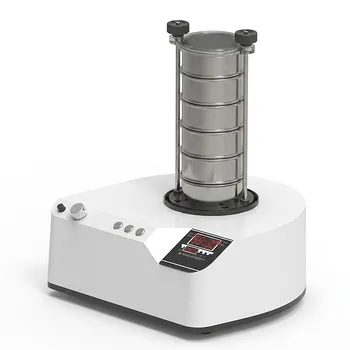
三维电磁微量振动筛分仪
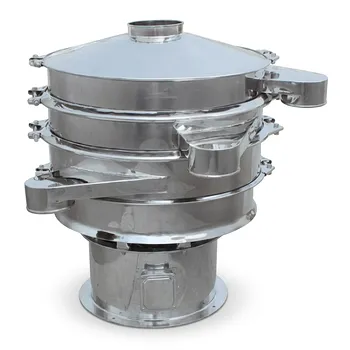
Stainless Steel Rotary Vibrating Sieve High Precision Circular Vibratory Separator Industrial Powder Grading Machine Multi Layer Sifting Equipment
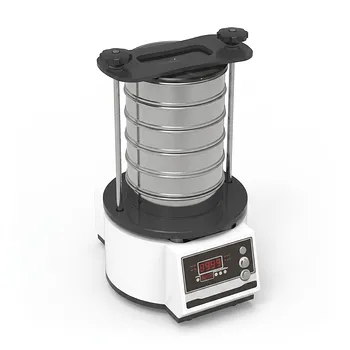
Tapping Oscillating Sieve Shaker for Dry and Wet Particle Size Analysis
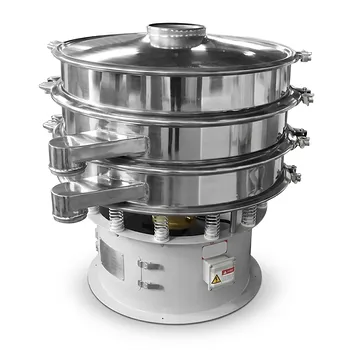
Three Dimensional Rotary Vibrating Sieve
Vibratory Superfine Grinder for Ultra Fine Laboratory Powder Milling
Small Vibrating Ultrafine Grinder for Traditional Chinese Medicine
Automatic Vibrating Powder Feeder for Laboratory Material Processing Precision Vibratory Hopper Feeder for Granular and Powder Material Handling Industrial Grade Vibrating Tray Feeder for Consistent Material Sample Preparation