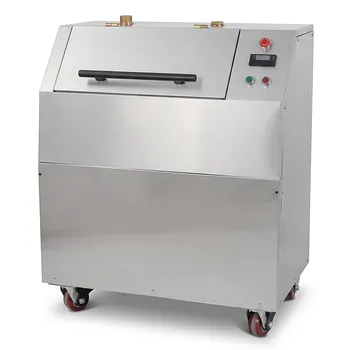
What is the significance of using standard test sieves and shakers? Enhance Slow-Release Pellet Precision & Yield
Updated 5 months ago
Precision particle size control is the cornerstone of effective slow-release fertilizer systems.
Standard test sieves and vibratory sieve shakers allow for the precise classification of pulverized agricultural waste, such as eggshell powder and torrefied wheat straw, into specific micron-level ranges. This consistency directly determines the specific surface area and mixing uniformity of the components, which in turn dictates the mechanical strength, porosity, and nutrient-release kinetics of the final pellets.
The use of standardized sieving equipment transforms raw agricultural waste into a predictable technical material by stabilizing the particle size distribution. This process ensures the mechanical integrity and porosity of the pellets remain consistent, allowing for a scientifically valid and reproducible slow-release profile.
Optimizing Material Characteristics for Slow Release
Enhancing Mixing Uniformity and Surface Area
Using a 40 mesh (425 micron) sieve ensures that raw materials have a high, uniform specific surface area. This uniformity allows different components, like biochar and manure, to mix thoroughly, preventing nutrient "hot spots" within the pellet.
Controlling Porosity and Nutrient Kinetics
The particle size of the substrate directly dictates the aeration porosity and water-holding capacity of the finished pellet. By controlling these voids through precise sieving, researchers can regulate exactly how fast water enters the pellet and how slowly nutrients are released into the soil.
Standardizing Adsorption Performance
Standardizing raw materials into a specific range, such as 2–4 mm, is essential for valid performance comparisons. This eliminates experimental bias caused by surface area variations, ensuring that any observed differences in nutrient adsorption are due to the material properties rather than size discrepancies.
Ensuring Process Stability and Reproducibility
Quantifying Distribution with Span Values
Vibratory shakers drive a stack of sieves to provide a comprehensive particle size distribution analysis. This data allows engineers to calculate the Span value, a critical metric for evaluating the stability and reproducibility of the pellet production process.
Optimizing Yield and Processing Parameters
By weighing the material retained on each sieve (e.g., 850μm to 1180μm), producers can calculate the yield of qualified pellets. Analyzing the ratio of oversize particles to "fines" helps identify whether grinding or pelletizing machinery needs adjustment to reduce waste.
Improving Heat Distribution During Drying
In biomass pelletization, isolating particles with uniform geometric dimensions ensures even heat distribution during the drying phase. This prevents inconsistent moisture levels or scorched particles, which would otherwise compromise the structural integrity of the slow-release system.
Understanding the Trade-offs and Pitfalls
The Energy-Efficiency Balance
While finer particles often improve the mechanical strength and dispersion of fillers, they require significantly more energy for grinding. Producers must find the "sweet spot" where the particle size is fine enough for performance but large enough to keep energy costs sustainable.
Sieve Blinding and Material Moisture
Agricultural wastes are often fibrous or hygroscopic, which can lead to sieve blinding (clogging). If materials are not sufficiently dried before sieving, the mesh openings will block, leading to inaccurate classification and skewed experimental results.
Mechanical Wear and Calibration
Vibratory shakers exert significant mechanical stress on fine mesh sieves over time. Failure to regularly calibrate and inspect sieves for wire displacement can lead to "oversize" particles passing through, which disrupts the uniformity of the recycled polymer or bio-composite matrix.
How to Apply Sieving Standards to Your Project
Before beginning the pelletization process, define your primary goal to select the correct sieving protocol:
- If your primary focus is Release Precision: Use a stack of precision sieves (50 to 120 mesh) to narrow the particle range, as tighter distributions result in more predictable nutrient leaching.
- If your primary focus is Process Scalability: Focus on calculating the Span value and the ratio of fines to qualified pellets to optimize the settings of your industrial grinders and pellet mills.
- If your primary focus is Structural Integrity: Prioritize uniform geometric dimensions to ensure even drying and filler dispersion, which prevents mechanical failure in the final composite.
By treating sieving as a critical engineering step rather than a simple filtering task, you ensure that agricultural waste is successfully converted into a high-performance, functional fertilizer.
Summary Table:
| Parameter | Role in Pellet Production | Impact on Slow-Release System |
|---|---|---|
| Particle Size Control | Classification of pulverized waste | Dictates porosity and nutrient-release kinetics |
| Mixing Uniformity | Ensures high specific surface area | Prevents nutrient "hot spots" and improves strength |
| Span Value Analysis | Quantifies distribution stability | Ensures scientific reproducibility and process yield |
| Geometric Consistency | Uniform particle dimensions | Facilitates even heat distribution during drying |
| Structural Integrity | Eliminates oversize particles | Prevents mechanical failure in the final composite |
Optimize Your Material Science Research with Precision Equipment
Achieving the perfect slow-release profile requires more than just raw materials—it requires precision engineering. At [Company Name], we provide complete laboratory sample preparation solutions tailored for material science and agricultural engineering.
Whether you are processing agricultural waste or advanced bio-composites, our extensive product line supports your entire workflow:
- Size Reduction: High-efficiency crushers, liquid nitrogen cryogenic grinders, and planetary ball/jet mills.
- Precision Classification: Professional vibratory and air-jet sieve shakers with a full range of standardized test sieves.
- Mixing & Homogenization: Advanced powder and defoaming mixers for uniform component distribution.
- Pelletization & Compaction: A full spectrum of hydraulic presses, including Cold/Warm Isostatic Presses (CIP/WIP), vacuum hot presses, and XRF pellet presses.
Ready to elevate your pellet production and research accuracy? Contact our technical experts today to find the ideal equipment configuration for your laboratory!
References
- Bernd G. K. Steiger, Lee D. Wilson. Sustainable agro-waste pellets as granular slow-release fertilizer carrier systems for ammonium sulfate. DOI: 10.1039/d4su00141a
Mentioned Products
- Vibratory Sieve Shaker Electromagnetic 3D Motion Powder Particle Size Analyzer for Dry and Wet Sieving
- Laboratory Dry and Wet Three Dimensional Vibratory Sieve Shaker for Particle Analysis
- Dry Three Dimensional Vibratory Sieve Shaker
- Stainless Steel Laboratory Vibratory Test Sieve Shaker
- Heavy Duty Dry Three Dimensional Vibratory Sieve Shaker for Particle Separation
People Also Ask
- How does a vibratory sieve shaker contribute to optimizing the performance of activated carbon? Enhance Adsorption Precision
- Why is a laboratory vibratory sieve shaker necessary for processing magnesium-based borate precursor powders? Boost Activity
- Why use a vibratory sieve shaker to verify coarse aggregate grading in rubberized concrete? Ensure Structural Integrity
- What function do vibratory sieve shakers and standard test sieves serve in the preparation of adsorbents? Key Guide
- What role does a vibratory sieve shaker play in the particle size analysis of ground corn products? Enhance QC Precision

Tech Team · PowderPreparation
Last updated on May 14, 2026
Related Products

Vibratory Sieve Shaker Electromagnetic 3D Motion Powder Particle Size Analyzer for Dry and Wet Sieving
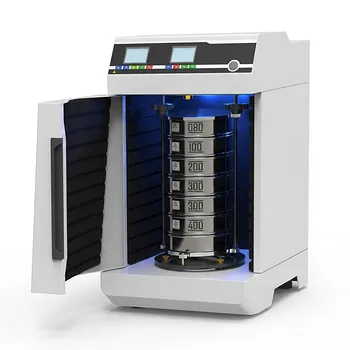
Laboratory Dry and Wet Three Dimensional Vibratory Sieve Shaker for Particle Analysis

Dry Three Dimensional Vibratory Sieve Shaker
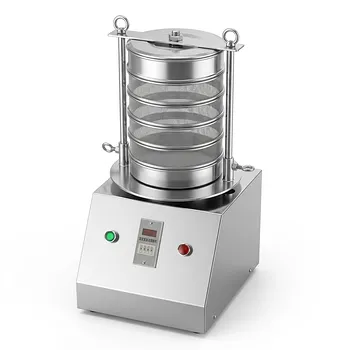
Stainless Steel Laboratory Vibratory Test Sieve Shaker

Heavy Duty Dry Three Dimensional Vibratory Sieve Shaker for Particle Separation

Small Laboratory Vibratory Sieve Shaker for Powder Gradation and Particle Size Analysis

Small Laboratory Vibrating Sieve Shaker for Precise Particle Size Analysis
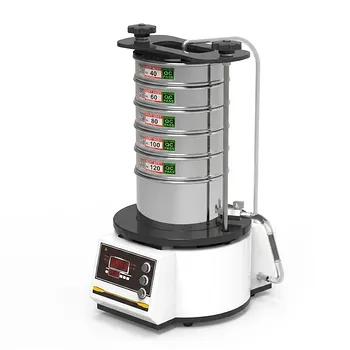
High Frequency Wet Three-Dimensional Vibrating Sieve Shaker for Dry and Wet Particle Size Analysis
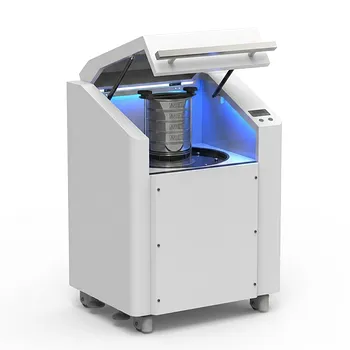
High Frequency Cabinet Type Three-Dimensional Rotary Vibrating Sieve Shaker for Dry Sieving and Particle Classification

Laboratory Vibratory Test Sieve Shaker for Precision Particle Size Analysis and Powder Grading

三维电磁微量振动筛分仪

Stainless Steel Rotary Vibrating Sieve High Precision Circular Vibratory Separator Industrial Powder Grading Machine Multi Layer Sifting Equipment

Tapping Oscillating Sieve Shaker for Dry and Wet Particle Size Analysis

Three Dimensional Rotary Vibrating Sieve
Vibratory Superfine Grinder for Ultra Fine Laboratory Powder Milling
Small Vibrating Ultrafine Grinder for Traditional Chinese Medicine
Automatic Vibrating Powder Feeder for Laboratory Material Processing Precision Vibratory Hopper Feeder for Granular and Powder Material Handling Industrial Grade Vibrating Tray Feeder for Consistent Material Sample Preparation