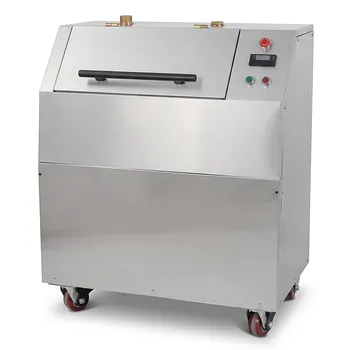
Why is a high-precision vibratory sieve shaker essential for analyzing recycled inorganic sand? Ensure Consistent PSD
Updated 4 months ago
A high-precision vibratory sieve shaker is essential because it provides the only repeatable method to quantify how particle size distribution (PSD) evolves across multiple recycling cycles. By using multi-layer standard sieves, these machines accurately measure the increase in coarse components—such as the 315μm fraction—caused by agglomeration, while tracking the critical loss of fine particles that dictates the quality of the final product.
Core Takeaway: For recycled inorganic sand, precision sieving is the bridge between raw waste and a high-performance aggregate. It ensures that the recycled material’s gradation matches natural sand, preserving the structural integrity and workability of the resulting concrete or foundry molds.
Quantifying the Evolution of Recycled Material
Tracking Agglomeration and Fine Loss
Recycled inorganic sand undergoes physical changes every time it is processed. High-precision shakers quantify the increase in coarse fractions caused by particles sticking together and the simultaneous decrease in fines.
This data is vital for understanding "performance evolution." Without it, engineers cannot predict how the sand will behave when reused in core production or construction.
Determining the Grain Fineness Number (GFN)
In foundry and specialized industrial applications, knowing the Grain Fineness Number (GFN) is critical. A vibratory shaker allows for the calculation of this number by precisely separating substitute powders into distinct mass distributions.
The resulting data ensures that recycled materials provide the same surface finish and permeability as virgin silica sand.
Ensuring Reproducibility and Standard Compliance
Eliminating Human Error via Mechanical Vibration
Manual sieving is inherently inconsistent due to variations in force and technique. Vibratory shakers use high-frequency mechanical vibrations with constant amplitude and uniform processing time.
This mechanical control ensures that results are repeatable and standardized, which is a prerequisite for any laboratory-grade sediment or aggregate analysis.
Meeting Fine Aggregate Specifications
Construction standards for fine aggregates require specific distributions, often ranging from 63.0 mm down to 0.063 mm. A high-precision shaker identifies whether waste sand meets these rigorous specifications for concrete mix proportions.
Accurate sieving allows for the calculation of the sand equivalent, a key metric for determining the cleanliness and suitability of the recycled material.
The Impact on End-Product Performance
Maintaining Concrete Workability and Packing Density
The "grading curve" of recycled aggregates must closely mimic that of natural aggregates to maintain packing density. If the gradation is off, the workability of the concrete mixture suffers, leading to structural weaknesses.
Using a shaker to match these curves ensures that LC3 recycled concrete remains stable and performs reliably under load.
Optimizing Foundry Mold Permeability
In foundry processes, the particle size distribution directly dictates the mechanical strength of the sand mold. If the sand is too fine, gas cannot escape; if it is too coarse, the surface finish of the casting will be poor.
High-precision sieving ensures that recycled sand maintains the exact balance required for high dimensional accuracy in metal castings.
Common Pitfalls to Avoid
Overloading the Sieve Stack
One of the most common mistakes is placing too much material on the top sieve. This leads to "blinding," where particles wedge into the mesh and prevent smaller grains from passing through, resulting in an inaccurate coarse-heavy reading.
Ignoring Mesh Wear and Calibration
Standard test sieves are precision instruments that degrade over time. Using a high-precision shaker with worn or distorted mesh negates the benefits of the machine’s mechanical accuracy, leading to inconsistent data across different batches.
How to Apply This to Your Project
Making the Right Choice for Your Goal
- If your primary focus is Quality Control in Construction: Use the shaker to strictly monitor the 0.063 mm silt and clay fraction to ensure your recycled sand meets fine aggregate standards.
- If your primary focus is Foundry Sand Recovery: Focus on calculating the Grain Fineness Number (GFN) to maintain the permeability and surface finish of your molds.
- If your primary focus is Material Research: Prioritize shakers with adjustable amplitude and digital timers to track the exact rate of agglomeration across multiple recycling loops.
By mastering the particle size distribution of recycled inorganic sand, you transform a waste product into a predictable, high-value industrial resource.
Summary Table:
| Application | Key Metric Analyzed | Primary Benefit |
|---|---|---|
| Construction | Particle Size Distribution (PSD) | Ensures concrete workability and packing density |
| Foundry Casting | Grain Fineness Number (GFN) | Maintains mold permeability and surface finish |
| Material Research | Agglomeration & Fine Loss | Tracks material evolution across recycling loops |
| Quality Control | 0.063 mm Silt/Clay Fraction | Ensures compliance with fine aggregate standards |
Elevate Your Material Analysis with Precision Equipment
To transform recycled waste into high-value industrial resources, precision is non-negotiable. At [Your Brand Name], we provide complete laboratory sample preparation solutions for material science, specializing in high-performance powder processing and compaction equipment.
Our extensive product line is designed to meet the rigorous demands of researchers and manufacturers:
- Sieve Analysis: High-precision vibratory and air-jet sieve shakers with various test sieves and meshes.
- Size Reduction: Jaw/roll crushers, liquid nitrogen cryogenic grinders, and various mills (planetary ball, jet, sand/bead, disc, rotor).
- Sample Preparation: Powder mixers, defoaming mixers, and a full spectrum of hydraulic presses, including Cold/Warm Isostatic Presses (CIP/WIP), standard lab presses, and vacuum hot presses.
Whether you are optimizing the Grain Fineness Number for foundry sand or ensuring the grading curve of recycled concrete, our equipment delivers the repeatability you need.
Ready to optimize your laboratory workflow? Contact our technical team today for a customized solution!
References
- Viktória Dargai, László Varga. Investigation of the Granulometric and Mechanical Properties of Inorganic Used Sand. DOI: 10.21791/ijems.2020.2.34.
Mentioned Products
- Vibratory Sieve Shaker Electromagnetic 3D Motion Powder Particle Size Analyzer for Dry and Wet Sieving
- Laboratory Dry and Wet Three Dimensional Vibratory Sieve Shaker for Particle Analysis
- Dry Three Dimensional Vibratory Sieve Shaker
- Stainless Steel Laboratory Vibratory Test Sieve Shaker
- Heavy Duty Dry Three Dimensional Vibratory Sieve Shaker for Particle Separation
People Also Ask
- How does a vibratory sieve shaker contribute to optimizing the performance of activated carbon? Enhance Adsorption Precision
- Why is a laboratory vibratory sieve shaker necessary for processing magnesium-based borate precursor powders? Boost Activity
- Why use a vibratory sieve shaker to verify coarse aggregate grading in rubberized concrete? Ensure Structural Integrity
- What function do vibratory sieve shakers and standard test sieves serve in the preparation of adsorbents? Key Guide
- What role does a vibratory sieve shaker play in the particle size analysis of ground corn products? Enhance QC Precision

Tech Team · PowderPreparation
Last updated on Jun 03, 2026
Related Products

Vibratory Sieve Shaker Electromagnetic 3D Motion Powder Particle Size Analyzer for Dry and Wet Sieving
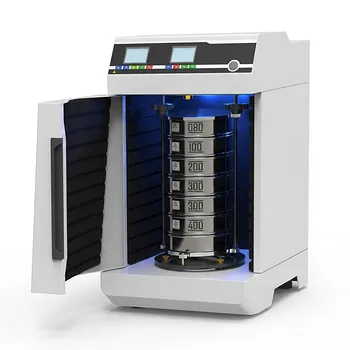
Laboratory Dry and Wet Three Dimensional Vibratory Sieve Shaker for Particle Analysis

Dry Three Dimensional Vibratory Sieve Shaker
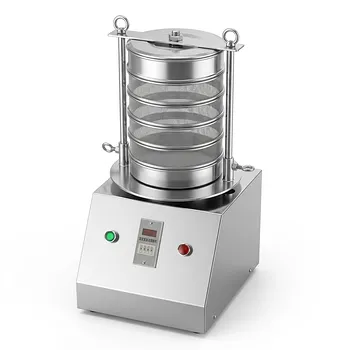
Stainless Steel Laboratory Vibratory Test Sieve Shaker

Heavy Duty Dry Three Dimensional Vibratory Sieve Shaker for Particle Separation

Small Laboratory Vibratory Sieve Shaker for Powder Gradation and Particle Size Analysis

Small Laboratory Vibrating Sieve Shaker for Precise Particle Size Analysis
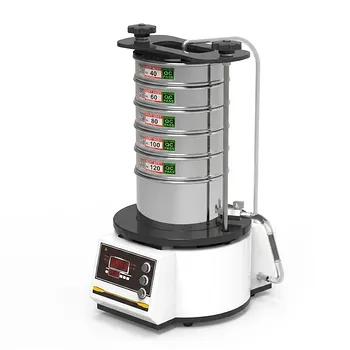
High Frequency Wet Three-Dimensional Vibrating Sieve Shaker for Dry and Wet Particle Size Analysis
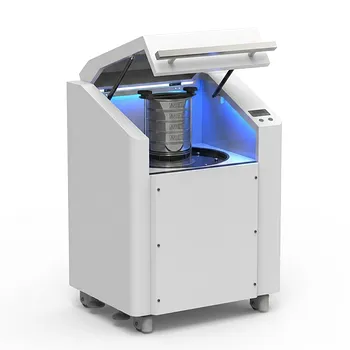
High Frequency Cabinet Type Three-Dimensional Rotary Vibrating Sieve Shaker for Dry Sieving and Particle Classification

Laboratory Vibratory Test Sieve Shaker for Precision Particle Size Analysis and Powder Grading

三维电磁微量振动筛分仪

Stainless Steel Rotary Vibrating Sieve High Precision Circular Vibratory Separator Industrial Powder Grading Machine Multi Layer Sifting Equipment

Tapping Oscillating Sieve Shaker for Dry and Wet Particle Size Analysis

Three Dimensional Rotary Vibrating Sieve
Vibratory Superfine Grinder for Ultra Fine Laboratory Powder Milling
Small Vibrating Ultrafine Grinder for Traditional Chinese Medicine
Automatic Vibrating Powder Feeder for Laboratory Material Processing Precision Vibratory Hopper Feeder for Granular and Powder Material Handling Industrial Grade Vibrating Tray Feeder for Consistent Material Sample Preparation