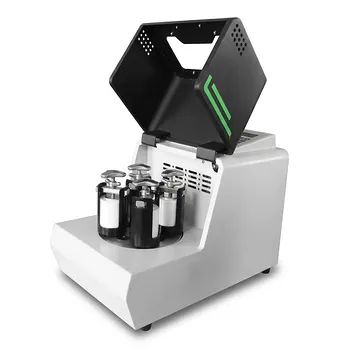
What is the primary function of high-energy ball milling? Achieve Homogeneity in Al2O3-Cu-Ni Composite Slurries
Updated 3 months ago
High-energy ball milling is the critical mechanism for ensuring atomic-level homogeneity and structural stability in Al2O3-Cu-Ni hybrid composite slurries. It functions primarily by utilizing mechanical impact and shear forces to break down powder agglomerates and facilitate the uniform distribution of alumina, copper, and nickel particles within a liquid medium. This process enables the creation of slurries with high solid loading (up to 50 vol.%) that maintain the precise balance of fluidity and stability required for high-quality slip casting or gel-casting precursors.
The core function of high-energy ball milling is to transform disparate powder components into a synchronized, homogeneous precursor by overcoming inter-particle surface energies. This mechanical processing ensures that hard ceramic reinforcements are uniformly embedded within the ductile metal matrix, establishing the foundation for a defect-free final microstructure.
Achieving Microstructural Homogeneity
Forced Mixing at the Atomic Level
High-energy ball milling utilizes the intense mechanical energy generated by high-speed rotation (typically around 300 rpm) to force the mixing of alumina, nickel, and copper. This process ensures that the reinforcement phase and the matrix components are distributed uniformly at the atomic level.
Fracturing and Cold Welding
During the milling process, the powder particles undergo repeated cycles of fracturing and cold welding. This mechanical interaction refines the particle size to the micrometer level and ensures that the hard Al2O3 particles are securely embedded within the ductile copper and nickel matrices.
Increasing Specific Surface Area
By refining the powder particle size, the milling process significantly increases the specific surface area of the components. This enhancement improves the contact area between particles, which is vital for the chemical reactivity and bonding strength during subsequent sintering or combustion reactions.
Optimizing Slurry Rheology and Stability
De-agglomeration of Nano-scale Powders
Powders, especially nano-scale alumina, naturally tend to clump together due to high surface energy. The mechanical stirring force of the ball mill effectively breaks these agglomerates, allowing each particle to be individually wetted by the solvent and additives.
Achieving High Solid Content
The breakdown of agglomerates is what allows a slurry to reach a high solid content (up to 50 vol.%) without losing its flow characteristics. This high density is essential for minimizing shrinkage and defects during the drying and sintering stages of composite production.
Balancing Fluidity and Stability
High-energy milling ensures that liquefying agents and stabilizers are uniformly distributed throughout the solvent. This creates a stable suspension where particles do not settle prematurely, providing the fluidity necessary for precision slip casting.
Understanding the Trade-offs and Pitfalls
Risk of Material Contamination
The high-energy nature of the process can lead to wear on the grinding balls and containers. To mitigate this, alumina containers and high-purity grinding media must be used to prevent the introduction of metallic impurities that could compromise the final composite's properties.
Energy-Induced Lattice Distortion
While milling increases defect density—which can aid in solid solution formation—excessive milling energy can cause unwanted lattice distortion. If not controlled, this may lead to unpredictable phase transformations or internal stresses in the final material.
Managing Milling Duration
Milling for too short a duration results in poor dispersion and residual agglomerates, while excessive milling can lead to over-refinement and excessive heat. Finding the optimal milling time is crucial to balancing homogenization with the physical integrity of the powder particles.
Applying Ball Milling to Your Project
To maximize the effectiveness of high-energy ball milling in your composite preparation, align your parameters with your specific material requirements:
- If your primary focus is high-density precursors: Prioritize maximizing solid vol.% (up to 50%) by using milling to ensure a perfectly de-agglomerated slurry for slip casting.
- If your primary focus is microstructural strength: Focus on the mechanical alloying aspect of milling to ensure hard Al2O3 particles are deeply embedded into the Cu-Ni matrix through repeated fracturing and cold welding.
- If your primary focus is chemical purity: Utilize high-purity alumina grinding media and limit milling duration to avoid the introduction of external metallic contaminants.
By mastering the mechanical forces of high-energy ball milling, you establish the fundamental uniformity required for high-performance hybrid composites.
Summary Table:
| Function | Key Mechanism | Benefit for Composite |
|---|---|---|
| Microstructural Homogeneity | Mechanical Impact & Shear | Atomic-level distribution of Al2O3 in Cu-Ni matrix |
| Particle Refinement | Fracturing & Cold Welding | Increased surface area for superior sintering reactivity |
| Slurry Stability | De-agglomeration | High solid loading (50 vol.%) with optimal fluidity |
| Structural Integrity | Embedding Reinforcements | Foundation for defect-free, high-strength final microstructures |
Elevate Your Material Synthesis with KINTEK Solution
Achieving the perfect Al2O3-Cu-Ni composite requires precision at every stage of preparation. KINTEK Solution specializes in providing complete laboratory sample preparation solutions for material science, offering the specialized powder processing and compaction equipment you need for consistent, high-quality results.
Our extensive range includes:
- Advanced Milling: Planetary ball, jet, and disc mills for superior homogenization and particle refinement.
- Powder Processing: Sieve shakers, powder mixers, and high-purity grinding media to prevent contamination.
- Compaction Excellence: A full spectrum of hydraulic presses, including Cold/Warm Isostatic Presses (CIP/WIP), vacuum hot presses, and XRF pellet presses.
Ready to optimize your slurry stability and achieve atomic-level uniformity? Contact KINTEK Solution today for expert guidance and the industry's most reliable laboratory equipment!
References
- Justyna Zygmuntowicz, W. Kaszuwara. Microstructure and mechanical properties of Al2O3-Cu-Ni hybrid composites fabricated by slip casting. DOI: 10.2298/pac2001001z
Mentioned Products
- High Energy Planetary Ball Mill for Nano Scale Grinding and Mechanical Alloying
- High Energy Hybrid Vibratory Ball Mill for Grinding Mixing and Cell Disruption
- High Energy Laboratory Planetary Ball Mill for Nano Grinding and Material Science Sample Preparation
- High Energy Omnidirectional Planetary Ball Mill 16L
- Ultra-Low Temperature Cryogenic High-Energy Vibratory Ball Mill
People Also Ask
- Why is a high-energy planetary ball mill used for nano-milling As4Se3? Achieve Expert Structural Transformation
- What role do high-energy planetary ball mills play in FDM composite filament preparation? Optimize Material Performance
- What is the role of a high-energy planetary ball mill in the exfoliation of modified WSe2? Achieve Nano-Precision
- What is the function of a planetary ball mill in glass-ceramic sintering? Optimize Reactivity and Uniformity
- What is the role of a high-energy planetary ball mill in the preparation of high-performance nano-ceramics? Key Guide

Tech Team · PowderPreparation
Last updated on May 14, 2026
Related Products

High Energy Planetary Ball Mill for Nano Scale Grinding and Mechanical Alloying

High Energy Hybrid Vibratory Ball Mill for Grinding Mixing and Cell Disruption

High Energy Laboratory Planetary Ball Mill for Nano Grinding and Material Science Sample Preparation
High Energy Omnidirectional Planetary Ball Mill 16L

Ultra-Low Temperature Cryogenic High-Energy Vibratory Ball Mill
High Energy Planetary Ball Mill for Nano Scale Grinding and Colloidal Mixing in Material Science Research

Nano High Energy Vibratory Ball Mill with Heating and Temperature Control
High Energy Omnidirectional Planetary Ball Mill 20L
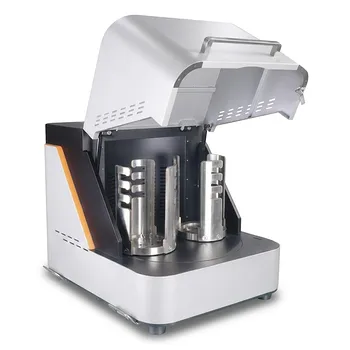
High Energy Laboratory Planetary Ball Mill for Nano Grinding and Colloidal Mixing of Hard and Brittle Materials
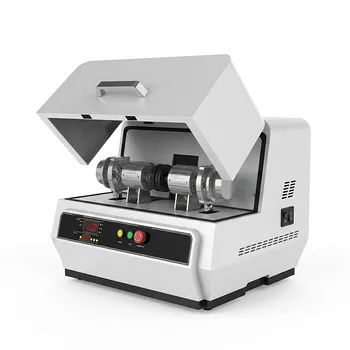
Dual Jar High Energy Vibratory Ball Mill

Multi-Platform Nanoscale High-Energy Vibratory Ball Mill
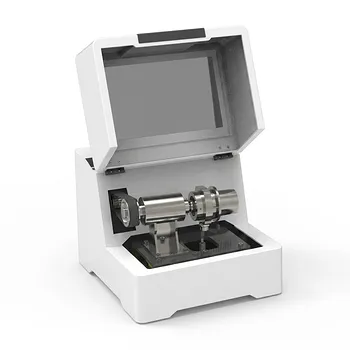
Single Tank High Energy Vibratory Ball Mill for Laboratory Grinding and Mixing

Nanoscale High-Energy Vibratory Ball Mill for Laboratory Sample Preparation, Mechanochemistry, and Mechanical Alloying

Heating Temperature Controlled High Energy Vibratory Ball Mill

Nano High Energy Vibratory Ball Mill for Laboratory Sample Preparation
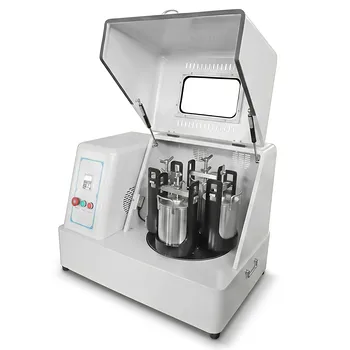
Vertical Square Planetary Ball Mill for Laboratory Sample Preparation and Nanoscale Grinding
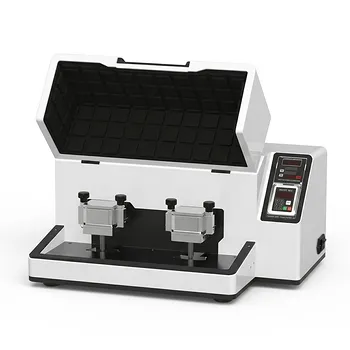
Nanoscale High Energy Vibratory Ball Mill Low Temperature

8L Planetary Ball Mill for Laboratory Grinding and Sample Preparation
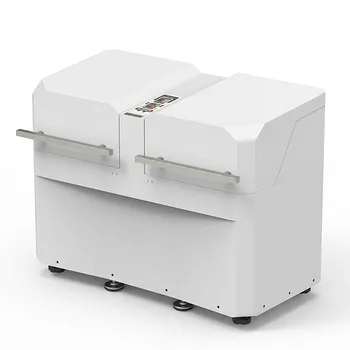
Dual Station Planetary Ball Mill 24L