What is the ball mill's role in recycled silica processing? Enhancing Rubber Composites
Updated 4 months ago
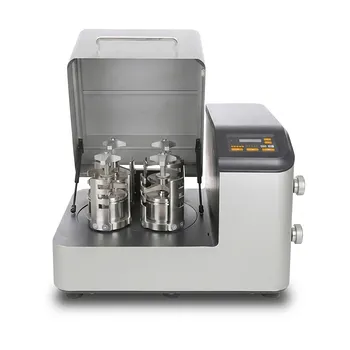
The industrial ball mill serves as the primary engine for micronization in recycled silica processing. It utilizes high-frequency impact and mechanical grinding to pulverize bead-shaped silica gel particles—typically 3-4 mm in diameter—into a fine, micron-sized powder. This mechanical reduction is the essential first step in transforming a waste product into a functional component for high-performance materials.
Core Takeaway: The ball mill's fundamental role is to drastically increase the specific surface area of recycled silica gel. This physical transformation is mandatory to ensure uniform dispersion and strong interfacial bonding when the silica is integrated as a reinforcing filler in a natural rubber matrix.
Achieving Particle Size Reduction
From Macro Beads to Micron Powder
Recycled silica gel desiccant usually enters the process as relatively large, 3-4 mm beads that are incompatible with polymer blending. The ball mill applies intense mechanical energy to break these beads down into micron-sized particles, which are small enough to be incorporated into the rubber's molecular structure.
High-Frequency Impact and Grinding
The equipment achieves this reduction through a combination of collision and grinding actions between the silica and the grinding media (balls). This process not only reduces size but also ensures that the resulting powder has the consistency required for industrial-scale manufacturing.
Enhancing Composite Performance
Maximizing Specific Surface Area
As the ball mill reduces particle size, it exponentially increases the specific surface area of the silica. This is a critical prerequisite for reinforcement, as a higher surface area allows for more contact points between the filler and the rubber chains.
Improving Filler-Polymer Interaction
By achieving a fine powder state, the ball mill facilitates uniform dispersion throughout the natural rubber matrix. This prevents the formation of "clumps" or agglomerates, ensuring that the filler strengthens the material evenly rather than creating points of structural weakness.
Boosting Interfacial Contact
The mechanical processing establishes the foundation for superior interfacial contact between the silica filler and the polymer. This enhanced bond is what ultimately improves the physical properties of the natural rubber composite, such as tensile strength and durability.
Understanding the Trade-offs
Energy Intensity and Heat Generation
Ball milling is a high-energy process that generates significant heat during extended operation. Excessive heat can potentially alter the physical characteristics of the silica gel if not monitored, requiring a balance between grinding duration and temperature control.
Potential for Media Contamination
As the grinding media (the balls) impact the silica, they undergo gradual wear and tear. Over time, microscopic fragments of the grinding media may integrate into the silica powder, which could affect the purity or the final color of the rubber composite.
How to Apply This to Your Project
Understanding the role of the ball mill allows you to optimize the recycling process for specific mechanical outcomes in rubber production.
- If your primary focus is Maximum Tensile Strength: Extend milling time to achieve the smallest possible particle size, thereby maximizing surface area and interfacial bonding.
- If your primary focus is Process Efficiency: Optimize the ratio of grinding media to silica beads to achieve the target micron size in the shortest possible cycle time.
- If your primary focus is Material Purity: Utilize high-wear-resistant grinding media (such as alumina or zirconia) to minimize the risk of metallic contamination in the final silica powder.
By mastering the micronization phase, you transform discarded desiccant into a high-value asset for advanced composite manufacturing.
Summary Table:
| Process Phase | Action | Impact on Composite |
|---|---|---|
| Micronization | Pulverizes 3-4mm beads to micron powder | Enables molecular-level integration |
| Surface Area | Increases specific surface area | Maximizes filler-to-polymer contact |
| Dispersion | High-frequency mechanical grinding | Prevents agglomeration for uniform strength |
| Reinforcement | Facilitates interfacial bonding | Improves tensile strength and durability |
Optimize Your Material Processing with Precision Engineering
At KinTek, we provide complete laboratory sample preparation solutions for material science, specializing in high-performance powder processing and compaction equipment. Whether you are recycling silica gel or developing advanced natural rubber composites, our tools ensure the particle consistency and material purity your research demands.
Our Comprehensive Product Range Includes:
- Advanced Milling: Planetary ball mills, jet mills, disc mills, and liquid nitrogen cryogenic grinders.
- Size Reduction & Sieving: Jaw/roll crushers and vibratory/air-jet sieve shakers.
- Mixing Solutions: High-efficiency powder mixers and vacuum defoaming mixers.
- Compaction Equipment: A full spectrum of hydraulic presses, including Cold/Warm Isostatic Presses (CIP/WIP), XRF pellet presses, and vacuum hot presses.
Ready to enhance your lab's efficiency and material performance? Contact our experts today to find the perfect equipment solution for your specific application!
References
- Dener da Silva Souza, Renivaldo José dos Santos. Recycling of Post-Consumer Silica Gel Desiccants as Reinforcing Filler in Natural Rubber Composites: The Effect of Coupling Agents and Comparison with Commercial Silicas. DOI: 10.3390/recycling10050184
Mentioned Products
- Heavy Duty Horizontal Planetary Ball Mill for Efficient Industrial Grinding and Sample Preparation
- Vertical Production Planetary Ball Mill for High Throughput Powder Processing
- Dual Station Planetary Ball Mill 24L
- Vertical Semi Circular Planetary Ball Mill for Laboratory Precision Grinding
- Vertical Square Planetary Ball Mill for Laboratory Sample Preparation and Nanoscale Grinding
People Also Ask
- Why grind lime-pozzolan specimens for TG/DTA for 3 mins? Master sample prep for high-precision thermal analysis.
- What is the role of a planetary ball mill in the mechanical activation of ZTA powder? Boost Sintering Performance
- What is the function of a planetary ball mill in wollastonite ceramic prep? Achieve Molecular Homogenization & Reactivity
- How does a planetary ball mill contribute to the homogenization of trace elements? Achieve Sub-Micron Uniformity
- What is the function of a high-performance planetary ball mill in AMZ laminates? Master Ceramic Homogenization.

Tech Team · PowderPreparation
Last updated on May 14, 2026
Related Products
Heavy Duty Horizontal Planetary Ball Mill for Efficient Industrial Grinding and Sample Preparation
Vertical Production Planetary Ball Mill for High Throughput Powder Processing
Dual Station Planetary Ball Mill 24L
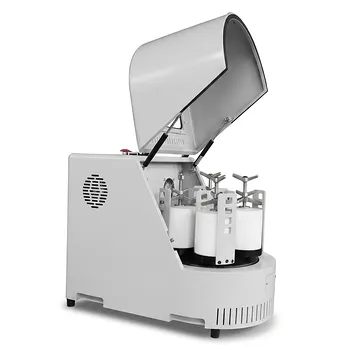
Vertical Semi Circular Planetary Ball Mill for Laboratory Precision Grinding
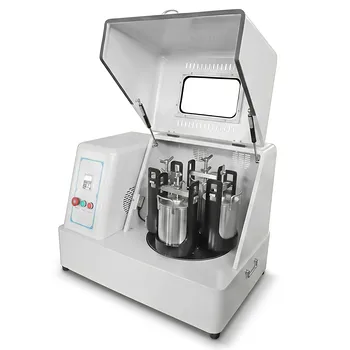
Vertical Square Planetary Ball Mill for Laboratory Sample Preparation and Nanoscale Grinding
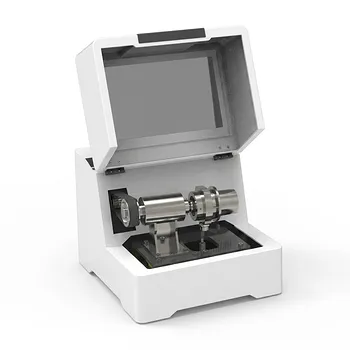
Single Tank High Energy Vibratory Ball Mill for Laboratory Grinding and Mixing
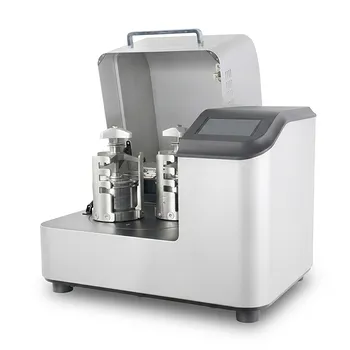
High Energy Planetary Ball Mill for Nano Scale Grinding and Mechanical Alloying
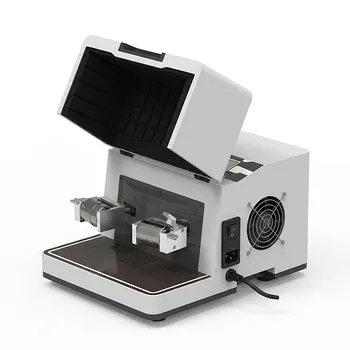
High Energy Hybrid Vibratory Ball Mill for Grinding Mixing and Cell Disruption
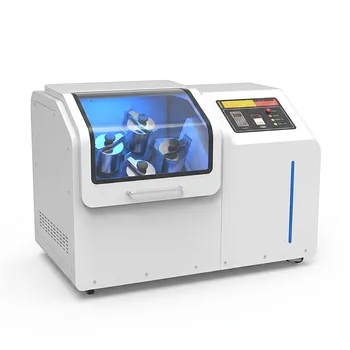
High Energy Omnidirectional Planetary Ball Mill 16L
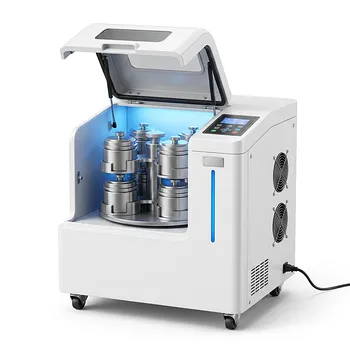
High Energy Omnidirectional Planetary Ball Mill 20L
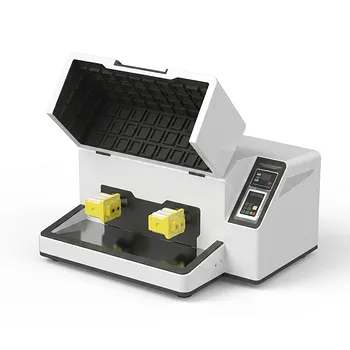
Multi-Platform Nanoscale High-Energy Vibratory Ball Mill
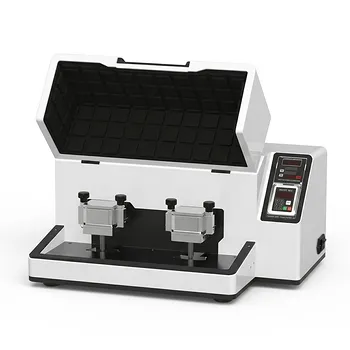
Nanoscale High Energy Vibratory Ball Mill Low Temperature
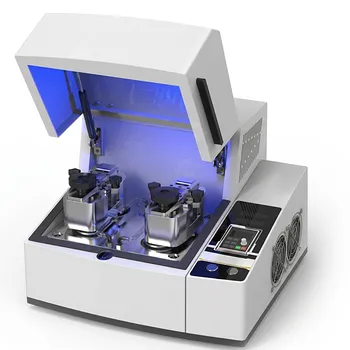
Laboratory Nano High Energy Ball Mill Ultrafine Grinding Mechanical Alloying
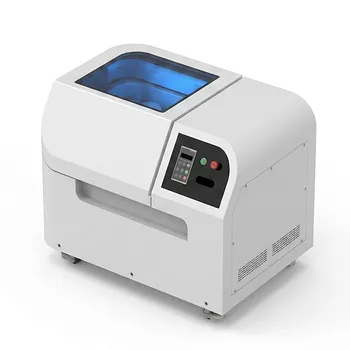
8L Planetary Ball Mill for Laboratory Grinding and Sample Preparation
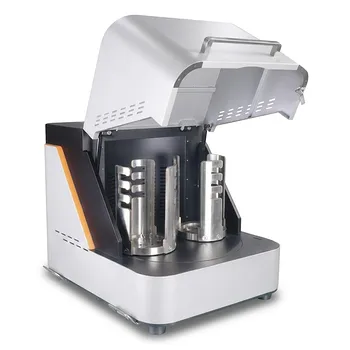
High Energy Laboratory Planetary Ball Mill for Nano Grinding and Colloidal Mixing of Hard and Brittle Materials
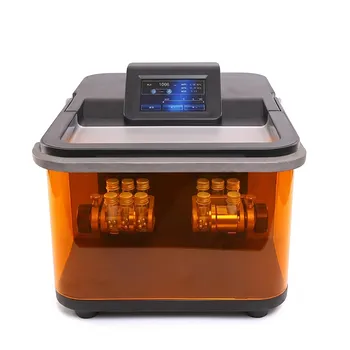
High Throughput Micro Ball Mill for Cryogenic Grinding and Laboratory Cell Disruption
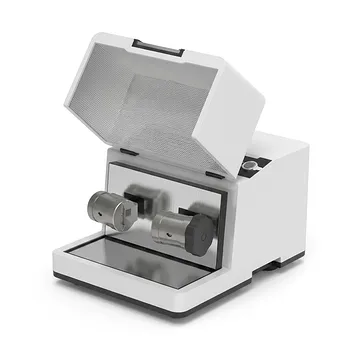
Heating Temperature Controlled High Energy Vibratory Ball Mill
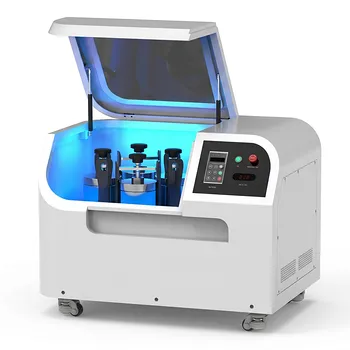
Planetary Ball Mill 12L
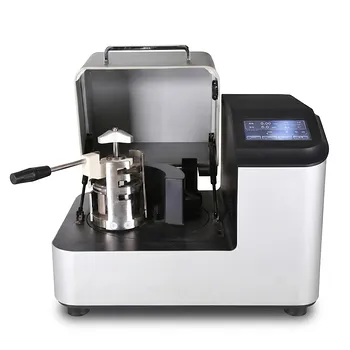
High Energy Laboratory Planetary Ball Mill for Nano Grinding and Material Science Sample Preparation