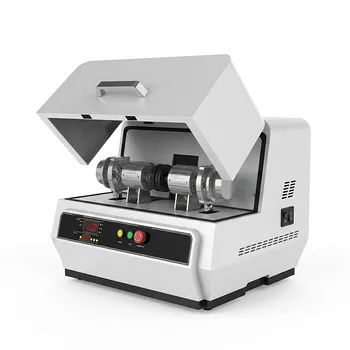
What is the function of a planetary ball mill in wollastonite ceramic prep? Achieve Molecular Homogenization & Reactivity
Updated 4 months ago
The planetary ball mill serves as the primary mechanism for high-energy homogenization and particle refinement. In the production of wollastonite ceramics from cement kiln dust (CKD) and rice husk ash (RHA), the mill uses intense shear and impact forces to ensure that waste materials of different densities achieve molecular-level contact. This process is essential for creating a uniform mixture that can undergo successful reactive sintering.
Core Takeaway: By utilizing high-speed rotation to generate extreme mechanical energy, the planetary ball mill transforms heterogeneous industrial and agricultural wastes into a reactive, molecularly blended precursor. This ensures the chemical precursors for wollastonite are perfectly positioned for solid-phase reactions during the heating process.
Achieving Molecular-Level Homogenization
Overcoming Density Disparities
Industrial wastes like cement kiln dust (CKD) and agricultural residues like rice husk ash (RHA) have significantly different physical properties and densities. The planetary ball mill uses centrifugal forces to force these disparate particles together, preventing the segregation that typically occurs in standard mixing.
Facilitating Wet Grinding
The milling process is typically performed as a wet grinding operation, often for a duration of approximately one hour. This liquid medium aids in the distribution of forces and prevents the agglomeration of fine particles, ensuring a more fluid and consistent slurry for subsequent processing.
Ensuring Precursor Contact
For wollastonite ($CaSiO_3$) to form, the calcium from the CKD and the silica from the RHA must be in direct physical contact at the microscopic scale. The high-energy impact of the mill ensures these components are intimately mixed, providing the necessary physical foundation for the chemical transformation during sintering.
Mechanochemical Activation and Refinement
Particle Size Reduction
The high-frequency rotation drives grinding balls to strike the raw materials with immense force, reducing coarse waste particles to micrometer-sized dimensions. This reduction in size significantly increases the total surface area of the powders.
Increasing Surface Energy
The milling process does more than just break particles; it performs mechanochemical action that increases the surface energy of the powder. This heightened energy state makes the particles more "unstable" and eager to react, which lowers the temperature required for subsequent sintering.
Promoting Solid-Phase Reactions
By achieving an atomic-level uniform distribution of components, the planetary ball mill promotes efficient solid-phase reactions. This ensures that the final ceramic achieves a pure phase structure rather than containing unreacted pockets of waste material.
Understanding the Trade-offs
Potential for Media Contamination
The intense energy required to refine hard waste materials can lead to the wear of the grinding balls and vial walls. This wear can introduce small amounts of impurities (such as alumina or zirconia) into the ceramic mix, which may slightly alter the final material properties.
Energy Consumption and Throughput
Planetary ball milling is a batch process that requires significant energy to maintain high-speed rotation. While it provides superior mixing for specialized ceramics, it may represent a bottleneck in high-volume industrial production compared to continuous milling methods.
Processing Time Sensitivity
While a one-hour milling time is typical for these wastes, over-milling can sometimes lead to excessive heat or unwanted phase changes before sintering. Precise control over the milling duration is required to balance particle refinement with the preservation of the desired chemical precursors.
How to Apply This to Your Project
Depending on your specific goals for waste-derived wollastonite, the milling parameters should be adjusted to prioritize different outcomes.
- If your primary focus is Maximum Structural Strength: Prioritize longer milling times to achieve the smallest possible particle size and highest microstructural density.
- If your primary focus is Minimizing Production Cost: Optimize the milling duration to the minimum time required for homogenization (e.g., exactly 60 minutes) to reduce energy expenditure and media wear.
- If your primary focus is High Chemical Purity: Utilize grinding media (balls and vials) made of the same material as your target ceramic or high-purity zirconia to prevent unwanted metallic contamination.
Properly calibrated planetary milling ensures that low-value waste streams are successfully transformed into high-performance, sustainable ceramic materials.
Summary Table:
| Key Function | Impact on Ceramic Preparation | Mechanism of Action |
|---|---|---|
| Particle Refinement | Increases surface area for faster reactions | High-frequency impact and shear forces |
| Molecular Homogenization | Ensures uniform contact between CKD and RHA | Overcomes density disparities via centrifugal force |
| Mechanochemical Activation | Lowers required sintering temperatures | Increases surface energy of precursor powders |
| Wet Grinding Support | Prevents particle agglomeration | Slurry-based milling for consistent distribution |
| Solid-Phase Promotion | Ensures pure phase structure in final ceramic | Atomic-level uniform distribution of components |
Elevate Your Material Research with Precision Sample Preparation
Transforming industrial waste into high-performance wollastonite ceramics requires more than just a formula—it requires the right equipment to ensure molecular-level precision. At [Your Brand Name], we provide complete laboratory sample preparation solutions tailored for material science and advanced ceramics.
Whether you are refining raw waste or compacting final components, our extensive product line supports your entire workflow:
- Advanced Milling: Achieve superior homogenization with our planetary ball mills, jet mills, and cryogenic grinders.
- Material Processing: From initial reduction with jaw/roll crushers to precise particle sizing using vibratory sieve shakers.
- Superior Compaction: Finalize your ceramic precursors with our full spectrum of Hydraulic Presses, including Cold/Warm Isostatic Presses (CIP/WIP), hot presses, and vacuum hot presses for high-density sintering.
Ready to optimize your waste-to-resource workflow? Contact our technical experts today to find the perfect equipment configuration for your laboratory's needs.
References
- Emad M.M. Ewais, H. El-Didamony. Cement kiln dust/rice husk ash as a low temperature route for wollastonite processing. DOI: 10.14382/epitoanyag-jsbcm.2014.14
Mentioned Products
- Vertical Semi Circular Planetary Ball Mill for Laboratory Precision Grinding
- High Energy Planetary Ball Mill for Nano Scale Grinding and Mechanical Alloying
- Heavy Duty Horizontal Planetary Ball Mill for Efficient Industrial Grinding and Sample Preparation
- Vertical Production Planetary Ball Mill for High Throughput Powder Processing
- 360° Rotating Omnidirectional Laboratory Planetary Ball Mill for Homogeneous Ultra-Fine Grinding and Mixing
People Also Ask
- What role does a planetary ball mill play in the synthesis of Li6PS5Cl (LPSCl)? Unlock High Ionic Conductivity
- Why is a planetary ball mill essential for SiBCN-rGO wet-spinning? Achieve Superior Dispersion and Spinnability
- Why is an intermittent grinding process required for perovskites in a planetary ball mill? Ensure Stability & Purity
- Why is a planetary ball mill required for PET micronization? Ensure Accurate Chemical Analysis of Reprocessed PET
- How does mechanized planetary ball milling compare to manual agate grinding? Optimize sulfide standard material precision.

Tech Team · PowderPreparation
Last updated on Jun 03, 2026
Related Products
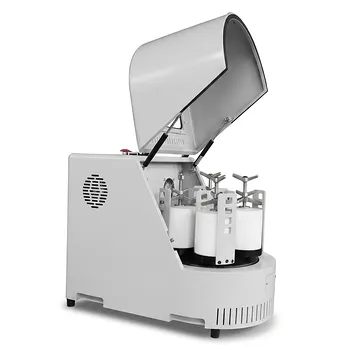
Vertical Semi Circular Planetary Ball Mill for Laboratory Precision Grinding
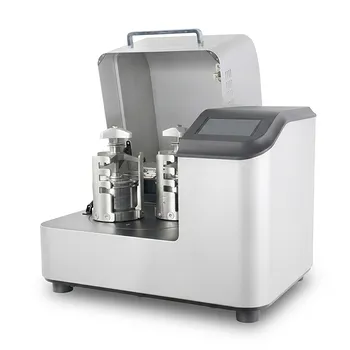
High Energy Planetary Ball Mill for Nano Scale Grinding and Mechanical Alloying
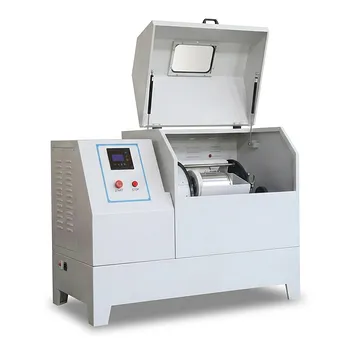
Heavy Duty Horizontal Planetary Ball Mill for Efficient Industrial Grinding and Sample Preparation
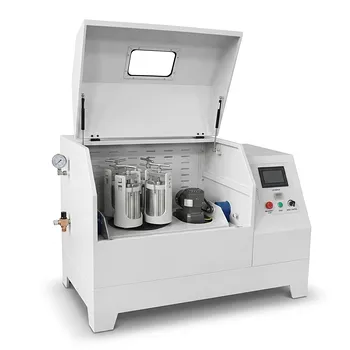
Vertical Production Planetary Ball Mill for High Throughput Powder Processing
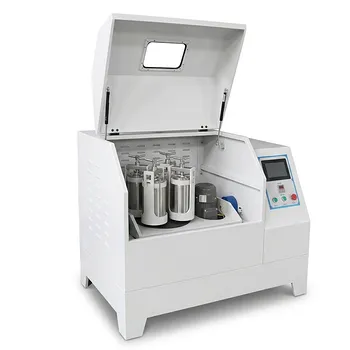
360° Rotating Omnidirectional Laboratory Planetary Ball Mill for Homogeneous Ultra-Fine Grinding and Mixing

Vertical Square Planetary Ball Mill for Laboratory Sample Preparation and Nanoscale Grinding
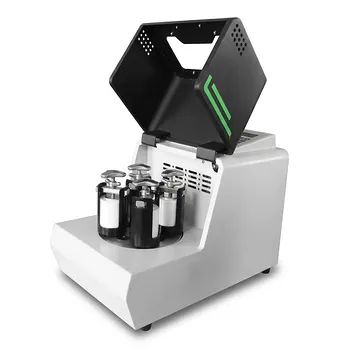
Miniature Planetary Ball Mill with Vacuum Grinding and High Efficiency for Laboratory Sample Preparation
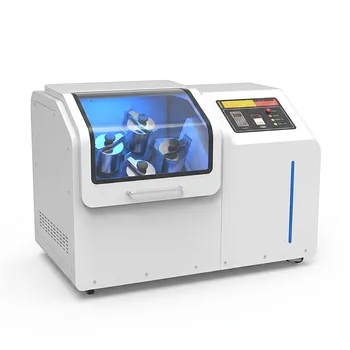
High Energy Omnidirectional Planetary Ball Mill 16L
High Energy Laboratory Planetary Ball Mill for Nano Grinding and Material Science Sample Preparation
High Energy Planetary Ball Mill for Nano Scale Grinding and Colloidal Mixing in Material Science Research
Planetary Ball Mill 12L
Horizontal Light Duty Planetary Ball Mill for Laboratory Sample Preparation
High Energy Omnidirectional Planetary Ball Mill 20L
High Energy Laboratory Planetary Ball Mill for Nano Grinding and Colloidal Mixing of Hard and Brittle Materials
8L Planetary Ball Mill for Laboratory Grinding and Sample Preparation
Dual Station Planetary Ball Mill 24L
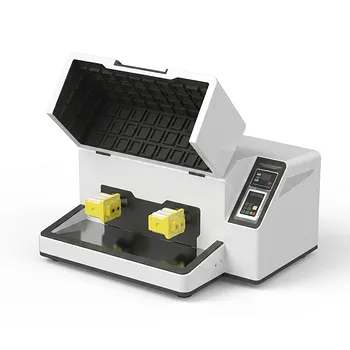
Multi-Platform Nanoscale High-Energy Vibratory Ball Mill

Nano High Energy Vibratory Ball Mill for Laboratory Sample Preparation
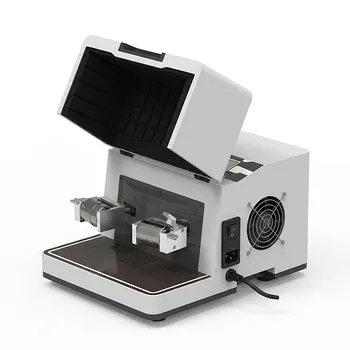
High Energy Hybrid Vibratory Ball Mill for Grinding Mixing and Cell Disruption