What is the primary function of a high-energy ball mill in SiOC/ZrB2/ZrO2 production? Achieve Sub-Micron Uniformity
Updated 4 months ago
The primary function of a high-energy ball mill in the production of SiOC/ZrB2/ZrO2 composite powders is to pulverize hardened materials into a uniform fine powder while ensuring the microscopic distribution of reinforcing phases. Specifically, it reduces the particle size of thermosetting precursors to approximately 1 µm and optimizes the dispersion of ZrB2 particles within the polymer matrix.
Core Takeaway: High-energy ball milling transforms coarse, heterogeneous raw materials into a highly reactive, ultrafine, and homogeneous powder. This mechanical activation is essential for increasing surface energy, which facilitates superior compression molding and uniform densification during subsequent thermal processing.
Particle Size Refinement and Surface Energy
Achieving Sub-Micron Uniformity
High-energy ball milling utilizes intense impact and shear forces to break down hardened materials into a fine powder. In the context of SiOC/ZrB2/ZrO2 composites, the process targets a particle size of approximately 1 µm. This consistency is vital for the flowability and packing density required in downstream manufacturing stages.
Increasing Surface Energy and Reactivity
By significantly reducing particle size, the mill increases the specific surface area of the powder. This mechanical action increases the surface energy, making the particles more reactive. This heightened reactivity is a critical foundation for the in-situ reactions and densification that occur during sintering.
Achieving Microscopic Homogeneity
Optimizing Reinforcement Distribution
A central challenge in composite production is preventing the "clumping" of reinforcing agents. The high-speed rotation and centrifugal forces of the ball mill ensure that ZrB2 particles are deeply and uniformly distributed within the polymer matrix. This microscopic uniformity is necessary to achieve a dispersion-strengthened structure.
Enhancing Interaction Area
The milling process increases the reaction contact area between different chemical components, such as the SiOC precursor and the Zr-based additives. This intimate contact can lower the starting temperature for chemical transformations, such as carbothermal or borothermal reduction reactions, by reducing the diffusion distance between reactants.
Understanding the Trade-offs
Balancing Energy Input and Contamination
While high-energy milling is effective, it is not without risks. The intense friction and impact can lead to wear on the grinding media (balls and jars), which may introduce impurities into the composite powder. Selecting the correct grinding media material is essential to prevent degrading the chemical purity of the final ceramic.
Over-milling and Agglomeration
Excessive milling time can lead to "over-milling," where the extremely fine particles begin to re-agglomerate due to high surface energy. This can reverse the benefits of size reduction and lead to poor flowability. Precise control over rotational speed and duration is required to maintain the desired sub-micron scale.
How to Apply This to Your Project
Making the Right Choice for Your Goal
The parameters of your ball milling process should be calibrated based on the final application of your composite material.
- If your primary focus is mechanical strength: Prioritize longer milling durations to ensure the most uniform dispersion of ZrB2 particles, as this creates a more consistent dispersion-strengthened matrix.
- If your primary focus is process efficiency: Optimize the milling speed to achieve the 1 µm threshold quickly, which maximizes surface energy for faster subsequent compression molding.
- If your primary focus is chemical purity: Use grinding media that matches the chemistry of your composite (e.g., zirconia media) to minimize the impact of wear-induced contamination.
By mastering the mechanical activation of these powders, you ensure that the final ceramic composite achieves its full theoretical performance.
Summary Table:
| Key Function | Technical Impact | Benefit for SiOC/ZrB2/ZrO2 |
|---|---|---|
| Size Refinement | Reduces particles to ~1 µm | Enhances flowability and packing density |
| Homogenization | Uniform dispersion of ZrB2 | Prevents clumping; ensures dispersion strengthening |
| Mechanical Activation | Increases specific surface area | Lowers reaction temperature and boosts reactivity |
| Energy Control | Optimized milling parameters | Prevents over-milling and minimizes contamination |
Elevate Your Material Research with Precision Powder Solutions
Achieving the perfect sub-micron dispersion for SiOC/ZrB2/ZrO2 composites requires more than just equipment—it requires the right mechanical activation strategy. At [Company Name], we provide complete laboratory sample preparation solutions tailored for material science professionals.
Our specialized range includes:
- Advanced Grinding: High-energy planetary ball mills, jet mills, and cryogenic grinders for ultra-fine particle refinement.
- Compaction Excellence: A full spectrum of hydraulic presses, including Cold/Warm Isostatic Presses (CIP/WIP), vacuum hot presses, and XRF pellet presses for superior densification.
- Processing Tools: Precision sieve shakers, powder mixers, and defoaming mixers to ensure chemical purity and homogeneity.
Whether you are a researcher aiming for theoretical performance or a manufacturer scaling up production, our equipment delivers the reliability and precision you need.
Ready to optimize your powder processing? Contact our technical experts today to find the ideal solution for your laboratory!
References
- Yujun Jia, Chengying Xu. Polymer-derived SiOC reinforced with core–shell nanophase structure of ZrB2/ZrO2 for excellent and stable high-temperature microwave absorption (up to 900 °C). DOI: 10.1038/s41598-023-27541-3
Mentioned Products
- High Energy Planetary Ball Mill for Nano Scale Grinding and Mechanical Alloying
- High Energy Hybrid Vibratory Ball Mill for Grinding Mixing and Cell Disruption
- High Energy Laboratory Planetary Ball Mill for Nano Grinding and Material Science Sample Preparation
- High Energy Omnidirectional Planetary Ball Mill 16L
- Ultra-Low Temperature Cryogenic High-Energy Vibratory Ball Mill
People Also Ask
- Why is a high-energy planetary ball mill used for nano-milling As4Se3? Achieve Expert Structural Transformation
- What role do high-energy planetary ball mills play in FDM composite filament preparation? Optimize Material Performance
- What is the role of a high-energy planetary ball mill in the exfoliation of modified WSe2? Achieve Nano-Precision
- What is the function of a planetary ball mill in glass-ceramic sintering? Optimize Reactivity and Uniformity
- What is the role of a high-energy planetary ball mill in the preparation of high-performance nano-ceramics? Key Guide

Tech Team · PowderPreparation
Last updated on May 14, 2026
Related Products

High Energy Planetary Ball Mill for Nano Scale Grinding and Mechanical Alloying
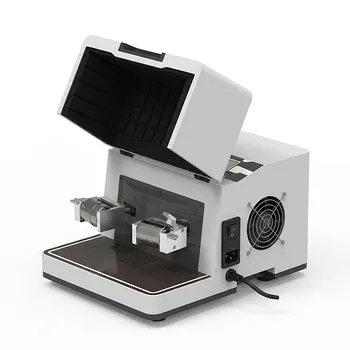
High Energy Hybrid Vibratory Ball Mill for Grinding Mixing and Cell Disruption

High Energy Laboratory Planetary Ball Mill for Nano Grinding and Material Science Sample Preparation

High Energy Omnidirectional Planetary Ball Mill 16L
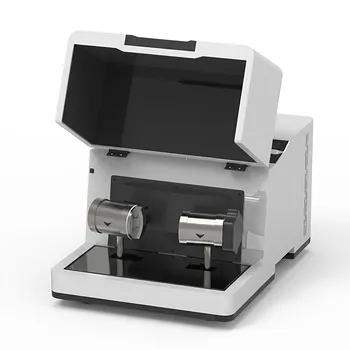
Ultra-Low Temperature Cryogenic High-Energy Vibratory Ball Mill
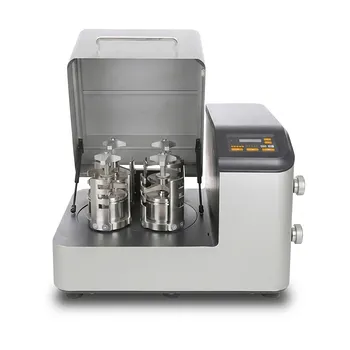
High Energy Planetary Ball Mill for Nano Scale Grinding and Colloidal Mixing in Material Science Research

Nano High Energy Vibratory Ball Mill with Heating and Temperature Control

High Energy Omnidirectional Planetary Ball Mill 20L
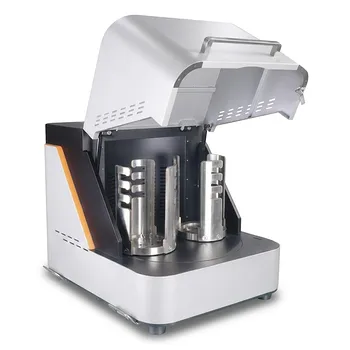
High Energy Laboratory Planetary Ball Mill for Nano Grinding and Colloidal Mixing of Hard and Brittle Materials
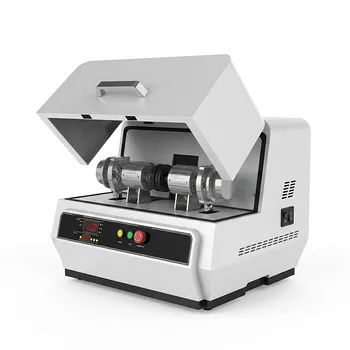
Dual Jar High Energy Vibratory Ball Mill
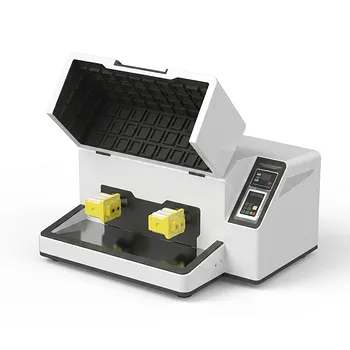
Multi-Platform Nanoscale High-Energy Vibratory Ball Mill
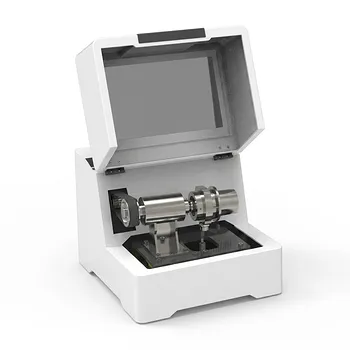
Single Tank High Energy Vibratory Ball Mill for Laboratory Grinding and Mixing
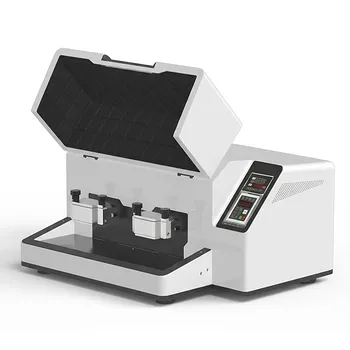
Nanoscale High-Energy Vibratory Ball Mill for Laboratory Sample Preparation, Mechanochemistry, and Mechanical Alloying
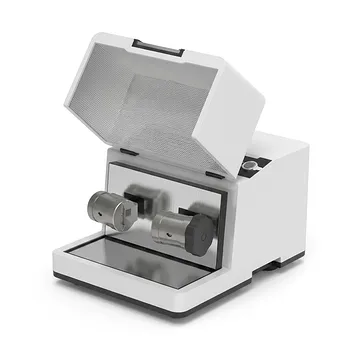
Heating Temperature Controlled High Energy Vibratory Ball Mill

Nano High Energy Vibratory Ball Mill for Laboratory Sample Preparation

Vertical Square Planetary Ball Mill for Laboratory Sample Preparation and Nanoscale Grinding
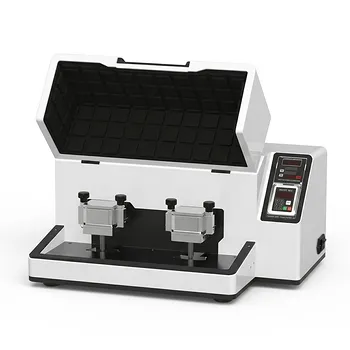
Nanoscale High Energy Vibratory Ball Mill Low Temperature
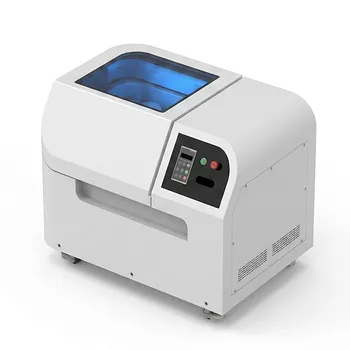
8L Planetary Ball Mill for Laboratory Grinding and Sample Preparation
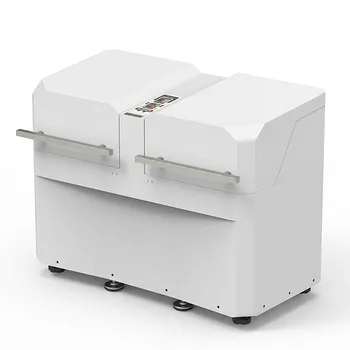
Dual Station Planetary Ball Mill 24L
