What is the function of a process control agent (PCA)? Master Cold-Welding for Superior Powder Milling Results
Updated 5 months ago
A Process Control Agent (PCA) acts as a chemical stabilizer that balances the competitive forces of cold-welding and fracturing during high-energy milling. By modifying the surface energy of ductile powder particles, the PCA prevents them from fusing into large, unmanageable clumps or adhering to the milling equipment. This additive is essential for transforming soft, "sticky" metals like aluminum into a fine, uniform powder.
Core Takeaway: The primary function of a PCA is to suppress excessive cold-welding and promote particle fracturing, ensuring that ductile powders achieve the desired refinement and homogeneity without damaging the milling machinery.
The Mechanics of Surface Modification
Managing Surface Energy
During high-energy ball milling, the constant impact of grinding balls creates fresh, highly reactive metallic surfaces. A Process Control Agent (often a liquid like n-heptane or alcohol) adsorbs onto these surfaces, effectively lowering their surface energy.
Balancing Welding and Fracturing
In ductile materials like aluminum, particles naturally tend to weld together upon impact. The PCA creates a thin film that inhibits this cold-welding, allowing the energy of the mill to instead trigger fracture events that reduce particle size.
Maintaining Powder Dispersion
By reducing the "stickiness" of the particles, the PCA ensures they remain finely and uniformly dispersed. This prevents the formation of large agglomerates and is critical for achieving a homogenous distribution of different components within a composite material.
Enhancing Milling Efficiency and Yield
Preventing Equipment Fouling
Ductile powders have a high affinity for the internal surfaces of the mill. Without a PCA, the metal can form a thick coating on the grinding balls and the inner walls of the milling jars, which halts the refinement process.
Maximizing Powder Yield
When powder sticks to the machinery, the final amount of usable material—the powder yield—is significantly reduced. The PCA acts as a lubricant and barrier, ensuring the majority of the material remains in the milling zone and can be easily recovered.
Protecting Internal Machinery
Excessive build-up of ductile metals can cause mechanical strain and potential damage to the milling components. By maintaining the powder in a free-flowing state, the PCA protects the internal machinery from the stresses associated with "caking" or jamming.
Understanding the Trade-offs
Risk of Chemical Contamination
The most significant drawback of using a PCA is the introduction of impurities. Because PCAs are often organic compounds, they can decompose during milling, potentially introducing carbon, hydrogen, or oxygen into the metal lattice.
Removal and Post-Processing
After milling is complete, the PCA must often be removed through degassing or specialized cleaning. If not handled correctly, residual PCA can interfere with subsequent sintering or compaction processes, leading to porosity or weakened structural integrity.
Optimal Dosing Challenges
Using too little PCA leads to excessive clumping, while using too much can overly suppress welding, resulting in an extremely fine powder that is difficult to handle or prone to pyrophoric (flammable) reactions when exposed to air.
Optimizing PCA Usage for Your Project
How to Apply This to Your Process
- If your primary focus is maximum particle refinement: Use a slightly higher concentration of PCA to aggressively promote fracturing, but ensure you have a robust degassing protocol to remove residues.
- If your primary focus is material purity: Select a PCA with a low boiling point or a simple molecular structure that can be easily removed through vacuum heating after the milling cycle.
- If your primary focus is high powder yield: Focus on PCAs like alcohol or n-heptane that specifically reduce the adhesion of the metal to the jar walls and grinding media.
By carefully selecting and dosing your process control agent, you can transform the milling of ductile metals from a messy, inefficient task into a precise tool for advanced material synthesis.
Summary Table:
| Key Function | Mechanism of Action | Primary Benefit |
|---|---|---|
| Suppress Cold-Welding | Creates a thin film barrier on fresh surfaces | Prevents large clumps and equipment fouling |
| Promote Fracturing | Lowers surface energy of particles | Accelerates particle size reduction and refinement |
| Maintain Dispersion | Reduces particle "stickiness" | Ensures a homogenous powder and composite mix |
| Equipment Protection | Minimizes metal-to-wall adhesion | Reduces mechanical strain on jars and grinding balls |
| Yield Optimization | Keeps powder in the milling zone | Maximizes the recovery of usable material |
Elevate Your Material Research with Expert Sample Prep Solutions
Achieving the perfect powder consistency requires more than just the right Process Control Agent—it demands high-precision equipment. At our core, we provide complete laboratory sample preparation solutions for material science, specializing in the tools needed for advanced powder processing and compaction.
Whether you are refining ductile metals or developing complex composites, our extensive product lines support every stage of your workflow:
- Milling & Grinding: High-energy planetary ball mills, jet mills, and cryogenic grinders for ultra-fine refinement.
- Size Analysis: Vibratory and air-jet sieve shakers to ensure uniform particle distribution.
- Advanced Pressing: A full spectrum of hydraulic presses, including Cold/Warm Isostatic Presses (CIP/WIP), vacuum hot presses, and XRF pellet presses.
- Processing: Industrial-grade crushers, powder mixers, and defoaming mixers.
Ready to optimize your milling efficiency and material purity? Contact our experts today to find the perfect equipment configuration for your specific application.
References
- P. Sarma, Anil Borah. Solid Lubricants in Sustainable Manufacturing: A Review of Processing Techniques, Materials and Applications. DOI: 10.15282/ijame.22.4.2025.1.0978
Mentioned Products
- High Energy Planetary Ball Mill for Nano Scale Grinding and Mechanical Alloying
- Single Tank High Energy Vibratory Ball Mill for Laboratory Grinding and Mixing
- High Energy Laboratory Planetary Ball Mill for Nano Grinding and Material Science Sample Preparation
- High Energy Hybrid Vibratory Ball Mill for Grinding Mixing and Cell Disruption
- Multi-Platform Nanoscale High-Energy Vibratory Ball Mill
People Also Ask
- Why is a high-energy planetary ball mill used for nano-milling As4Se3? Achieve Expert Structural Transformation
- What role do high-energy planetary ball mills play in FDM composite filament preparation? Optimize Material Performance
- What is the role of a high-energy planetary ball mill in the exfoliation of modified WSe2? Achieve Nano-Precision
- What is the function of a planetary ball mill in glass-ceramic sintering? Optimize Reactivity and Uniformity
- What is the role of a high-energy planetary ball mill in the preparation of high-performance nano-ceramics? Key Guide

Tech Team · PowderPreparation
Last updated on May 14, 2026
Related Products
High Energy Planetary Ball Mill for Nano Scale Grinding and Mechanical Alloying
Single Tank High Energy Vibratory Ball Mill for Laboratory Grinding and Mixing
High Energy Laboratory Planetary Ball Mill for Nano Grinding and Material Science Sample Preparation
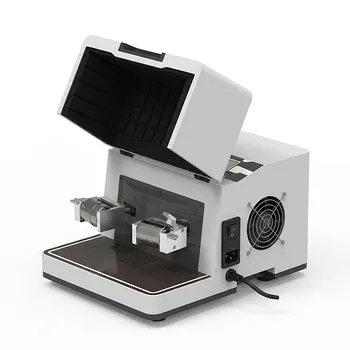
High Energy Hybrid Vibratory Ball Mill for Grinding Mixing and Cell Disruption
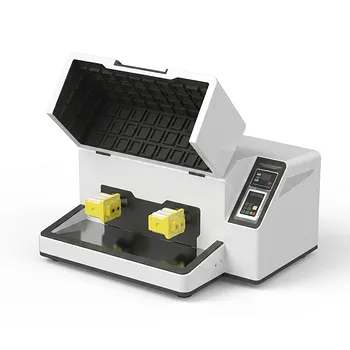
Multi-Platform Nanoscale High-Energy Vibratory Ball Mill
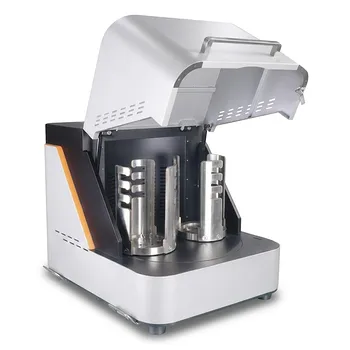
High Energy Laboratory Planetary Ball Mill for Nano Grinding and Colloidal Mixing of Hard and Brittle Materials
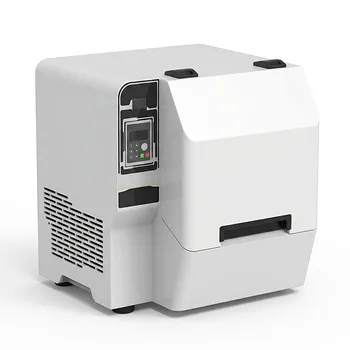
Nano High Energy Vibratory Ball Mill for Laboratory Sample Preparation
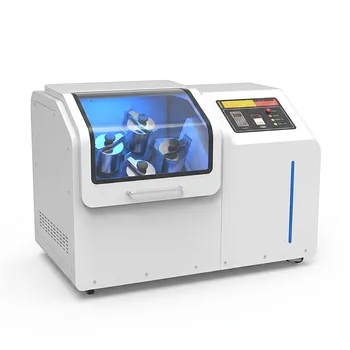
High Energy Omnidirectional Planetary Ball Mill 16L
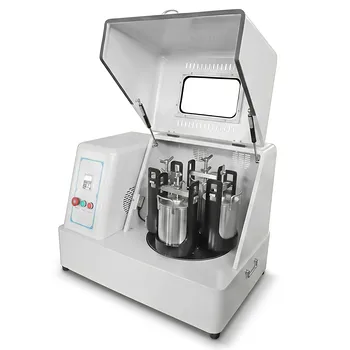
Vertical Square Planetary Ball Mill for Laboratory Sample Preparation and Nanoscale Grinding
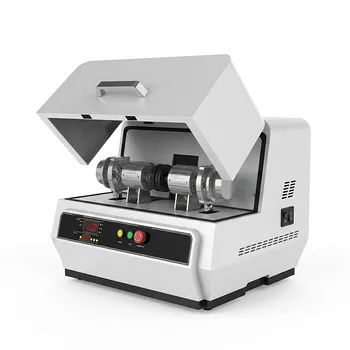
Dual Jar High Energy Vibratory Ball Mill
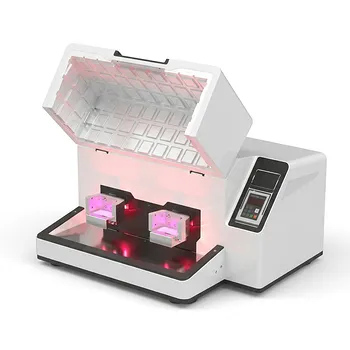
Nano High Energy Vibratory Ball Mill with Heating and Temperature Control
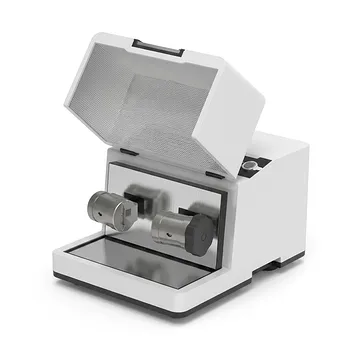
Heating Temperature Controlled High Energy Vibratory Ball Mill
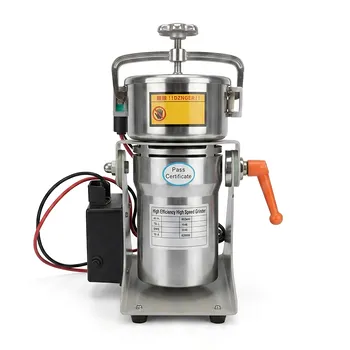
High Efficiency High Speed Grinder Laboratory Mill 1300W 25000rpm
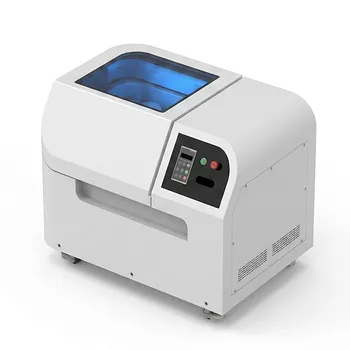
8L Planetary Ball Mill for Laboratory Grinding and Sample Preparation
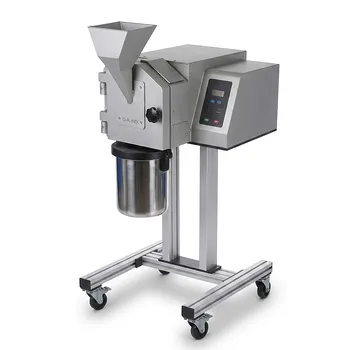
Industrial Rotor Beater Mill for High Speed Impact and Shear Grinding in Laboratory Sample Preparation
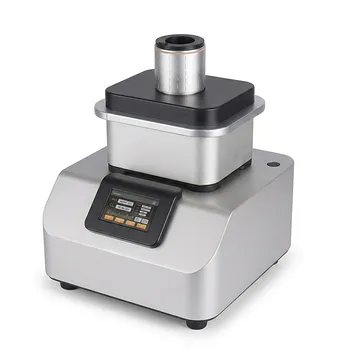
Ultra Centrifugal Mill High Speed Laboratory Grinder for Fibrous and Brittle Sample Preparation
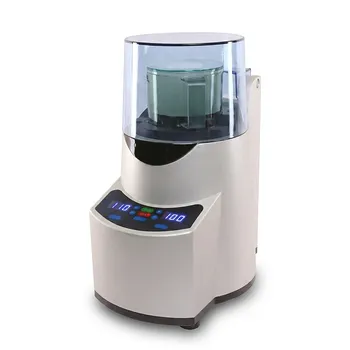
High Speed Laboratory Knife Mill for Oily Fibrous and Wet Sample Homogenization
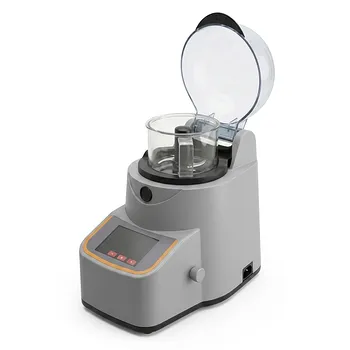
Industrial Knife Mill for Food and Biological Sample Preparation High Speed Laboratory Homogenizer
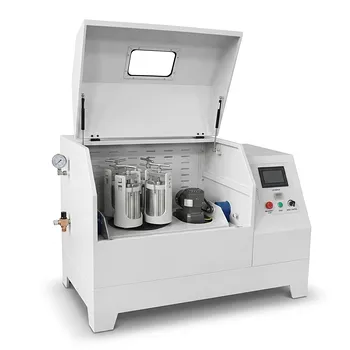
Vertical Production Planetary Ball Mill for High Throughput Powder Processing