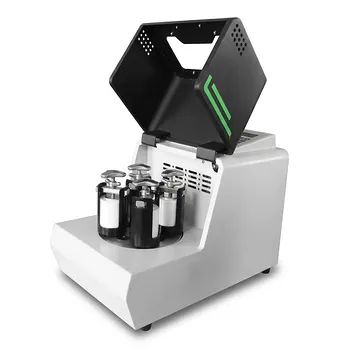
What is the function of a high-energy ball mill in VCat synthesis? Optimize Solid-State Catalyst Production
Updated 4 months ago
In the synthesis of vanadium-based complex catalysts (VCat), the high-energy ball mill acts as a mechanochemical reactor that drives a solid-state reaction between vanadium hydride and copper oxide powder. This process utilizes intense mechanical impact and shearing forces to provide the necessary activation energy to fully reduce copper oxide into metallic copper. Crucially, the mill facilitates the formation of specific V-H—O coordination structures, which are essential for enhancing the catalytic performance of magnesium-based hydrogen storage materials.
The high-energy ball mill serves as a critical bridge between physical processing and chemical synthesis, using mechanical energy to induce atomic-level rearrangements and redox reactions that are often impossible through traditional thermal or solution-based methods.
Driving Solid-State Chemical Transformations
The Reduction of Copper Oxide
The primary function of the mill in VCat synthesis is the complete reduction of copper oxide (CuO) into metallic copper. Through repeated high-energy collisions, the mechanical energy surpasses the chemical barriers required to strip oxygen from the copper precursor.
This reduction occurs without the need for external gaseous reducing agents. The energy transferred during impact effectively drives the oxygen to interact with the vanadium hydride components, facilitating a controlled phase change.
Formation of V-H—O Coordination Structures
Beyond simple reduction, the ball mill forces the vanadium, hydrogen, and oxygen atoms into unique coordination structures. These specific atomic arrangements are the "active sites" that define the catalyst's effectiveness.
These structures are created as the milling process breaks existing chemical bonds and allows atoms to rearrange into metastable states. This resulting atomic configuration is what ultimately accelerates hydrogen absorption and desorption in storage materials.
Atomic-Level Engineering and Dispersion
Achieving Atomic-Level Homogeneity
The mill uses powerful centrifugal and shear forces to achieve atomic-level uniform mixing of the precursors. This goes far beyond simple physical blending, ensuring that the vanadium and copper components are intimately integrated.
This level of mixing is vital for creating a "nanocomposite" structure. By embedding active components within an amorphous or nanocrystalline matrix, the mill maximizes the contact area between different phases.
Surface Activation and Structural Defects
High-energy milling intentionally creates structural defects and broken chemical bonds on the surface of the catalyst carriers. These defects serve as anchoring sites for metal atoms, preventing them from clustering and maintaining their catalytic activity.
In some configurations, the mechanical force is so intense it can strip metal atoms directly from the grinding balls. This enables atomic-level dispersion of active components without requiring conventional, and often expensive, metal salt precursors.
Understanding the Trade-offs and Pitfalls
Material Contamination
The most significant risk in high-energy ball milling is impurities introduced from the grinding media. As the balls and vial walls collide, small amounts of iron, chromium, or other elements can wear off and integrate into the VCat.
These impurities can alter the electronic structure of the catalyst. Engineers must carefully select vial materials, such as tungsten carbide or hardened steel, to match the desired purity levels of the final product.
Thermal Management and Over-processing
Excessive milling can lead to unwanted phase transformations or the complete collapse of the desired crystalline structure. The friction and impact generate significant heat, which, if not managed, may cause the V-H—O structures to decompose.
Finding the "energy equilibrium" is critical. Too little energy fails to trigger the solid-state reaction, while too much energy can lead to the sintering of particles, reducing the active surface area you worked to create.
How to Apply This to Your Project
Making the Right Choice for Your Goal
- If your primary focus is maximum catalytic activity: Prioritize the optimization of milling time and RPM to ensure the complete formation of V-H—O coordination sites without inducing grain growth.
- If your primary focus is material purity: Utilize high-density, wear-resistant grinding media like zirconia or tungsten carbide and consider milling in an inert gas atmosphere to prevent secondary oxidation.
- If your primary focus is rapid hydrogen kinetics: Focus on achieving the highest degree of amorphization and surface defect density to provide more pathways for hydrogen diffusion.
By mastering the mechanical energy input, you can precisely tune the chemical environment of vanadium-based catalysts to solve complex hydrogen storage challenges.
Summary Table:
| Key Function | Mechanochemical Process | Impact on VCat Performance |
|---|---|---|
| Solid-State Reduction | Reduces CuO to metallic copper via mechanical impact | Provides active metal components without gaseous agents |
| Atomic Coordination | Creates specific V-H—O coordination structures | Enhances hydrogen absorption/desorption kinetics |
| Nano-Engineering | Achieves atomic-level homogeneity and dispersion | Maximizes contact area and prevents phase clustering |
| Surface Activation | Generates structural defects and anchoring sites | Increases catalytic activity by preventing atom migration |
Elevate Your Catalyst Synthesis with Precision Laboratory Solutions
Are you looking to master atomic-level engineering in material science? At our core, we provide complete laboratory sample preparation solutions designed to help researchers and manufacturers achieve the "energy equilibrium" necessary for high-performance catalysts like VCat.
Our specialized range of equipment is built for reliability and precision:
- Advanced Milling & Grinding: High-energy planetary ball mills, jet mills, liquid nitrogen cryogenic grinders, and rotor mills for perfect atomic dispersion.
- Powder Processing: Innovative powder mixers, defoaming mixers, and high-efficiency sieve shakers (vibratory/air-jet).
- High-Pressure Compaction: A full spectrum of hydraulic presses, including Cold/Warm Isostatic Presses (CIP/WIP), vacuum hot presses, and XRF pellet presses.
Whether you are focusing on rapid hydrogen kinetics or maintaining material purity, our expert-grade tools ensure consistent results and scalable workflows.
Ready to optimize your powder processing? Contact our technical team today to find the perfect solution for your lab
References
- Atikah Kadri, Xiangdong Yao. Catalytically Enhanced Hydrogen Sorption in Mg-MgH2 by Coupling Vanadium-Based Catalyst and Carbon Nanotubes. DOI: 10.3390/ma8063491
Mentioned Products
- High Energy Planetary Ball Mill for Nano Scale Grinding and Mechanical Alloying
- High Energy Hybrid Vibratory Ball Mill for Grinding Mixing and Cell Disruption
- High Energy Laboratory Planetary Ball Mill for Nano Grinding and Material Science Sample Preparation
- High Energy Omnidirectional Planetary Ball Mill 16L
- Ultra-Low Temperature Cryogenic High-Energy Vibratory Ball Mill
People Also Ask
- Why is a high-energy planetary ball mill used for nano-milling As4Se3? Achieve Expert Structural Transformation
- What role do high-energy planetary ball mills play in FDM composite filament preparation? Optimize Material Performance
- What is the role of a high-energy planetary ball mill in the exfoliation of modified WSe2? Achieve Nano-Precision
- What is the function of a planetary ball mill in glass-ceramic sintering? Optimize Reactivity and Uniformity
- What is the role of a high-energy planetary ball mill in the preparation of high-performance nano-ceramics? Key Guide

Tech Team · PowderPreparation
Last updated on Jun 03, 2026
Related Products
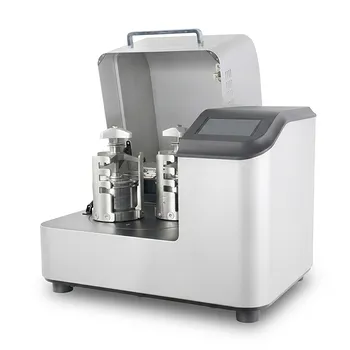
High Energy Planetary Ball Mill for Nano Scale Grinding and Mechanical Alloying

High Energy Hybrid Vibratory Ball Mill for Grinding Mixing and Cell Disruption
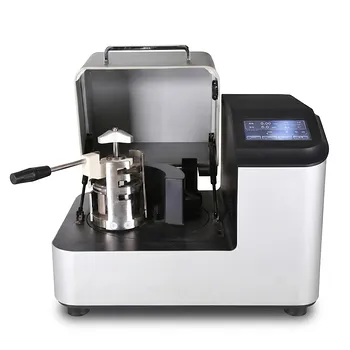
High Energy Laboratory Planetary Ball Mill for Nano Grinding and Material Science Sample Preparation
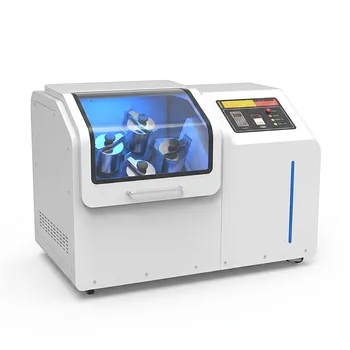
High Energy Omnidirectional Planetary Ball Mill 16L

Ultra-Low Temperature Cryogenic High-Energy Vibratory Ball Mill
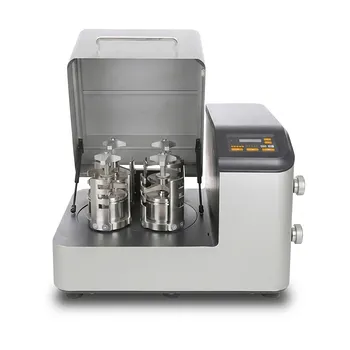
High Energy Planetary Ball Mill for Nano Scale Grinding and Colloidal Mixing in Material Science Research

Nano High Energy Vibratory Ball Mill with Heating and Temperature Control
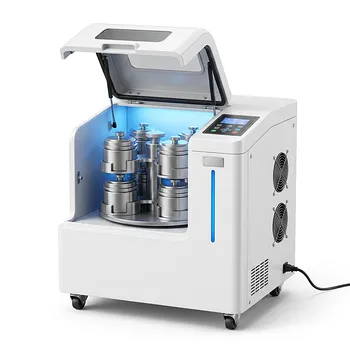
High Energy Omnidirectional Planetary Ball Mill 20L
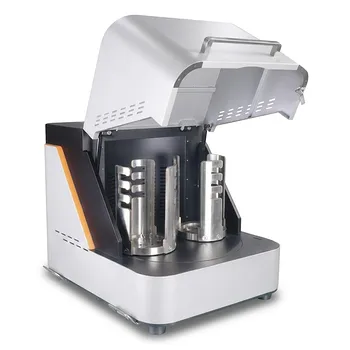
High Energy Laboratory Planetary Ball Mill for Nano Grinding and Colloidal Mixing of Hard and Brittle Materials
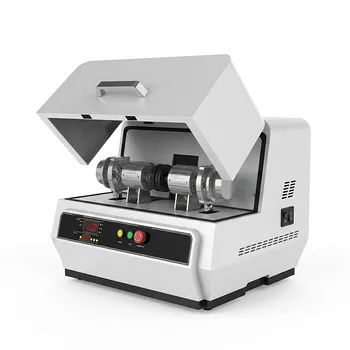
Dual Jar High Energy Vibratory Ball Mill

Multi-Platform Nanoscale High-Energy Vibratory Ball Mill
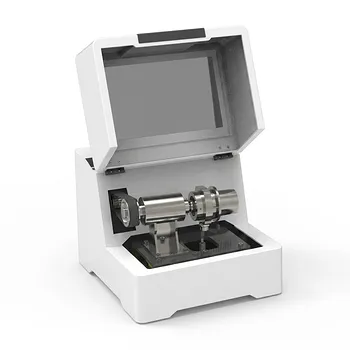
Single Tank High Energy Vibratory Ball Mill for Laboratory Grinding and Mixing
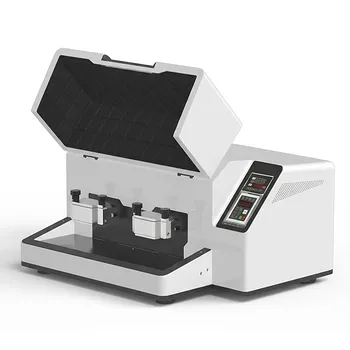
Nanoscale High-Energy Vibratory Ball Mill for Laboratory Sample Preparation, Mechanochemistry, and Mechanical Alloying

Heating Temperature Controlled High Energy Vibratory Ball Mill

Nano High Energy Vibratory Ball Mill for Laboratory Sample Preparation
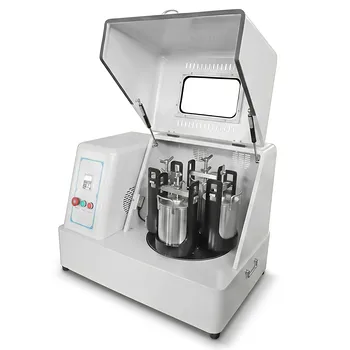
Vertical Square Planetary Ball Mill for Laboratory Sample Preparation and Nanoscale Grinding
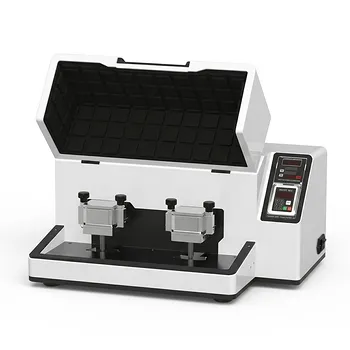
Nanoscale High Energy Vibratory Ball Mill Low Temperature

8L Planetary Ball Mill for Laboratory Grinding and Sample Preparation
Dual Station Planetary Ball Mill 24L