What are the advantages of the vibratory mixing and milling process? Optimize Pharma R&D with Superior API Efficiency
Updated 4 months ago
Vibratory mixing and milling processes provide a superior alternative to traditional stirred milling in early-stage pharmaceutical R&D by minimizing material waste and enhancing micro-level uniformity. This technology allows researchers to conduct high-throughput screening with milligram-scale samples while maintaining a clear pathway to industrial-scale production. By utilizing high-frequency oscillation rather than mechanical impellers, it achieves superior dispersion and preserves the integrity of sensitive active pharmaceutical ingredients (APIs).
Core Takeaway: Vibratory processes solve the primary bottleneck of early R&D—limited API availability—by enabling precise parameter screening on tiny volumes while ensuring the resulting data is a reliable proxy for large-scale stirred milling performance.
Maximizing Resource Efficiency in Early Development
Superior Drug Conservation
Early-stage R&D often operates with extremely small sample volumes due to the high cost and scarcity of new chemical entities. Vibratory milling excels here because it can perform comprehensive parameter screenings using a fraction of the material required by stirred mills.
Rapid Parameter Screening
The ability to run multiple tests simultaneously with minimal cleanup allows for faster formulation exploration. Researchers can quickly iterate through different loading ratios and vibration intensities to identify the optimal processing window without depleting their API stock.
Reliable Industrial Scalability
Despite the small scale of early tests, vibratory equipment can achieve breakage effects comparable to large-scale industrial stirred mills. By increasing vibration intensity and media loading, the process provides a dependable reference for future scale-up, reducing the risk of failure during the transition to manufacturing.
Achieving Precision Micro-Level Uniformity
3D Motion and High-Frequency Dispersion
Vibratory systems employ high-frequency modes that cause particles to undergo intense, random motion in three-dimensional space. This 3D movement is more effective than the circular flow of stirred milling for achieving a highly uniform dispersion of nanometer-scale additives within a micrometer-scale matrix.
Overcoming Van der Waals Forces
The mechanical energy generated by high-frequency vibration is specifically tuned to prevent nanoparticle agglomeration. By overcoming Van der Waals forces, the process ensures that fine powders (even those below 45 µm) remain separated, which is critical for consistent drug bioavailability and dissolution rates.
Enhancing Thermodynamic Solubility Predictions
Compared to manual or low-energy mixing, vibratory ball milling reduces negative diffusion effects. This precision leads to more accurate determinations of dissolution or melting endpoints, allowing material scientists to predict thermodynamic solubility with much higher confidence.
Preserving API and Polymer Integrity
Controlled Mechanical Energy
Vibratory milling allows for the precise control of frequency and duration, ensuring that energy is used primarily for reactant diffusion. This is a significant advantage over stirred milling, which can sometimes cause excessive mechanical stress and unwanted depolymerization.
Partial Amorphization and Surface Interaction
The process maximizes surface interactions between particles, which can induce partial amorphization of the drug when desired. This specific mechanical activation enhances the solubility profile of the API without destroying its inherent crystalline structure or mechanical properties.
Containment and Environmental Safety
Modern vibratory mixers often feature fully enclosed designs that significantly reduce dust emissions. In a pharmaceutical R&D setting, this improves labor conditions and prevents the cross-contamination of potent compounds, ensuring a cleaner and safer laboratory environment.
Understanding the Trade-offs and Pitfalls
Heat Generation at High Frequencies
While vibratory milling is efficient, the high-frequency oscillation can generate localized heat within the milling chamber. For highly thermolabile compounds, this requires careful monitoring or the use of cooling jackets to prevent degradation.
Frequency Sensitivity
Unlike stirred milling, where "faster" usually means more energy, vibratory systems rely on resonance and frequency tuning. If the frequency is not correctly matched to the material's density and the media's mass, the mixing efficiency can drop significantly, leading to non-uniform results.
Media Wear and Contamination
In high-intensity vibratory ball milling, the grinding media (balls) are subject to constant collision. If the media material is not sufficiently harder than the processed powder, it can lead to trace metal contamination, which may interfere with subsequent analytical testing or stability studies.
How to Apply Vibratory Processing to Your Project
Selecting the Right Approach
Choosing between vibratory and stirred methods depends on your specific R&D milestones and material constraints.
- If your primary focus is API conservation: Utilize vibratory milling to conduct multi-parameter screenings on milligram-scale samples to preserve your most expensive materials.
- If your primary focus is enhancing bioavailability: Leverage high-frequency 3D motion to ensure nanometer-scale dispersion and prevent the agglomeration of fine API particles.
- If your primary focus is future manufacturing scale-up: Use high-intensity vibratory settings to simulate the breakage effects of industrial stirred mills, creating a validated baseline for production.
By integrating vibratory processing into your early-stage workflow, you bridge the gap between bench-top discovery and industrial-scale manufacturing with unmatched precision and material efficiency.
Summary Table:
| Feature | Vibratory Mixing & Milling | Traditional Stirred Milling |
|---|---|---|
| Sample Volume | Milligram-scale (Ideal for R&D) | Typically requires larger volumes |
| Material Waste | Minimal; high drug conservation | Higher due to equipment dead space |
| Mixing Motion | High-frequency 3D oscillation | Circular impeller-driven flow |
| Uniformity | Superior micro-level dispersion | Prone to nanoparticle agglomeration |
| API Integrity | Controlled energy; preserves sensitivity | Risk of mechanical stress/degradation |
| Scalability | Clear path to industrial performance | Difficult to simulate on small scales |
Elevate Your Pharmaceutical R&D with Precision Solutions
Bridge the gap between bench-top discovery and industrial manufacturing with our complete laboratory sample preparation solutions. We specialize in high-performance powder processing and compaction equipment tailored for material science and pharmaceutical research.
Our Comprehensive Product Line Includes:
- Advanced Milling: Planetary ball mills, jet mills, rotor mills, and liquid nitrogen cryogenic grinders for sensitive APIs.
- Precision Mixing: High-efficiency powder mixers and vacuum defoaming mixers to ensure micro-level uniformity.
- Compaction Excellence: A full spectrum of hydraulic presses, including Cold/Warm Isostatic Presses (CIP/WIP), XRF pellet presses, and vacuum hot presses.
- Sieving & Analysis: Vibratory and air-jet sieve shakers for precise particle size distribution.
Whether you need to conserve expensive materials or ensure reliable industrial scalability, our expert team is here to provide the tools for your success.
Contact our technical specialists today to optimize your workflow!
References
- Meng Li, Ecevit Bilgili. An Intensified Vibratory Milling Process for Enhancing the Breakage Kinetics during the Preparation of Drug Nanosuspensions. DOI: 10.1208/s12249-015-0364-3
Mentioned Products
- Single Tank High Energy Vibratory Ball Mill for Laboratory Grinding and Mixing
- High Energy Hybrid Vibratory Ball Mill for Grinding Mixing and Cell Disruption
- High Speed Vibratory Disc Mill for Spectral Analysis Sample Preparation and Rapid Powder Grinding
- Automatic Vibrating Powder Feeder for Laboratory Material Processing Precision Vibratory Hopper Feeder for Granular and Powder Material Handling Industrial Grade Vibrating Tray Feeder for Consistent Material Sample Preparation
- Dual Jar High Energy Vibratory Ball Mill
People Also Ask
- What is the primary purpose of using a vibratory ball mill in the preparation of respirable carbon fiber fragments?
- What is the purpose of using a vibratory ball mill for Al-Ni-Fe alloy ribbons? Achieve High Catalytic Activity
- Why is a vibratory ball mill preferred over a planetary ball mill for rapid powder particle refinement? High-Speed Impact
- How does a high-energy vibratory ball mill improve the performance of MgH2? Optimize Hydrogen Storage Kinetics
- What role do high-energy ball mills play in the preparation of reinforcements for hybrid metal matrix composites?

Tech Team · PowderPreparation
Last updated on Jun 03, 2026
Related Products
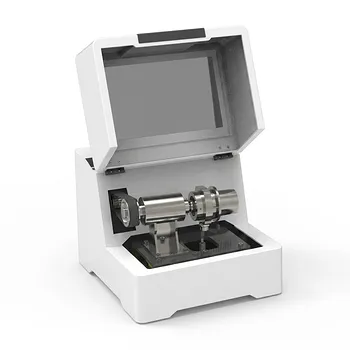
Single Tank High Energy Vibratory Ball Mill for Laboratory Grinding and Mixing
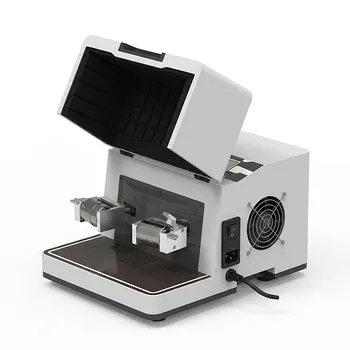
High Energy Hybrid Vibratory Ball Mill for Grinding Mixing and Cell Disruption
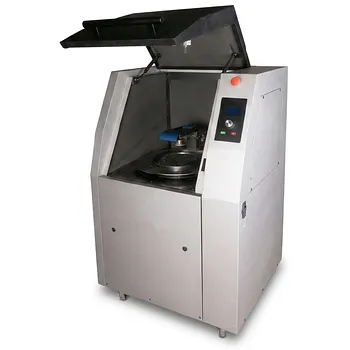
High Speed Vibratory Disc Mill for Spectral Analysis Sample Preparation and Rapid Powder Grinding
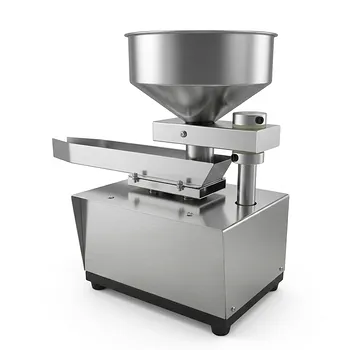
Automatic Vibrating Powder Feeder for Laboratory Material Processing Precision Vibratory Hopper Feeder for Granular and Powder Material Handling Industrial Grade Vibrating Tray Feeder for Consistent Material Sample Preparation
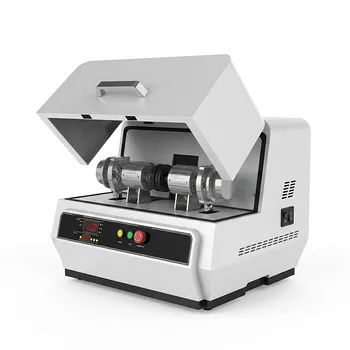
Dual Jar High Energy Vibratory Ball Mill
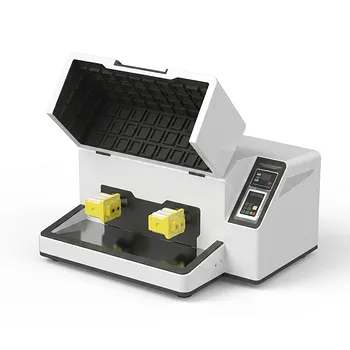
Multi-Platform Nanoscale High-Energy Vibratory Ball Mill
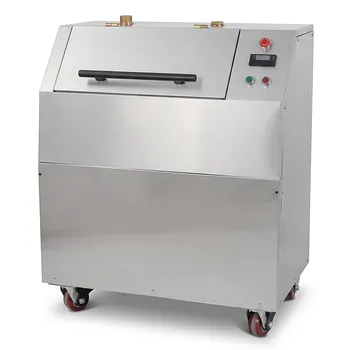
Vibratory Disc Mill for Rapid Fine Grinding and High Throughput Sample Preparation of Hard and Brittle Materials
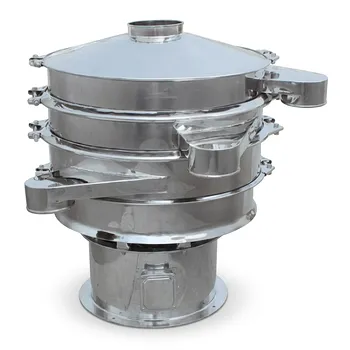
Stainless Steel Rotary Vibrating Sieve High Precision Circular Vibratory Separator Industrial Powder Grading Machine Multi Layer Sifting Equipment
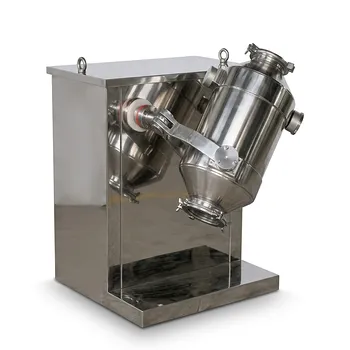
Three-Dimensional Motion Mixer for Laboratory Powder and Granule Blending
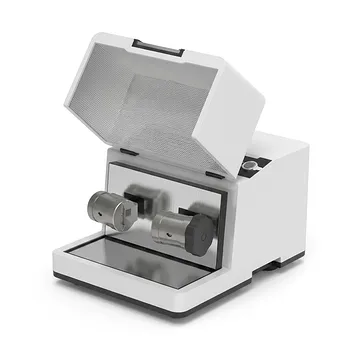
Heating Temperature Controlled High Energy Vibratory Ball Mill
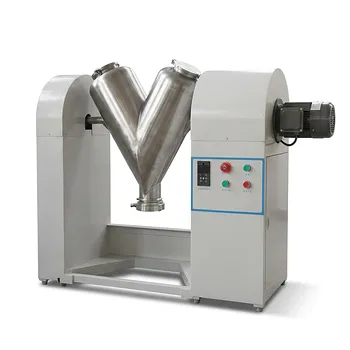
V-Type Powder Mixer for Uniform Blending of Dry Powders and Granules
Nanoscale High-Energy Vibratory Ball Mill for Laboratory Sample Preparation, Mechanochemistry, and Mechanical Alloying
High Efficiency Vacuum Planetary Centrifugal Mixer and Defoaming Machine for Industrial Material Research and Precise Laboratory Powder Dispersion
非介入式材料均质机真空脱泡行星搅拌高粘度混合设备
High Viscosity Planetary Centrifugal Mixing and Vacuum Defoaming Machine for Laboratory Material Preparation
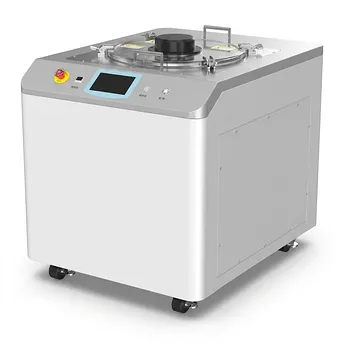
Industrial Planetary Centrifugal Vacuum Defoaming Mixer for High Viscosity Paste and Powder Homogenization
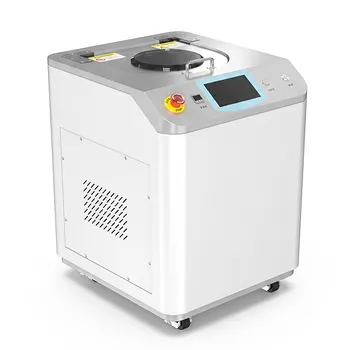
High Speed Vacuum Planetary Centrifugal Mixer and Defoamer for Industrial Paste Processing
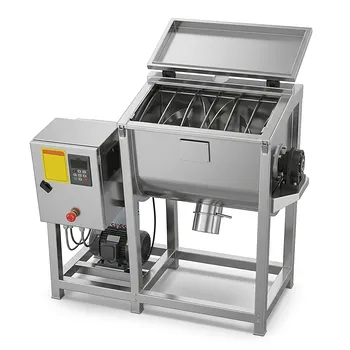
Horizontal Ribbon Mixer for Uniform Powder and Slurry Mixing
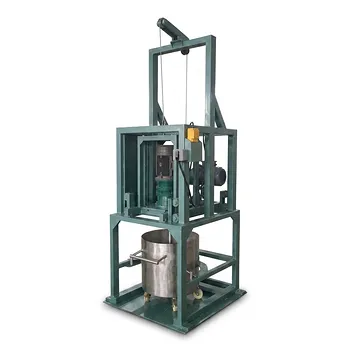
High-Speed Simple Disperser for Efficient Mixing, Dispersion, and Emulsification