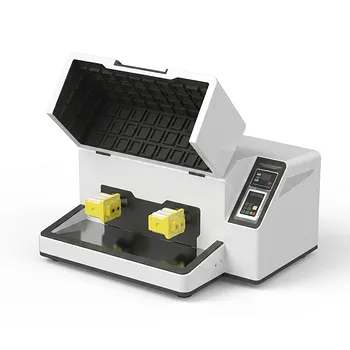
What core function does a laboratory ball mill perform during phosphate ore grinding? Achieve Monomer Dissociation
Updated 4 months ago
The primary function of a laboratory ball mill in phosphate ore processing is to achieve monomer dissociation. This process involves refining the ore particles to a specific size range—typically between -250 and +38μm—to separate valuable minerals from the surrounding gangue (waste rock).
By utilizing mechanical forces like impact and abrasion, the laboratory ball mill provides a controlled environment to determine the optimal grinding parameters required for mineral liberation while preventing the loss of material to over-pulverization.
Achieving Monomer Dissociation through Particle Refinement
The Mechanics of Impact and Attrition
The laboratory ball mill operates by rotating a cylindrical drum filled with grinding media, such as steel balls. This rotation creates a combination of impact, abrasion, and shear forces that strike the phosphate ore. These forces break the physical bonds between the target mineral and the host rock.
The Critical Target Size Range
For phosphate ore, the goal is to hit a "sweet spot" of particle fineness. The mill is specifically tuned to produce particles within the -250 to +38μm range. This ensures the particles are small enough for effective chemical processing but large enough to be easily handled in downstream stages.
Controlling the Grinding Environment
To reach these targets, operators must precisely manage the grinding time, rotation speed, and media filling rate. These variables dictate the amount of mechanical energy transferred to the ore. Proper control ensures the material reaches the required fineness without unnecessary energy waste.
Simulating Industrial Environments and Grindability
Establishing Energy Requirements
Laboratory ball mills serve as essential tools for measuring ore grindability. By simulating the power consumption of full-scale industrial mills, researchers can use methods like the Bond Work Index to calculate the energy needed for large-scale operations. This data is vital for selecting the right industrial equipment and managing operational costs.
Particle Morphology and Shape Evolution
The mechanical action of the ball mill also influences the physical shape of the resulting particles. Grinding in these mills often produces particles with angular features due to the dominance of impact forces. This shape evolution can impact how the particles behave during the later stages of mineral separation, such as flotation.
Understanding the Trade-offs
The Risk of Over-Grinding and Slime Production
One of the most significant pitfalls in phosphate grinding is the creation of harmful slimes (particles smaller than 38μm). Over-grinding wastes energy and produces "fines" that are difficult to recover, often leading to significant mineral loss during processing.
Scaling Discrepancies from Lab to Field
While laboratory mills provide a stable, controlled environment, they cannot perfectly replicate the complexities of a continuous industrial circuit. Scaling errors can occur if the laboratory data is not properly adjusted for industrial variables like heat accumulation or different moisture conditions (dry vs. wet grinding).
How to Apply This to Your Grinding Project
To maximize the efficiency of your phosphate ore processing, consider the following recommendations based on your primary objectives:
- If your primary focus is mineral recovery: Prioritize monomer dissociation by focusing on the -250 to +38μm size range to ensure the valuable phosphate is fully liberated from the waste rock.
- If your primary focus is energy efficiency: Use a standard Bond Ball Mill test to determine the exact energy requirements, allowing you to optimize your industrial power consumption and reduce operational overhead.
- If your primary focus is downstream process stability: Strictly monitor the media filling rate and rotation speed to minimize the production of particles under 38μm, preventing the formation of problematic slimes.
The laboratory ball mill remains the cornerstone of mineral processing research, turning mechanical energy into the precise particle refinement necessary for successful phosphate extraction.
Summary Table:
| Feature | Target / Value | Purpose in Phosphate Grinding |
|---|---|---|
| Primary Goal | Monomer Dissociation | Liberating valuable minerals from waste rock (gangue). |
| Target Size Range | -250 to +38μm | Ensuring optimal particle size for chemical processing. |
| Mechanical Action | Impact & Attrition | Breaking physical bonds using grinding media forces. |
| Energy Analysis | Bond Work Index | Simulating industrial power needs and grindability. |
| Critical Control | Avoid <38μm (Slimes) | Preventing mineral loss and energy waste from over-grinding. |
Elevate Your Mineral Processing with Expert Laboratory Solutions
Maximize your phosphate recovery and grinding efficiency with precision-engineered equipment. At [Brand Name], we provide complete laboratory sample preparation solutions for material science, specializing in advanced powder processing and compaction.
Our extensive line includes everything you need for superior ore refinement:
- Grinding & Milling: Planetary ball mills, jet mills, disc mills, and cryogenic grinders for precise particle size control.
- Crushing & Sieving: Jaw/roll crushers and vibratory/air-jet sieve shakers for initial prep and analysis.
- Compaction & Pressing: A full spectrum of hydraulic presses, including Cold/Warm Isostatic Presses (CIP/WIP), vacuum hot presses, and XRF pellet presses.
Whether you are refining mineral liberation parameters or scaling up to industrial production, our equipment ensures accuracy and durability.
Contact our technical team today to find the perfect solution for your laboratory's grinding and material preparation needs!
References
- Gamal S. Abdelhaffez, Mohammed A. Hefni. CONTROLLING GRINDING PROCESS PARAMETERS USING CENTRAL COMPOSITE DESIGN TO REDUCE SLIMES IN PHOSPHATE ORE BENEFICIATION. DOI: 10.17794/rgn.2022.3.11
Mentioned Products
- 360° Rotating Omnidirectional Laboratory Planetary Ball Mill for Homogeneous Ultra-Fine Grinding and Mixing
- High Energy Laboratory Planetary Ball Mill for Nano Grinding and Material Science Sample Preparation
- Laboratory Nano High Energy Ball Mill Ultrafine Grinding Mechanical Alloying
- Vertical Semi Circular Planetary Ball Mill for Laboratory Precision Grinding
- Vertical Square Planetary Ball Mill for Laboratory Sample Preparation and Nanoscale Grinding
People Also Ask
- What role does an omni-directional planetary ball mill play in brass/cobalt antimonide pretreatment? Achieve Nano-Scale Homogeneity.
- What is the function of an omni-directional planetary ball mill? Achieve Streak-Free Glass Homogenization
- Why is an intermittent grinding process required for perovskites in a planetary ball mill? Ensure Stability & Purity
- Why is a planetary ball mill essential for SiBCN-rGO wet-spinning? Achieve Superior Dispersion and Spinnability
- What role does a planetary ball mill play in the synthesis of Li6PS5Cl (LPSCl)? Unlock High Ionic Conductivity

Tech Team · PowderPreparation
Last updated on Jun 03, 2026
Related Products
360° Rotating Omnidirectional Laboratory Planetary Ball Mill for Homogeneous Ultra-Fine Grinding and Mixing
High Energy Laboratory Planetary Ball Mill for Nano Grinding and Material Science Sample Preparation
Laboratory Nano High Energy Ball Mill Ultrafine Grinding Mechanical Alloying
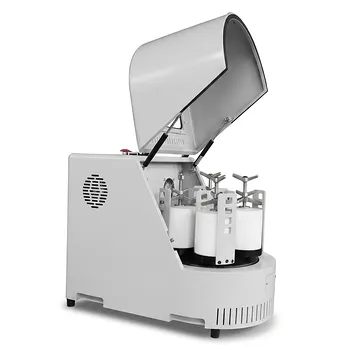
Vertical Semi Circular Planetary Ball Mill for Laboratory Precision Grinding
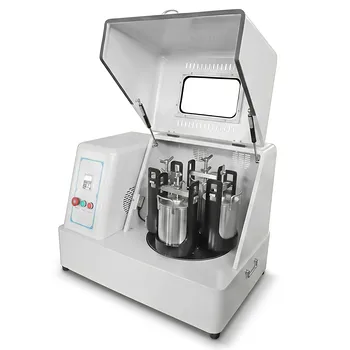
Vertical Square Planetary Ball Mill for Laboratory Sample Preparation and Nanoscale Grinding
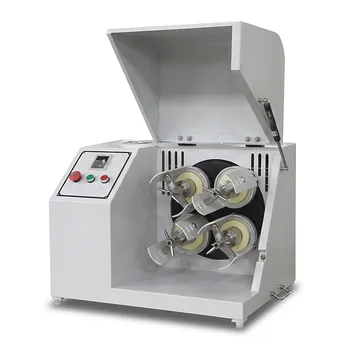
Horizontal Light Duty Planetary Ball Mill for Laboratory Sample Preparation
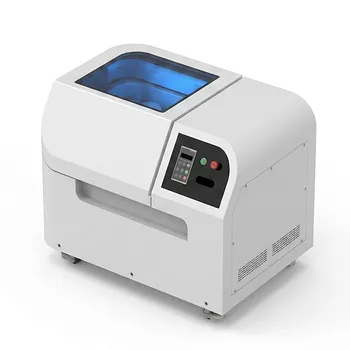
8L Planetary Ball Mill for Laboratory Grinding and Sample Preparation
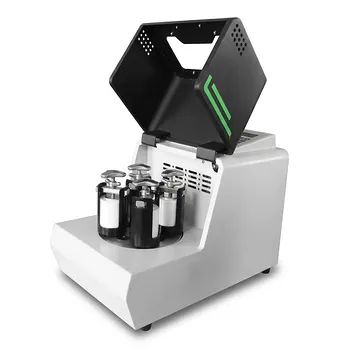
Miniature Planetary Ball Mill with Vacuum Grinding and High Efficiency for Laboratory Sample Preparation
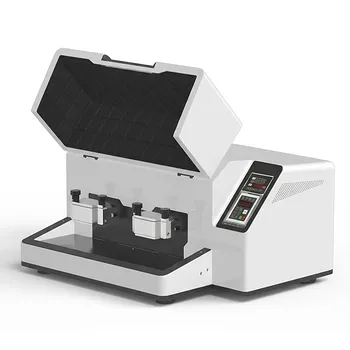
Nanoscale High-Energy Vibratory Ball Mill for Laboratory Sample Preparation, Mechanochemistry, and Mechanical Alloying
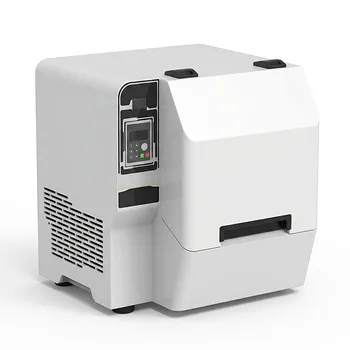
Nano High Energy Vibratory Ball Mill for Laboratory Sample Preparation
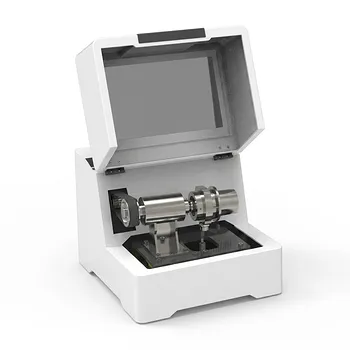
Single Tank High Energy Vibratory Ball Mill for Laboratory Grinding and Mixing
Planetary Ball Mill 12L
High Energy Planetary Ball Mill for Nano Scale Grinding and Colloidal Mixing in Material Science Research
High Throughput Micro Ball Mill for Cryogenic Grinding and Laboratory Cell Disruption
Heavy Duty Horizontal Planetary Ball Mill for Efficient Industrial Grinding and Sample Preparation
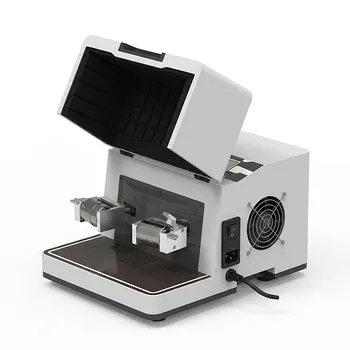
High Energy Hybrid Vibratory Ball Mill for Grinding Mixing and Cell Disruption
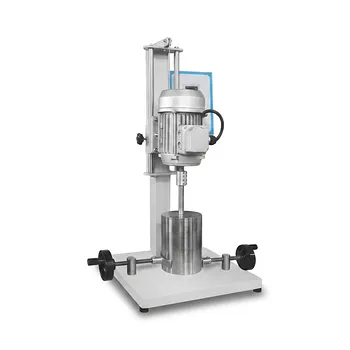
Laboratory Basket Sand Mill for Wet Grinding and Dispersion of Viscous Slurries
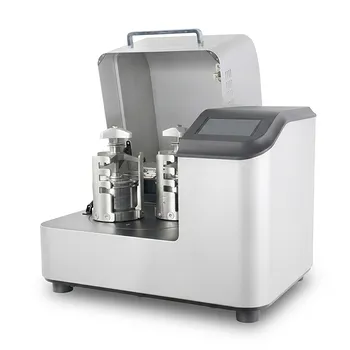
High Energy Planetary Ball Mill for Nano Scale Grinding and Mechanical Alloying
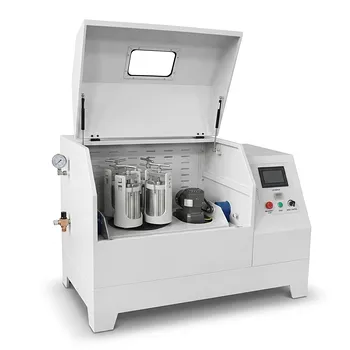
Vertical Production Planetary Ball Mill for High Throughput Powder Processing