Role of Lab Ball Mills in Activating Coal Fly Ash for Cement: Enhance Reactivity and Strength
Updated 5 months ago
The laboratory ball mill serves as the primary engine for mechanical activation, transforming inert coal fly ash into a highly reactive cementitious material. It achieves this by reducing the median particle size from approximately 60 microns to 5 microns, which exponentially increases the available surface area for chemical reactions. This process disrupts the stable aluminosilicate glass structure of the ash, directly promoting the development of early-stage strength in blended cements.
Mechanical activation via ball milling overcomes the natural chemical dormancy of coal fly ash by applying high-energy impact and shear forces. This physical and structural transformation is the key to successfully integrating high volumes of fly ash into cement without sacrificing performance.
The Mechanics of Physical Refinement
Radical Particle Size Reduction
The primary function of the ball mill is to subject unclassified coal fly ash to high-energy grinding. This process reduces the median particle size by over 90%, typically moving from a coarse 60 microns to a fine 5 microns.
Increased Specific Surface Area
As particles are crushed, the geometric specific surface area increases significantly. This provides a much larger interface for the fly ash to interact with water and calcium hydroxide during the hydration process.
Morphological Alteration
The milling process breaks down the original spherical micromorphology of the fly ash. By fracturing these spheres, the mill exposes the internal active components that were previously shielded by the smooth, inert exterior.
Disrupting the Glassy Structure
Breaking the Aluminosilicate Shield
Coal fly ash is largely composed of an inert aluminosilicate glass structure that resists chemical reaction. The high-frequency impact and shear forces of a ball mill physically rupture this glassy shell, making the material chemically accessible.
Inducing Lattice Defects
Mechanical activation does more than just break particles; it induces structural defects in the mineral lattice. These defects lower the energy barrier required for the silicon and aluminum atoms to dissolve into the pore solution of the cement paste.
Facilitating Chemical Dissolution
Once the crystalline structures—such as mullite and quartz—are disrupted, the aluminum and silicon atoms become "active." This leads to a substantially higher dissolution rate during subsequent geopolymerization and hydration reactions.
Impact on Blended Cement Performance
Improving Early-Age Strength
One of the greatest challenges with fly ash is its slow reaction time, which usually delays strength gain. Mechanical activation significantly shortens the induction period, allowing the blended cement to develop structural integrity much earlier in the curing process.
Promoting Calcium Hydroxide Consumption
The activated fly ash acts as a hungry reactant that more efficiently consumes calcium hydroxide, a byproduct of cement hydration. This pozzolanic reaction creates additional calcium silicate hydrate (C-S-H) gel, which densifies the concrete matrix.
Achieving Uniform Distribution
In addition to activation, the ball mill ensures a highly uniform distribution of components. When mixing fly ash with other additives like hydrated lime or calcined clay, the mill's intensive force creates a homogenous blend that reacts consistently.
Understanding the Trade-offs
Energy Consumption vs. Reactivity
The benefits of mechanical activation come at the cost of high energy consumption. Achieving ultra-fine particle sizes (under 5 microns) requires significant power, which may impact the economic feasibility of the process at a massive scale.
The Risk of Particle Agglomeration
Excessive grinding time can lead to agglomeration, where fine particles begin to clump together due to electrostatic forces. This effectively reduces the surface area you worked to create and can negatively impact the flowability of the cement.
Equipment Wear and Contamination
High-energy milling environments cause significant wear on the grinding media and the mill lining. Over time, this wear can introduce trace impurities into the fly ash blend, which may slightly alter the chemical profile of the final cement product.
Optimizing Your Blended Cement Strategy
How to Apply This to Your Project
Mechanical activation is a powerful tool, but its application should be tailored to your specific performance requirements and resource constraints.
- If your primary focus is early-stage strength: Prioritize ultra-fine grinding to the 5-micron range to maximize the immediate pozzolanic reaction and shorten the induction period.
- If your primary focus is cost-efficiency: Target a moderate reduction in particle size to break the glassy shell without incurring the exponential energy costs of ultra-fine milling.
- If your primary focus is high-volume substitution: Use a planetary or stirred mill to maximize the disruption of the aluminosilicate structure, allowing for higher percentages of ash to replace traditional clinker.
By strategically leveraging mechanical activation, you can transform coal fly ash from a simple filler into a high-performance, reactive component of modern sustainable infrastructure.
Summary Table:
| Activation Aspect | Mechanism of Action | Impact on Blended Cement |
|---|---|---|
| Physical Refinement | Reduces particle size from ~60µm to <5µm | Increases specific surface area for hydration |
| Structural Disruption | Breaks the inert aluminosilicate glass shell | Facilitates faster chemical dissolution |
| Mineral Lattice | Induces lattice defects and active sites | Lowers energy barrier for geopolymerization |
| Homogenization | High-energy shear and intensive mixing | Ensures uniform distribution of additives |
| Performance Gain | Rapid consumption of calcium hydroxide | Shortens induction period; boosts early strength |
Elevate Your Material Research with Precision Engineering
Unlock the full potential of your cementitious materials with industry-leading laboratory equipment. At [Brand Name], we provide complete laboratory sample preparation solutions for material science, specializing in advanced powder processing and compaction technology.
Our extensive product lines are designed to help researchers achieve critical mechanical activation and material transformation:
- High-Energy Milling: Planetary ball mills, jet mills, and cryogenic grinders for superior particle refinement.
- Size Reduction: Heavy-duty jaw and roll crushers for primary processing.
- Advanced Compaction: A full spectrum of hydraulic presses, including Cold/Warm Isostatic Presses (CIP/WIP), vacuum hot presses, and XRF pellet presses.
- Mixing & Classification: Vibratory sieve shakers, powder mixers, and high-performance defoaming mixers.
Whether you are optimizing coal fly ash reactivity or developing next-generation sustainable materials, our expert solutions ensure consistency and performance. Contact our technical team today to discuss your specific application and find the perfect equipment for your laboratory.
References
- Grizelda du Toit, Elsabé P. Kearsley. Characterisation of the Hydration Products of a Chemically and Mechanically Activated High Coal Fly Ash Hybrid Cement. DOI: 10.3390/min12020157
Mentioned Products
- 360° Rotating Omnidirectional Laboratory Planetary Ball Mill for Homogeneous Ultra-Fine Grinding and Mixing
- High Energy Laboratory Planetary Ball Mill for Nano Grinding and Material Science Sample Preparation
- Laboratory Nano High Energy Ball Mill Ultrafine Grinding Mechanical Alloying
- Vertical Semi Circular Planetary Ball Mill for Laboratory Precision Grinding
- Vertical Square Planetary Ball Mill for Laboratory Sample Preparation and Nanoscale Grinding
People Also Ask
- What role does an omni-directional planetary ball mill play in brass/cobalt antimonide pretreatment? Achieve Nano-Scale Homogeneity.
- What is the function of an omni-directional planetary ball mill? Achieve Streak-Free Glass Homogenization
- Why is an intermittent grinding process required for perovskites in a planetary ball mill? Ensure Stability & Purity
- Why is a planetary ball mill essential for SiBCN-rGO wet-spinning? Achieve Superior Dispersion and Spinnability
- What role does a planetary ball mill play in the synthesis of Li6PS5Cl (LPSCl)? Unlock High Ionic Conductivity

Tech Team · PowderPreparation
Last updated on May 14, 2026
Related Products

360° Rotating Omnidirectional Laboratory Planetary Ball Mill for Homogeneous Ultra-Fine Grinding and Mixing

High Energy Laboratory Planetary Ball Mill for Nano Grinding and Material Science Sample Preparation
Laboratory Nano High Energy Ball Mill Ultrafine Grinding Mechanical Alloying
Vertical Semi Circular Planetary Ball Mill for Laboratory Precision Grinding

Vertical Square Planetary Ball Mill for Laboratory Sample Preparation and Nanoscale Grinding
Horizontal Light Duty Planetary Ball Mill for Laboratory Sample Preparation

8L Planetary Ball Mill for Laboratory Grinding and Sample Preparation

Miniature Planetary Ball Mill with Vacuum Grinding and High Efficiency for Laboratory Sample Preparation
Nanoscale High-Energy Vibratory Ball Mill for Laboratory Sample Preparation, Mechanochemistry, and Mechanical Alloying

Nano High Energy Vibratory Ball Mill for Laboratory Sample Preparation
Single Tank High Energy Vibratory Ball Mill for Laboratory Grinding and Mixing
Planetary Ball Mill 12L
High Energy Planetary Ball Mill for Nano Scale Grinding and Colloidal Mixing in Material Science Research

High Throughput Micro Ball Mill for Cryogenic Grinding and Laboratory Cell Disruption

Heavy Duty Horizontal Planetary Ball Mill for Efficient Industrial Grinding and Sample Preparation

High Energy Hybrid Vibratory Ball Mill for Grinding Mixing and Cell Disruption
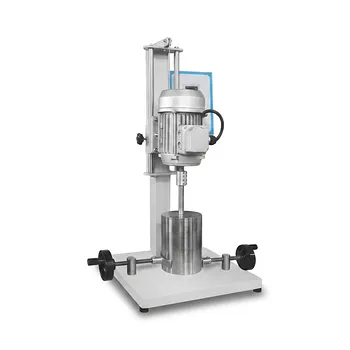
Laboratory Basket Sand Mill for Wet Grinding and Dispersion of Viscous Slurries

High Energy Planetary Ball Mill for Nano Scale Grinding and Mechanical Alloying

Vertical Production Planetary Ball Mill for High Throughput Powder Processing