How does high-energy ball milling contribute to microplastic studies? Creating Realistic Environmental Models
Updated 4 months ago
High-energy ball milling is a critical tool for creating realistic microplastic models by mechanically fracturing bulk plastics into irregular, secondary microplastic fragments. This process utilizes high-frequency impacts and shear forces to replicate the natural degradation of plastic in the environment. By producing particles with complex geometries and high specific surface areas, this method allows researchers to simulate real-world mechanical weathering more accurately than standardized spherical particles.
High-energy ball milling transforms bulk plastic into secondary microplastics that mimic the irregular morphology and high surface area found in natural ecosystems. This technique provides a more ecologically relevant alternative to spherical standards for environmental impact and toxicological studies.
The Mechanism of Mechanical Fragmentation
High-Frequency Impact and Shear
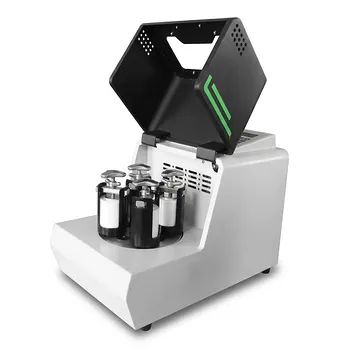
High-energy ball milling relies on stainless steel grinding balls moving at high speeds to generate intense kinetic energy. These balls deliver high-frequency impacts and shear forces that crush large plastic products into smaller fragments.
Particle Size Reduction
This method is capable of reducing material from the micron level to below 100 nanometers after several hours of processing. This significant reduction allows researchers to study not just microplastics, but also the emerging field of nanoplastics.
Replicating Secondary Microplastics
In nature, most microplastics are "secondary," meaning they result from the breakdown of larger items. Ball milling simulates this mechanical weathering process effectively, creating fragments that represent the lifecycle of plastic waste in the environment.
Morphological Advantages in Environmental Simulation
Beyond Spherical Standards
Many laboratory studies use commercially available spherical particles, which are uniform and easy to track. However, these do not reflect the complex geometric shapes and irregular edges of plastics found in the ocean or soil.
Increased Specific Surface Area
The fragmentation process significantly increases the specific surface area of the plastic particles. A higher surface area changes how the plastic interacts with its environment, including its ability to absorb pollutants or penetrate biological membranes.
Improved Ecological Relevance
Because the edges are irregular and the surfaces are often pitted or jagged, these fragments behave differently in environmental simulation studies. They offer a more realistic look at how microplastics settle in sediment or are ingested by organisms.
Understanding the Trade-offs and Limitations
Potential for Material Contamination
The use of stainless steel grinding media introduces a risk of trace metal contamination in the plastic samples. Researchers must account for these potential impurities when conducting sensitive toxicological assessments.
Thermal Degradation During Milling
The high-speed motion of the mill generates significant heat, which can lead to thermal degradation of the polymer. If temperatures are not controlled, the chemical properties of the microplastic may change, potentially skewing experimental results.
Energy and Time Intensity
Achieving nanoscale particles requires prolonged processing times, often lasting several hours. This makes the method energy-intensive compared to other forms of particle generation or the use of pre-manufactured standards.
How to Apply This to Your Research Project
When deciding whether to utilize high-energy ball milling for microplastic generation, consider the specific goals of your environmental simulation.
- If your primary focus is mimicking mechanical weathering: Utilize high-energy ball milling to produce irregular fragments that represent the physical state of plastics found in natural environments.
- If your primary focus is high-precision toxicological controls: Consider using spherical standards or chemically pure particles to ensure that surface irregularities or mill contamination do not introduce confounding variables.
- If your primary focus is nanoplastic behavior: Leverage the high-energy mill’s ability to reach sub-100nm sizes to investigate how increased surface area affects chemical adsorption and cellular uptake.
By selecting the appropriate milling parameters, you can bridge the gap between idealized laboratory conditions and the complex reality of environmental plastic pollution.
Summary Table:
| Feature | Spherical Standards | Ball Milled Fragments |
|---|---|---|
| Morphology | Uniform, smooth spheres | Irregular, jagged, complex geometries |
| Surface Area | Low (standardized) | High specific surface area |
| Realism | Low (idealized) | High (mimics environmental weathering) |
| Particle Size | Fixed sizes | Adjustable (micron down to <100nm) |
| Interaction | Predictable behavior | Realistic pollutant absorption & uptake |
Elevate Your Research with Precision Sample Preparation
Ready to achieve more realistic results in your environmental simulation and material science studies? At our core, we provide complete laboratory sample preparation solutions designed to meet the rigorous demands of modern research.
We specialize in high-performance powder processing and compaction equipment, ensuring your samples are prepared with absolute precision. Our extensive product lines include:
- Advanced Mills: Planetary ball mills, jet mills, liquid nitrogen cryogenic grinders, and rotor mills for achieving sub-100nm particles.
- Crushing & Sizing: Jaw/roll crushers and vibratory/air-jet sieve shakers.
- Compaction Solutions: A full spectrum of hydraulic presses, including Cold/Warm Isostatic Presses (CIP/WIP), vacuum hot presses, and XRF pellet presses.
- Mixing: High-efficiency powder and defoaming mixers.
Whether you are simulating mechanical weathering or developing new materials, our expertise in powder processing empowers your laboratory to reach new milestones. Contact us today to discuss your project requirements and discover how our specialized equipment can optimize your workflow.
References
- Urška Šunta, Mojca Bavcon Kralj. Insights into Microplastics: from Physical and Chemical Characterisation to its Potential as a Vector.. DOI: 10.55295/psl.2022.d13
Mentioned Products
- High Energy Planetary Ball Mill for Nano Scale Grinding and Mechanical Alloying
- High Energy Hybrid Vibratory Ball Mill for Grinding Mixing and Cell Disruption
- High Energy Laboratory Planetary Ball Mill for Nano Grinding and Material Science Sample Preparation
- High Energy Omnidirectional Planetary Ball Mill 16L
- Ultra-Low Temperature Cryogenic High-Energy Vibratory Ball Mill
People Also Ask
- Why is a high-energy planetary ball mill used for nano-milling As4Se3? Achieve Expert Structural Transformation
- What role do high-energy planetary ball mills play in FDM composite filament preparation? Optimize Material Performance
- What is the role of a high-energy planetary ball mill in the exfoliation of modified WSe2? Achieve Nano-Precision
- What is the function of a planetary ball mill in glass-ceramic sintering? Optimize Reactivity and Uniformity
- What is the role of a high-energy planetary ball mill in the preparation of high-performance nano-ceramics? Key Guide

Tech Team · PowderPreparation
Last updated on Jun 03, 2026
Related Products

High Energy Planetary Ball Mill for Nano Scale Grinding and Mechanical Alloying

High Energy Hybrid Vibratory Ball Mill for Grinding Mixing and Cell Disruption

High Energy Laboratory Planetary Ball Mill for Nano Grinding and Material Science Sample Preparation

High Energy Omnidirectional Planetary Ball Mill 16L

Ultra-Low Temperature Cryogenic High-Energy Vibratory Ball Mill
High Energy Planetary Ball Mill for Nano Scale Grinding and Colloidal Mixing in Material Science Research

Nano High Energy Vibratory Ball Mill with Heating and Temperature Control
High Energy Omnidirectional Planetary Ball Mill 20L

High Energy Laboratory Planetary Ball Mill for Nano Grinding and Colloidal Mixing of Hard and Brittle Materials
Dual Jar High Energy Vibratory Ball Mill

Multi-Platform Nanoscale High-Energy Vibratory Ball Mill
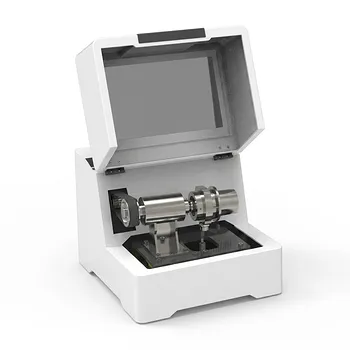
Single Tank High Energy Vibratory Ball Mill for Laboratory Grinding and Mixing
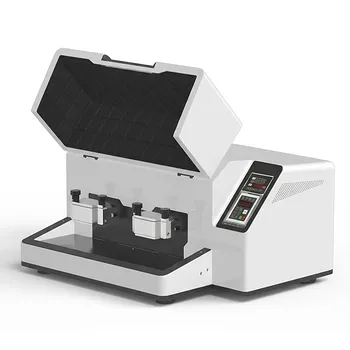
Nanoscale High-Energy Vibratory Ball Mill for Laboratory Sample Preparation, Mechanochemistry, and Mechanical Alloying

Heating Temperature Controlled High Energy Vibratory Ball Mill

Nano High Energy Vibratory Ball Mill for Laboratory Sample Preparation
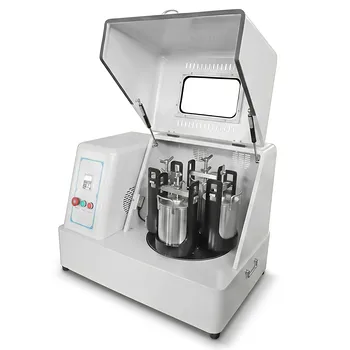
Vertical Square Planetary Ball Mill for Laboratory Sample Preparation and Nanoscale Grinding
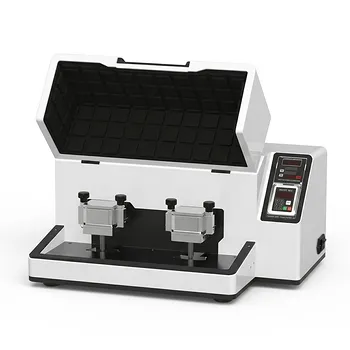
Nanoscale High Energy Vibratory Ball Mill Low Temperature

8L Planetary Ball Mill for Laboratory Grinding and Sample Preparation
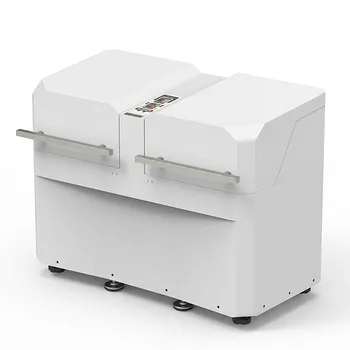
Dual Station Planetary Ball Mill 24L