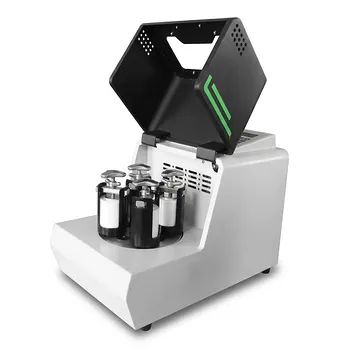
How does a high-energy ball mill facilitate silicon nanostructuring? Achieve precise 37-77nm particle refinement.
Updated 4 months ago
The transition from micron-scale to nano-scale silicon is driven by the application of intense mechanical energy. This process utilizes high-frequency impact and shear forces generated by grinding media to physically pulverize micron-sized particles. By overcoming internal cohesive forces, the mill reduces silicon particles to a range typically between 37.27 nm and 77.82 nm, resulting in materials with high specific surface areas and enhanced electrochemical properties.
Core Takeaway: High-energy ball milling facilitates nanostructuring by converting kinetic energy into mechanical work, breaking down silicon particles through repeated collisions. This process not only reduces size but also fundamentally alters the material's surface energy and structural stability.
The Mechanical Mechanisms of Particle Refinement
High-Frequency Impact and Shear Forces
The primary mechanism for size reduction is the high-speed collision of grinding balls against the silicon particles. These balls strike the particles against each other and the cylinder walls, creating intense impact forces that fracture the material.
Simultaneously, shear forces occur as balls slide past one another under pressure. This grinding action further refines the particles, shaving down their surfaces and ensuring a transition from the micron scale to the nanometer scale.
Overcoming Interparticle Cohesion
Micron-sized silicon particles are held together by cohesive forces that must be neutralized to achieve nanostructuring. The high-energy environment provides sufficient energy to overcome these bonds, effectively "unzipping" the larger particles.
As the particles shrink, their specific surface area increases dramatically. This reduction is critical for applications like battery electrodes, where smaller particle sizes facilitate faster lithium-ion diffusion.
The Dynamics of the High-Energy Environment
Planetary Motion and Centrifugal Force
In a planetary ball mill, the jars undergo a dual motion: rotation on their own axes and revolution around a central sun wheel. This combined motion generates powerful centrifugal forces that accelerate the grinding media to high velocities.
These forces ensure that the grinding balls do not merely roll but are projected across the jar with significant momentum. The resulting high-energy environment is far more efficient than traditional tumbling mills for reaching the sub-100 nm range.
Mechanochemical Activation and Plastic Deformation
Beyond simple crushing, the process involves mechanochemical action. Repeated impacts cause micro-strain and plastic deformation within the silicon crystal lattice.
This accumulation of mechanical energy can alter the crystallinity of the powder. By inducing these structural changes, the mill prepares the silicon for subsequent chemical reactions or sintering processes.
Material Transformation and Performance Gains
Precision Size Regulation
High-energy milling allows for precise process controllability over the final particle size. Studies show that silicon can be consistently refined to a range of 50 nm to 150 nm depending on the duration and speed of the milling.
This precision is vital for creating nanosilicon that exhibits quantum confinement effects. Such effects change the electronic properties of the material, making it suitable for advanced semiconductor and energy storage applications.
Enhanced Structural Stability
By refining silicon to the nanoscale, the mill reduces the internal strain energy that typically occurs during battery charging and discharging. This prevents the silicon from pulverizing or cracking under the stress of lithium-ion intercalation.
The resulting nanostructured silicon significantly enhances the structural integrity of the electrode. This leads to longer cycle lives and more stable performance in high-capacity lithium-ion batteries.
Understanding the Trade-offs
Contamination and Purity
The high-intensity nature of the process can lead to media wear, where small amounts of the grinding balls or jar lining contaminate the silicon. Selecting high-purity materials, such as zirconia or silicon carbide media, is essential to maintain product quality.
Heat Generation and Energy Consumption
A significant portion of the kinetic energy in the mill is converted into heat. Excessive temperatures can lead to unwanted phase changes or particle agglomeration, often requiring cooling breaks or "rest" periods during long milling cycles (e.g., 24-hour runs).
How to Apply This to Your Project
Depending on your specific objectives, the application of high-energy ball milling should be tailored to balance efficiency and purity.
- If your primary focus is maximized surface area: Utilize higher rotation speeds (e.g., 700 rpm) and longer milling durations to reach the lowest possible nanometer range (approx. 27–40 nm).
- If your primary focus is electrode longevity: Focus on achieving a uniform 50–100 nm size distribution to minimize internal strain while avoiding the over-milling that leads to excessive contamination.
- If your primary focus is cost-effective production: Optimize the ball-to-powder ratio and milling time to reach the "saturation point" where further milling provides diminishing returns in size reduction.
By mastering the mechanical forces within the mill, you can transform standard commercial silicon into a high-performance nanostructured material.
Summary Table:
| Mechanism | Action Type | Impact on Silicon Material |
|---|---|---|
| High-Frequency Impact | Collision | Fractures micron particles into sub-100nm scales |
| Shear Forces | Grinding/Sliding | Refines surfaces and overcomes interparticle cohesion |
| Centrifugal Force | Planetary Motion | Accelerates media for high-efficiency kinetic energy transfer |
| Mechanochemical Activation | Structural Change | Induces lattice strain and improves electrochemical stability |
| Thermal Management | Cooling Cycles | Prevents unwanted phase changes and particle agglomeration |
Elevate Your Material Research with Expert Sample Prep Solutions
Achieving consistent nano-scale silicon requires more than just a mill—it requires a complete, high-precision workflow. At our laboratory equipment center, we specialize in providing comprehensive sample preparation solutions tailored for material science and advanced powder processing.
From high-energy planetary ball mills, jet mills, and cryogenic grinders for reaching the sub-100nm range, to our full spectrum of hydraulic presses—including Cold/Warm Isostatic Presses (CIP/WIP) and vacuum hot presses—we ensure your materials achieve the density and structure required for cutting-edge applications. Whether you are processing battery electrodes or advanced semiconductors, our equipment—including crushers, sieve shakers, and powder mixers—is designed for precision and durability.
Ready to optimize your silicon nanostructuring process? Contact our technical experts today to find the perfect equipment configuration for your lab's specific needs!
References
- S. S. Oluyamo, M. O. Olasoji. Isolation and Characterisation of High Grade Nanosilicon from Coastal Landform in Ilaje Local Government Area of Ondo State, Nigeria.. DOI: 10.46481/asr.2023.2.1.82
Mentioned Products
- High Energy Planetary Ball Mill for Nano Scale Grinding and Mechanical Alloying
- High Energy Hybrid Vibratory Ball Mill for Grinding Mixing and Cell Disruption
- High Energy Laboratory Planetary Ball Mill for Nano Grinding and Material Science Sample Preparation
- High Energy Omnidirectional Planetary Ball Mill 16L
- Ultra-Low Temperature Cryogenic High-Energy Vibratory Ball Mill
People Also Ask
- Why is a high-energy planetary ball mill used for nano-milling As4Se3? Achieve Expert Structural Transformation
- What role do high-energy planetary ball mills play in FDM composite filament preparation? Optimize Material Performance
- What is the role of a high-energy planetary ball mill in the exfoliation of modified WSe2? Achieve Nano-Precision
- What is the function of a planetary ball mill in glass-ceramic sintering? Optimize Reactivity and Uniformity
- What is the role of a high-energy planetary ball mill in the preparation of high-performance nano-ceramics? Key Guide

Tech Team · PowderPreparation
Last updated on May 14, 2026
Related Products
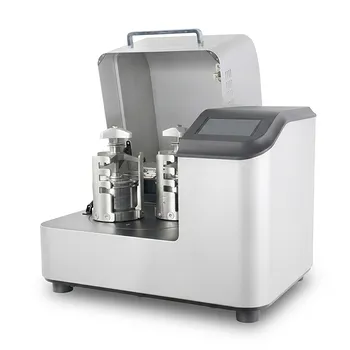
High Energy Planetary Ball Mill for Nano Scale Grinding and Mechanical Alloying

High Energy Hybrid Vibratory Ball Mill for Grinding Mixing and Cell Disruption

High Energy Laboratory Planetary Ball Mill for Nano Grinding and Material Science Sample Preparation

High Energy Omnidirectional Planetary Ball Mill 16L

Ultra-Low Temperature Cryogenic High-Energy Vibratory Ball Mill
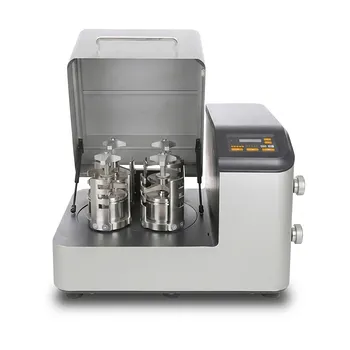
High Energy Planetary Ball Mill for Nano Scale Grinding and Colloidal Mixing in Material Science Research

Nano High Energy Vibratory Ball Mill with Heating and Temperature Control
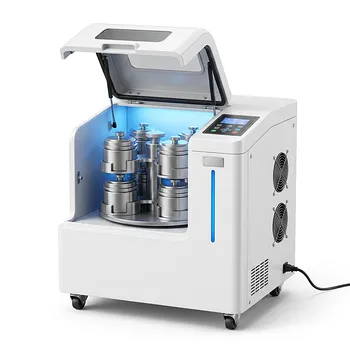
High Energy Omnidirectional Planetary Ball Mill 20L
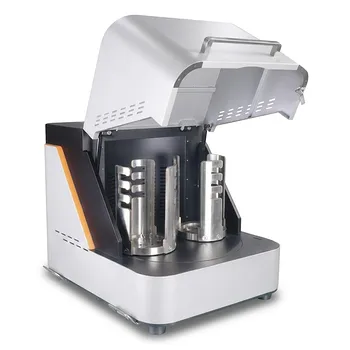
High Energy Laboratory Planetary Ball Mill for Nano Grinding and Colloidal Mixing of Hard and Brittle Materials
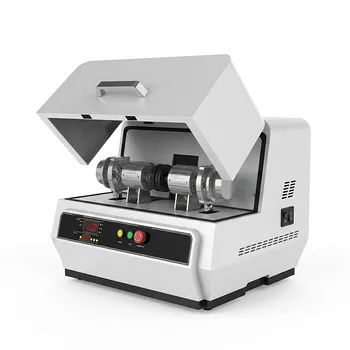
Dual Jar High Energy Vibratory Ball Mill

Multi-Platform Nanoscale High-Energy Vibratory Ball Mill

Single Tank High Energy Vibratory Ball Mill for Laboratory Grinding and Mixing
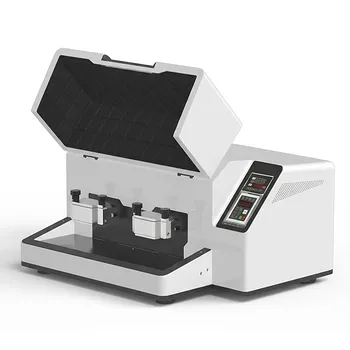
Nanoscale High-Energy Vibratory Ball Mill for Laboratory Sample Preparation, Mechanochemistry, and Mechanical Alloying

Heating Temperature Controlled High Energy Vibratory Ball Mill

Nano High Energy Vibratory Ball Mill for Laboratory Sample Preparation

Vertical Square Planetary Ball Mill for Laboratory Sample Preparation and Nanoscale Grinding
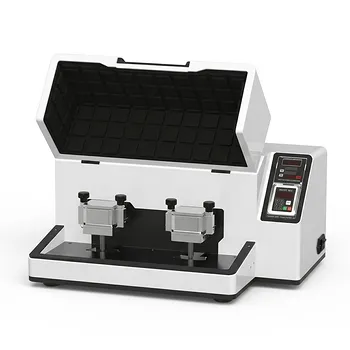
Nanoscale High Energy Vibratory Ball Mill Low Temperature

8L Planetary Ball Mill for Laboratory Grinding and Sample Preparation
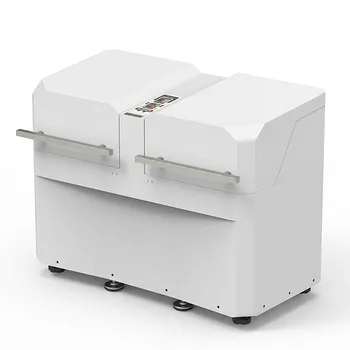
Dual Station Planetary Ball Mill 24L