How do steel ball specs affect industrial ball mill waste crushing? Optimize mass & quality for maximum efficiency.
Updated 4 months ago
The efficiency of waste crushing in an industrial ball mill is fundamentally determined by the kinetic energy and material durability of the steel balls. Specifically, the individual mass of the balls and the total loading volume dictate the magnitude of impact forces, while the quality of the steel ensures consistent performance and reduced maintenance during the processing of diverse waste streams.
Core Takeaway: To optimize waste crushing, operators must balance ball mass and volume to maximize impact kinetic energy, while prioritizing wear-resistant steel to maintain particle size stability and lower operational costs.
The Mechanics of Impact Kinetic Energy
Individual Ball Mass and Force
The individual mass of each steel ball, such as a standard 5.5kg unit, is the primary driver of instantaneous impact force. As the drum rotates and lifts these balls, their potential energy is converted into kinetic energy upon release, providing the necessary power to fracture dense materials.
Total Loading Volume and Throughput
The total loading volume determines the frequency and cumulative energy of the grinding action within the mill. Proper loading ensures there is sufficient media to strike the waste materials repeatedly, preventing "dead zones" where waste might bypass the crushing process.
The Lifting and Dropping Cycle
Efficiency is highly dependent on the mechanical trajectory created by the drum's rotation. High-quality specifications ensure the balls are lifted to an optimal height before dropping, maximizing the gravitational force applied to the waste at the bottom of the mill.
Overcoming Diverse Waste Composition
Crushing Hard Impurities
Industrial waste often contains hard impurities that require significant localized pressure to break. Large-mass steel balls generate the massive impact forces needed to shatter these brittle components into manageable particles.
Processing Fibrous Tissues
Tough fibrous tissues in waste streams can be resilient to standard grinding. The high-energy impact of heavy steel balls is required to shear and compress these fibers, ensuring they do not clog the system or compromise the final output quality.
Maintaining Particle Size Consistency
Consistent ball quality prevents the media from degrading into irregular shapes. This uniformity is critical for achieving a predictable particle size reduction, which is often a strict requirement for downstream waste processing or recycling.
The Role of Material Quality in Operational Stability
Wear Resistance and Longevity
The wear resistance of the steel balls directly dictates the continuous operation time of the ball mill. High-quality steel resists the abrasive nature of industrial waste, reducing the frequency of shutdowns required for media replacement.
Impact on Maintenance Costs
Utilizing superior steel media reduces the overall maintenance burden on the equipment. By minimizing ball breakage and excessive wear, operators can lower the "cost per ton" of processed waste and extend the life of the mill's internal liners.
Stability of the Grinding Environment
Quality media ensures that the grinding environment remains stable over hundreds of hours. Without high-quality steel, the balls would lose mass quickly, leading to a gradual decline in crushing efficiency and fluctuating output quality.
Understanding the Trade-offs
Impact Force vs. Power Consumption
Increasing the mass of the steel balls enhances crushing power but also significantly raises the energy consumption of the motor. Finding the "sweet spot" is essential to avoid excessive electricity costs while still meeting throughput goals.
Media Hardness vs. Liner Wear
Extremely hard steel balls offer excellent longevity but can accelerate the wear and tear on the mill's internal liners. Operators must choose a ball hardness that balances media life with the protection of the more expensive mill infrastructure.
Loading Volume vs. Airflow and Space
While a higher loading volume increases impact frequency, it can also restrict material flow and airflow through the mill. Overloading can lead to a "cushioning effect" where the waste dampens the impact of the balls, actually reducing total crushing efficiency.
Making the Right Choice for Your Waste Stream
To maximize the performance of your industrial ball mill, align your steel ball selection with the specific characteristics of your waste material.
- If your primary focus is processing extremely hard or brittle impurities: Prioritize a higher individual ball mass to ensure the impact force exceeds the fracture point of the contaminants.
- If your primary focus is reducing long-term operational overhead: Invest in steel balls with the highest wear resistance ratings to minimize downtime and replacement costs.
- If your primary focus is achieving a very fine and uniform particle size: Maintain a precise total loading volume with uniform ball sizes to ensure consistent surface area contact.
Selecting the correct steel ball specifications transforms the ball mill from a simple rotating drum into a high-precision instrument for efficient waste transformation.
Summary Table:
| Key Factor | Impact on Crushing Efficiency | Operational Consideration |
|---|---|---|
| Individual Ball Mass | Higher mass increases kinetic energy to fracture dense/hard waste. | Increases energy consumption and motor load. |
| Loading Volume | Higher volume increases the frequency of impacts and total throughput. | Overloading causes a "cushioning effect," reducing impact. |
| Material Quality | High wear resistance maintains consistent ball shape and particle size. | Must balance ball hardness against mill liner wear. |
| Lifting Cycle | Optimal drum rotation ensures balls reach the maximum drop height. | Directly influences the magnitude of gravitational force. |
Elevate Your Material Processing with Expert Solutions
Achieving the perfect particle size and material density requires more than just equipment—it requires the right specifications for your unique waste stream or research goals. [Company Name] provides complete laboratory sample preparation solutions for material science, specializing in advanced powder processing and compaction technology.
Our extensive range of equipment includes:
- Size Reduction: High-performance crushers (jaw/roll), liquid nitrogen cryogenic grinders, and various mills (planetary ball, jet, sand/bead, disc, rotor).
- Classification & Mixing: Vibratory/air-jet sieve shakers and high-precision powder or defoaming mixers.
- Compaction & Pressing: A full spectrum of hydraulic presses, including Cold/Warm Isostatic Presses (CIP/WIP), standard lab presses, XRF pellet presses, and vacuum hot presses.
Whether you are scaling up industrial waste processing or conducting precise material analysis, our expertise ensures you get the maximum efficiency and durability from your equipment.
Ready to optimize your workflow? Contact our technical experts today to find the perfect solution for your application!
References
- Yue Zhang, S. Heaven. Particle Size Distribution in Municipal Solid Waste Pre-Treated for Bioprocessing. DOI: 10.3390/resources8040166
Mentioned Products
- Heating Temperature Controlled High Energy Vibratory Ball Mill
- High Energy Omnidirectional Planetary Ball Mill 16L
- Vertical Production Planetary Ball Mill for High Throughput Powder Processing
- High Energy Omnidirectional Planetary Ball Mill 20L
- Single Tank High Energy Vibratory Ball Mill for Laboratory Grinding and Mixing
People Also Ask
- How does a high-energy vibratory ball mill improve the performance of MgH2? Optimize Hydrogen Storage Kinetics
- What is the primary purpose of using a vibratory ball mill in the preparation of respirable carbon fiber fragments?
- What is the purpose of using a vibratory ball mill for Al-Ni-Fe alloy ribbons? Achieve High Catalytic Activity
- Why is a vibratory ball mill preferred over a planetary ball mill for rapid powder particle refinement? High-Speed Impact
- What is the purpose of adding alcohol as a PCA during titanium ball milling? Prevent Cold Welding & Enhance Refinement

Tech Team · PowderPreparation
Last updated on Jun 03, 2026
Related Products
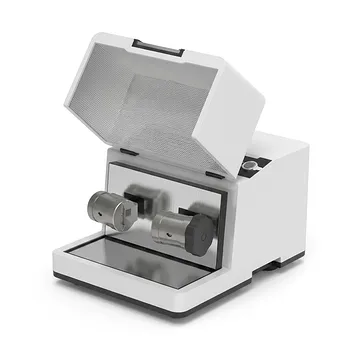
Heating Temperature Controlled High Energy Vibratory Ball Mill
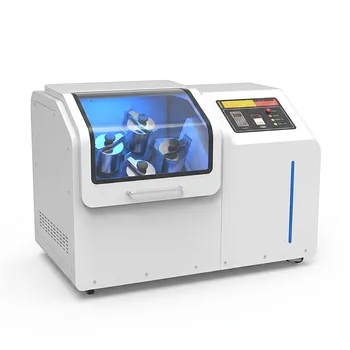
High Energy Omnidirectional Planetary Ball Mill 16L
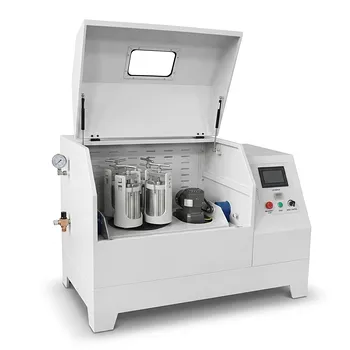
Vertical Production Planetary Ball Mill for High Throughput Powder Processing
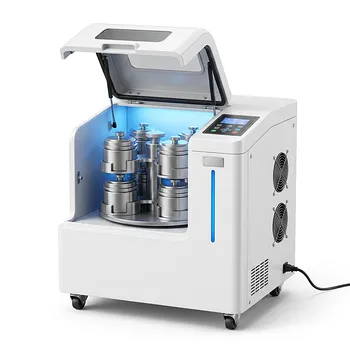
High Energy Omnidirectional Planetary Ball Mill 20L
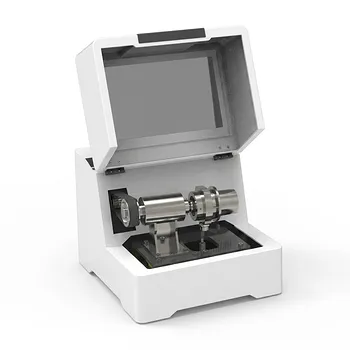
Single Tank High Energy Vibratory Ball Mill for Laboratory Grinding and Mixing

Multi-Platform Nanoscale High-Energy Vibratory Ball Mill

High Energy Planetary Ball Mill for Nano Scale Grinding and Mechanical Alloying
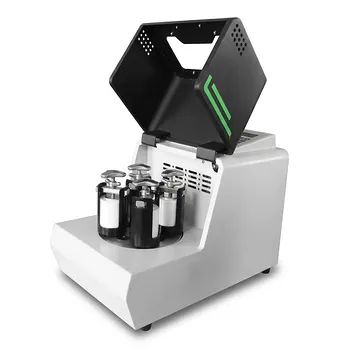
Miniature Planetary Ball Mill with Vacuum Grinding and High Efficiency for Laboratory Sample Preparation
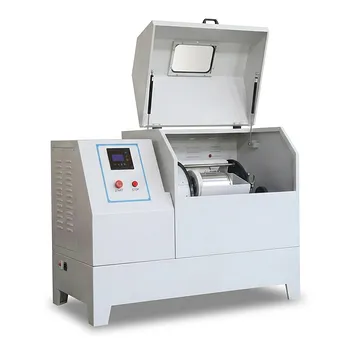
Heavy Duty Horizontal Planetary Ball Mill for Efficient Industrial Grinding and Sample Preparation
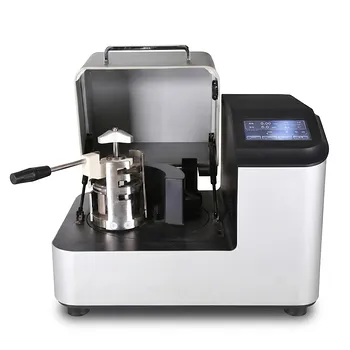
High Energy Laboratory Planetary Ball Mill for Nano Grinding and Material Science Sample Preparation
Dual Station Planetary Ball Mill 24L
360° Rotating Omnidirectional Laboratory Planetary Ball Mill for Homogeneous Ultra-Fine Grinding and Mixing

High Energy Hybrid Vibratory Ball Mill for Grinding Mixing and Cell Disruption
Planetary Ball Mill 12L
Dual Jar High Energy Vibratory Ball Mill
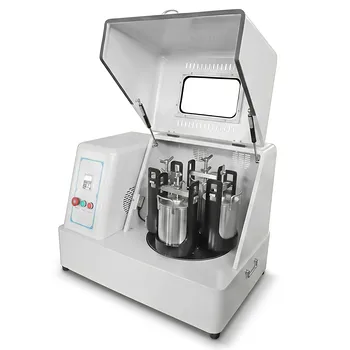
Vertical Square Planetary Ball Mill for Laboratory Sample Preparation and Nanoscale Grinding

8L Planetary Ball Mill for Laboratory Grinding and Sample Preparation
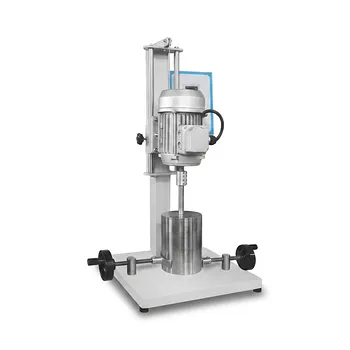
Laboratory Basket Sand Mill for Wet Grinding and Dispersion of Viscous Slurries
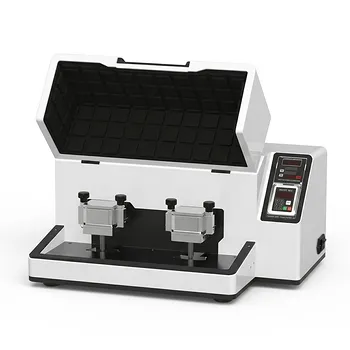
Nanoscale High Energy Vibratory Ball Mill Low Temperature