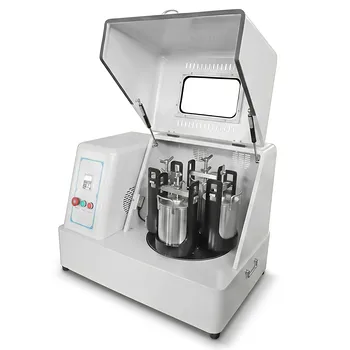
How do high-frequency ball mills facilitate the mechanochemical synthesis of ZnO-NPs? Efficient Solvent-Free Methods
Updated 4 months ago
High-frequency ball mills enable the synthesis of Zinc Oxide nanoparticles (ZnO-NPs) by converting mechanical kinetic energy into chemical potential. They utilize high-energy impact and shear forces to drive solid-state displacement reactions between precursors while simultaneously pulverizing the material to the nanoscale. This approach eliminates the need for liquid solvents and allows for precise control over particle size, crystal structure, and surface reactivity.
High-frequency ball milling serves as a solvent-free chemical reactor where intense mechanical forces break covalent bonds and facilitate atomic diffusion at the solid-solid interface. This process allows for the direct production of high-surface-area ZnO-NPs while simultaneously introducing beneficial structural defects.
The Mechanics of Energy Transfer
High-frequency ball mills function by delivering rapid, intense mechanical energy to the chemical system. This energy is the primary driver for both physical and chemical transformations.
Impact and Shear Forces
The primary mechanism involves the high-speed collision and friction between grinding media (balls) and the material. These high-energy impacts provide the necessary activation energy to overcome the barriers of solid-state reactions.
Kinetic-to-Chemical Energy Conversion
Unlike traditional chemistry that relies on thermal energy, ball milling inputs mechanical energy directly into the atomic structure. This can lead to the breaking of covalent bonds and the rearrangement of molecular crystal lattices at room temperature.
Driving Solid-Phase Chemical Reactions
The core of mechanochemical synthesis is the ability to induce chemical changes in solid precursors without a liquid medium.
Displacement Reactions
High-frequency mills facilitate displacement reactions between solid precursors, such as zinc chloride and sodium carbonate. The mechanical force induces these materials to swap ions and form Zinc Oxide and a byproduct salt.
Atomic Diffusion and Bond Rearrangement
The continuous pressure and friction facilitate atomic diffusion across the interfaces of the solid particles. This allows for the synthesis of materials that are typically difficult or impossible to produce using conventional solution-based methods.
Nanoscale Refinement and Structural Control
Beyond the chemical reaction, the equipment acts as a powerful pulverizer to achieve the desired nanoparticle dimensions.
The Crushing and Cold Welding Cycle
Particle size refinement occurs through a continuous cycle of crushing and cold welding. While impacts shatter larger particles, the mechanical energy also causes particles to weld together, ultimately reaching a steady-state "nanoscale" equilibrium.
Surface Area and Reactivity
By controlling the grinding time and frequency, operators can produce ZnO with a high specific surface area. This physical refinement increases the chemical reactivity of the resulting powder, making it more effective for downstream applications.
Defect Engineering (Oxygen Vacancies)
The high-energy environment introduces high densities of intrinsic defects, such as oxygen vacancies, into the ZnO crystal lattice. These defects are critical for enhancing visible light absorption and boosting the antibacterial activity of the material.
Understanding the Trade-offs
While highly efficient, mechanochemical synthesis through ball milling presents specific technical challenges that must be managed.
Media Contamination
The intense friction between the grinding balls and the chamber can lead to material wear, introducing impurities into the ZnO product. Selecting high-durability media (like zirconia) is often necessary to maintain high purity levels.
Thermal Accumulation
Although the process is "cold" relative to furnace sintering, the localized friction generates significant internal heat. If not managed, this heat can cause unwanted grain growth or phase transformations that reverse the refinement process.
Uniformity and Scaling
Ensuring a uniform particle size distribution requires precise control over the mill's rotation speed and filling rate. Achieving consistent results at an industrial scale necessitates highly efficient mechanical energy transfer across the entire batch.
How to Apply This to Your Project
To successfully leverage high-frequency ball milling for ZnO-NP synthesis, you must align your equipment parameters with your specific material requirements.
- If your primary focus is enhanced antibacterial or optical activity: Prioritize high-energy settings and longer milling times to maximize the density of oxygen vacancies and surface defects.
- If your primary focus is large-scale, low-cost production: Utilize industrial-grade vibratory or planetary mills to facilitate solvent-free displacement reactions that bypass expensive drying and filtration steps.
- If your primary focus is semiconductor or varistor manufacturing: Focus on the high-speed mixing capabilities of the mill to ensure uniform physical distribution of doping elements within the Zinc Oxide matrix.
By mastering the balance between mechanical input and material response, high-frequency ball milling provides a robust, sustainable pathway for engineering high-performance Zinc Oxide nanomaterials.
Summary Table:
| Synthesis Factor | Mechanism of Action | Resulting Material Benefit |
|---|---|---|
| Energy Transfer | High-speed impact & shear forces | Activation energy for bond breaking |
| Chemical Drive | Solid-state displacement reactions | Solvent-free, high-purity synthesis |
| Size Reduction | Continuous crushing/welding cycle | Nanoscale refinement & high surface area |
| Structural Detail | Mechanical lattice distortion | Defect engineering (oxygen vacancies) |
Optimize Your Nanomaterial Synthesis with Precision Equipment
Are you looking to achieve superior results in mechanochemical synthesis and powder processing? We provide complete laboratory sample preparation solutions for material science, ensuring your research meets the highest standards of precision and efficiency.
Our extensive product line is designed to handle every stage of your workflow:
- Advanced Milling: Specialized planetary ball mills, jet mills, and cryogenic grinders for achieving nanoscale refinement.
- Powder Processing: High-performance sieve shakers, powder mixers, and defoaming mixers for material uniformity.
- Compaction Excellence: A full spectrum of hydraulic presses, including Cold/Warm Isostatic Presses (CIP/WIP), hot presses, and XRF pellet presses.
Whether you are synthesizing ZnO-NPs or developing new ceramics, our equipment delivers the reliability you need. Contact us today to discuss your project requirements and let our experts help you find the perfect solution for your lab.
References
- L. Rodríguez‐López, Laura Lorena Díaz Flores. Enhancement of rheological and filtration properties of water-based drilling fluids through zinc oxide nanoparticles addition. DOI: 10.24275/rmiq/ia25505
Mentioned Products
- Multi-Platform Nanoscale High-Energy Vibratory Ball Mill
- Nanoscale High-Energy Vibratory Ball Mill for Laboratory Sample Preparation, Mechanochemistry, and Mechanical Alloying
- Nano High Energy Vibratory Ball Mill with Heating and Temperature Control
- Dual Jar High Energy Vibratory Ball Mill
- Nano High Energy Vibratory Ball Mill for Laboratory Sample Preparation
People Also Ask
- How does a high-energy vibratory ball mill improve the performance of MgH2? Optimize Hydrogen Storage Kinetics
- What is the purpose of adding alcohol as a PCA during titanium ball milling? Prevent Cold Welding & Enhance Refinement
- What is the Role of HEBM in High-Entropy H-SOFC Cathode Prep? Achieving Atomic-Level Homogenization
- What is the importance of using a high-purity argon atmosphere during the high-energy ball milling of ceramic particles?
- What is the role of high-energy ball milling in antibacterial ceramic powders? Boost Reactivity & Homogeneity

Tech Team · PowderPreparation
Last updated on Jun 03, 2026
Related Products

Multi-Platform Nanoscale High-Energy Vibratory Ball Mill

Nanoscale High-Energy Vibratory Ball Mill for Laboratory Sample Preparation, Mechanochemistry, and Mechanical Alloying

Nano High Energy Vibratory Ball Mill with Heating and Temperature Control
Dual Jar High Energy Vibratory Ball Mill

Nano High Energy Vibratory Ball Mill for Laboratory Sample Preparation

High Energy Hybrid Vibratory Ball Mill for Grinding Mixing and Cell Disruption
Single Tank High Energy Vibratory Ball Mill for Laboratory Grinding and Mixing

High Throughput Micro Ball Mill for Cryogenic Grinding and Laboratory Cell Disruption

High Energy Planetary Ball Mill for Nano Scale Grinding and Mechanical Alloying

Heating Temperature Controlled High Energy Vibratory Ball Mill
Nanoscale High Energy Vibratory Ball Mill Low Temperature

Vertical Production Planetary Ball Mill for High Throughput Powder Processing
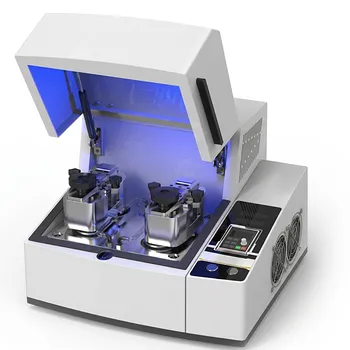
Laboratory Nano High Energy Ball Mill Ultrafine Grinding Mechanical Alloying

High Energy Laboratory Planetary Ball Mill for Nano Grinding and Colloidal Mixing of Hard and Brittle Materials
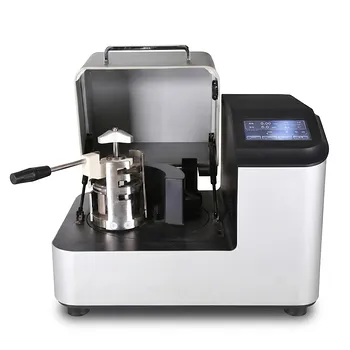
High Energy Laboratory Planetary Ball Mill for Nano Grinding and Material Science Sample Preparation
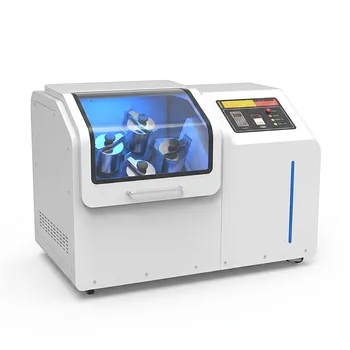
High Energy Omnidirectional Planetary Ball Mill 16L
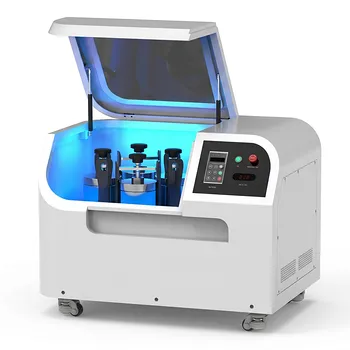
Planetary Ball Mill 12L
High Energy Omnidirectional Planetary Ball Mill 20L
Miniature Planetary Ball Mill with Vacuum Grinding and High Efficiency for Laboratory Sample Preparation