The Bath That Builds Better Nanotubes: Why Wet Grinding Unlocks the True Potential of MWCNTs
Aug 23, 2026
The 3 a.m. Frustration in the Lab
You have done everything the literature suggests. You weighed the multi-walled carbon nanotubes to the milligram, loaded the jar with precisely sized ceramic balls, and ran the planetary mill for hours. The powder came out finer—no question there. But when you try to disperse it in a polymer matrix, the familiar black specks reappear. The nanotubes are not separate; they are huddled together, clinging to each other like static-charged hair on a dry winter day.
It is not your formulation. It is what happened inside the jar.
Dry grinding, for all its simplicity, invites a silent saboteur: secondary agglomeration. The same mechanical forces that fracture nanotube agglomerates also build up electrostatic charges on the fresh surfaces. As soon as the mill stops, the very particles you separated find reasons to reconnect. You are left with a powder that fights you every time you try to integrate it into a functional material.
Wet grinding changes this story completely.
The Physics of a Liquid Shield
Why Dry Air Works Against You
In a dry mill jar, nothing stands between two freshly cracked nanotube surfaces. Van der Waals forces and electrostatic attraction dominate the space, turning your carefully fractured particles back into clumps. The result is not a uniformly de-agglomerated powder; it is a material that oscillates between being over-milled in some spots and still heavily entangled in others.
Wet grinding inserts a liquid medium into that gap. That liquid does something mechanically simple but functionally profound: it coats each particle as soon as it is created, forcing a physical separation that charges cannot easily overcome.
A Cushion for the Walls You Want to Keep
There is a secondary danger in dry milling that is often overlooked. Multi-walled carbon nanotubes are not just filler particles; they are tiny concentric cylinders of graphene. For them to carry current or transfer stress, the outer walls must remain intact. Dry impact from heavy grinding media creates sharp, localized stresses that punch through these delicate layers.
Introducing a liquid creates a hydrodynamic cushion. The force of each grinding-ball collision is filtered through the fluid before it reaches the nanotube. The energy still does its job—shortening overlong tubes, breaking bridges between aggregates—but it arrives more gently, spreading the load across many carbon atoms instead of concentrating it on a few.
The Psychology of Choosing the Harder Path
Wet grinding complicates a process that engineers love to keep simple. You now have to select a solvent, manage viscosity, and often add a drying step later. Given the choice, most of us instinctively reach for the “no added variables” version of any experiment.
Morgan Housel once observed that we systematically underestimate the cost of easy decisions that create hard downstream problems. Dry grinding looks easier on Monday morning, but makes Friday afternoon a nightmare of failed dispersion tests and irreproducible data. Wet grinding forces you to face the complexity upfront, so the downstream material behaves predictably.
The best milling strategy, then, is not the one with the fewest steps. It is the one that aligns with how the material actually responds to force.
Inside the Jar: How Wet Milling Builds a Better Suspension
Uniform Energy Delivery
In a liquid-filled jar, the grinding media move through a medium that both resists and distributes their kinetic energy. When a large ball accelerates through a viscous liquid, it does not just crash into a target particle; it displaces liquid that itself sends shear waves through agglomerates. The result is a distribution of energy that feels less like a hammer blow and more like a sustained, grain-by-grain persuasion.
The Surface Area Sweet Spot
Shortening nanotubes increases their specific surface area, which is a gift to every process that relies on surface interactions: chemical functionalization, matrix bonding, gas sensing. But the gains stop if the tubes become so short that they lose their aspect ratio entirely. Wet milling gives you a dial to control this trade-off.
- High-density media (tungsten carbide or stabilized zirconia) deliver deep impact, dismantling large flocs without requiring high rpms.
- Smaller filler beads work the gaps between larger media, shearing loose particles away from bundles rather than shattering the tubes themselves.
- Liquid viscosity acts as a moderating force, limiting the speed at which media can accelerate toward a particle.
Temperature as a Silent Variable
MWCNTs are thermally stable in inert atmospheres, but dry milling produces localized hot spots. Even brief, microscopic temperature spikes can oxidize defect sites or alter surface chemistry in ways that affect later functionalization. The liquid phase in wet grinding operates as a continuous heat sink, pulling thermal energy away before it concentrates in the powder.
The Right Equipment for a Predictable Process
All of this physics only translates into reproducible results when the machine holding the jar is capable of precision. A mill that drifts in speed, or a jar that leaks or allows media to degrade unevenly, erodes the very control you are trying to gain.
That is where purpose-built laboratory sample preparation equipment becomes more than a convenience—it becomes a guardrail for your research.
Planetary Ball Mills Designed for the Demands of Wet Grinding
Modern planetary ball mills engineered for advanced materials can handle the high-energy input wet grinding demands while maintaining strict rotational control. Features such as programmable cycling, adjustable speed ratios, and reliable sealing systems mean the promise of uniform force distribution actually delivers, jar after jar.
For temperature-sensitive work, the option to integrate liquid nitrogen cryogenic grinding extends the protective cushion idea even further. By keeping the entire milling environment below the glass-transition temperature of the polymer or the oxidation threshold of the nanotubes, you preserve the structural integrity that a conventional liquid simply cools.
The Complete Powder Processing Chain
De-agglomerating nanotubes is rarely the final step. The process often leads to mixing with other powders, defoaming viscous slurries, or compacting the composite into a test pellet. Having a cohesive ecosystem of equipment—from sieve shakers that verify particle size, to powder mixers that homogenize without destroying structure, to hydraulic presses (including vacuum hot presses and cold/warm isostatic presses) that consolidate composites—turns a batch process into a controlled, end-to-end workflow.
When your mixer understands how fragile the dispersed nanotube network is, and your press applies isostatic pressure rather than uniaxial force, the gains you capture during wet milling are not lost further down the line.
The One-Page Reference for Your Next Milling Protocol
| Process Dilemma | What Wet Grinding Provides | The Practical Effect on MWCNTs |
|---|---|---|
| Re-agglomeration after milling | Liquid barriers neutralize surface charges | Powder remains de-agglomerated long enough to be used |
| Damage to graphene walls | Hydrodynamic cushioning and shear-dominated forces | Electrical and mechanical properties are preserved |
| Inconsistent particle size | Uniform force distribution through the liquid phase | Narrower size distribution, predictable behavior |
| Sedimentation in storage | Stable suspensions with longer shelf life | Easier integration into inks, coatings, or composites |
| Heat accumulation | Fluid acts as a continuous heat sink | Avoids oxidative damage and retains surface chemistry |
| Insufficient active sites | Controlled shortening via media size and viscosity | More grafting points for functionalization without losing aspect ratio |
Building a Material That Cooperates
Atul Gawande, writing about medicine, often points out that the difference between failure and success is not a new wonder drug—it is the systematic application of well-understood principles at the moment they matter most. The same holds for materials processing. We know why wet grinding works. The physics is not a mystery. But putting those principles into practice requires equipment that executes the principle without drift, batch after batch.
When your planetary ball mill lets you set and hold the exact speed profile that balances shear and impact, you are not just operating a machine. You are conducting a physical intervention into the architecture of a material—one where each parameter is a decision about how much structure to keep and how much to sacrifice.
We supply complete laboratory sample preparation solutions for material science, built around that exact idea. Whether you are optimizing MWCNT dispersion for conductive films or preparing composite powders for advanced ceramics, the path from tangled powder to functional material starts with the right grinding environment.
Quick Links
Suggested Products
Vertical Square Planetary Ball Mill for Laboratory Sample Preparation and Nanoscale Grinding Single Tank High Energy Vibratory Ball Mill for Laboratory Grinding and Mixing High Throughput Micro Ball Mill for Cryogenic Grinding and Laboratory Cell Disruption Nanoscale High-Energy Vibratory Ball Mill for Laboratory Sample Preparation, Mechanochemistry, and Mechanical Alloying High Energy Planetary Ball Mill for Nano Scale Grinding and Mechanical AlloyingFurther Reading
The Energy Budget of a Single Impact: How the Ball-to-Powder Ratio Shapes Nanocrystalline Reality The 65-Micron Gate: Unlocking the True Isotopic Fingerprint of Portland Cement The Gentle Violence of a Planetary Mill: Why the Most Critical Moment in SiC–VC Composites Happens Before Any Heat The High-Energy Gamble: What SiBCN-rGO Fibers Teach Us About Perfect Homogenization The Alchemist's Hammer: How a Planetary Ball Mill Solves the Diffusion Dilemma in Rare-Earth Doped Ceramics
PowderPreparation
Last updated on May 14, 2026
Related Products

Vertical Square Planetary Ball Mill for Laboratory Sample Preparation and Nanoscale Grinding
Single Tank High Energy Vibratory Ball Mill for Laboratory Grinding and Mixing

High Throughput Micro Ball Mill for Cryogenic Grinding and Laboratory Cell Disruption
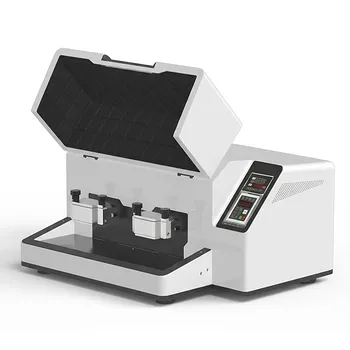
Nanoscale High-Energy Vibratory Ball Mill for Laboratory Sample Preparation, Mechanochemistry, and Mechanical Alloying
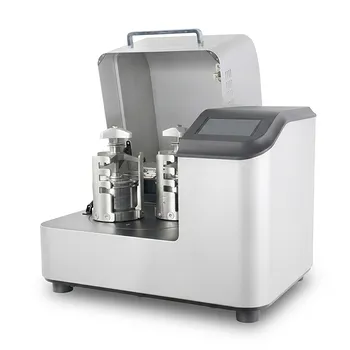
High Energy Planetary Ball Mill for Nano Scale Grinding and Mechanical Alloying
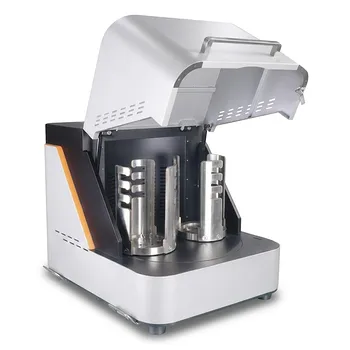
High Energy Laboratory Planetary Ball Mill for Nano Grinding and Colloidal Mixing of Hard and Brittle Materials
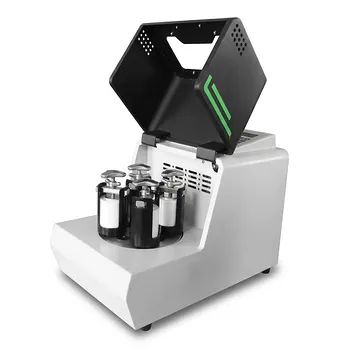
Miniature Planetary Ball Mill with Vacuum Grinding and High Efficiency for Laboratory Sample Preparation
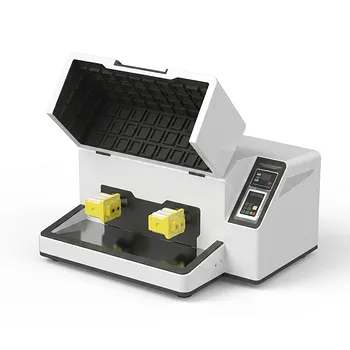
Multi-Platform Nanoscale High-Energy Vibratory Ball Mill
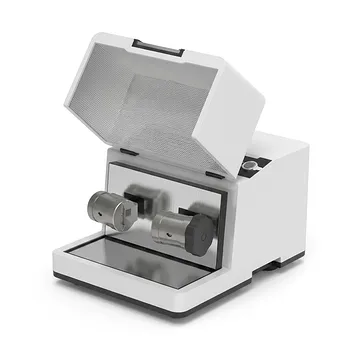
Heating Temperature Controlled High Energy Vibratory Ball Mill
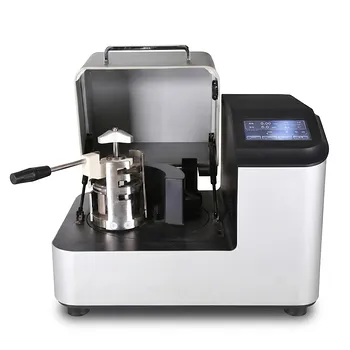
High Energy Laboratory Planetary Ball Mill for Nano Grinding and Material Science Sample Preparation
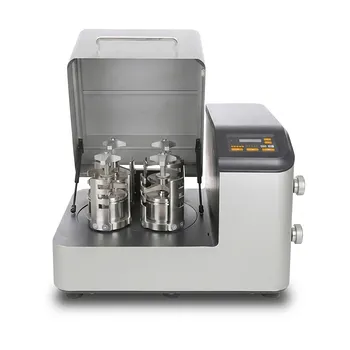
High Energy Planetary Ball Mill for Nano Scale Grinding and Colloidal Mixing in Material Science Research
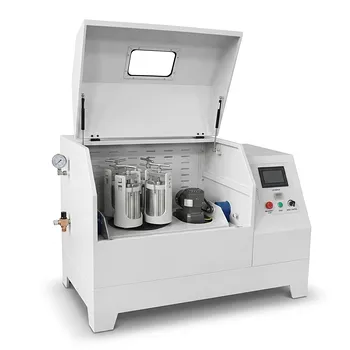
Vertical Production Planetary Ball Mill for High Throughput Powder Processing
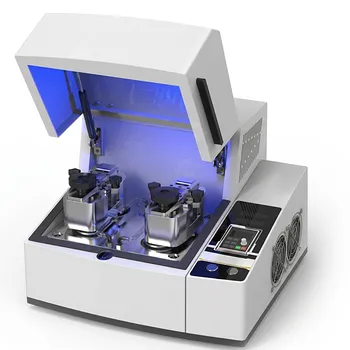
Laboratory Nano High Energy Ball Mill Ultrafine Grinding Mechanical Alloying
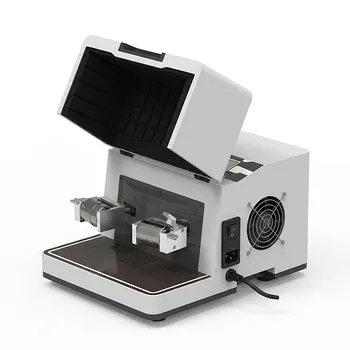
High Energy Hybrid Vibratory Ball Mill for Grinding Mixing and Cell Disruption

Nano High Energy Vibratory Ball Mill for Laboratory Sample Preparation
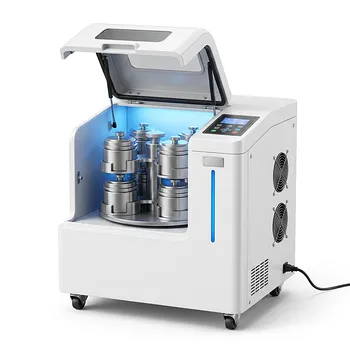
High Energy Omnidirectional Planetary Ball Mill 20L
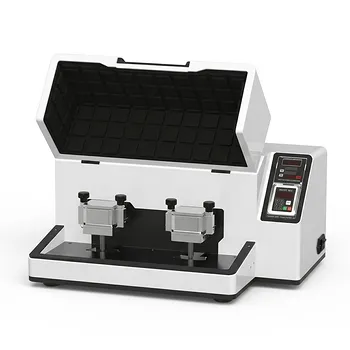
Nanoscale High Energy Vibratory Ball Mill Low Temperature
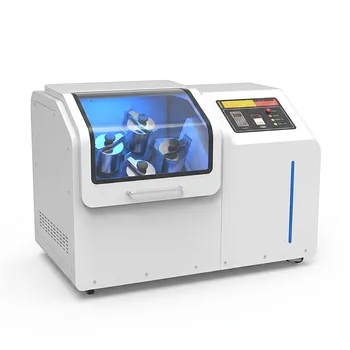
High Energy Omnidirectional Planetary Ball Mill 16L
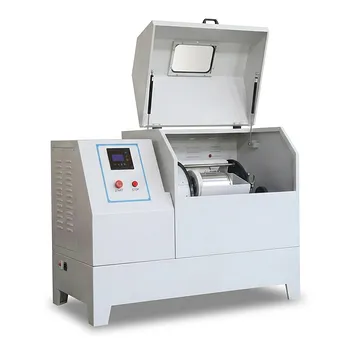
Heavy Duty Horizontal Planetary Ball Mill for Efficient Industrial Grinding and Sample Preparation