Why is light dry ball milling necessary in UO2-Gd2O3 fuel pellet production? Ensure Homogeneity and Integrity
Updated 4 months ago
Uniformity is the cornerstone of nuclear fuel integrity. In UO2-Gd2O3 production, light dry ball milling is essential to break down hard agglomerates inherent in Gadolinium Oxide raw materials. This mechanical refinement ensures that Gd2O3 is distributed as fine particles throughout the Uranium Dioxide matrix, facilitating proper chemical diffusion during sintering and preventing structural defects.
Light dry ball milling serves as the critical bridge between raw material input and a homogenous fuel pellet by eliminating Gd2O3 agglomerates. This process ensures uniform distribution and optimal sintering kinetics, which are vital for preventing microscopic defects and macroscopic pellet bloating.
The Role of Agglomerate Breakdown
Eliminating Structural Weaknesses
Raw Gadolinium Oxide (Gd2O3) often contains hard agglomerates that do not naturally disperse during standard mixing. If left untreated, these clumps create localized regions of high gadolinium concentration that compromise the mechanical and thermal consistency of the fuel pellet.
Optimizing Sintering Kinetics
By applying mechanical force to achieve particle refinement, milling significantly increases the surface area of the gadolinium particles. This reduction in size minimizes the diffusion distance required for gadolinium atoms to migrate into the UO2 matrix during the high-temperature sintering process.
Enhancing Microstructural Homogeneity
Avoiding "Free Gadolinium" Defects
Without adequate milling, the fuel may suffer from "free gadolinium" defects, where unreacted Gd2O3 remains as a separate phase. Proper de-agglomeration ensures that trace amounts of gadolinium are fully integrated into the crystalline structure of the uranium dioxide, maintaining the desired neutronics of the fuel.
Preventing Pellet Bloating and Porosity
Large agglomerates that are eliminated during sintering often leave behind voids or large pores, which can lead to pellet "bloating." Light dry ball milling ensures a dense, stable microstructure by replacing these large clumps with fine particles that fill the matrix uniformly.
Understanding the Trade-offs
Surface Adhesion and Efficiency Loss
As powders reach higher levels of fineness during dry grinding, particles tend to adhere to the mill liners and grinding media. This creates a "buffer layer" that absorbs mechanical energy and reduces the overall breakage efficiency of the mill.
The Need for Grinding Aids
To counter adhesion, flow promoters or grinding aids are often introduced to modify the surface properties of the particles. While these additives help maintain linear breakage kinetics and production consistency, they must be carefully managed to ensure they do not introduce impurities into the nuclear fuel.
Risk of Over-Processing
While refinement is necessary, excessive milling can lead to powder that is too active or difficult to press into "green" pellets. The process is specifically termed "light" ball milling to indicate a balance between sufficient de-agglomeration and maintaining the flowability required for subsequent production steps.
Implementing Milling for Optimal Fuel Performance
Integrating mechanical grinding into the production flow is a technical necessity for safety and efficiency. The goal is to move from simple liberation of particles to a state of complete chemical integration.
- If your primary focus is microstructural integrity: Prioritize the complete breakdown of hard agglomerates to prevent large-pore formation and bloating during the sintering stage.
- If your primary focus is chemical homogeneity: Ensure milling achieves the finest possible particle distribution to minimize diffusion distances and eliminate "free gadolinium" phases.
- If your primary focus is process efficiency: Utilize flow promoters to prevent powder adhesion to mill surfaces, ensuring consistent breakage rates and predictable throughput.
A precisely calibrated milling process transforms raw chemical components into a high-performance, stable nuclear fuel matrix.
Summary Table:
| Key Process Step | Primary Objective | Impact on Fuel Quality |
|---|---|---|
| De-agglomeration | Break down hard Gd2O3 clumps | Eliminates localized high-Gd concentrations and structural weaknesses |
| Particle Refinement | Increase surface area | Optimizes sintering kinetics and reduces chemical diffusion distance |
| Homogenization | Uniform particle distribution | Prevents "free gadolinium" defects and ensures stable neutronics |
| Controlled Grinding | Balance flowability & activity | Prevents pellet bloating, large voids, and pressing difficulties |
Elevate Your Material Homogeneity with Precision Equipment
Achieving the perfect microstructural integrity in sensitive materials like UO2-Gd2O3 requires specialized powder processing tools. At our facility, we provide complete laboratory sample preparation solutions tailored for material science.
From high-performance planetary ball mills, jet mills, and liquid nitrogen cryogenic grinders for superior de-agglomeration to our advanced range of Cold/Warm Isostatic Presses (CIP/WIP) and vacuum hot presses for high-density compaction, we empower your research and production with reliability.
Our extensive line also includes:
- Crushers & Sieve Shakers: For precise particle size control.
- Powder & Defoaming Mixers: For absolute matrix uniformity.
- Standard & XRF Pellet Presses: For streamlined sample preparation.
Ready to optimize your production flow? Contact our technical experts today to find the ideal equipment for your laboratory or industrial application.
References
- Palanki Balakrishna. Fabrication of UO<sub>2</sub>-Gd<sub>2</sub>O<sub>3</sub> Fuel Pellets. DOI: 10.4236/msce.2016.42002
Mentioned Products
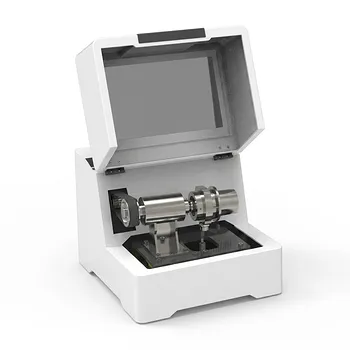
- Single Tank High Energy Vibratory Ball Mill for Laboratory Grinding and Mixing
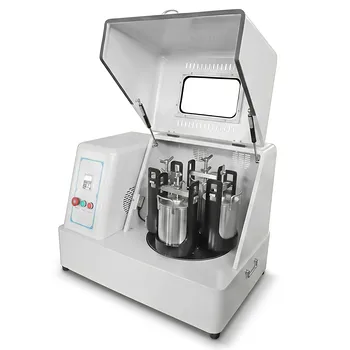
- Vertical Square Planetary Ball Mill for Laboratory Sample Preparation and Nanoscale Grinding
- High Throughput Micro Ball Mill for Cryogenic Grinding and Laboratory Cell Disruption
- Vertical Production Planetary Ball Mill for High Throughput Powder Processing
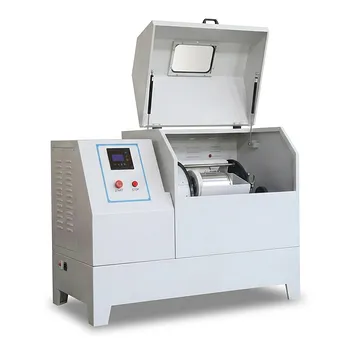
- Heavy Duty Horizontal Planetary Ball Mill for Efficient Industrial Grinding and Sample Preparation
People Also Ask
- What is the primary purpose of using a vibratory ball mill in the preparation of respirable carbon fiber fragments?
- What is the purpose of using a vibratory ball mill for Al-Ni-Fe alloy ribbons? Achieve High Catalytic Activity
- Why is a vibratory ball mill preferred over a planetary ball mill for rapid powder particle refinement? High-Speed Impact
- How does a high-energy vibratory ball mill improve the performance of MgH2? Optimize Hydrogen Storage Kinetics
- What role do high-energy ball mills play in the preparation of reinforcements for hybrid metal matrix composites?

Tech Team · PowderPreparation
Last updated on Jun 03, 2026
Related Products
Single Tank High Energy Vibratory Ball Mill for Laboratory Grinding and Mixing
Vertical Square Planetary Ball Mill for Laboratory Sample Preparation and Nanoscale Grinding

High Throughput Micro Ball Mill for Cryogenic Grinding and Laboratory Cell Disruption

Vertical Production Planetary Ball Mill for High Throughput Powder Processing
Heavy Duty Horizontal Planetary Ball Mill for Efficient Industrial Grinding and Sample Preparation
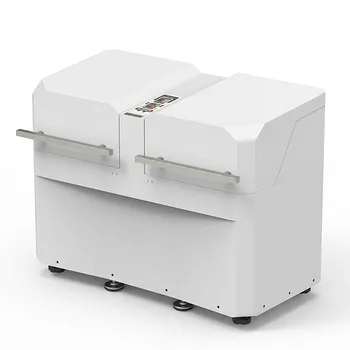
Dual Station Planetary Ball Mill 24L
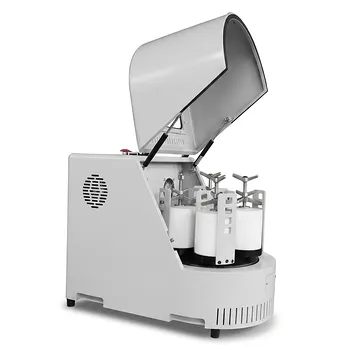
Vertical Semi Circular Planetary Ball Mill for Laboratory Precision Grinding
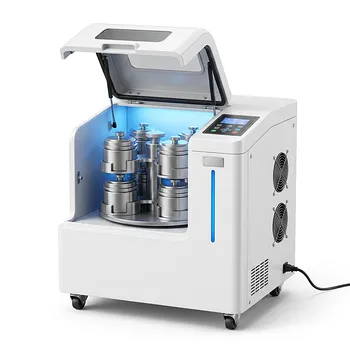
High Energy Omnidirectional Planetary Ball Mill 20L

8L Planetary Ball Mill for Laboratory Grinding and Sample Preparation

High Energy Omnidirectional Planetary Ball Mill 16L
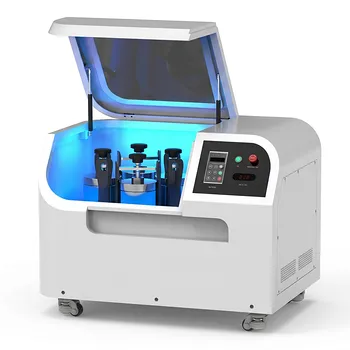
Planetary Ball Mill 12L
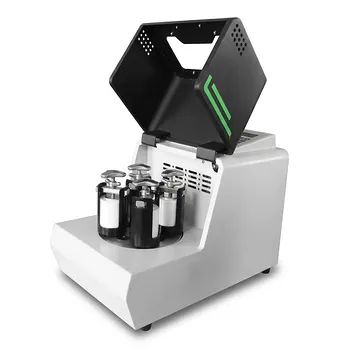
Miniature Planetary Ball Mill with Vacuum Grinding and High Efficiency for Laboratory Sample Preparation
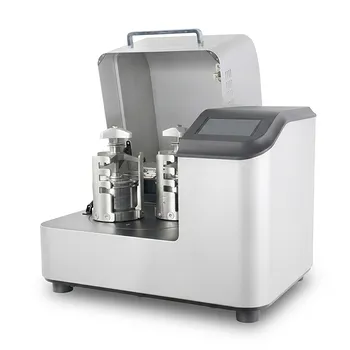
High Energy Planetary Ball Mill for Nano Scale Grinding and Mechanical Alloying
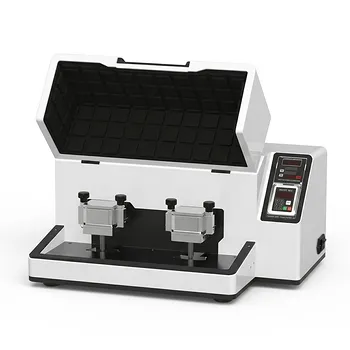
Nanoscale High Energy Vibratory Ball Mill Low Temperature

High Energy Laboratory Planetary Ball Mill for Nano Grinding and Material Science Sample Preparation
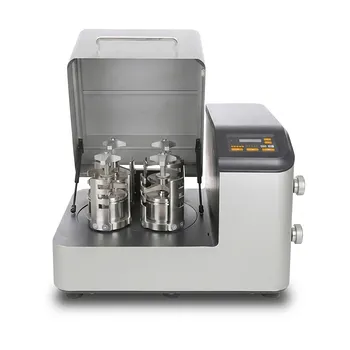
High Energy Planetary Ball Mill for Nano Scale Grinding and Colloidal Mixing in Material Science Research
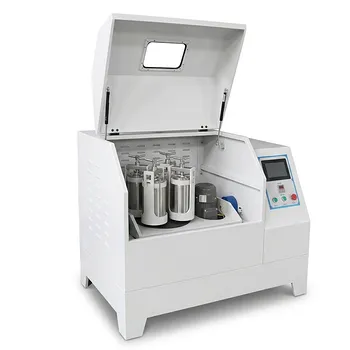
360° Rotating Omnidirectional Laboratory Planetary Ball Mill for Homogeneous Ultra-Fine Grinding and Mixing
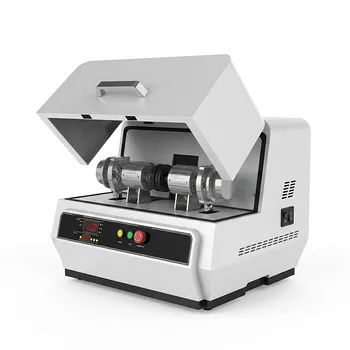
Dual Jar High Energy Vibratory Ball Mill
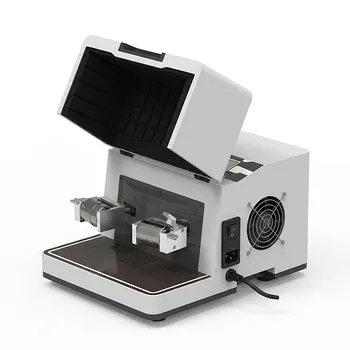
High Energy Hybrid Vibratory Ball Mill for Grinding Mixing and Cell Disruption