Why is the ball milling of MWCNTs conducted under wet conditions? Optimize Dispersion and Prevent Agglomeration
Updated 5 months ago
Wet grinding is the standard approach for ball milling multi-walled carbon nanotubes (MWCNTs) because the liquid medium facilitates superior particle dispersion and prevents secondary agglomeration. This process ensures a uniform distribution of mechanical forces, which protects the delicate tube wall structure from excessive damage while producing highly stable suspensions.
Core Takeaway: Conducting ball milling in a wet environment leverages liquid physics to prevent MWCNTs from re-clumping due to electrostatic forces, ensuring a more uniform, stable, and structurally intact final product compared to dry grinding.
The Mechanics of Dispersion in Wet Grinding
Preventing Secondary Agglomeration
In a dry environment, MWCNTs frequently re-clump after being broken down due to electrostatic and mechanical forces. The presence of a liquid medium in wet grinding acts as a physical barrier that neutralizes these forces, preventing nanotubes from forming new, tight entanglements.
Uniform Force Distribution
Wet grinding ensures that the impact and shear forces generated by the grinding media are distributed evenly throughout the mixture. This uniform force distribution is critical for achieving a consistent particle size without creating "hot spots" of high energy that could destroy the nanotubes.
Producing Superior Suspension Stability
Suspensions created through wet milling exhibit significantly better dispersion stability than those produced via dry methods. The liquid carrier maintains the separation achieved during milling, which is essential for downstream applications like conductive coatings or composite reinforcement.
Enhancing Material Properties and Functionality
Preservation of Tube Integrity
While ball milling is intended to modify the nanotubes, maintaining the tube wall structure is vital for electrical and mechanical performance. Wet conditions provide a "cushioning" effect that allows for length reduction and aggregate breakdown while minimizing catastrophic damage to the graphene layers.
Increasing Surface Area and Active Sites
The mechanical energy from the milling process shortens the nanotubes and breaks down large flocs, which increases the specific surface area. This physical modification is easier to control in a liquid phase and provides more active sites for subsequent chemical functionalization or bonding.
Improving Sedimentation Resistance
By effectively breaking down aggregates into smaller, suspendable particles, wet milling reduces the sedimentation tendency of MWCNTs in solution. This results in a more homogenous material that is easier to integrate into polymers or aqueous systems.
The Role of Grinding Media in Wet Systems
Optimized Size Grading
Using a mix of grinding media, such as porcelain or stainless steel balls of varying diameters, optimizes the milling efficiency. Larger balls provide the impact force to crush large aggregates, while smaller balls provide the shearing action necessary for fine dispersion within the liquid.
Material Consistency and Contamination
Selecting the right media, such as tungsten carbide (WC) balls for WC-based systems, prevents foreign impurity contamination. High-density media are often preferred in wet milling to ensure sufficient kinetic energy is transferred to the MWCNTs even at lower rotational speeds.
Understanding the Trade-offs
Solvent Selection and Removal
The primary trade-off in wet grinding is the necessity of solvent management. Choosing an incompatible liquid can lead to poor wetting of the nanotubes, and removing the solvent after processing adds an extra step that can be energy-intensive.
Risk of Excessive Shortening
While shortening the nanotubes increases surface area, excessive milling can reduce the aspect ratio too far. This can negatively impact the formation of a conductive network, as shorter tubes may struggle to bridge the gaps required for electron transport.
Optimizing Your Milling Strategy
How to Apply This to Your Project
To achieve the best results with MWCNT ball milling, align your parameters with your specific material requirements:
- If your primary focus is building conductive networks: Use wet grinding with high-density media at moderate speeds to preserve the tube length while ensuring microscopic uniformity.
- If your primary focus is chemical functionalization: Prioritize wet milling in a planetary mill to maximize the creation of active sites and increase the specific surface area for reagent attachment.
- If your primary focus is aerosol or suspension stability: Utilize high-hardness stainless steel balls in a viscous liquid medium to break down tight entanglements into small, suspendable particles.
By carefully selecting your liquid medium and grinding media, you can precisely control the balance between structural integrity and dispersion quality.
Summary Table:
| Feature | Wet Grinding Advantage | Impact on MWCNTs |
|---|---|---|
| Particle Dispersion | Neutralizes electrostatic forces | Prevents secondary agglomeration |
| Force Application | Uniform shear & impact distribution | Protects tube walls from structural damage |
| Product Stability | Creates stable liquid suspensions | Minimizes sedimentation and clumping |
| Surface Area | Controlled mechanical shortening | Increases active sites for functionalization |
| Temperature | Liquid acts as a heat sink | Prevents thermal degradation during milling |
Maximize Your Material Performance with Precision Preparation
Achieving perfect dispersion in multi-walled carbon nanotubes requires high-performance equipment that balances power with precision. We provide complete laboratory sample preparation solutions tailored for advanced material science and powder processing.
Whether you need to optimize your MWCNT dispersion or advance your powder metallurgy, our extensive product line has you covered:
- Advanced Milling: Planetary ball mills, jet mills, and liquid nitrogen cryogenic grinders for superior particle size control.
- Sample Compaction: A full spectrum of hydraulic presses, including Cold/Warm Isostatic Presses (CIP/WIP), vacuum hot presses, and standard lab presses.
- Processing & Sizing: Vibratory/air-jet sieve shakers, powder mixers, and high-efficiency defoaming mixers.
Ready to elevate your research and production quality? Contact our technical experts today to find the ideal solution for your laboratory needs!
References
- Baasandulam Tserengombo, Se-Dong Kim. Effects of Functionalization in Different Conditions and Ball Milling on the Dispersion and Thermal and Electrical Conductivity of MWCNTs in Aqueous Solution. DOI: 10.3390/nano11051323
Mentioned Products
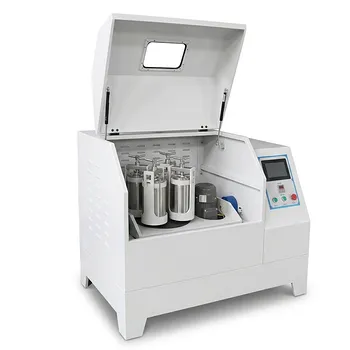
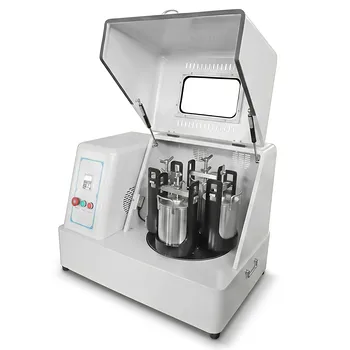
- Vertical Square Planetary Ball Mill for Laboratory Sample Preparation and Nanoscale Grinding
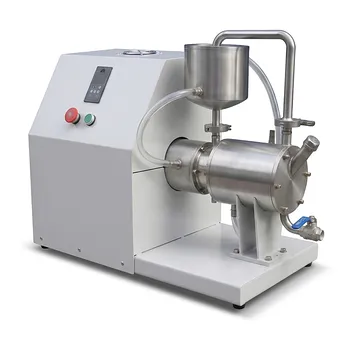
- Laboratory Small Horizontal Sand Mill for Nano Materials Wet Grinding
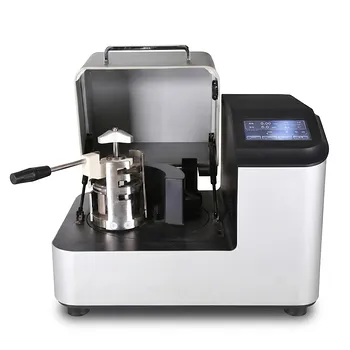
- High Energy Laboratory Planetary Ball Mill for Nano Grinding and Material Science Sample Preparation
- Laboratory Horizontal Bead Mill for Nanomaterial Wet Grinding and Material Science Research
- High Energy Laboratory Planetary Ball Mill for Nano Grinding and Colloidal Mixing of Hard and Brittle Materials
People Also Ask
- What is the function of a planetary ball mill in wollastonite ceramic prep? Achieve Molecular Homogenization & Reactivity
- How does a planetary ball mill contribute to the homogenization of trace elements? Achieve Sub-Micron Uniformity
- Why grind lime-pozzolan specimens for TG/DTA for 3 mins? Master sample prep for high-precision thermal analysis.
- What role does a planetary ball mill play in the synthesis of Li6PS5Cl (LPSCl)? Unlock High Ionic Conductivity
- What role does a planetary ball mill play in KNTO ceramic refinement? Optimize Homogeneity & Reactivity

Tech Team · PowderPreparation
Last updated on May 14, 2026
Related Products
Vertical Square Planetary Ball Mill for Laboratory Sample Preparation and Nanoscale Grinding
Laboratory Small Horizontal Sand Mill for Nano Materials Wet Grinding
High Energy Laboratory Planetary Ball Mill for Nano Grinding and Material Science Sample Preparation
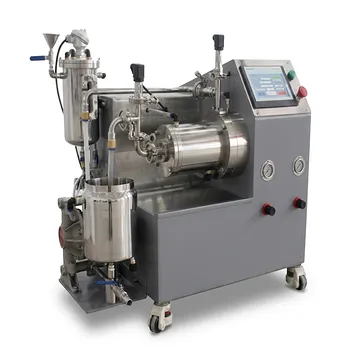
Laboratory Horizontal Bead Mill for Nanomaterial Wet Grinding and Material Science Research
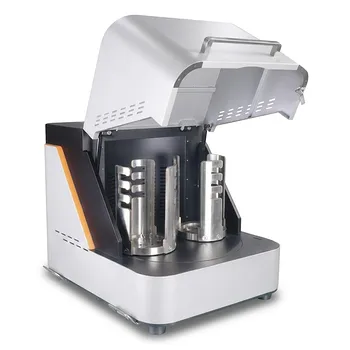
High Energy Laboratory Planetary Ball Mill for Nano Grinding and Colloidal Mixing of Hard and Brittle Materials
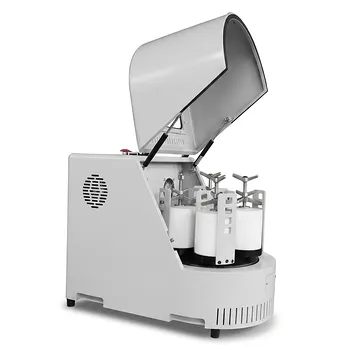
Vertical Semi Circular Planetary Ball Mill for Laboratory Precision Grinding
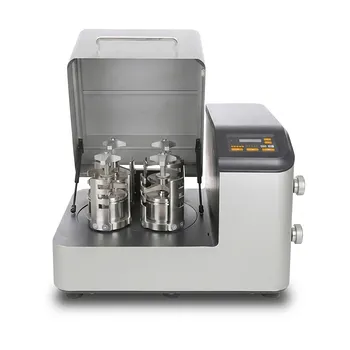
High Energy Planetary Ball Mill for Nano Scale Grinding and Colloidal Mixing in Material Science Research
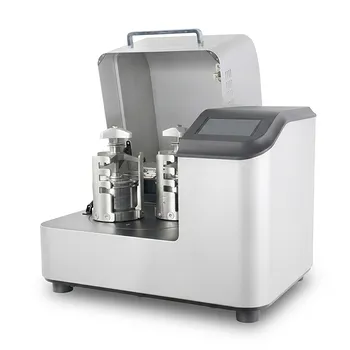
High Energy Planetary Ball Mill for Nano Scale Grinding and Mechanical Alloying
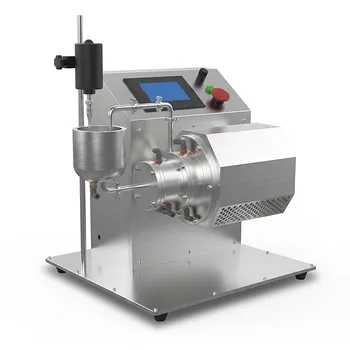
Laboratory Horizontal Pin Nano Sand Mill
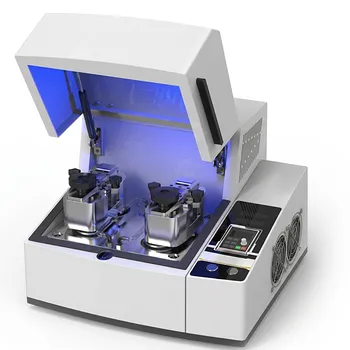
Laboratory Nano High Energy Ball Mill Ultrafine Grinding Mechanical Alloying
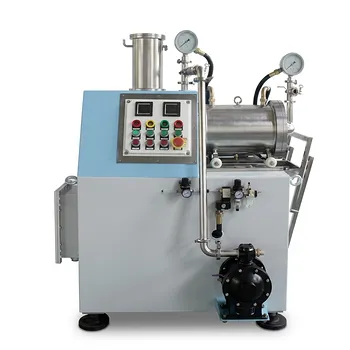
Horizontal Bead Mill for Nanoscale Grinding and Advanced Material Powder Processing
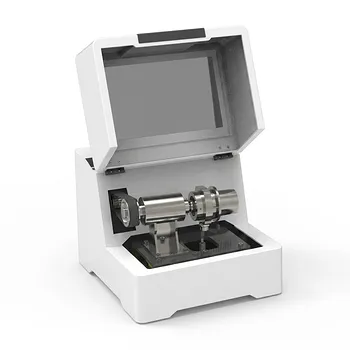
Single Tank High Energy Vibratory Ball Mill for Laboratory Grinding and Mixing
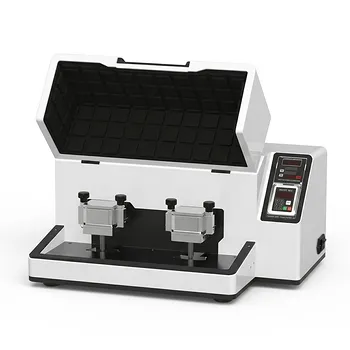
Nanoscale High Energy Vibratory Ball Mill Low Temperature
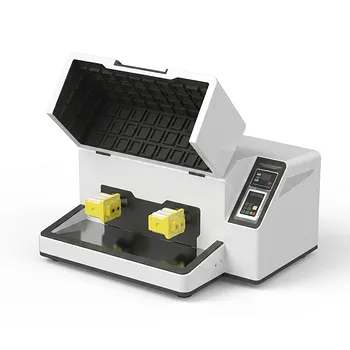
Multi-Platform Nanoscale High-Energy Vibratory Ball Mill
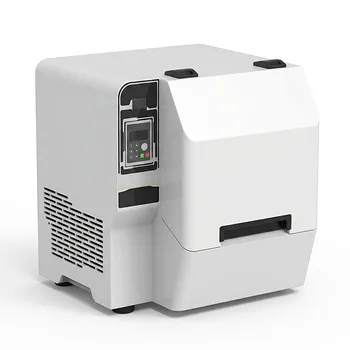
Nano High Energy Vibratory Ball Mill for Laboratory Sample Preparation
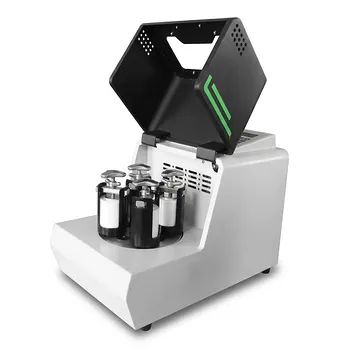
Miniature Planetary Ball Mill with Vacuum Grinding and High Efficiency for Laboratory Sample Preparation
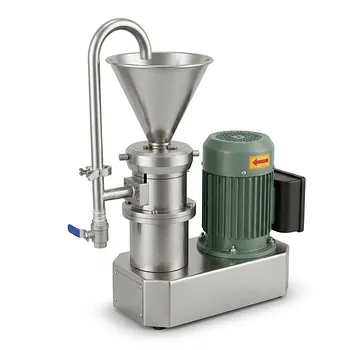
Small Laboratory Colloid Mill for Ultra-Fine Wet Grinding and Emulsification

High Throughput Micro Ball Mill for Cryogenic Grinding and Laboratory Cell Disruption
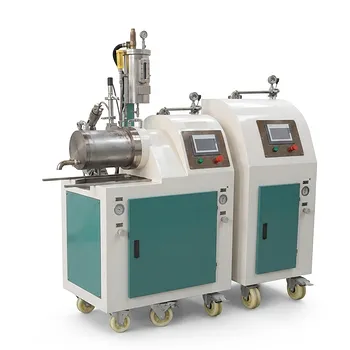
Mass Production Nano Sand Mill for Industrial Nanomaterial Grinding and Dispersion