What is the primary purpose of using a planetary ball mill during the raw material mixing stage of cerium-doped bioactive glass? - Goal
Updated 5 months ago
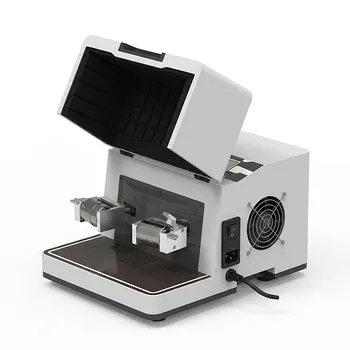
The primary purpose of using a planetary ball mill is to achieve micron-level refinement and extreme chemical homogeneity among raw materials. This high-energy grinding process utilizes high-frequency rotation to generate intense impact and shear forces on materials like silica and calcium carbonate. By ensuring a highly uniform mixture of powders prior to calcination, the process establishes the foundation for bioactive glass with a precise chemical composition and stable functional properties.
The planetary ball mill acts as a critical homogenization tool that reduces particle size to increase the reaction surface area. This ensures that dopants like cerium are distributed uniformly at a microscopic scale, which is essential for the material's eventual bioactivity and chemical stability.
Achieving Particle Refinement and Homogeneity
High-Energy Impact and Shear Forces
A planetary ball mill operates through high-frequency rotation that creates a "planetary" motion of the grinding jars. This motion generates powerful impact and shear forces that break down tough raw materials more effectively than traditional mixing methods.
Micron-Level Size Reduction
The grinding process achieves micron-level refinement of the chemical components. Reducing the raw powders to this scale is fundamental for ensuring that the different elements are in close physical contact before the heating process begins.
Ensuring Chemical Homogeneity
For cerium-doped bioactive glass, chemical homogeneity is the ultimate goal of the mixing stage. A uniform distribution of cerium and other oxides ensures that the final glass structure remains consistent, preventing localized fluctuations in properties.
Enhancing Reactivity and Material Stability
Increasing Reaction Contact Area
By refining particles to the micron or sub-micron scale, the mill significantly increases the specific surface area of the powder. This larger contact area facilitates faster and more complete solid-state reactions during the subsequent calcination and sintering phases.
Facilitating Effective Doping
In doped materials, such as those involving cerium or yttrium, the mill provides the necessary foundation for ionic substitution. Highly uniform mixing ensures that dopant ions can substitute into the host matrix evenly during heat treatment, rather than forming isolated clusters.
Establishing Stable Physical Properties
The precision of the mixture directly influences the stability of the final product. Without the high-energy homogenization provided by the planetary mill, the bioactive glass might suffer from inconsistent degradation rates or poor mechanical strength.
Understanding the Trade-offs
Risk of Material Contamination
The intense mechanical energy involved can lead to wear and tear of the grinding jars and balls. This wear can introduce small amounts of impurities (such as alumina or zirconia) into the bioactive glass, which may alter its biological compatibility.
Agglomeration and Over-Milling
If the milling duration is too long, the extremely fine particles may begin to agglomerate due to van der Waals forces. This sticking effect can actually decrease the uniformity of the mixture and hinder the efficiency of the subsequent sintering process.
Heat Generation and Phase Changes
High-energy milling generates significant thermal energy within the jars. In some cases, this localized heat can trigger premature chemical reactions or phase transitions in sensitive raw materials before the intended calcination stage.
How to Apply This to Your Project
Recommendations for Optimization
- If your primary focus is maximum chemical purity: Utilize grinding jars and media made of the same material as your primary component (e.g., high-purity silica or specialized polymers) to minimize foreign contamination.
- If your primary focus is accelerating reaction kinetics: Opt for wet milling in a medium like ethanol to prevent particle agglomeration and achieve a more consistent sub-micron particle size distribution.
- If your primary focus is large-scale production stability: Standardize milling RPM and duration to ensure that every batch reaches the same level of homogenization and specific surface area.
By mastering the homogenization phase through planetary ball milling, you ensure the structural integrity and predictable biological efficacy of your cerium-doped bioactive glass.
Summary Table:
| Key Feature | Functional Advantage | Material Impact |
|---|---|---|
| High-Energy Impact | Micron-level size reduction | Increases specific surface area for faster reactions |
| Planetary Motion | Extreme chemical homogeneity | Ensures uniform distribution of cerium dopants |
| Shear Force Mixing | Particle breakdown | Prevents localized fluctuations in bioactive properties |
| Controlled Milling | Foundation for sintering | Establishes stable physical and mechanical strength |
Precision Sample Preparation for Advanced Material Science
Elevate your research and production with our complete laboratory sample preparation solutions. We specialize in high-performance powder processing and compaction equipment tailored for material science. Our extensive lines include planetary ball mills, jet mills, crushers (jaw/roll), liquid nitrogen cryogenic grinders, and sieve shakers to ensure your cerium-doped bioactive glass achieves perfect homogeneity.
Furthermore, we manufacture a full spectrum of hydraulic presses to support your final product forming, including Cold/Warm Isostatic Presses (CIP/WIP), hot presses, and XRF pellet presses. Whether you are aiming for micron-level refinement or superior mechanical stability, we provide the tools you need to succeed.
Contact us today to optimize your lab's efficiency!
References
- Sofia Pacheco, Sílvia Gavinho. Impact of CeO2-Doped Bioactive Glass on the Properties of CMC/PEG Hydrogels Intended for Wound Treatment. DOI: 10.3390/gels11121010
Mentioned Products
- Vertical Semi Circular Planetary Ball Mill for Laboratory Precision Grinding
- High Energy Planetary Ball Mill for Nano Scale Grinding and Mechanical Alloying
- Heavy Duty Horizontal Planetary Ball Mill for Efficient Industrial Grinding and Sample Preparation
- Vertical Production Planetary Ball Mill for High Throughput Powder Processing
- 360° Rotating Omnidirectional Laboratory Planetary Ball Mill for Homogeneous Ultra-Fine Grinding and Mixing
People Also Ask
- What role does a planetary ball mill play in the synthesis of Li6PS5Cl (LPSCl)? Unlock High Ionic Conductivity
- Why is a planetary ball mill essential for SiBCN-rGO wet-spinning? Achieve Superior Dispersion and Spinnability
- Why is an intermittent grinding process required for perovskites in a planetary ball mill? Ensure Stability & Purity
- Why is a planetary ball mill required for PET micronization? Ensure Accurate Chemical Analysis of Reprocessed PET
- How does mechanized planetary ball milling compare to manual agate grinding? Optimize sulfide standard material precision.

Tech Team · PowderPreparation
Last updated on May 14, 2026
Related Products
Vertical Semi Circular Planetary Ball Mill for Laboratory Precision Grinding
High Energy Planetary Ball Mill for Nano Scale Grinding and Mechanical Alloying
Heavy Duty Horizontal Planetary Ball Mill for Efficient Industrial Grinding and Sample Preparation

Vertical Production Planetary Ball Mill for High Throughput Powder Processing
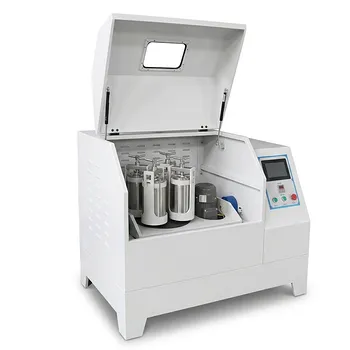
360° Rotating Omnidirectional Laboratory Planetary Ball Mill for Homogeneous Ultra-Fine Grinding and Mixing

Vertical Square Planetary Ball Mill for Laboratory Sample Preparation and Nanoscale Grinding

Miniature Planetary Ball Mill with Vacuum Grinding and High Efficiency for Laboratory Sample Preparation
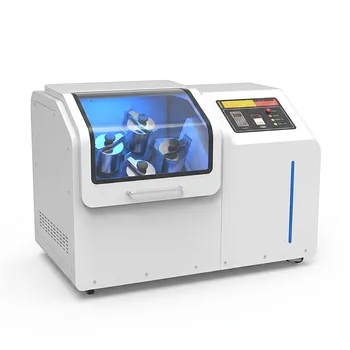
High Energy Omnidirectional Planetary Ball Mill 16L

High Energy Laboratory Planetary Ball Mill for Nano Grinding and Material Science Sample Preparation
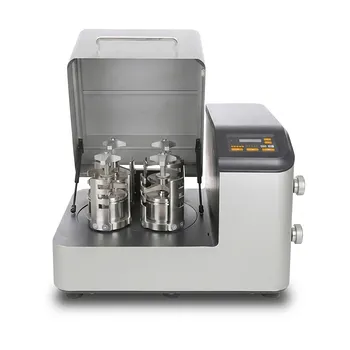
High Energy Planetary Ball Mill for Nano Scale Grinding and Colloidal Mixing in Material Science Research
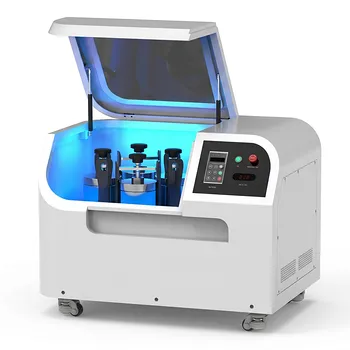
Planetary Ball Mill 12L
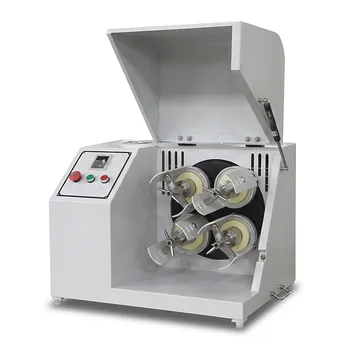
Horizontal Light Duty Planetary Ball Mill for Laboratory Sample Preparation
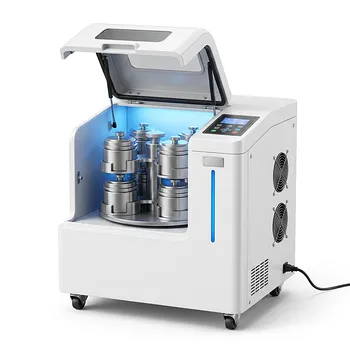
High Energy Omnidirectional Planetary Ball Mill 20L
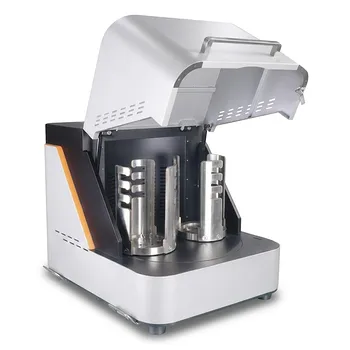
High Energy Laboratory Planetary Ball Mill for Nano Grinding and Colloidal Mixing of Hard and Brittle Materials
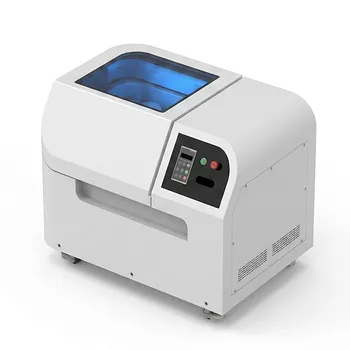
8L Planetary Ball Mill for Laboratory Grinding and Sample Preparation
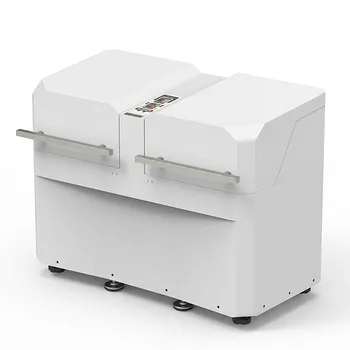
Dual Station Planetary Ball Mill 24L
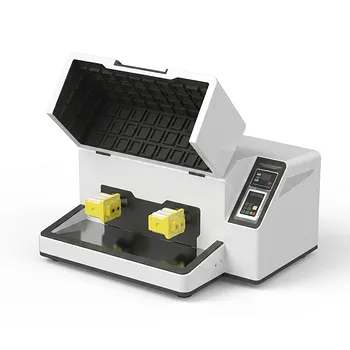
Multi-Platform Nanoscale High-Energy Vibratory Ball Mill

Nano High Energy Vibratory Ball Mill for Laboratory Sample Preparation
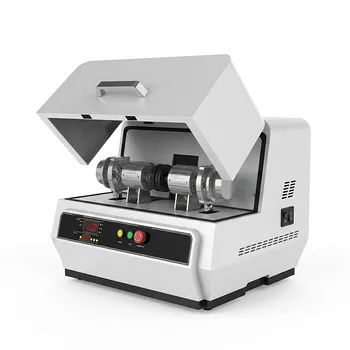
Dual Jar High Energy Vibratory Ball Mill