Why is low-speed ball milling equipment required for dry mixing when coating SiAlON granules with nano-sized SiC? - Guide
Updated 5 months ago
Low-speed ball milling is utilized to provide a gentle mixing environment that facilitates the uniform adhesion of nano-SiC particles onto the surface of SiAlON granules. This specific mechanical approach ensures that a continuous coating layer is formed without compromising the spherical integrity of the larger granules.
To achieve high electrical and thermal conductivity at low additive concentrations, one must maintain the structural integrity of the base granules while creating a uniform shell. Low-speed milling provides the precise mechanochemical control necessary to reach the percolation threshold without crushing the core material.
Preserving the Structural Integrity of SiAlON Granules
Avoiding Mechanical Degradation
High-energy milling processes, such as those found in planetary ball mills, generate significant shear and impact forces. While these forces are excellent for refining powders to sub-micron levels, they are too aggressive for coating applications and can easily shatter the spherical structure of SiAlON granules.
Facilitating Gentle Particle Adhesion
Low-speed equipment, typically operating at around 30 rpm, provides just enough energy for nano-SiC particles to collide with and adhere to the larger granules. This "soft" mechanical action allows the nanoparticles to distribute evenly across the surface rather than being embedded or crushed.
Ensuring Surface Uniformity
The goal of this process is to create a continuous coating layer. Low-energy mixing ensures that the nano-SiC is spread consistently across every granule, which is the foundational requirement for building a conductive network within the final composite.
Achieving Conductivity through the Percolation Threshold
The Role of the Percolation Threshold
The percolation threshold refers to the minimum concentration of a conductive phase (SiC) required to create a continuous path for electrons or heat. By coating the granules uniformly, the material can achieve this threshold at much lower additive concentrations than if the SiC were randomly dispersed.
Impact on Electrical and Thermal Properties
When nano-SiC forms a complete shell around the SiAlON granules, it creates a three-dimensional conductive skeleton. This precise mechanochemical control is what allows the final ceramic to exhibit high electrical and thermal conductivity while maintaining the bulk properties of the SiAlON matrix.
Precision vs. Power
In this specific application, the quality of the interface between the nano-SiC and the SiAlON is more important than particle size reduction. Low-speed milling prioritizes the surface-level interaction, ensuring that the functional coating remains intact throughout the dry mixing phase.
Understanding the Trade-offs
Processing Time vs. Energy Input
The primary trade-off of low-speed milling is the extended processing time required to achieve a uniform mix. While high-speed mills work in minutes, low-speed systems may require significantly longer durations to ensure every granule is sufficiently coated.
Lack of Particle Refinement
Low-speed ball milling is not a substitute for grinding or refining raw materials. If the initial SiAlON granules or SiC particles are not already at the desired size, this equipment will not be able to reduce them further, as it lacks the impact energy of planetary or high-speed systems.
Risk of Incomplete Coating
If the speed is too low or the time is too short, the nano-SiC may aggregate rather than coat. Finding the "sweet spot"—such as the documented 30 rpm—is critical to prevent both the destruction of granules and the poor distribution of the reinforcement phase.
How to Apply This to Your Project
Selecting the Right Milling Strategy
Successful ceramic composite preparation requires matching the milling energy to the specific goal of the process step.
- If your primary focus is surface coating and percolation: Use low-speed ball milling (approx. 30 rpm) with ceramic media to maintain granule shape and achieve a uniform nano-layer.
- If your primary focus is particle size reduction or refinement: Utilize planetary ball milling to generate high shear forces and reduce powders to sub-micron or nano-levels.
- If your primary focus is preventing contamination: Ensure the use of ceramic linings and grinding media (such as SiC or alumina) that match your material system to avoid introducing metallic impurities.
Choosing low-speed mixing is a deliberate engineering decision to prioritize the structural architecture of the composite over raw processing power.
Summary Table:
| Feature | Low-Speed Ball Milling (~30 rpm) | High-Energy Milling (Planetary) |
|---|---|---|
| Primary Goal | Surface coating & uniform adhesion | Particle size reduction & refinement |
| Granule Impact | Preserves spherical structural integrity | High risk of shattering/crushing granules |
| Energy Level | Low shear; gentle mechanical action | High shear; aggressive impact forces |
| Key Outcome | Continuous conductive shell (Percolation) | Random dispersion or material degradation |
| Best Used For | Coating, dry mixing, surface interaction | Grinding, alloying, sub-micron milling |
Elevate Your Material Research with Precision Powder Solutions
Achieving the perfect percolation threshold requires more than just equipment—it requires the right mechanical strategy. At [Insert Brand Name], we provide complete laboratory sample preparation solutions tailored for material science.
Whether you need low-speed ball mills for delicate surface coatings or high-energy planetary, jet, and rotor mills for particle refinement, our equipment is designed for precision and durability. Beyond milling, we offer a full spectrum of processing tools including:
- Powder Processing: Crushers (jaw/roll), liquid nitrogen cryogenic grinders, and sieve shakers (vibratory/air-jet).
- Mixing & Defoaming: Advanced powder mixers and specialized defoaming mixers for uniform composites.
- Advanced Compaction: A full range of hydraulic presses, including Cold/Warm Isostatic Presses (CIP/WIP), standard lab presses, XRF pellet presses, and vacuum hot presses.
Ready to optimize your SiAlON-SiC composites or other advanced ceramic workflows? Contact us today to discuss how our powder processing and compaction expertise can bring superior consistency and performance to your laboratory.
References
- Erhan Ayas. Mechanical, Electrical and Thermal Properties of α/β SiAlON-SiC Composites Fabricated by Gas Pressure Sintering Method. DOI: 10.18038/aubtda.279850
Mentioned Products
- Nanoscale High Energy Vibratory Ball Mill Low Temperature
- Ultra-Low Temperature Cryogenic High-Energy Vibratory Ball Mill
- Miniature Planetary Ball Mill with Vacuum Grinding and High Efficiency for Laboratory Sample Preparation
- Planetary Ball Mill 12L
- Single Tank High Energy Vibratory Ball Mill for Laboratory Grinding and Mixing
People Also Ask
- How does a high-energy vibratory ball mill improve the performance of MgH2? Optimize Hydrogen Storage Kinetics
- What is the importance of using a high-purity argon atmosphere during the high-energy ball milling of ceramic particles?
- What is the purpose of adding alcohol as a PCA during titanium ball milling? Prevent Cold Welding & Enhance Refinement
- What is the role of high-energy ball milling in antibacterial ceramic powders? Boost Reactivity & Homogeneity
- What is the function of high-energy ball milling in ZnO membrane slurry prep? Optimize Homogenization & Dispersion

Tech Team · PowderPreparation
Last updated on May 14, 2026
Related Products
Nanoscale High Energy Vibratory Ball Mill Low Temperature
Ultra-Low Temperature Cryogenic High-Energy Vibratory Ball Mill

Miniature Planetary Ball Mill with Vacuum Grinding and High Efficiency for Laboratory Sample Preparation
Planetary Ball Mill 12L
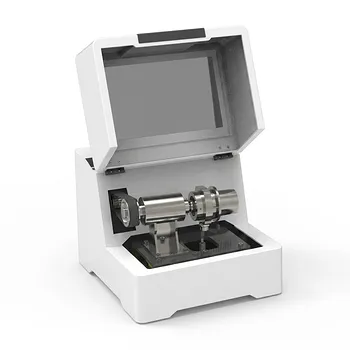
Single Tank High Energy Vibratory Ball Mill for Laboratory Grinding and Mixing
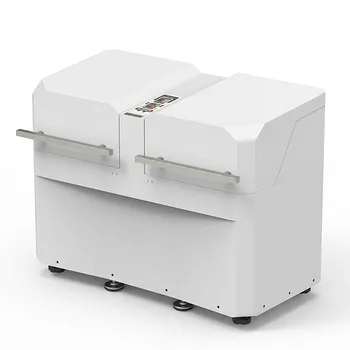
Dual Station Planetary Ball Mill 24L

High Energy Omnidirectional Planetary Ball Mill 20L

Heavy Duty Horizontal Planetary Ball Mill for Efficient Industrial Grinding and Sample Preparation

High Energy Omnidirectional Planetary Ball Mill 16L

Vertical Square Planetary Ball Mill for Laboratory Sample Preparation and Nanoscale Grinding

Vertical Production Planetary Ball Mill for High Throughput Powder Processing

High Throughput Micro Ball Mill for Cryogenic Grinding and Laboratory Cell Disruption
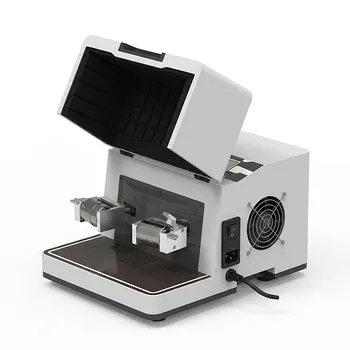
High Energy Hybrid Vibratory Ball Mill for Grinding Mixing and Cell Disruption
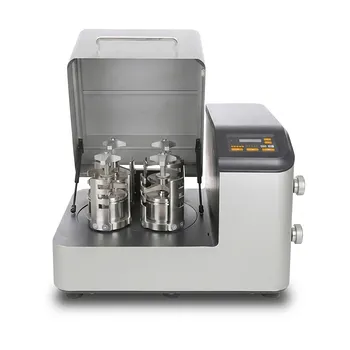
High Energy Planetary Ball Mill for Nano Scale Grinding and Colloidal Mixing in Material Science Research

High Energy Planetary Ball Mill for Nano Scale Grinding and Mechanical Alloying

360° Rotating Omnidirectional Laboratory Planetary Ball Mill for Homogeneous Ultra-Fine Grinding and Mixing
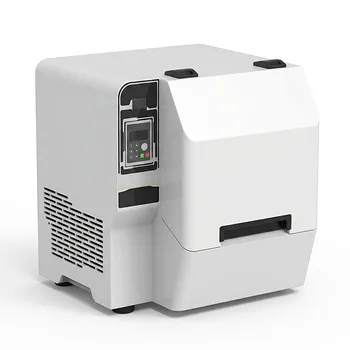
Nano High Energy Vibratory Ball Mill for Laboratory Sample Preparation
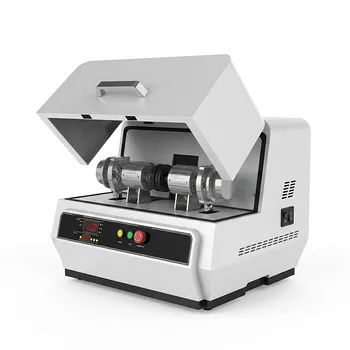
Dual Jar High Energy Vibratory Ball Mill
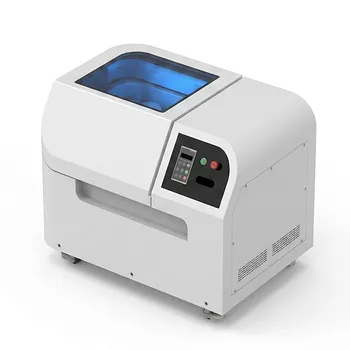
8L Planetary Ball Mill for Laboratory Grinding and Sample Preparation