What unique advantages does a CIP offer for silicon carbide? Achieve uniform density and superior ceramic reliability.
Updated 5 months ago
Cold Isostatic Pressing (CIP) offers a transformative advantage for silicon carbide (SiC) ceramics by applying uniform, omnidirectional pressure through a fluid medium. Unlike uniaxial pressing, which is limited by friction against rigid mold walls, CIP eliminates internal density gradients and stress concentrations. This results in a green body with exceptionally consistent packing density, which is critical for preventing deformation during the ultra-high-temperature sintering process required for silicon carbide.
Core Takeaway: CIP overcomes the physical limitations of uniaxial pressing by providing isotropic compression, leading to superior density uniformity, reduced sintering deformation, and enhanced mechanical reliability in high-performance ceramics.
Eliminating the Constraints of Friction
Overcoming Density Gradients
In standard uniaxial pressing, the friction between the powder and the rigid mold walls creates "dead zones" where pressure is unevenly distributed. This leads to density gradients, where the center or bottom of a part may be significantly less dense than the top.
CIP utilizes a liquid medium to apply pressure equally from every direction. Because there are no rigid walls to create friction, the pressure is transmitted uniformly throughout the entire volume of the silicon carbide green body.
Promoting Particle Bonding
The isostatic environment at high pressures—often reaching between 200 MPa and 300 MPa—promotes the deformation and bonding of granulated particles. This process narrows the pore size distribution within the green body more effectively than uniaxial methods.
By eliminating micro-pores and achieving a higher initial green density, the material is better prepared for the final densification phase. This foundational uniformity is what allows silicon carbide to reach its full theoretical density potential.
Enhancing Sintering Performance and Stability
Reducing Sintering Deformation
Silicon carbide requires ultra-high temperatures to sinter effectively. If a green body has internal density variations, different areas will shrink at different rates during heating, leading to warping, cracking, or dimensional inaccuracy.
Because CIP produces a green body with highly consistent packing, the shrinkage during sintering is isotropic (uniform in all directions). This significantly reduces the risk of deformation and ensures the final product maintains its intended geometry.
Minimizing Residual Stress
Uniaxial pressing often leaves behind anisotropic residual stresses—stresses that are stronger in one direction than another. These internal tensions can act as failure points when the ceramic is subjected to thermal or mechanical loads.
CIP ensures minimal anisotropic stress, resulting in a more homogenous microstructure. This makes the finished silicon carbide ceramic more resilient to thermal shock and harsh operating environments.
Understanding the Trade-offs
Equipment Complexity and Cycle Time
While CIP provides superior material properties, it is generally a slower process than uniaxial pressing. It requires sealing the powder in flexible bags and a multi-stage pressurization/depressurization cycle within a pressure vessel.
Dimensional Precision of Green Bodies
Uniaxial pressing provides excellent dimensional control for the "as-pressed" green body due to the use of rigid, high-precision steel molds. CIP green bodies, shaped by flexible membranes, often require additional "green machining" to achieve precise final dimensions before sintering.
How to Apply This to Your Project
Making the Right Choice for Your Goal
The choice between CIP and uniaxial pressing depends on the geometric complexity and performance requirements of your specific silicon carbide component.
- If your primary focus is maximum material reliability and strength: Utilize CIP to ensure a homogenous microstructure and eliminate internal flaws that could lead to premature failure.
- If your primary focus is high-volume production of simple shapes: Uniaxial pressing is often more cost-effective and provides faster cycle times for basic geometries like thin plates or simple discs.
- If your primary focus is complex, near-net shapes: CIP is the superior choice, as it allows for the compression of intricate forms that would be impossible to eject from a rigid uniaxial mold.
- If your primary focus is large-scale industrial components: CIP is generally preferred, as it can handle much larger volume parts without the massive press-frame requirements of large-diameter uniaxial molds.
By leveraging the isotropic pressure of CIP, engineers can produce silicon carbide ceramics that push the boundaries of density, uniformity, and structural integrity.
Summary Table:
| Feature | Uniaxial Pressing | Cold Isostatic Pressing (CIP) |
|---|---|---|
| Pressure Distribution | Unidirectional (leads to friction) | Omnidirectional (fluid-based) |
| Density Uniformity | High gradients; "dead zones" | Exceptionally consistent packing |
| Sintering Behavior | Risk of warping and cracking | Isotropic shrinkage; high stability |
| Residual Stress | Anisotropic (directional) | Minimal; homogenous microstructure |
| Ideal Application | High-volume simple shapes | Complex, high-performance ceramics |
Optimize Your Ceramic Production with Professional CIP Solutions
Achieving the full density potential of silicon carbide requires precision equipment designed for material excellence. We provide complete laboratory sample preparation solutions for material science, specializing in advanced powder processing and compaction technology.
Our extensive product line includes high-performance Cold/Warm Isostatic Presses (CIP/WIP), standard lab presses, and vacuum hot presses, alongside precision tools like planetary ball mills and jet mills to ensure perfect powder preparation.
Whether you are tackling complex geometries or aiming for maximum mechanical reliability, our expertise helps you eliminate internal flaws and enhance sintering performance. Contact our specialists today to find the ideal pressing solution for your high-performance material projects!
References
- Yeongjun Oh, Hyun‐Sik Kim. Effect of carbon content on electrical, thermal, and mechanical properties of pressureless sintered SiC ceramics. DOI: 10.1111/jace.20562
Mentioned Products
- Small Ceramic Structure Laboratory Sand Mill Nanoscale Grinding Dispersion Equipment Seal-less Screen-less Design
- Low Temperature Laboratory Knife Mill Cryogenic Sample Grinder Material Science Powder Processing
- 500g Capacity Water Cooled Low Temperature Grinder with Variable Speed and Safety Cover
- Water Cooled Airflow Ultra Fine Grinder for Low Temperature Material Processing
- Laboratory Liquid Nitrogen Cryogenic Grinder Polymer Sample Preparation Pulverizer
People Also Ask
- Why is a sand mill used to process solid carbon-forming agents like PPVA and PER? Enhance Dispersion & Flame Retardancy
- What is the role of laboratory grinding equipment in the preparation of waste glass powder for eco-friendly red bricks?
- Why is grinding equipment necessary for SnO2-Sb2O3 xerogels? Maximize surface area and photocatalytic activity.
- How does laboratory grinding or pulverizing equipment influence eggshell-derived adsorbents? Maximize Surface Area.
- What is the primary role of grinding equipment in BLA preparation? Enhance Reactivity & Material Uniformity

Tech Team · PowderPreparation
Last updated on May 14, 2026
Related Products
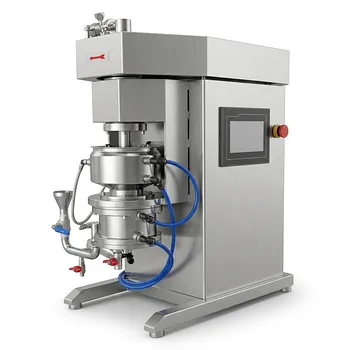
Small Ceramic Structure Laboratory Sand Mill Nanoscale Grinding Dispersion Equipment Seal-less Screen-less Design
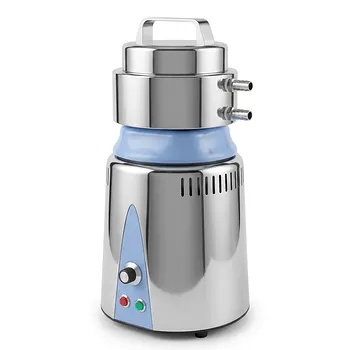
Low Temperature Laboratory Knife Mill Cryogenic Sample Grinder Material Science Powder Processing
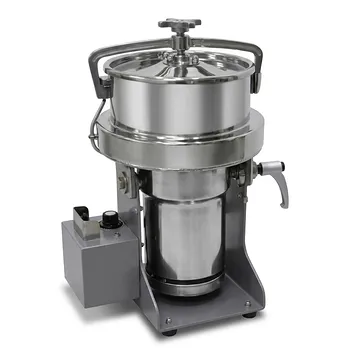
500g Capacity Water Cooled Low Temperature Grinder with Variable Speed and Safety Cover
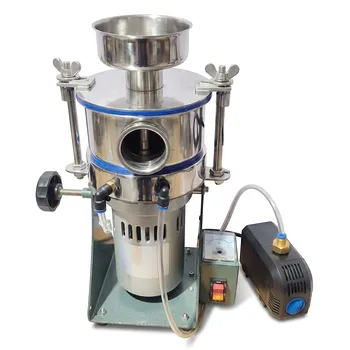
Water Cooled Airflow Ultra Fine Grinder for Low Temperature Material Processing
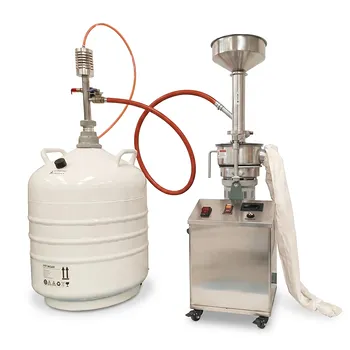
Laboratory Liquid Nitrogen Cryogenic Grinder Polymer Sample Preparation Pulverizer
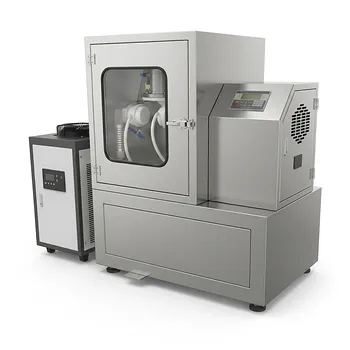
Vibratory Ultra-Low Temperature Ultrafine Grinder for Cryogenic Powder Processing
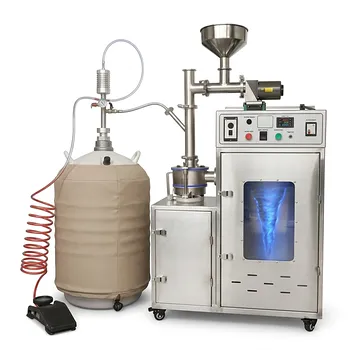
Small Liquid Nitrogen Cryogenic Grinder for Ultrafine Grinding of Heat-Sensitive Materials in Laboratories
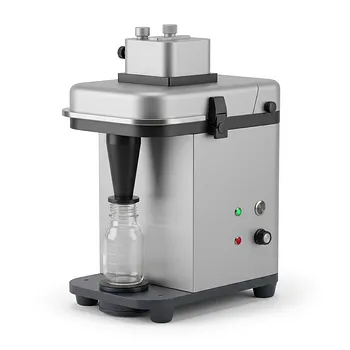
Cyclonic Laboratory Mill for NIR Spectroscopy Sample Preparation Food and Feed Grinding
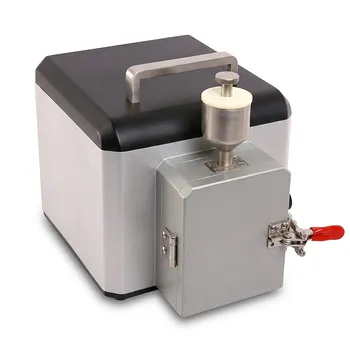
Portable Cutting Mill for Laboratory Sample Preparation and RoHS WEEE Compliance Testing
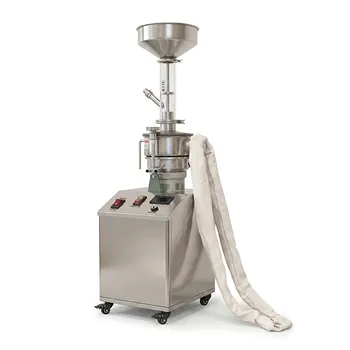
Small Liquid Nitrogen Cryogenic Grinder for Plastic and Heat-Sensitive Material Sample Preparation
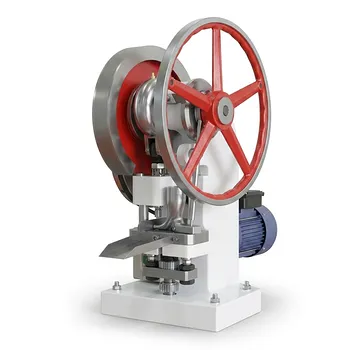
5 Ton Single Punch Tablet Press Laboratory Small Batch Production
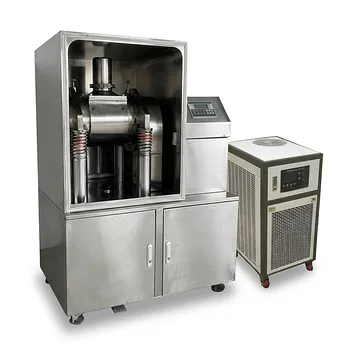
Water Cooled Cryogenic Ultra Fine Cell Wall Breaking Mill
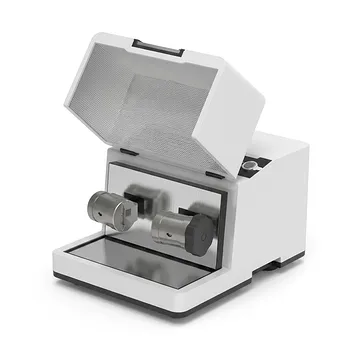
Heating Temperature Controlled High Energy Vibratory Ball Mill
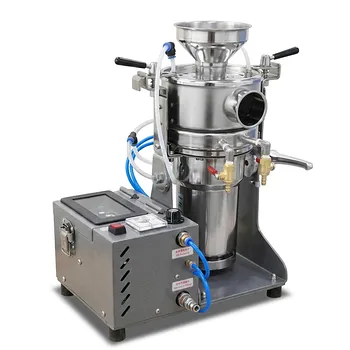
Water Cooled Pulse Jet Ultrafine Grinder
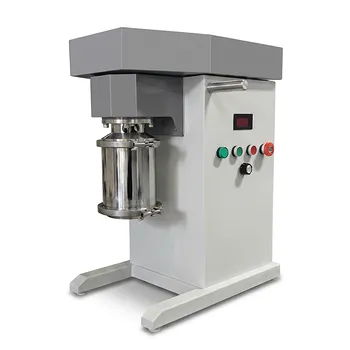
Nano Laboratory Bead Mill Desktop Sub Micron Sand Mill Screenless Seal Less Powder Grinder
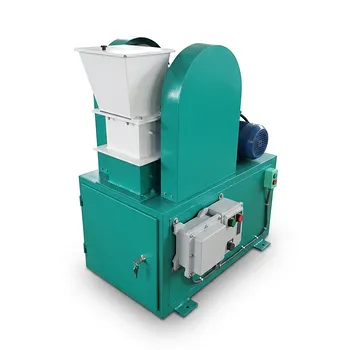
Custom Explosion-Proof Sealed Jaw Crusher for Laboratory and Industrial Sample Preparation
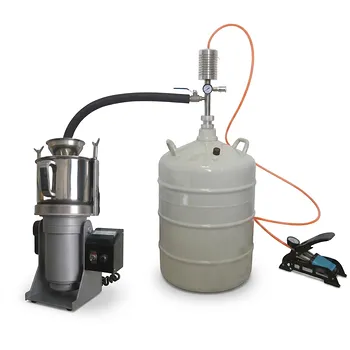
Liquid Nitrogen Cryogenic Grinder for Plastic and Heat-Sensitive Materials
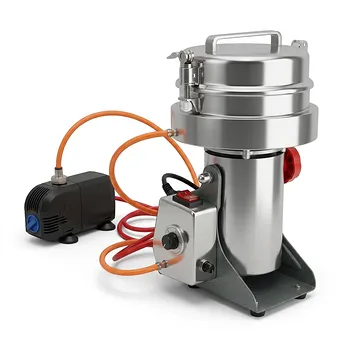
Water Cooled High Speed Grinder with Cryogenic Option for Laboratory Sample Preparation
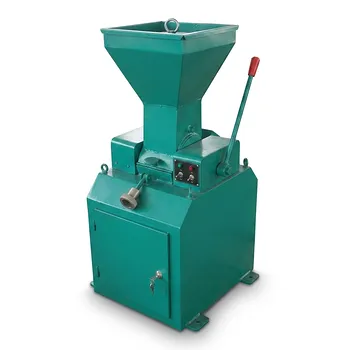
Laboratory Sealed Hammer Crusher for Coal and Mineral Sample Preparation