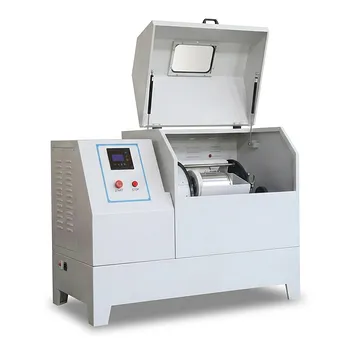
Why is a vibratory disc mill utilized for the pretreatment of alum shale waste samples in phase analysis? Ensure XRD Accuracy
Updated 5 months ago
The vibratory disc mill is the primary tool for alum shale pretreatment because it rapidly reduces samples to a particle size below 10 micrometers. This ultra-fine grinding is essential for X-ray diffraction (XRD) phase analysis to eliminate the "preferred orientation effect," where minerals align in a way that distorts intensity readings. By achieving this specific fineness, the mill ensures that the powder particles achieve a truly random orientation, which is the foundation for accurate and repeatable quantitative data.
Core Takeaway: Utilizing a vibratory disc mill transforms heterogeneous alum shale waste into a standardized, micron-level powder. This process is critical not just for physical size reduction, but for ensuring the statistical randomness required for valid mineralogical phase identification and chemical consistency.
Achieving Analytical Precision in XRD
Eliminating the Preferred Orientation Effect
Alum shale contains mineral structures that naturally tend to stack or align in specific directions. Preferred orientation occurs when these particles aren't ground finely enough, leading to disproportionate peak intensities in X-ray diffraction. The vibratory disc mill breaks these structures down to a sub-10 micrometer level, ensuring that the X-rays hit the crystals from all possible angles.
Ensuring Repeatability Through Sub-10μm Fineness
Consistency in phase analysis depends on the ability to replicate results across multiple samples. The high-energy impact of a disc mill produces a uniform particle size distribution in a fraction of the time required by other methods. This uniformity minimizes "grain size effects" and allows for a more stable baseline during data refinement.
Maximizing Sample Homogeneity
High-Frequency Vibration and Impact Forces
The mill operates by utilizing high-frequency vibrations to generate intense impact and friction forces between the grinding set and the sample. This mechanical energy is efficient at pulverizing hardened shale and solidified bulk materials into fine powders. The result is a physically uniform state that is ready for subsequent thermal or chemical activation.
Improving Sampling Consistency
In waste analysis, a small sample must accurately represent a much larger batch of material. Fine grinding ensures chemical homogeneity, meaning the trace elements and mineral phases are distributed evenly throughout the powder. This reduces the risk of sampling errors and ensures that the analytical results reflect the true content of the waste rock.
Enhancing Surface Area for Chemical Analysis
Increasing Effective Reactive Surface Area
Reducing alum shale to a micron-level powder significantly increases the effective reactive surface area of the material. This is particularly important if the phase analysis is a precursor to chemical treatments like ion exchange or desilication. A higher surface area allows chemical reagents to interact more uniformly with the sample particles.
Facilitating Complete Component Release
For complex shale composites, mineral phases can be "locked" within a larger matrix. The intense energy of a vibratory mill performs ultra-fine pulverization, which releases these components. This ensures that the phases are completely exposed for extraction or instrumental detection, improving the overall yield and accuracy of the study.
Understanding the Trade-offs
The Risk of Metallic Contamination
While hardened steel grinding sets are efficient, they can introduce iron or other metallic impurities into the shale sample. For high-precision trace element analysis (like ICP-MS), experts often switch to agate grinding media. Agate prevents metallic contamination, though it may require longer grinding times due to its lower density compared to steel.
Heat Generation and Phase Stability
The high-energy nature of vibratory milling generates significant heat through friction. Some sensitive minerals in alum shale, such as certain clays or hydrated phases, can undergo phase transitions or dehydration if the mill is run for too long without cooling. It is critical to balance the "short duration" benefit with the thermal limits of the sample.
Applying Pretreatment to Your Analytical Goals
Choosing the right milling parameters depends on whether your priority is structural identification, chemical purity, or physical reactivity.
- If your primary focus is Quantitative XRD (Phase Analysis): Aim for a particle size below 10 micrometers to ensure random orientation and eliminate peak intensity errors.
- If your primary focus is Trace Element Analysis (XRF/ICP): Utilize agate grinding sets to pulverize samples to less than 75 micrometers while preventing metallic contamination.
- If your primary focus is Chemical Reactivity or Extraction: Focus on maximizing surface area through high-frequency vibration to ensure reagents can access the entire sample matrix.
Effective pretreatment is the bridge between a raw waste sample and high-quality, defensible analytical data.
Summary Table:
| Key Feature | Benefit for Alum Shale Pretreatment |
|---|---|
| Sub-10μm Pulverization | Eliminates "preferred orientation" for accurate XRD peak intensity. |
| High-Frequency Impact | Rapidly achieves homogeneity and uniform particle size distribution. |
| Increased Surface Area | Enhances chemical reactivity for subsequent extraction or activation. |
| Component Release | Breaks complex matrices to fully expose mineral phases for detection. |
Achieve Unmatched Precision in Your Material Analysis
High-quality analytical data starts with expert sample preparation. We provide complete laboratory sample preparation solutions for material science, specializing in high-performance powder processing and compaction equipment.
Whether you need to achieve sub-10μm fineness with our vibratory disc mills and planetary ball mills, or require high-pressure sample preparation with our Cold/Warm Isostatic Presses (CIP/WIP) and XRF pellet presses, our equipment is designed to ensure maximum homogeneity and repeatability.
Our comprehensive product line includes:
- Mills & Grinders: Disc mills, jet mills, and cryogenic grinders for ultra-fine powders.
- Sieving & Mixing: Vibratory sieve shakers and high-efficiency powder mixers.
- Hydraulic Presses: Standard lab presses, hot presses, and vacuum hot presses for material synthesis.
Ready to enhance your lab's efficiency and accuracy? Contact us today to find the perfect solution for your application!
References
- Kristina Åhlgren, Mattias Bäckström. Groundwater chemistry affected by trace elements (As, Mo, Ni, U and V) from a burning alum shale waste deposit, Kvarntorp, Sweden. DOI: 10.1007/s11356-021-12784-2
Mentioned Products
- Vibratory Disc Mill for Rapid Fine Grinding and High Throughput Sample Preparation of Hard and Brittle Materials
- High Speed Vibratory Disc Mill for Spectral Analysis Sample Preparation and Rapid Powder Grinding
- Vibratory Superfine Grinder for Ultra Fine Laboratory Powder Milling
- Single Tank High Energy Vibratory Ball Mill for Laboratory Grinding and Mixing
- Multi-Platform Nanoscale High-Energy Vibratory Ball Mill
People Also Ask
- What is the primary function of a vibrating disc mill in the pretreatment of raw clay samples? Achieve Micron-Level Precision
- What is the primary function of a laboratory disc mill for oyster shells? Boost Reactivity & Analytical Precision
- How does the size of grinding media influence the vibratory milling efficiency? Achieve Optimal Pharmaceutical Fineness
- What is the function of a laboratory vibratory mill? Master StPh/MMT Nanocomposite Preparation via Mechanochemistry
- What is the primary function of a vibration mill in processing beta-SiAlON after SHS? Powder Refinement Guide.

Tech Team · PowderPreparation
Last updated on May 14, 2026
Related Products
Vibratory Disc Mill for Rapid Fine Grinding and High Throughput Sample Preparation of Hard and Brittle Materials
High Speed Vibratory Disc Mill for Spectral Analysis Sample Preparation and Rapid Powder Grinding
Vibratory Superfine Grinder for Ultra Fine Laboratory Powder Milling
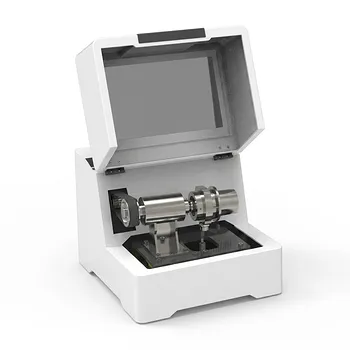
Single Tank High Energy Vibratory Ball Mill for Laboratory Grinding and Mixing
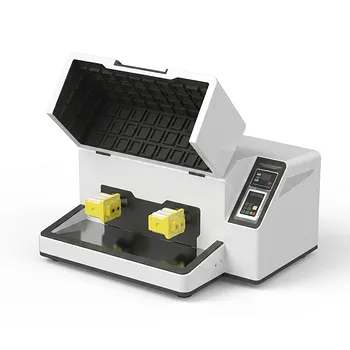
Multi-Platform Nanoscale High-Energy Vibratory Ball Mill
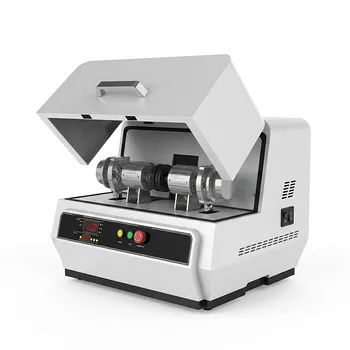
Dual Jar High Energy Vibratory Ball Mill
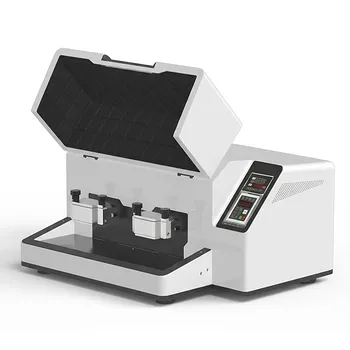
Nanoscale High-Energy Vibratory Ball Mill for Laboratory Sample Preparation, Mechanochemistry, and Mechanical Alloying
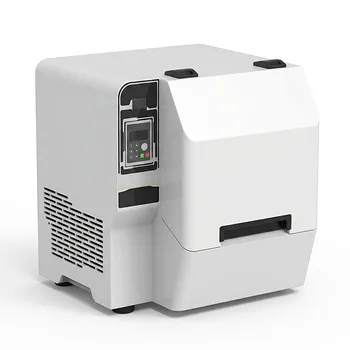
Nano High Energy Vibratory Ball Mill for Laboratory Sample Preparation
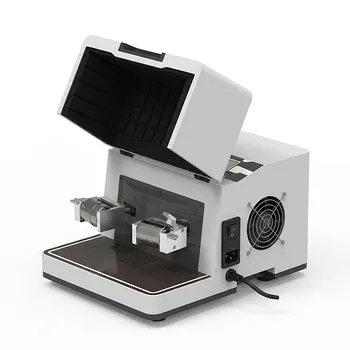
High Energy Hybrid Vibratory Ball Mill for Grinding Mixing and Cell Disruption
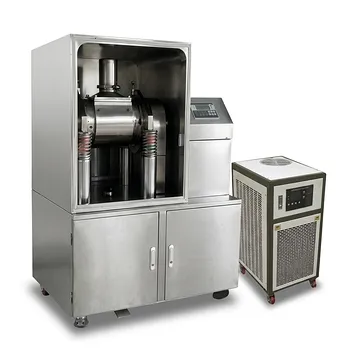
Small Vibrating Ultrafine Grinder for Traditional Chinese Medicine
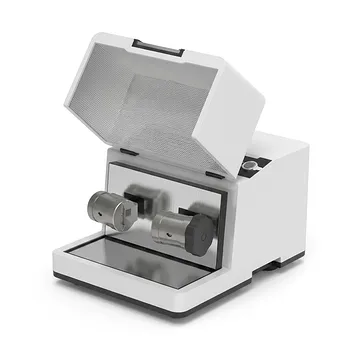
Heating Temperature Controlled High Energy Vibratory Ball Mill
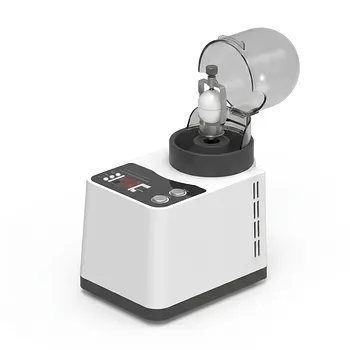
Laboratory Micro Vibration Grinding Mill for Trace Sample Preparation
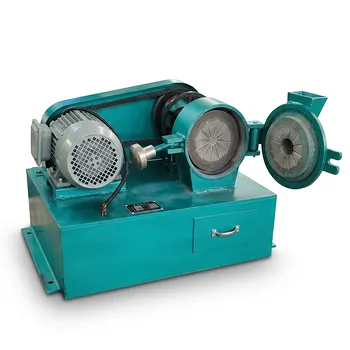
Laboratory Disc Mill Medium Hard Material Grinding Coal Coke Ore Pulverizer
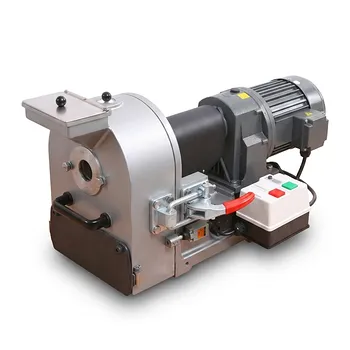
Laboratory Disc Mill for Fine Sample Preparation of Hard and Brittle Materials
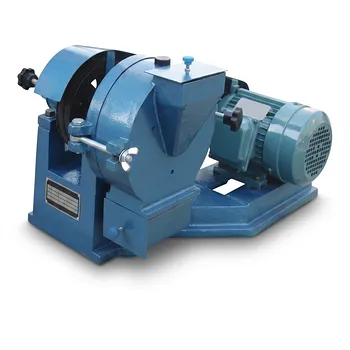
Laboratory Disc Mill for Ore and Mineral Sample Preparation
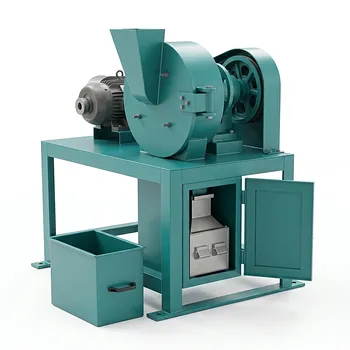
Sealed Disc Pulverizer Customized Model
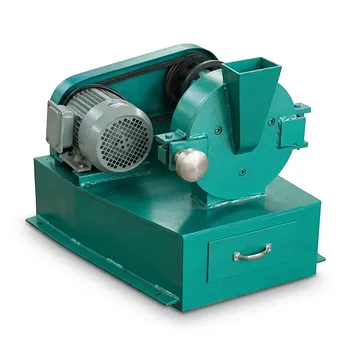
Medium Hardness Material Disc Pulverizer for Coal Ore Sample Preparation

Automatic Vibrating Powder Feeder for Laboratory Material Processing Precision Vibratory Hopper Feeder for Granular and Powder Material Handling Industrial Grade Vibrating Tray Feeder for Consistent Material Sample Preparation
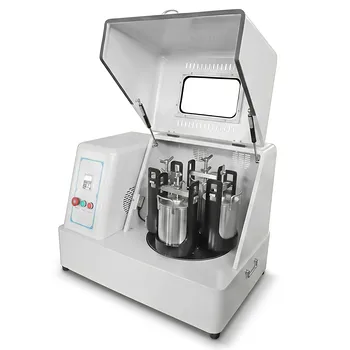
Vertical Square Planetary Ball Mill for Laboratory Sample Preparation and Nanoscale Grinding