Why is a laboratory hydraulic press required to compress oyster shell powder before XRF analysis? Improve Data Accuracy.
Updated 5 months ago
Pelletization is the fundamental process for stabilizing oyster shell powder for X-ray Fluorescence (XRF) analysis. A laboratory hydraulic press is required because it transforms loose, irregular powder into a dense, flat, and homogeneous pellet. This standardization eliminates "particle size effects" and air voids that would otherwise scatter X-rays and produce inaccurate elemental data.
The central takeaway is that high-pressure compression is necessary to create a uniform sample surface and consistent internal density. This process minimizes matrix interference and surface roughness, ensuring that the X-ray beam generates a repeatable and accurate fluorescence signal for quantitative analysis.
Eliminating Matrix Interference
Removing Voids and Internal Porosity
Loose oyster shell powder contains significant air pockets, known as voids, which cause irregular X-ray scattering. The hydraulic press applies high axial pressure to force these particles together, creating a solid mass with a consistent internal density. This uniformity ensures the X-ray beam interacts directly with the sample material rather than trapped air, leading to a more reliable signal.
Neutralizing Particle Size Effects
Variations in the grain size of ground oyster shells can lead to inconsistent fluorescence intensity and "shadowing" within the sample. The compression process compacts these varied grains into a cohesive, homogeneous structure that neutralizes the influence of individual particle shapes. This results in a much more representative signal for both major elements, like calcium, and minor trace elements.
Optimizing the X-ray Optical Path
Achieving Surface Planarity
XRF equipment requires a perfectly flat surface to maintain a constant distance and angle between the sample and the X-ray source. A hydraulic press, used in conjunction with specialized polished dies, produces a mirror-like finish on the pellet surface. This smoothness drastically reduces surface scattering errors that would otherwise mask low-concentration elements.
Enhancing Signal-to-Noise Ratio
Dense pellets provide a more concentrated volume of atoms for the X-ray beam to excite within the measurement area. By increasing the density of the material, the press allows for a stronger and more stable fluorescence signal compared to loose powder. This is particularly critical when trying to detect trace minerals or contaminants within the biological matrix of the shell.
Understanding Technical Trade-offs
The Role of Chemical Binders
Oyster shell powder is often brittle and may not form a stable pellet under pressure alone. It is common to mix the powder with a binder, such as cellulose or boric acid, to ensure the pellet does not crumble upon removal from the die. While binders improve structural integrity, they also introduce a "dilution effect" that must be carefully calculated and corrected during data processing.
Risk of Cross-Contamination
The high pressure involved in pelletization can cause the sample to adhere to the die's internal surfaces. If the dies are not meticulously cleaned or if they are made of softer materials, they can introduce foreign elements like iron or chromium into the sample. Utilizing high-quality tungsten carbide or hardened steel dies is essential to maintain the purity of the oyster shell sample.
Achieving Precision in Elemental Analysis
Standardizing your sample preparation is the most effective way to ensure the integrity of your XRF results.
- If your primary focus is quantitative accuracy: Use a hydraulic press to create a high-density pellet, which maximizes signal strength and minimizes the scattering caused by voids.
- If your primary focus is sample durability: Incorporate a high-quality binder and maintain consistent pressure dwell times to prevent the pellet from fracturing during transport or analysis.
- If your primary focus is repeatability: Standardize the grinding fineness—ideally to less than 75 micrometers—and use the same pressure settings for every sample in the batch.
By transforming irregular oyster shell powder into a standardized pellet, you provide the XRF spectrometer with the ideal physical conditions for high-precision chemical characterization.
Summary Table:
| Factor | Effect of Hydraulic Pressing | Benefit to XRF Analysis |
|---|---|---|
| Internal Voids | Removes air pockets & increases density | Minimizes X-ray scattering errors |
| Particle Size | Compacts grains into a homogeneous mass | Neutralizes matrix interference |
| Surface Finish | Creates a flat, mirror-like planar surface | Maintains constant X-ray optical path |
| Signal Strength | Concentrates the volume of atoms | Enhances signal-to-noise ratio |
| Consistency | Standardizes sample dimensions/density | Ensures repeatable quantitative results |
Elevate Your Material Analysis with Precision Sample Prep
To achieve reliable XRF results, high-quality sample preparation is non-negotiable. At [Your Brand Name], we provide complete laboratory sample preparation solutions for material science, specializing in advanced powder processing and compaction equipment.
Whether you need to eliminate matrix interference in biological samples or ensure uniformity in industrial powders, our extensive product line has you covered:
- Pressing Solutions: XRF pellet presses, standard lab presses, and high-pressure Cold/Warm Isostatic Presses (CIP/WIP).
- Size Reduction: Jaw/roll crushers, liquid nitrogen cryogenic grinders, and high-efficiency mills (planetary ball, jet, and rotor).
- Classification & Mixing: Sieve shakers, powder mixers, and vacuum defoaming mixers.
Don't let poor sample prep compromise your data. Contact our experts today to find the ideal equipment for your laboratory and ensure every pellet meets the highest analytical standards.
References
- J. J. K. Gordon, E. K. Asiam. Characterisation of Oyster Shell for Neutralisation of Bio-leached Effluent. DOI: 10.4314/gm.v16i2.6
Mentioned Products
- 6 Ton Variable Frequency Single Punch Tablet Press
- 5 Ton Single Punch Tablet Press Laboratory Small Batch Production
- Manual Tablet Press with Dual Scale Pressure Gauge for Pharmaceutical Food Chemical Laboratory Sample Preparation
- Small Swing Granulator Efficient Powder Granulation for Pharmaceutical Chemical Food Industries
- 6-Ton Small Single-Punch Tablet Press — Laboratory Powder & Granule Tableting Equipment / Tablet Forming Machine
People Also Ask
- Why is a laboratory hydraulic press required for FT-IR KBr pellets? Achieve Precise Sample Clarity for ZrC–SiC Analysis
- Why is vacuum sealing and flexible packaging necessary for Aluminum Titanate powders during CIP? Ensure Peak Density
- What are the advantages of using hardened steel molds and graphite spray for titanium powder? Ensure structural integrity
- What role does a high-strength stainless steel mold kit play in the uniaxial die compaction process? Ensuring Precision
- What purpose does a manual hydraulic press serve in the molding of ceramic water filters? Optimize Density & Porosity

Tech Team · PowderPreparation
Last updated on May 14, 2026
Related Products
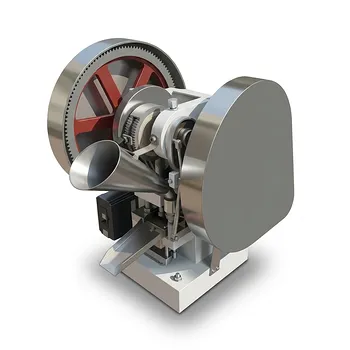
6 Ton Variable Frequency Single Punch Tablet Press
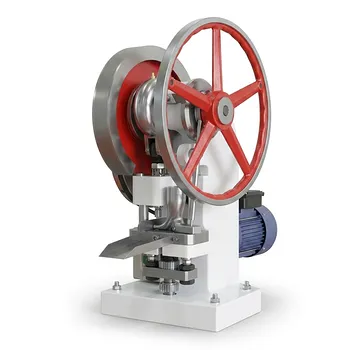
5 Ton Single Punch Tablet Press Laboratory Small Batch Production
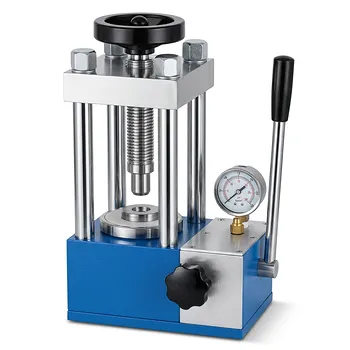
Manual Tablet Press with Dual Scale Pressure Gauge for Pharmaceutical Food Chemical Laboratory Sample Preparation
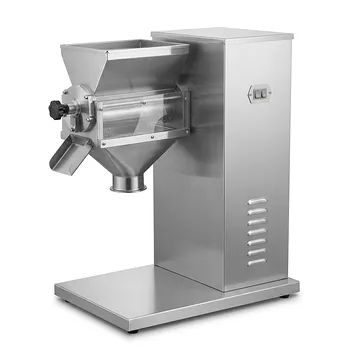
Small Swing Granulator Efficient Powder Granulation for Pharmaceutical Chemical Food Industries
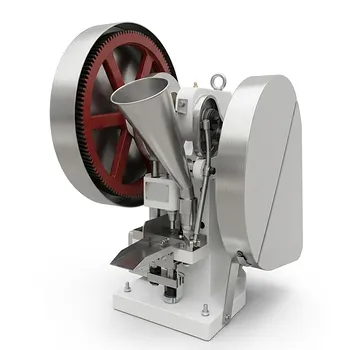
6-Ton Small Single-Punch Tablet Press — Laboratory Powder & Granule Tableting Equipment / Tablet Forming Machine
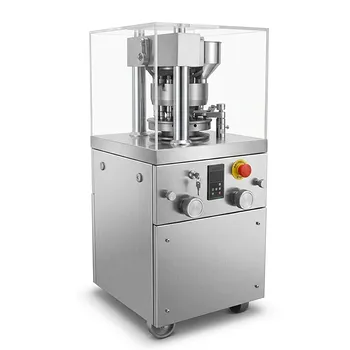
Ordinary Type Rotary Tablet Press for Pharmaceutical Chemical Food Electronic Industries
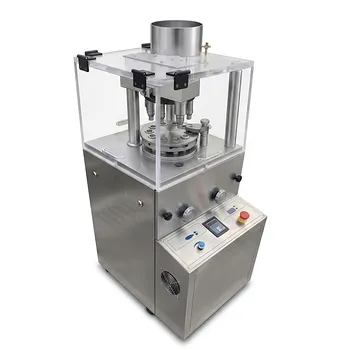
Enhanced 9 Punch Rotary Tablet Press for Powder Compaction
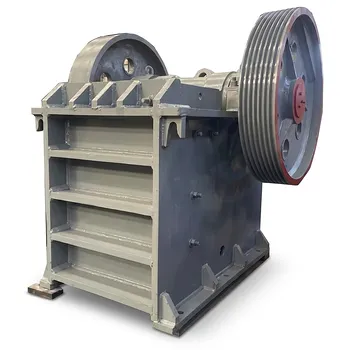
Heavy-Duty Jaw Crusher for Medium-Hard Ore and Industrial Mineral Crushing
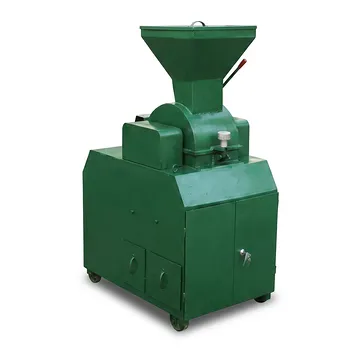
Industrial Sealed Hammer Knife Crusher for Mining Ore and Coal Sample Preparation
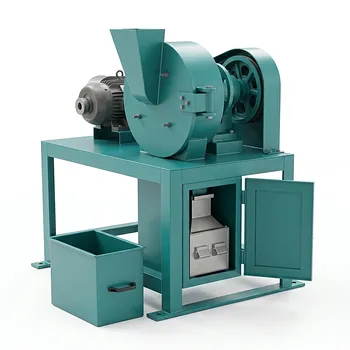
Sealed Disc Pulverizer Customized Model
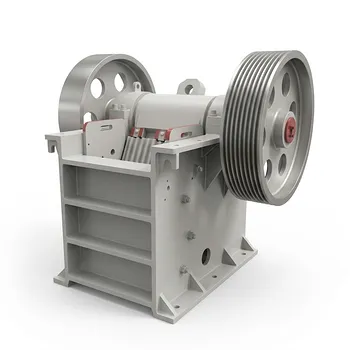
Jaw Crusher with 400x600mm Feed Opening for Primary Rock Crushing in Mining and Construction
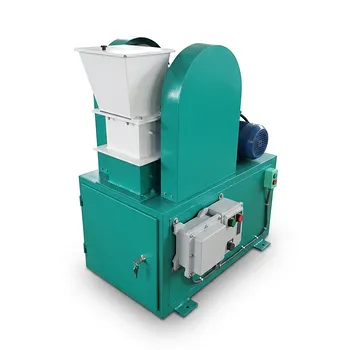
Custom Explosion-Proof Sealed Jaw Crusher for Laboratory and Industrial Sample Preparation
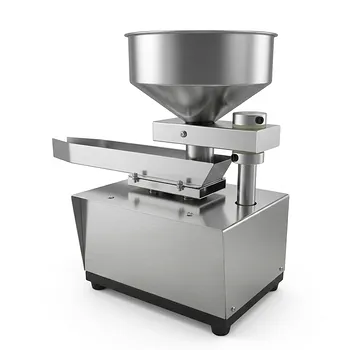
Automatic Vibrating Powder Feeder for Laboratory Material Processing Precision Vibratory Hopper Feeder for Granular and Powder Material Handling Industrial Grade Vibrating Tray Feeder for Consistent Material Sample Preparation

Heavy Duty Dry Three Dimensional Vibratory Sieve Shaker for Particle Separation
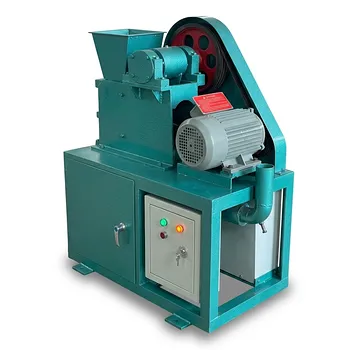
EP-B Type Sealed Jaw Crusher for Laboratory Sample Preparation
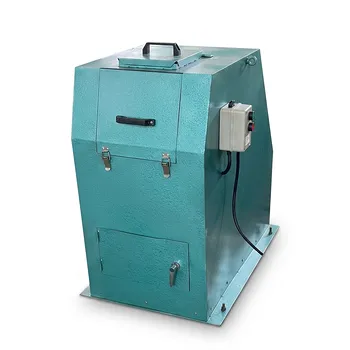
Environmentally Friendly Sealed Laboratory Jaw Crusher for Sample Preparation
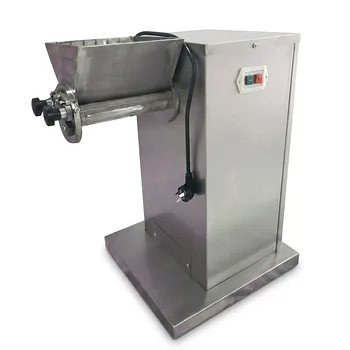
Small Laboratory Oscillating Granulator for Wet and Dry Granulation Processing
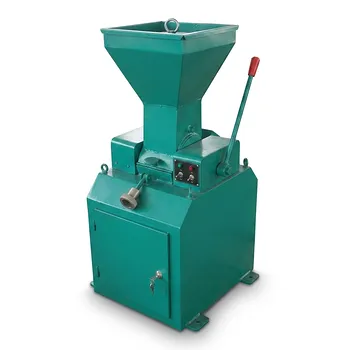
Laboratory Sealed Hammer Crusher for Coal and Mineral Sample Preparation
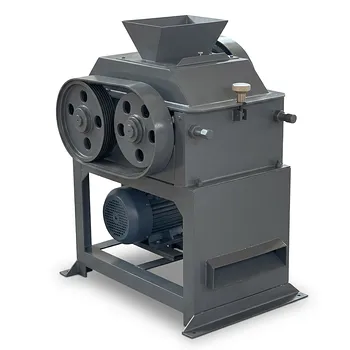
Sealed Laboratory Double Roll Crusher for Coal, Mineral, Ore Sample Preparation