Why is vacuum sealing and flexible packaging necessary for Aluminum Titanate powders during CIP? Ensure Peak Density
Updated 5 months ago
Vacuum sealing and flexible packaging are essential components of the Cold Isostatic Pressing (CIP) process because they ensure the uniform transmission of hydraulic pressure while protecting the Aluminum Titanate powder from contamination. Without these steps, the powder would either be compromised by the pressing medium or suffer from structural failures like delamination and cracking during the decompression phase.
The core purpose of vacuum sealing and flexible packaging is to create an impermeable, air-free barrier that allows high-pressure fluids to compress powder particles into a high-density "green body" without sacrificing material purity or structural integrity.
The Role of Flexible Packaging in Pressure Transmission
Achieving True Isostatic Compression
In CIP, a liquid medium like water or oil applies isotropic pressure—equal force from all directions—to the powder. The flexible packaging, often made of rubber or elastomer, acts as a dynamic interface that deforms under pressure to transmit this force directly to the Aluminum Titanate surface.
Overcoming Particle Friction
High pressures, typically exceeding 100 MPa, are required to force ceramic particles to rearrange. The flexible mold allows the hydraulic force to overcome static friction, encouraging particles to roll, twist, and interlock until they reach 60-65% of their theoretical density.
Maintaining Shape Integrity
Because the flexible material is elastic, it moves with the powder as it compacts. This ensures that the pressure remains uniformly distributed, preventing the uneven density gradients that often plague traditional dry pressing methods.
Why Vacuum Sealing is Essential
Preventing Contamination from Hydraulic Media
The primary function of a hermetic seal is to ensure that the pressure-transmitting medium (oil or water) cannot penetrate the powder. Any infiltration would contaminate the Aluminum Titanate, rendering the final ceramic component chemically impure and physically weak.
Eliminating Air Expansion and Delamination
Vacuuming removes residual air from between the powder particles before the pressing cycle begins. If air is trapped, it will compress under high pressure and then rapidly expand during the pressure release stage, leading to "bursting" defects or internal delamination.
Maximizing Green Body Density
By removing air, the vacuum ensures that the hydraulic energy is spent exclusively on particle rearrangement. This leads to a more predictable and uniform green body density, which is critical for achieving high-quality results during the subsequent sintering process.
Understanding the Trade-offs and Challenges
Packaging Durability and Material Fatigue
While flexible molds are essential, they are subject to mechanical wear and fatigue after repeated high-pressure cycles. A small tear or pinhole in the packaging can lead to a catastrophic "blowout," where hydraulic fluid ruins the entire batch of Aluminum Titanate powder.
The Complexity of Vacuum Consistency
Achieving a consistent vacuum across complex shapes can be technically demanding. If the vacuum is uneven, it can lead to irregular compaction, resulting in a green body that warps or cracks during the transition from the mold to the furnace.
Powder Flowability Requirements
The success of vacuum-sealed CIP depends heavily on how the powder is loaded into the flexible mold. If the powder has poor flowability (a cohesion index outside the 11-14 range), it may not fill the mold uniformly, leading to structural "soft spots" even after vacuum sealing and pressing.
How to Apply This to Your Process
Making the Right Choice for Your Goal
- If your primary focus is Maximum Density Uniformity: Ensure your Aluminum Titanate powder is granulated to achieve a cohesion index between 11 and 14 for optimal mold filling before sealing.
- If your primary focus is Preventing Structural Defects: Prioritize a high-vacuum seal to remove all interstitial air, which prevents delamination and bursting during the decompression phase.
- If your primary focus is Material Purity: Rigorously inspect your flexible packaging for micro-tears and ensure the sealing mechanism is robust enough to withstand pressures exceeding 100 MPa.
By mastering the interface between the flexible mold and the vacuum environment, you ensure that Aluminum Titanate powders are transformed into high-performance components with unparalleled structural consistency.
Summary Table:
| Feature | Primary Purpose | Key Benefit |
|---|---|---|
| Flexible Packaging | Transmit isotropic hydraulic pressure | Ensures uniform density & shape integrity |
| Vacuum Sealing | Remove interstitial air & seal out media | Prevents delamination, bursting & contamination |
| Pressure Transmission | Overcome static particle friction | Achieves 60-65% theoretical green density |
| Hermetic Seal | Create an impermeable barrier | Maintains material purity from hydraulic fluids |
Elevate Your Material Processing with KinTek
Achieving perfect structural integrity in Aluminum Titanate requires precision equipment. KinTek provides complete laboratory sample preparation solutions for material science, specializing in high-performance powder processing and compaction equipment.
Whether you need Cold/Warm Isostatic Presses (CIP/WIP) for uniform green body density, or advanced mills (planetary ball, jet, disc, rotor) and crushers for optimal powder flowability, we have the expertise to support your research. Our full spectrum of hydraulic presses—including XRF pellet presses and vacuum hot presses—is engineered to meet the rigorous demands of advanced ceramic manufacturing.
Ready to optimize your CIP process? Contact KinTek today to discover how our comprehensive equipment range can enhance your laboratory's efficiency and material performance.
References
- Ramanathan Papitha, Roy Johnson. Pressure slip casting and cold isostatic pressing of aluminum titanate green ceramics: A comparative evaluation. DOI: 10.2298/pac1304159p
Mentioned Products
- 5 Ton Single Punch Tablet Press Laboratory Small Batch Production
- 6-Ton Small Single-Punch Tablet Press — Laboratory Powder & Granule Tableting Equipment / Tablet Forming Machine
- 6 Ton Variable Frequency Single Punch Tablet Press
- Manual Tablet Press with Dual Scale Pressure Gauge for Pharmaceutical Food Chemical Laboratory Sample Preparation
- Ordinary Type Rotary Tablet Press for Pharmaceutical Chemical Food Electronic Industries
People Also Ask
- What is the function of a laboratory press in assessing the hydrophobic performance of modified vermiculite fillers?
- What is the core function of a laboratory press in the forming of ceramic filter element green bodies? Maximize Density.
- What is the function of a laboratory press in Cr-Ti alloy evaluation? Quantify Fracture Stress & Strength
- Why is a laboratory hydraulic press required for FT-IR KBr pellets? Achieve Precise Sample Clarity for ZrC–SiC Analysis
- What is the function of a laboratory press in the preparation of ceramic feed rods? Master Density and Precision

Tech Team · PowderPreparation
Last updated on May 14, 2026
Related Products
5 Ton Single Punch Tablet Press Laboratory Small Batch Production
6-Ton Small Single-Punch Tablet Press — Laboratory Powder & Granule Tableting Equipment / Tablet Forming Machine
6 Ton Variable Frequency Single Punch Tablet Press
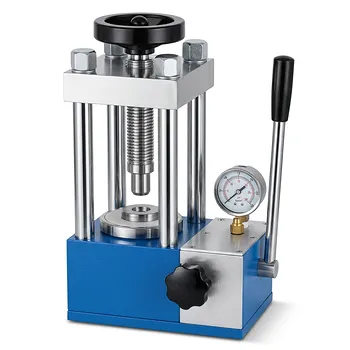
Manual Tablet Press with Dual Scale Pressure Gauge for Pharmaceutical Food Chemical Laboratory Sample Preparation
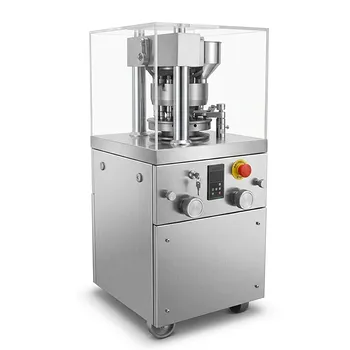
Ordinary Type Rotary Tablet Press for Pharmaceutical Chemical Food Electronic Industries
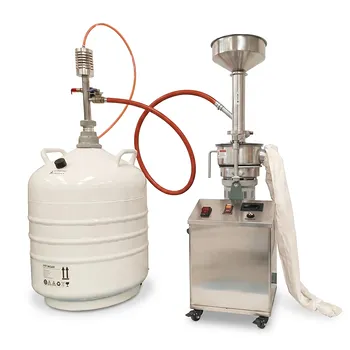
Laboratory Liquid Nitrogen Cryogenic Grinder Polymer Sample Preparation Pulverizer
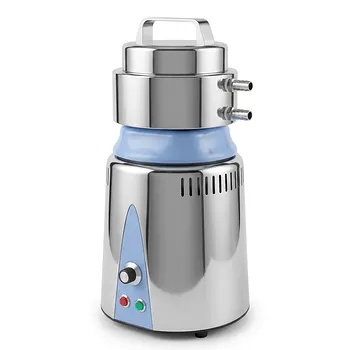
Low Temperature Laboratory Knife Mill Cryogenic Sample Grinder Material Science Powder Processing
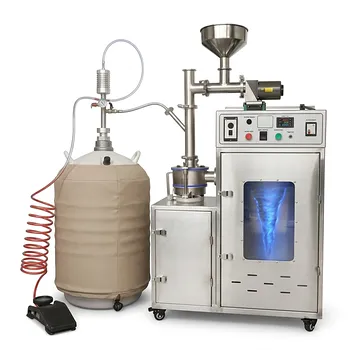
Small Liquid Nitrogen Cryogenic Grinder for Ultrafine Grinding of Heat-Sensitive Materials in Laboratories
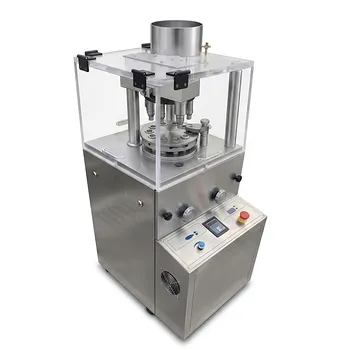
Enhanced 9 Punch Rotary Tablet Press for Powder Compaction
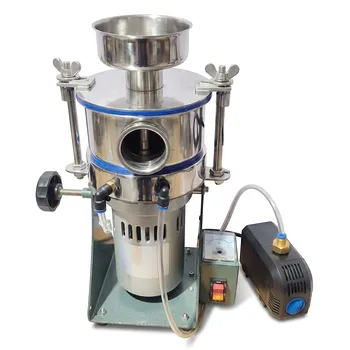
Water Cooled Airflow Ultra Fine Grinder for Low Temperature Material Processing
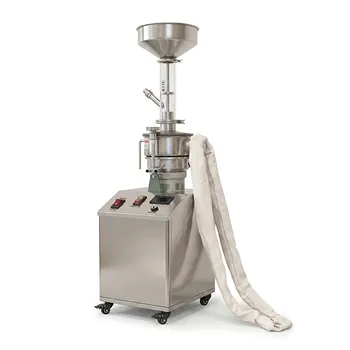
Small Liquid Nitrogen Cryogenic Grinder for Plastic and Heat-Sensitive Material Sample Preparation
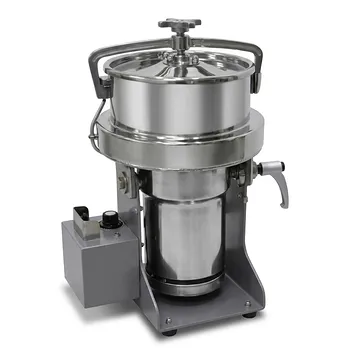
500g Capacity Water Cooled Low Temperature Grinder with Variable Speed and Safety Cover
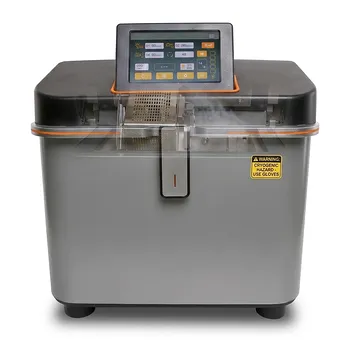
Cryogenic Liquid Nitrogen Grinder for DNA Analysis and Polymer Pulverization with Automatic Cooling and Electromagnetic Impact Technology
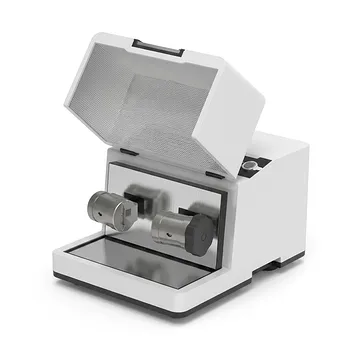
Heating Temperature Controlled High Energy Vibratory Ball Mill
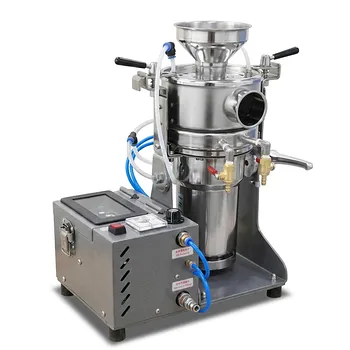
Water Cooled Pulse Jet Ultrafine Grinder
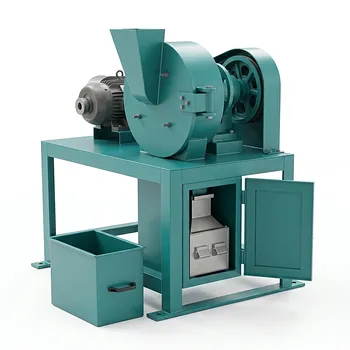
Sealed Disc Pulverizer Customized Model
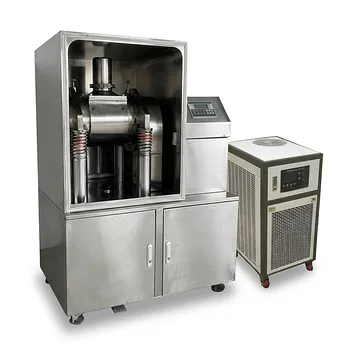
Water Cooled Cryogenic Ultra Fine Cell Wall Breaking Mill
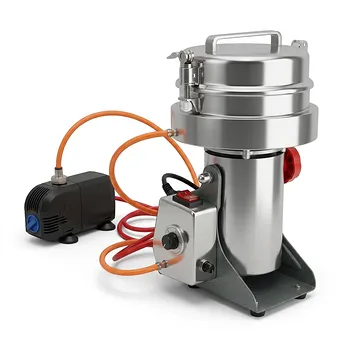
Water Cooled High Speed Grinder with Cryogenic Option for Laboratory Sample Preparation
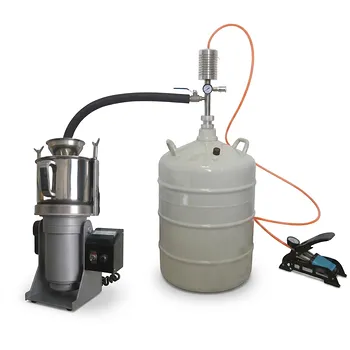
Liquid Nitrogen Cryogenic Grinder for Plastic and Heat-Sensitive Materials