What are the advantages of using hardened steel molds and graphite spray for titanium powder? Ensure structural integrity
Updated 3 months ago
Hardened steel molds and graphite lubrication are the primary safeguards against structural failure during the high-pressure compression of titanium powders. Hardened steel provides the necessary wear resistance and rigidity to withstand extreme compaction forces without deforming. Meanwhile, graphite spray acts as a critical friction-reducer that ensures uniform density and prevents the fragile "green" compact from cracking during the ejection phase.
The synergy between robust tooling and effective lubrication is essential for maintaining the geometric accuracy and internal integrity of titanium components. By minimizing friction and resisting deformation, these tools ensure that the final product meets strict dimensional and structural standards.
The Role of Hardened Steel in Structural Integrity
Resisting Extreme Compaction Pressures
Titanium powder mixtures, particularly those containing hard reinforcements, require immense pressure to achieve sufficient density. Hardened steel possesses the high mechanical strength required to absorb these loads without suffering permanent deformation. This strength ensures that the mold remains stable, allowing for the consistent application of force throughout the molding cycle.
Maintaining Geometric Accuracy and Stability
The rigidity of high-strength tool steel ensures that the mold cavity maintains its shape under load. This is vital for the dimensional stability of complex samples, such as Nickel-Titanium-Silicon (Ni-Ti-Si) alloys. A precision fit between the punches and the mold prevents powder leakage and ensures that pressure is transmitted uniformly across the sample.
Minimizing Abrasive Wear
Refined titanium particles and ceramic phases like B4C are highly abrasive to internal mold surfaces. Hardened steel resists this abrasive wear, extending the service life of the tooling and maintaining a smooth surface finish. Without this hardness, the mold walls would quickly degrade, leading to inconsistent part dimensions and increased friction.
The Impact of Graphite Lubrication on Compact Quality
Reducing Interfacial Friction
Graphite lubrication spray creates a low-friction barrier between the powder mixture and the internal walls of the mold. By reducing friction, the spray allows the compaction pressure to be distributed more effectively throughout the powder column. This reduces the energy lost to wall resistance, making the pressing process more efficient.
Achieving Uniform Internal Density
Friction against mold walls often leads to density gradients, where the center of the part is less dense than the exterior. Graphite minimizes these gradients, ensuring the "green" compact has a uniform internal structure. A consistent density is critical to preventing warping or cracking during the subsequent sintering process.
Facilitating Damage-Free Ejection
The unsintered "green" compact is extremely fragile and susceptible to structural failure. Graphite significantly lowers the force required for ejection, allowing the part to slide out of the mold smoothly. This prevent the formation of surface-level micro-cracks that could compromise the integrity of the finished component.
Understanding the Trade-offs
Risk of Carbon Contamination
While graphite is an effective lubricant, it introduces the risk of carbon contamination into the titanium matrix. If applied excessively, residual carbon may react with the titanium during sintering, potentially altering the alloy's intended mechanical properties. Processors must balance the need for lubrication with the purity requirements of the final application.
Tooling Complexity and Cost
Hardened steel molds require a higher initial investment and specialized machining compared to standard materials. The precision fit required to minimize density gradients also demands rigorous maintenance and cleaning schedules. Failure to maintain these tolerances can result in "flashing" or uneven pressure distribution, negating the benefits of the high-strength steel.
Optimizing Your Titanium Molding Process
When selecting materials and lubricants for compression molding, your choice should be dictated by the complexity and performance requirements of the final part.
- If your primary focus is dimensional precision: Utilize high-strength tool steels with precision-machined punches to ensure the most uniform pressure transmission possible.
- If your primary focus is maximizing tool life: Invest in hardened steel media and molds that can withstand the abrasive nature of ceramic-reinforced titanium powders.
- If your primary focus is preventing structural failure: Focus on the consistent, thin-film application of graphite spray to minimize ejection stress and internal density variations.
Mastering the interaction between mold hardness and interfacial lubrication is the foundation for producing high-quality, defect-free titanium components.
Summary Table:
| Component | Key Advantage | Impact on Final Component |
|---|---|---|
| Hardened Steel Molds | High Wear Resistance & Rigidity | Maintains geometric accuracy and prevents mold deformation under pressure. |
| Graphite Spray | Reduced Interfacial Friction | Ensures uniform internal density and facilitates damage-free part ejection. |
| Synergistic Effect | Optimized Compaction | Minimizes internal stress and surface cracks in fragile "green" compacts. |
Optimize Your Material Preparation with Precision Tooling
Achieving the perfect titanium compact requires more than just pressure—it requires the right equipment and expertise. At [Your Brand], we provide complete laboratory sample preparation solutions for material science, specializing in professional-grade powder processing and compaction equipment.
Our extensive product lines are designed to meet the rigorous demands of advanced metallurgy and material research:
- Size Reduction: Crushers (jaw/roll), liquid nitrogen cryogenic grinders, and high-energy mills (planetary ball, jet, sand/bead, disc, rotor).
- Classification & Mixing: Vibratory/air-jet sieve shakers and advanced powder/defoaming mixers.
- Compaction Excellence: A full spectrum of hydraulic presses, including Cold/Warm Isostatic Presses (CIP/WIP), standard lab presses, XRF pellet presses, and specialized vacuum hot presses.
Whether you are developing titanium alloys or ceramic composites, our solutions ensure maximum density, structural integrity, and repeatability. Contact us today to discuss your specific application and discover how our high-performance tooling can enhance your laboratory's efficiency!
References
- Tamás Mikó, Zoltán Gácsi. A Novel Process to Produce Ti Parts from Powder Metallurgy with Advanced Properties for Aeronautical Applications. DOI: 10.3390/aerospace10040332
Mentioned Products
- 6 Ton Variable Frequency Single Punch Tablet Press
- Ordinary Type Rotary Tablet Press for Pharmaceutical Chemical Food Electronic Industries
- Manual Tablet Press with Dual Scale Pressure Gauge for Pharmaceutical Food Chemical Laboratory Sample Preparation
- 6-Ton Small Single-Punch Tablet Press — Laboratory Powder & Granule Tableting Equipment / Tablet Forming Machine
- 5 Ton Single Punch Tablet Press Laboratory Small Batch Production
People Also Ask
- Why is a laboratory hydraulic press required for FT-IR KBr pellets? Achieve Precise Sample Clarity for ZrC–SiC Analysis
- Why is vacuum sealing and flexible packaging necessary for Aluminum Titanate powders during CIP? Ensure Peak Density
- Why is a laboratory hydraulic press required to compress oyster shell powder before XRF analysis? Improve Data Accuracy.
- What role does a high-strength stainless steel mold kit play in the uniaxial die compaction process? Ensuring Precision
- What purpose does a manual hydraulic press serve in the molding of ceramic water filters? Optimize Density & Porosity

Tech Team · PowderPreparation
Last updated on Jun 03, 2026
Related Products
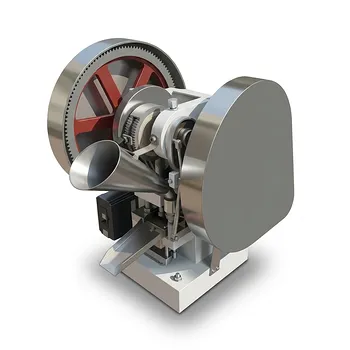
6 Ton Variable Frequency Single Punch Tablet Press
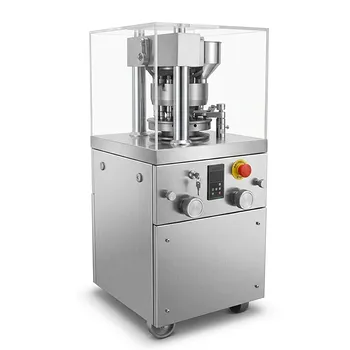
Ordinary Type Rotary Tablet Press for Pharmaceutical Chemical Food Electronic Industries
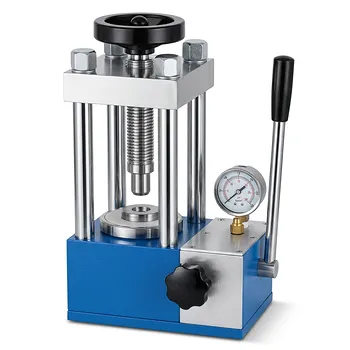
Manual Tablet Press with Dual Scale Pressure Gauge for Pharmaceutical Food Chemical Laboratory Sample Preparation
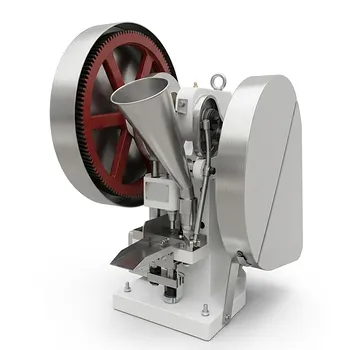
6-Ton Small Single-Punch Tablet Press — Laboratory Powder & Granule Tableting Equipment / Tablet Forming Machine
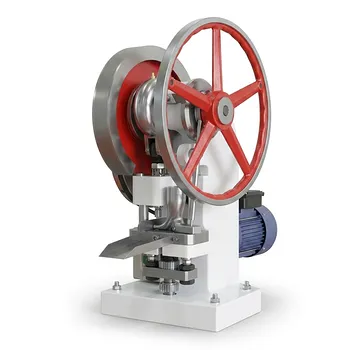
5 Ton Single Punch Tablet Press Laboratory Small Batch Production
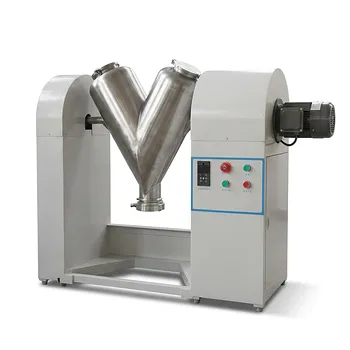
V-Type Powder Mixer for Uniform Blending of Dry Powders and Granules
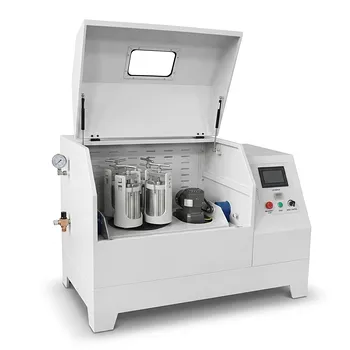
Vertical Production Planetary Ball Mill for High Throughput Powder Processing
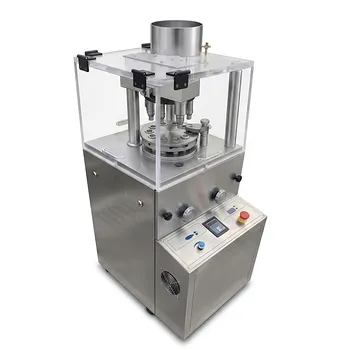
Enhanced 9 Punch Rotary Tablet Press for Powder Compaction
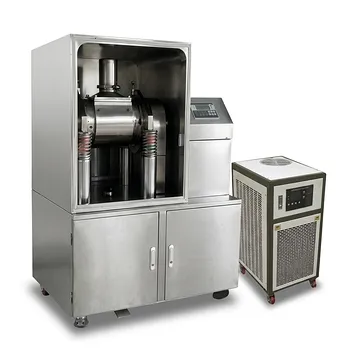
Small Vibrating Ultrafine Grinder for Traditional Chinese Medicine
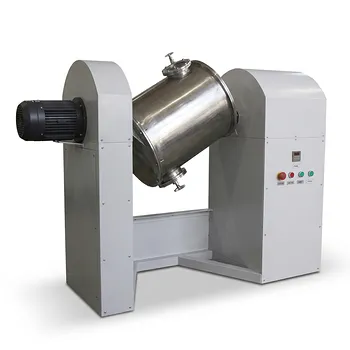
Inclined Mixer for Homogeneous Powder Blending and Grinding
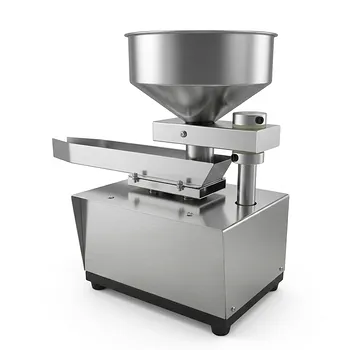
Automatic Vibrating Powder Feeder for Laboratory Material Processing Precision Vibratory Hopper Feeder for Granular and Powder Material Handling Industrial Grade Vibrating Tray Feeder for Consistent Material Sample Preparation
Three-Dimensional Motion Mixer for Laboratory Powder and Granule Blending
Multi Dimensional Universal Mixer for High Uniformity Powder Blending
Heating Temperature Controlled High Energy Vibratory Ball Mill
Sealed Disc Pulverizer Customized Model
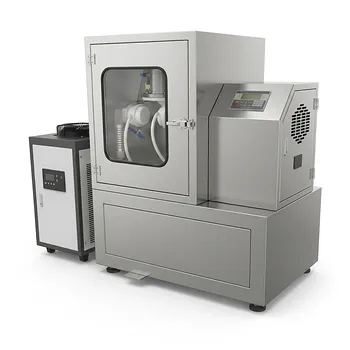
Vibratory Ultra-Low Temperature Ultrafine Grinder for Cryogenic Powder Processing
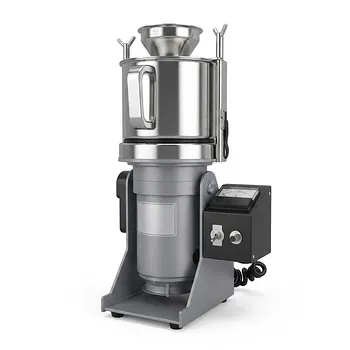
High Speed Air Induced Ultrafine Pulverizer Laboratory Superfine Powder Mill for Pharmaceutical and Material Science Sample Preparation
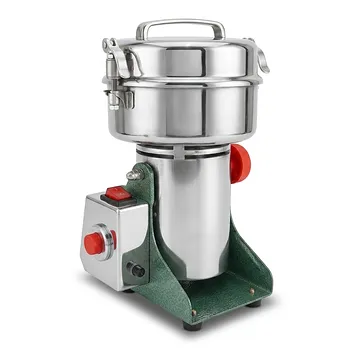
Small High-Speed Laboratory Grinder for Powder Processing
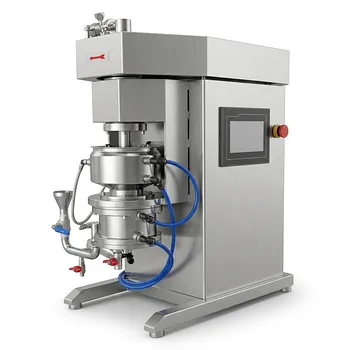
Small Ceramic Structure Laboratory Sand Mill Nanoscale Grinding Dispersion Equipment Seal-less Screen-less Design