Why is a laboratory ball mill required to process OPEFB after carbonization? Achieve uniform, high-surface-area powder
Updated 4 months ago
Mechanical refinement of Oil Palm Empty Fruit Bunch (OPEFB) via a laboratory ball mill is essential to convert coarse, irregular charcoal lumps into a fine, uniform powder. This process utilizes high-energy impact and shear forces to drastically increase the material's specific surface area. By maximizing this surface area, you ensure that the carbonized material has the necessary contact sites for efficient chemical activation and the adsorption of target ions.
Core Takeaway: A laboratory ball mill provides the mechanical energy required to break down the rigid, coarse structure of carbonized OPEFB into a micron-scale powder. This transition is the critical bridge between raw carbonization and high-performance applications like chemical activation or metal ion filtration.
Transforming Physical Structure for Functional Utility
From Coarse Lumps to Micronized Powder
After the carbonization stage, OPEFB typically results in irregular lumps and coarse particles that are unsuitable for direct application. The laboratory ball mill uses high-hardness grinding media to apply consistent impact and attrition forces. This mechanical action pulverizes the carbonized structure into a homogenous powder with a controlled particle size.
Achieving Material Uniformity
Consistency is vital for any downstream analytical or industrial process. A ball mill ensures that the charcoal reaches a uniform fineness, which prevents "channeling" in filtration applications and ensures even heat distribution during further thermal processing. This uniformity is what allows the carbonized biomass to behave as a predictable industrial precursor.
Maximizing Chemical and Physical Reactivity
Increasing Specific Surface Area
The primary goal of size reduction is the exponential increase of specific surface area. By breaking long fibers and coarse lumps into micron-scale particles, you expose a significantly higher number of internal and external active sites. This increased area is the fundamental requirement for the charcoal to act as an effective adsorption medium.
Enhancing Chemical Activation Efficiency
If the OPEFB is intended for activated carbon production, the ball milling stage is non-negotiable. Smaller particles allow activating reagents (such as potassium hydroxide or phosphoric acid) to penetrate the carbon matrix more deeply and uniformly. This leads to a more efficient and complete activation process, resulting in superior pore development.
Understanding the Trade-offs
Milling Duration and Agglomeration
While reducing particle size is beneficial, excessive milling time can lead to particle agglomeration. After a certain threshold, the fine particles may begin to fuse back together due to van der Waals forces, effectively reducing the usable surface area you worked to create. Finding the "sweet spot"—often around 30 to 60 minutes—is critical for optimal results.
Heat Generation and Surface Chemistry
The high-energy nature of ball milling generates frictional heat. If the temperature is not managed, it can potentially cause premature oxidation or alter the surface functional groups of the carbonized OPEFB. For sensitive applications, utilizing high-hardness alumina balls or intermittent milling cycles can help mitigate these thermal effects.
How to Apply This to Your Project
Depending on your final application, your approach to ball milling should vary:
- If your primary focus is high-capacity adsorption: Prioritize a longer milling duration to achieve the smallest possible particle size and maximum specific surface area.
- If your primary focus is chemical activation: Focus on achieving a uniform particle distribution to ensure the activating agent reacts consistently across the entire batch.
- If your primary focus is composite reinforcement: Optimize the milling time to ensure the particles are fine enough for "physical interlocking" within the resin or matrix without causing material degradation.
By masterfully controlling the mechanical refinement of carbonized OPEFB, you unlock the full chemical potential of the biomass for advanced material science applications.
Summary Table:
Key Benefits of Ball Milling Carbonized OPEFB
| Objective | Mechanical Action | Impact on Material Performance |
|---|---|---|
| Size Reduction | Impact & Attrition | Converts irregular lumps into a uniform micron-scale powder. |
| Surface Area | Particle Fragmentation | Dramatically increases active sites for enhanced adsorption. |
| Uniformity | Homogenization | Prevents 'channeling' and ensures consistent thermal/chemical behavior. |
| Activation | Deep Penetration | Allows activating reagents (KOH/H3PO4) to reach the carbon matrix core. |
| Process Control | Optimized Milling Time | Balances fine particle size while avoiding unwanted agglomeration. |
Optimize Your Material Science Research with Precision Equipment
Achieving the perfect micron-scale powder from carbonized biomass requires high-energy, reliable processing. At our company, we provide complete laboratory sample preparation solutions tailored for advanced material science and powder processing.
Whether you are refining OPEFB for activated carbon or developing new composites, our extensive line of equipment ensures superior results:
- Advanced Milling: Planetary ball mills, jet mills, and disc mills for precise size reduction.
- Crushing & Sizing: Jaw/roll crushers and vibratory sieve shakers for feedstock preparation.
- Compaction & Shaping: A full spectrum of hydraulic presses, including Cold/Warm Isostatic Presses (CIP/WIP), vacuum hot presses, and XRF pellet presses.
- Mixing: Powder and defoaming mixers for perfect material homogeneity.
Ready to elevate your lab's efficiency and material performance? Contact our experts today to find the ideal solution for your OPEFB processing and sample preparation needs!
References
- Saisa Saisa, Erdiwansyah Erdiwansyah. Development of Alumina-Chitosan Modified Carbon Monolith from Oil Palm Waste: Carbonization and Initial Characterization. DOI: 10.32672/picmr.v7i2.3037
Mentioned Products
- Vertical Production Planetary Ball Mill for High Throughput Powder Processing
- High Energy Omnidirectional Planetary Ball Mill 20L
- High Energy Laboratory Planetary Ball Mill for Nano Grinding and Colloidal Mixing of Hard and Brittle Materials
- High Energy Omnidirectional Planetary Ball Mill 16L
- Vertical Square Planetary Ball Mill for Laboratory Sample Preparation and Nanoscale Grinding
People Also Ask
- What is the function of a high-performance planetary ball mill in AMZ laminates? Master Ceramic Homogenization.
- What is the role of a planetary ball mill in Al–Si3N4 nanocomposite prep? Achieve Uniform Homogenization
- What is the function of a planetary ball mill in lanthanum hexaaluminate synthesis? Master Micron-Level Homogenization
- What role does a planetary ball mill play in the synthesis of Er-doped PMN-PT ceramics? Enhancing Homogeneity & Purity
- What are the advantages of using a planetary ball mill for the fine grinding of barium silicate glass powder? Peak Results

Tech Team · PowderPreparation
Last updated on Jun 03, 2026
Related Products
Vertical Production Planetary Ball Mill for High Throughput Powder Processing
High Energy Omnidirectional Planetary Ball Mill 20L
High Energy Laboratory Planetary Ball Mill for Nano Grinding and Colloidal Mixing of Hard and Brittle Materials
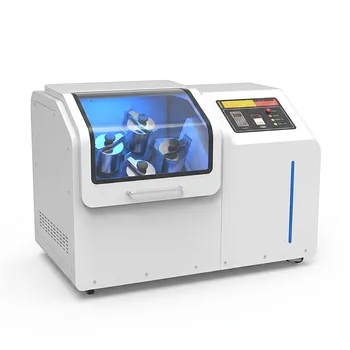
High Energy Omnidirectional Planetary Ball Mill 16L
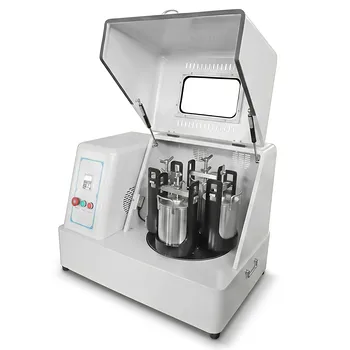
Vertical Square Planetary Ball Mill for Laboratory Sample Preparation and Nanoscale Grinding
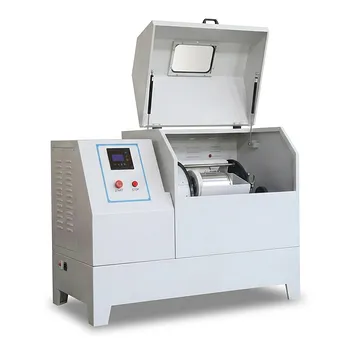
Heavy Duty Horizontal Planetary Ball Mill for Efficient Industrial Grinding and Sample Preparation
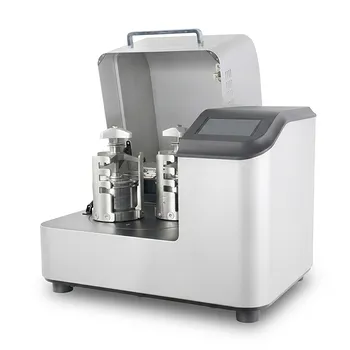
High Energy Planetary Ball Mill for Nano Scale Grinding and Mechanical Alloying
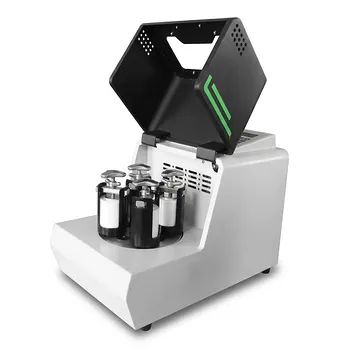
Miniature Planetary Ball Mill with Vacuum Grinding and High Efficiency for Laboratory Sample Preparation
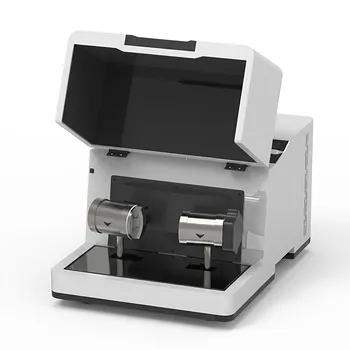
Ultra-Low Temperature Cryogenic High-Energy Vibratory Ball Mill
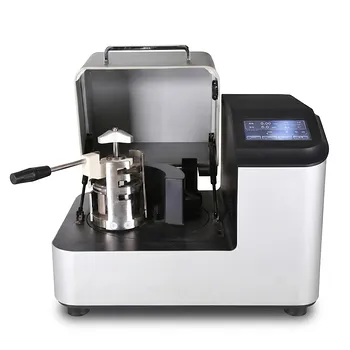
High Energy Laboratory Planetary Ball Mill for Nano Grinding and Material Science Sample Preparation
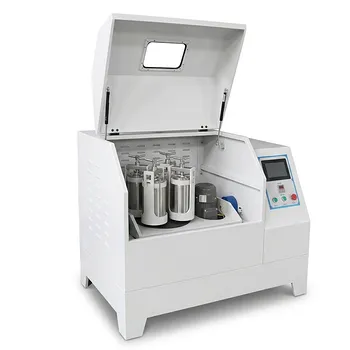
360° Rotating Omnidirectional Laboratory Planetary Ball Mill for Homogeneous Ultra-Fine Grinding and Mixing
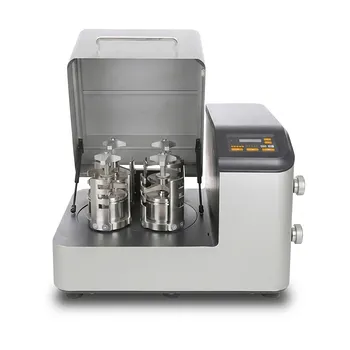
High Energy Planetary Ball Mill for Nano Scale Grinding and Colloidal Mixing in Material Science Research
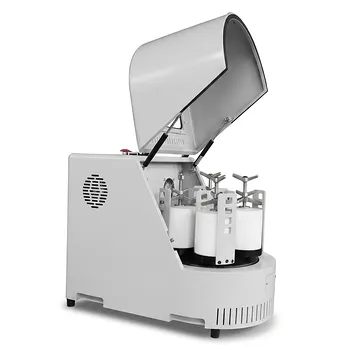
Vertical Semi Circular Planetary Ball Mill for Laboratory Precision Grinding
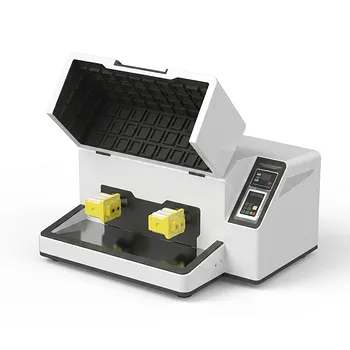
Multi-Platform Nanoscale High-Energy Vibratory Ball Mill
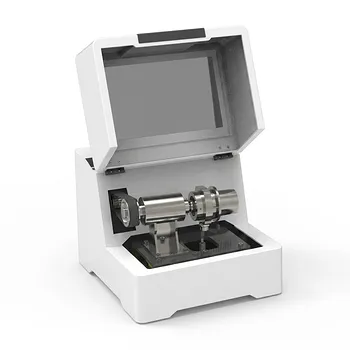
Single Tank High Energy Vibratory Ball Mill for Laboratory Grinding and Mixing
Laboratory Nano High Energy Ball Mill Ultrafine Grinding Mechanical Alloying
Dual Station Planetary Ball Mill 24L
Planetary Ball Mill 12L
Nanoscale High Energy Vibratory Ball Mill Low Temperature