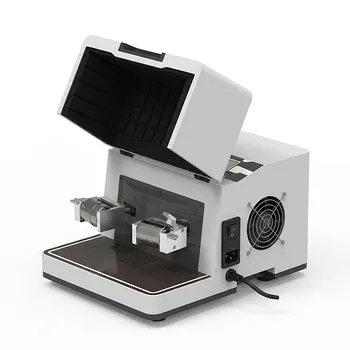
What is the function of a planetary ball mill in cement prep for Sr isotope analysis? Enhancing Analytical Precision.
Updated 5 months ago
The primary function of a planetary ball mill in this context is to reduce Portland cement samples to a micro-level fineness of 65 micrometers or less.
This mechanical refinement significantly increases the specific surface area of the cement particles. By breaking down the material to this degree, the mill ensures that complex mineral phases, such as alite and belite, are fully exposed and can react thoroughly with reagents during concentrated acid digestion or selective chemical treatments.
Core Takeaway: The planetary ball mill transforms bulk cement into a high-surface-area powder to ensure complete chemical digestion and isotopic homogeneity, which are essential for the precision of strontium (Sr) isotope analysis.
Enhancing Chemical Reactivity through Physical Refinement
Increasing Specific Surface Area
The high-energy impact and attrition forces within the mill break the cement into micron-level particles. This process exponentially increases the surface area available for chemical interaction.
A higher surface area allows reagents to penetrate the sample more effectively. This is a prerequisite for achieving the high digestion efficiency required for sensitive isotopic measurements.
Facilitating Complete Mineral Phase Reaction
Portland cement contains robust mineral phases like alite and belite that can be resistant to chemical attack in their bulk form. Fine grinding ensures these phases are physically accessible to the digestion acids.
If these minerals are not completely dissolved, the resulting strontium isotope signature may be biased or unrepresentative. The mill eliminates this risk by ensuring a total release of the target elements into the solution.
Ensuring Homogeneity and Analytical Precision
Eliminating Particle Size Effects
Variations in particle size can lead to compositional segregation, where different minerals settle or react at different rates. The planetary ball mill produces a uniform powder that behaves consistently during laboratory procedures.
Uniformity is critical for reproducibility. By standardizing the physical state of the sample, researchers can ensure that small sub-samples remain representative of the entire original batch.
Achieving Molecular-Level Homogenization
Beyond simple grinding, the planetary motion provides high-energy mixing. This ensures that the chemical components of the cement are distributed uniformly at a microscopic scale.
This level of homogenization reduces experimental errors caused by mineralogical heterogeneity. It provides a foundational level of precision necessary for detecting subtle variations in strontium isotope ratios.
Understanding the Trade-offs
Risk of Material Contamination
The high-energy collisions between the milling media (balls and jars) can introduce trace contaminants into the sample. For strontium analysis, it is vital to use milling components made of high-purity materials like agate or tungsten carbide to avoid isotopic skewing.
Heat Generation and Structural Changes
The intense mechanical energy can generate significant localized heat, which might alter the hydration state or crystal structure of certain cement phases. While usually not an issue for isotope ratios, it can affect subsequent mineralogical studies if the same sample is used for multiple purposes.
Processing Time vs. Fineness
Extended milling times increase the likelihood of achieving ultra-fine powders but also increase the risk of sample loss and equipment wear. Finding the "sweet spot"—typically reaching the 65-micrometer threshold—is necessary to balance efficiency with sample integrity.
How to Apply This to Your Sample Preparation
Effective strontium isotope analysis relies on the transition from a heterogeneous solid to a representative liquid solution. To achieve this, your milling strategy should align with your specific analytical goals.
- If your primary focus is Maximum Isotopic Accuracy: Use high-purity agate milling media to prevent the introduction of external strontium or interfering elements.
- If your primary focus is Throughput and Efficiency: Optimize the rotation speed and ball-to-powder ratio to reach the 65-micrometer target in the shortest time possible.
- If your primary focus is Complex Mineral Phase Recovery: Ensure the milling duration is sufficient to fully liberate alite and belite crystals for total acid digestion.
By meticulously controlling the grinding process, you ensure that the final isotopic data is a true reflection of the cement's geochemical fingerprint.
Summary Table:
| Feature | Role in Sample Preparation | Key Outcome |
|---|---|---|
| Particle Size | Reduction to <65 micrometers | Increased specific surface area |
| Chemical Reactivity | Exposes alite and belite phases | Complete acid digestion |
| Homogenization | High-energy microscopic mixing | Improved analytical reproducibility |
| Contamination Control | High-purity media (Agate/WC) | Preserved isotopic integrity |
Achieve Analytical Excellence with Our Precision Lab Solutions
Precise strontium isotope analysis requires flawless sample preparation. We provide complete laboratory solutions for material science, specializing in advanced powder processing and compaction equipment designed to meet the most rigorous research standards.
From achieving ultra-fine homogeneity with our planetary ball mills, jet mills, and cryogenic grinders to preparing high-density samples with our Cold/Warm Isostatic Presses (CIP/WIP) and vacuum hot presses, our equipment ensures your geochemical fingerprints are accurate and reproducible. Our full range also includes jaw crushers, sieve shakers, and XRF pellet presses tailored for high-throughput laboratories.
Why Partner With Us?
- Purity Guaranteed: High-purity milling media to prevent trace element contamination.
- Versatility: Solutions spanning from raw crushing to molecular-level homogenization.
- Expertise: Specialized equipment for complex mineral phases like alite and belite.
Ready to elevate your laboratory's capabilities? Contact us today to discuss your specific sample preparation needs!
References
- Anera Kazlagić, Gregor J. G. Gluth. Development of a sample preparation procedure for Sr isotope analysis of Portland cements. DOI: 10.1007/s00216-021-03821-7
Mentioned Products
- Vertical Semi Circular Planetary Ball Mill for Laboratory Precision Grinding
- High Energy Planetary Ball Mill for Nano Scale Grinding and Mechanical Alloying
- Heavy Duty Horizontal Planetary Ball Mill for Efficient Industrial Grinding and Sample Preparation
- Vertical Production Planetary Ball Mill for High Throughput Powder Processing
- 360° Rotating Omnidirectional Laboratory Planetary Ball Mill for Homogeneous Ultra-Fine Grinding and Mixing
People Also Ask
- What role does a planetary ball mill play in the synthesis of Li6PS5Cl (LPSCl)? Unlock High Ionic Conductivity
- Why is a planetary ball mill essential for SiBCN-rGO wet-spinning? Achieve Superior Dispersion and Spinnability
- Why is an intermittent grinding process required for perovskites in a planetary ball mill? Ensure Stability & Purity
- Why is a planetary ball mill required for PET micronization? Ensure Accurate Chemical Analysis of Reprocessed PET
- How does mechanized planetary ball milling compare to manual agate grinding? Optimize sulfide standard material precision.

Tech Team · PowderPreparation
Last updated on May 14, 2026
Related Products
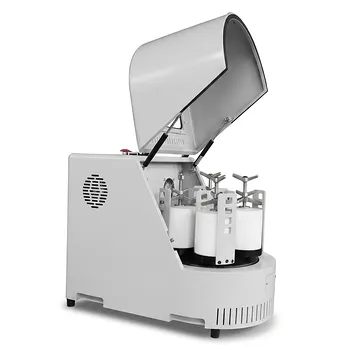
Vertical Semi Circular Planetary Ball Mill for Laboratory Precision Grinding
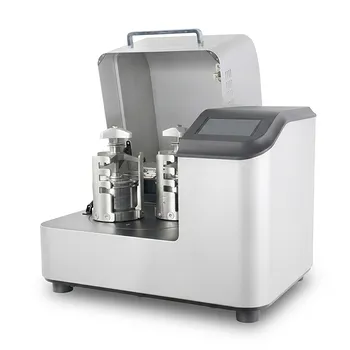
High Energy Planetary Ball Mill for Nano Scale Grinding and Mechanical Alloying
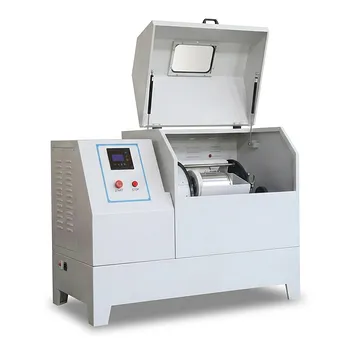
Heavy Duty Horizontal Planetary Ball Mill for Efficient Industrial Grinding and Sample Preparation
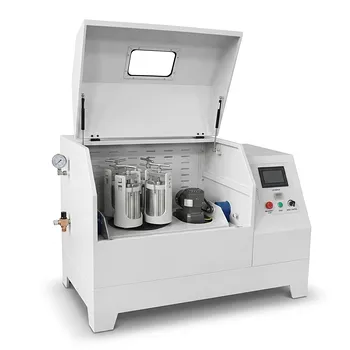
Vertical Production Planetary Ball Mill for High Throughput Powder Processing
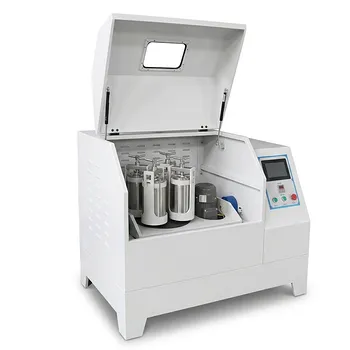
360° Rotating Omnidirectional Laboratory Planetary Ball Mill for Homogeneous Ultra-Fine Grinding and Mixing

Vertical Square Planetary Ball Mill for Laboratory Sample Preparation and Nanoscale Grinding
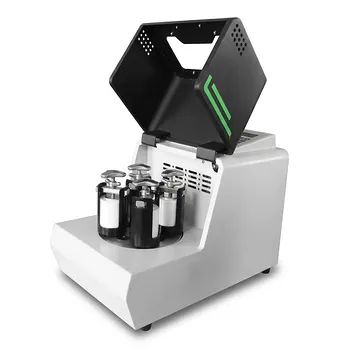
Miniature Planetary Ball Mill with Vacuum Grinding and High Efficiency for Laboratory Sample Preparation

High Energy Omnidirectional Planetary Ball Mill 16L

High Energy Laboratory Planetary Ball Mill for Nano Grinding and Material Science Sample Preparation
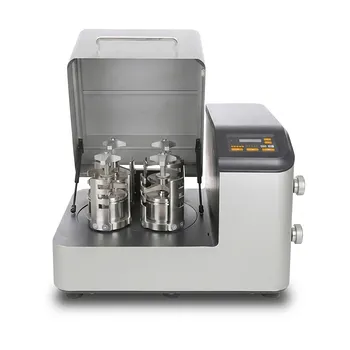
High Energy Planetary Ball Mill for Nano Scale Grinding and Colloidal Mixing in Material Science Research
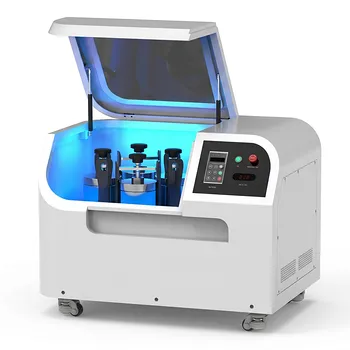
Planetary Ball Mill 12L
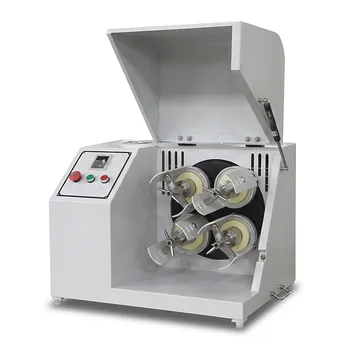
Horizontal Light Duty Planetary Ball Mill for Laboratory Sample Preparation
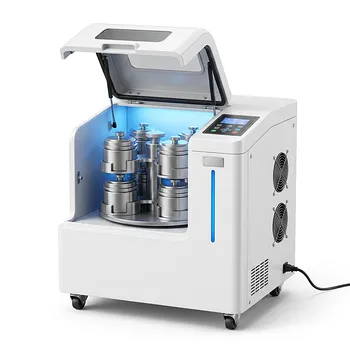
High Energy Omnidirectional Planetary Ball Mill 20L
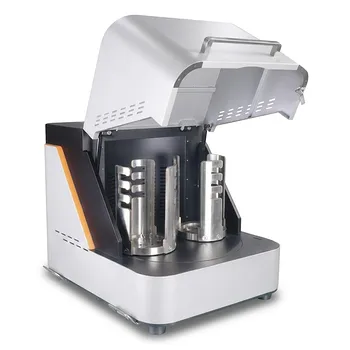
High Energy Laboratory Planetary Ball Mill for Nano Grinding and Colloidal Mixing of Hard and Brittle Materials
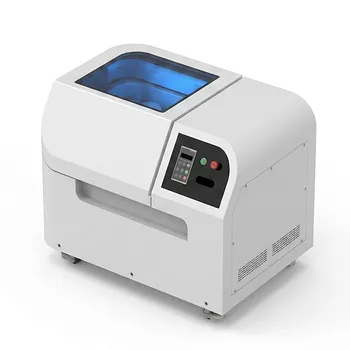
8L Planetary Ball Mill for Laboratory Grinding and Sample Preparation
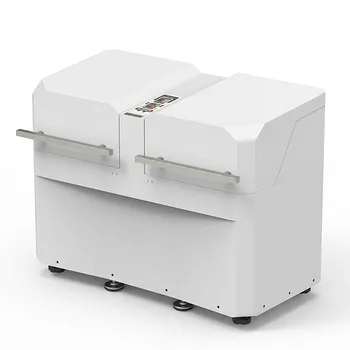
Dual Station Planetary Ball Mill 24L
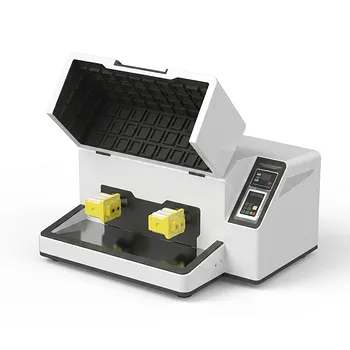
Multi-Platform Nanoscale High-Energy Vibratory Ball Mill
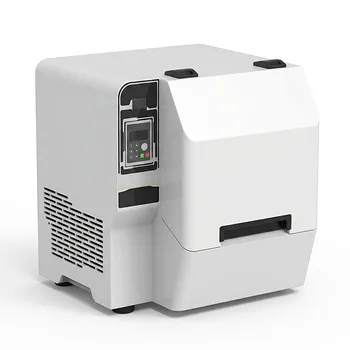
Nano High Energy Vibratory Ball Mill for Laboratory Sample Preparation
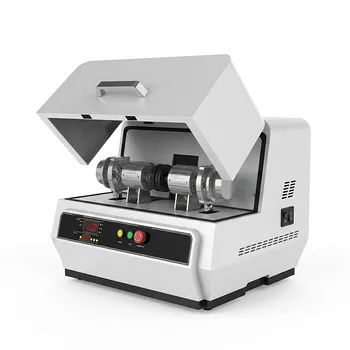
Dual Jar High Energy Vibratory Ball Mill