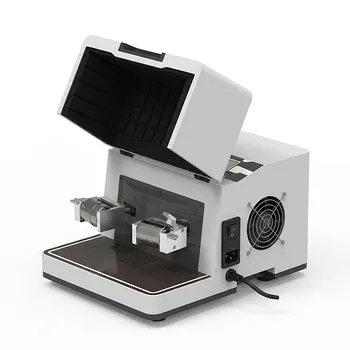
How does mechanized planetary ball milling compare to manual agate grinding? Optimize sulfide standard material precision.
Updated 4 months ago
Mechanized planetary ball milling represents a fundamental shift toward standardization and precision in material science. Compared to manual agate grinding, mechanized milling provides high-energy, repeatable processing that achieves micron-level grain refinement and superior trace element distribution, typically reducing the Relative Standard Deviation (RSD) to as low as 2-3%.
While manual agate grinding is valued for its ability to preserve delicate crystal structures, mechanized planetary ball milling is the superior choice for producing uniform, high-performance sulfide standards at scale. The primary distinction lies in the energy density and the ability to trigger mechanochemical reactions that manual methods cannot replicate.
The Technical Advantage of Mechanized Milling
Achieving Spatial Uniformity and the "Cocktail Effect"
Planetary ball mills utilize high-frequency collisions to eliminate agglomeration in precursors. This process achieves microscopic mixing uniformity for complex mixtures, even those containing five or more metal elements.
This high level of mixing is essential for achieving entropy stabilization and the "cocktail effect." By ensuring local compositional consistency, mechanized milling prevents the precipitation of secondary phases that often plague manual preparations.
Enhancing Performance via Mechanochemical Reactions
Mechanized milling provides a high-energy environment that encourages deep solid-state reactions between raw materials like $Li_2S$ and $P_2S_5$. These reactions can lead to beneficial amorphization or the formation of specific crystal structures.
In the production of sulfide solid electrolytes, this intense atomic-level contact is critical. It significantly increases room-temperature ionic conductivity, a result that manual grinding cannot consistently produce due to its lower energy input.
Scalability and Process Control
Manual grinding relies heavily on operator experience, making it inherently prone to human error and inconsistency. Mechanized systems allow for precise control over parameters such as frequency, amplitude, and duration.
This automation ensures that every batch meets the same rigorous standards. For professionals looking to scale production, the repeatability of planetary ball milling is a non-negotiable requirement for quality assurance.
The Specific Utility of Manual Agate Grinding
Preserving Mineralogical Integrity
Manual agate mortars are often preferred when the primary goal is the homogenization of mineral standards without altering their internal state. The lower energy levels prevent infrared spectral shifts that can occur during high-energy mechanical milling.
This makes manual grinding ideal for developing accurate calibration models where the mineral’s original crystal structure must remain intact. It avoids the unintended phase changes or "damage" to the lattice that high-energy impacts might cause.
Flexibility for Sensitive Nanoclusters
Manual methods offer a level of "gentle" flexibility for materials sensitive to mechanical stress. They are particularly suitable for preparing monodisperse nanoclusters or materials requiring mild reduction conditions.
Agate is also prized for its chemical stability and hardness. When used manually, it ensures that virtually no impurities are introduced into the sample, maintaining the high purity required for certain analytical standards.
Understanding the Trade-offs
Energy Intensity vs. Structural Damage
The greatest strength of planetary ball milling—its high energy—is also its primary risk factor. In some sulfide materials, excessive energy can lead to unwanted amorphization, which may degrade the material's specific analytical properties if a crystalline state is required.
Reproducibility vs. Contamination
While manual grinding is "cleaner" in terms of avoiding mechanical wear-and-tear from metal mill parts, it fails the test of reproducibility. Two different operators will produce two different powder distributions, leading to higher RSD values and potential inconsistencies in trace element analysis.
Making the Right Choice for Your Goal
When deciding between mechanized planetary ball milling and manual agate grinding, your choice should be driven by the final application of the sulfide standard.
- If your primary focus is high ionic conductivity or entropy stabilization: Use mechanized planetary ball milling to ensure deep solid-state reactions and atomic-level mixing.
- If your primary focus is large-scale production and low RSD: Utilize mechanized milling to achieve standardized grain sizes and repeatable trace element distribution (2-3% RSD).
- If your primary focus is preserving crystal structure for calibration: Opt for manual agate grinding to prevent amorphization and infrared spectral shifts.
- If your primary focus is stress-sensitive nanoclusters: Stick to manual methods to maintain the delicate structural integrity of the clusters under mild conditions.
By aligning your preparation method with the specific physical and chemical requirements of your sulfide materials, you ensure both the accuracy and the reliability of your scientific results.
Summary Table:
| Feature | Mechanized Planetary Ball Milling | Manual Agate Grinding |
|---|---|---|
| Energy Density | High (High-frequency collisions) | Low (Manual physical force) |
| Repeatability | Superior (Low 2-3% RSD) | Poor (Operator dependent) |
| Structural Impact | Triggers amorphization/reactions | Preserves mineralogical integrity |
| Mixing Quality | Atomic-level "Cocktail Effect" | Basic homogenization |
| Best Use Case | Solid electrolytes & mass production | Calibration models & sensitive clusters |
Elevate Your Material Research with Professional Sample Preparation
Precision in material science begins with consistent sample preparation. At [Brand Name], we provide complete laboratory solutions for powder processing and compaction, ensuring your sulfide standards meet the highest rigorous requirements for uniformity and conductivity.
Our extensive equipment line is designed to eliminate human error and maximize repeatability:
- Advanced Milling: Planetary ball mills, liquid nitrogen cryogenic grinders, jet mills, and disc mills for micron-level refinement.
- Preparation & Sizing: Jaw/roll crushers and vibratory/air-jet sieve shakers.
- Mixing & Homogenization: High-efficiency powder mixers and defoaming mixers.
- Precision Compaction: A full spectrum of hydraulic presses, including Cold/Warm Isostatic Presses (CIP/WIP), vacuum hot presses, and XRF pellet presses.
Ready to transform your laboratory workflow and achieve superior RSD results? Contact our technical team today to find the perfect equipment solution for your material science applications!
References
- К. А. Кох. Contribution of Planetary Ball Milling to the Homogeneity of Pyrrhotite Reference Material for LA-ICP-MS. DOI: 10.46770/as.2025.145
Mentioned Products
- Vertical Semi Circular Planetary Ball Mill for Laboratory Precision Grinding
- High Energy Planetary Ball Mill for Nano Scale Grinding and Mechanical Alloying
- Heavy Duty Horizontal Planetary Ball Mill for Efficient Industrial Grinding and Sample Preparation
- Vertical Production Planetary Ball Mill for High Throughput Powder Processing
- 360° Rotating Omnidirectional Laboratory Planetary Ball Mill for Homogeneous Ultra-Fine Grinding and Mixing
People Also Ask
- What role does a planetary ball mill play in the synthesis of Li6PS5Cl (LPSCl)? Unlock High Ionic Conductivity
- Why is a planetary ball mill essential for SiBCN-rGO wet-spinning? Achieve Superior Dispersion and Spinnability
- Why is an intermittent grinding process required for perovskites in a planetary ball mill? Ensure Stability & Purity
- Why is a planetary ball mill required for PET micronization? Ensure Accurate Chemical Analysis of Reprocessed PET
- What role does a planetary ball mill play in the preparation of forsterite (Mg2SiO4) ceramic raw materials? Key Insights

Tech Team · PowderPreparation
Last updated on Jun 03, 2026
Related Products
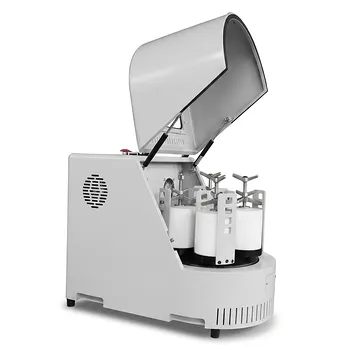
Vertical Semi Circular Planetary Ball Mill for Laboratory Precision Grinding
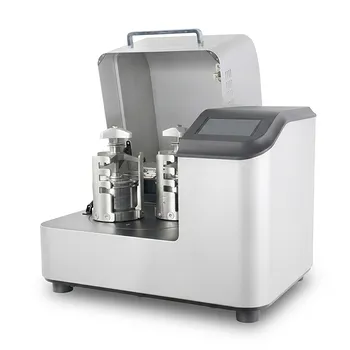
High Energy Planetary Ball Mill for Nano Scale Grinding and Mechanical Alloying
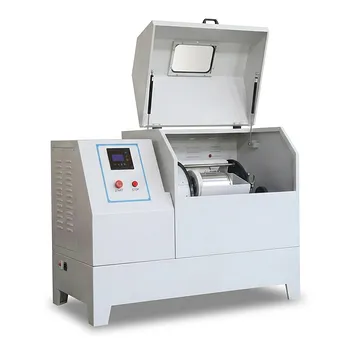
Heavy Duty Horizontal Planetary Ball Mill for Efficient Industrial Grinding and Sample Preparation

Vertical Production Planetary Ball Mill for High Throughput Powder Processing

360° Rotating Omnidirectional Laboratory Planetary Ball Mill for Homogeneous Ultra-Fine Grinding and Mixing
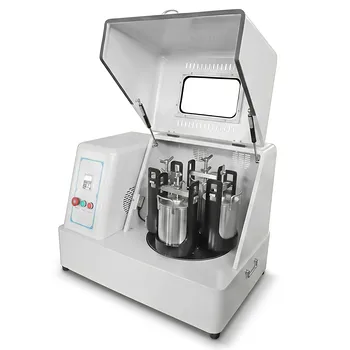
Vertical Square Planetary Ball Mill for Laboratory Sample Preparation and Nanoscale Grinding
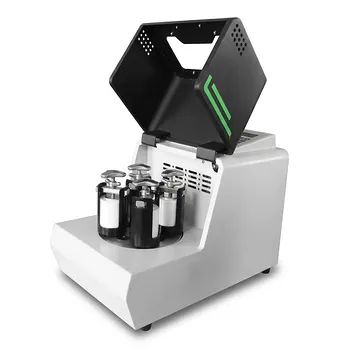
Miniature Planetary Ball Mill with Vacuum Grinding and High Efficiency for Laboratory Sample Preparation
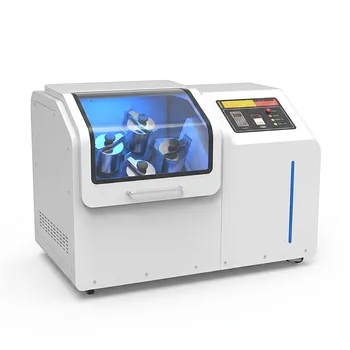
High Energy Omnidirectional Planetary Ball Mill 16L
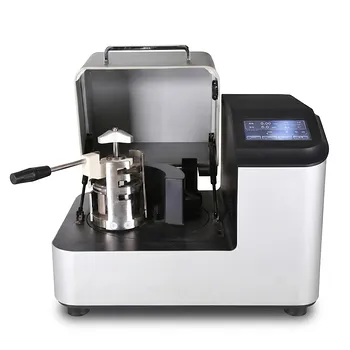
High Energy Laboratory Planetary Ball Mill for Nano Grinding and Material Science Sample Preparation
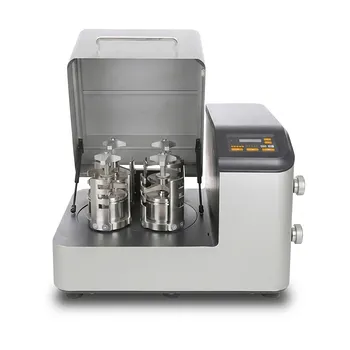
High Energy Planetary Ball Mill for Nano Scale Grinding and Colloidal Mixing in Material Science Research
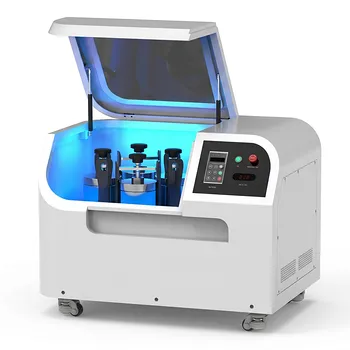
Planetary Ball Mill 12L
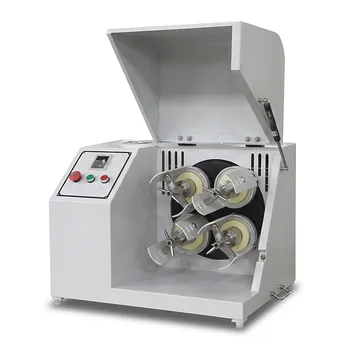
Horizontal Light Duty Planetary Ball Mill for Laboratory Sample Preparation
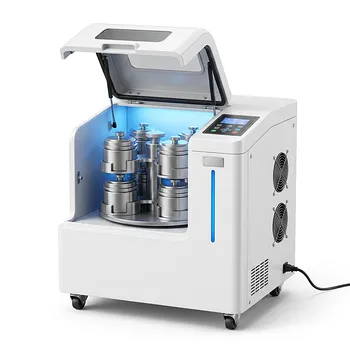
High Energy Omnidirectional Planetary Ball Mill 20L
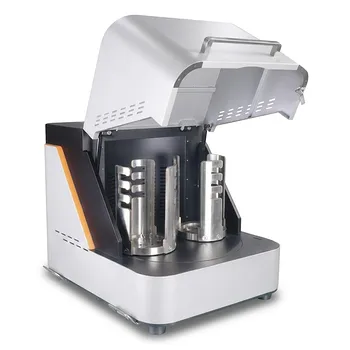
High Energy Laboratory Planetary Ball Mill for Nano Grinding and Colloidal Mixing of Hard and Brittle Materials

8L Planetary Ball Mill for Laboratory Grinding and Sample Preparation
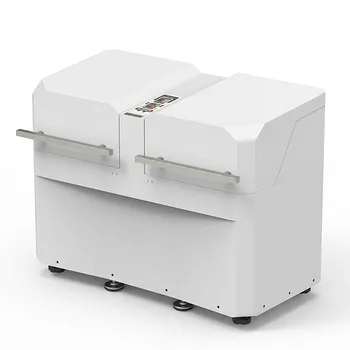
Dual Station Planetary Ball Mill 24L
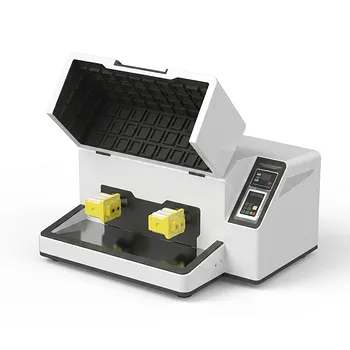
Multi-Platform Nanoscale High-Energy Vibratory Ball Mill

Nano High Energy Vibratory Ball Mill for Laboratory Sample Preparation
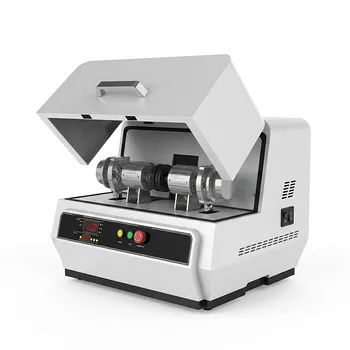
Dual Jar High Energy Vibratory Ball Mill