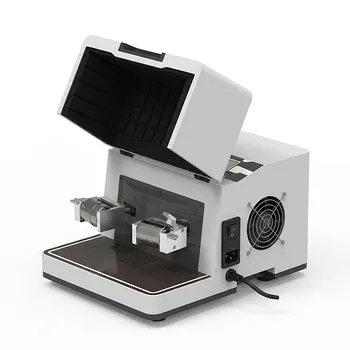
What is the role of a planetary ball mill in the preparation of Mullite ceramic raw materials? Achieving Atomic Homogeneity
Updated 5 months ago
The planetary ball mill serves as the primary high-energy processor for reducing raw silica and alumina powders to ultra-fine particle sizes while achieving atomic-level homogenization. By utilizing intense centrifugal, impact, and shear forces, the mill creates the ideal kinetic conditions necessary for the solid-phase reactions that form the Mullite phase during subsequent high-temperature sintering.
Core Takeaway: The planetary ball mill is the essential link between raw chemical precursors and a reactive ceramic powder; it ensures that components are so thoroughly mixed and refined that the chemical transformation into Mullite occurs uniformly and efficiently during heat treatment.
Mechanisms of Material Transformation
Particle Size Reduction and Surface Energy
The mill utilizes high-frequency rotation to drive grinding media, generating intense mechanical forces that reduce coarse ore particles, such as quartz, feldspar, or kyanite, to micrometer or even sub-micrometer dimensions.
This process, often referred to as mechanochemical action, does more than just break down particles; it significantly increases the specific surface energy of the powder.
This elevated energy state is critical because it lowers the activation energy required for the chemical reactions that occur later in the kiln.
Achieving Atomic-Level Homogeneity
Traditional mixing methods often leave "pockets" of unreacted silica or alumina, leading to structural weaknesses in the final ceramic.
The planetary ball mill achieves a molecular-level uniform distribution of components, ensuring that every part of the mixture has the correct stoichiometric ratio.
This deep homogenization prevents compositional segregation, which is vital for maintaining the reliability and consistency of the Mullite ceramic's mechanical properties.
Impact on Sintering and Phase Formation
Facilitating Solid-Phase Reactions
Mullite is formed through a solid-phase reaction between alumina and silica, a process that relies heavily on the contact area between particles.
By refining the powder to an ultra-fine state, the planetary ball mill maximizes these contact points, allowing the Mullite phase to nucleate and grow more rapidly during sintering.
Without this high-energy preparation, the sintering temperature would need to be significantly higher, or the holding time much longer, to achieve the same phase purity.
Integration of Sintering Aids and Additives
In specialized applications, such as porous ceramics or high-entropy Mullite, the mill is used to incorporate sintering additives (like calcium fluoride or yttrium oxide) and organic binders.
The high-energy environment ensures these trace additives are distributed with absolute uniformity throughout the mineral matrix.
This precision is what allows for the controlled growth of in-situ mullite whiskers or the uniform carbonization of organic additives in carbon-composite ceramics.
Understanding the Trade-offs
Contamination and Media Wear
The very high-energy forces that make planetary ball mills effective also lead to significant wear on the grinding jars and balls.
Material from the grinding media can leach into the Mullite precursor, introducing impurities that may alter the ceramic's thermal or electrical properties.
To mitigate this, operators must carefully select media—such as alumina or zirconia—that is chemically compatible with the final product.
Heat Generation and Material Stability
Long-term wet or dry grinding generates substantial internal heat within the milling jars.
This temperature rise can prematurely degrade sensitive organic binders (like PVA or CMC) or cause unwanted phase changes in certain raw materials before the sintering stage.
Managing these thermal effects often requires intermittent milling cycles or specialized cooling jackets to maintain the integrity of the raw material blend.
How to Apply This to Your Project
Making the Right Choice for Your Goal
Success in Mullite preparation depends on aligning your milling parameters with your final material requirements.
- If your primary focus is High-Strength Structural Mullite: Prioritize long-term grinding to achieve atomic-level distribution and maximum particle refinement to ensure a dense, flaw-free solid-phase reaction.
- If your primary focus is Porous or Composite Ceramics: Use the mill to deeply homogenize organic pore-formers or sawdust with the inorganic matrix to ensure a uniform distribution of voids after sintering.
- If your primary focus is Research and Reliability Assessment: Focus on high-energy mixing to minimize experimental errors caused by segregation, providing the representative data needed for Weibull distribution analysis.
By mastering the high-energy dynamics of the planetary ball mill, you transform raw minerals into a highly reactive, homogeneous precursor optimized for superior ceramic performance.
Summary Table:
| Feature | Role in Preparation | Impact on Mullite Quality |
|---|---|---|
| Size Reduction | Reaches sub-micrometer scale | Increases surface energy & reaction rate |
| Homogenization | Atomic-level mixing | Prevents compositional segregation |
| Mechanochemistry | Lowers activation energy | Reduces sintering temperature & time |
| Additive Prep | Uniform dispersion of aids | Controlled growth of Mullite whiskers |
Precision Equipment for Superior Ceramic Materials
Achieving high-performance Mullite requires more than just mixing; it demands atomic-level precision. At [Company Name], we provide complete laboratory sample preparation solutions for material science, specializing in powder processing and compaction equipment.
Our extensive line includes:
- Milling & Grinding: High-energy planetary ball mills, jet mills, and cryogenic grinders for ultra-fine refinement.
- Powder Processing: Sieve shakers, powder mixers, and defoaming mixers.
- Compaction Solutions: A full spectrum of hydraulic presses, including Cold/Warm Isostatic Presses (CIP/WIP), standard lab presses, and vacuum hot presses.
Whether you are optimizing structural ceramics or researching advanced composites, our equipment ensures consistent, reliable results. Contact us today to find the perfect solution for your lab!
References
- Perent GÜLER, Alpagut Kara. A Study on the Wear Behaviour of Monolithic Mullite Materials for Dental Applications. DOI: 10.35219/mms.2021.3.02
Mentioned Products
- Vertical Semi Circular Planetary Ball Mill for Laboratory Precision Grinding
- High Energy Planetary Ball Mill for Nano Scale Grinding and Mechanical Alloying
- Heavy Duty Horizontal Planetary Ball Mill for Efficient Industrial Grinding and Sample Preparation
- Vertical Production Planetary Ball Mill for High Throughput Powder Processing
- 360° Rotating Omnidirectional Laboratory Planetary Ball Mill for Homogeneous Ultra-Fine Grinding and Mixing
People Also Ask
- What role does a planetary ball mill play in the synthesis of Li6PS5Cl (LPSCl)? Unlock High Ionic Conductivity
- Why is a planetary ball mill essential for SiBCN-rGO wet-spinning? Achieve Superior Dispersion and Spinnability
- Why is an intermittent grinding process required for perovskites in a planetary ball mill? Ensure Stability & Purity
- Why is a planetary ball mill required for PET micronization? Ensure Accurate Chemical Analysis of Reprocessed PET
- How does mechanized planetary ball milling compare to manual agate grinding? Optimize sulfide standard material precision.

Tech Team · PowderPreparation
Last updated on May 14, 2026
Related Products

Vertical Semi Circular Planetary Ball Mill for Laboratory Precision Grinding

High Energy Planetary Ball Mill for Nano Scale Grinding and Mechanical Alloying

Heavy Duty Horizontal Planetary Ball Mill for Efficient Industrial Grinding and Sample Preparation

Vertical Production Planetary Ball Mill for High Throughput Powder Processing

360° Rotating Omnidirectional Laboratory Planetary Ball Mill for Homogeneous Ultra-Fine Grinding and Mixing

Vertical Square Planetary Ball Mill for Laboratory Sample Preparation and Nanoscale Grinding

Miniature Planetary Ball Mill with Vacuum Grinding and High Efficiency for Laboratory Sample Preparation

High Energy Omnidirectional Planetary Ball Mill 16L

High Energy Laboratory Planetary Ball Mill for Nano Grinding and Material Science Sample Preparation
Planetary Ball Mill 12L

High Energy Planetary Ball Mill for Nano Scale Grinding and Colloidal Mixing in Material Science Research
Horizontal Light Duty Planetary Ball Mill for Laboratory Sample Preparation

High Energy Omnidirectional Planetary Ball Mill 20L

High Energy Laboratory Planetary Ball Mill for Nano Grinding and Colloidal Mixing of Hard and Brittle Materials

8L Planetary Ball Mill for Laboratory Grinding and Sample Preparation

Dual Station Planetary Ball Mill 24L
Multi-Platform Nanoscale High-Energy Vibratory Ball Mill

Nano High Energy Vibratory Ball Mill for Laboratory Sample Preparation
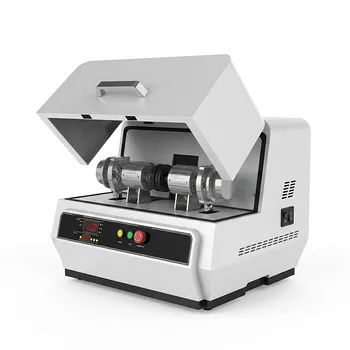
Dual Jar High Energy Vibratory Ball Mill