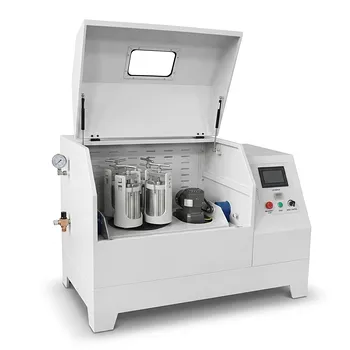
Why is a high-energy bead mill important for CNC production? Achieve Efficient Scalable Nanocellulose Manufacturing
Updated 4 months ago
High-energy bead mills represent a transformative shift in nanocellulose processing by providing a scalable, low-energy mechanical pathway for industrial production. Unlike traditional high-shear methods that often consume prohibitive amounts of power, bead mills utilize high-frequency collisions and shear forces to dissociate cellulose fibers efficiently. This approach successfully produces cellulose nanocrystals (CNC) with high crystallinity and thermal stability while significantly lowering the cost barriers to large-scale commercialization.
A high-energy bead mill is essential for industrial CNC production because it bridges the gap between laboratory-scale precision and commercial-scale volume. By maximizing energy transfer efficiency, it enables the creation of high-quality nanocrystals without the extreme energy overhead of traditional dissociation techniques.
Overcoming the Industrial Scalability Barrier
Efficiency in Energy Consumption
Traditional dissociation methods are often plagued by high energy requirements that make large-scale CNC production economically unviable. High-energy bead mills optimize this process by focusing mechanical energy directly onto the cellulose fibers through grinding media.
This targeted energy application allows for the preparation of CNC products at a fraction of the power cost typically associated with high-pressure homogenization or ultra-fine grinding.
Solving the Cost-to-Volume Equation
For industrial manufacturers, the primary hurdle for nanocellulose has always been the "cost per kilogram." The bead mill's ability to integrate with chemical treatments, such as phosphoric acid, creates a streamlined workflow that facilitates continuous production.
This integration reduces processing time and increases throughput, making it the preferred choice for facilities moving from pilot plants to full-scale industrial output.
Maintaining Superior Material Properties
Preservation of High Crystallinity
A critical challenge in mechanical processing is the potential to damage the crystalline structure of cellulose, which gives CNC its strength. High-energy bead mills are engineered to provide enough force for dissociation without destroying the inherent crystallinity of the source material.
This ensures that the resulting CNC maintains the mechanical reinforcement properties required for advanced applications in polymers and composites.
Enhancing Aspect Ratio and Thermal Stability
The controlled mechanical action of the bead mill results in CNC with high aspect ratios, which is vital for forming effective networks within a matrix. Furthermore, the efficiency of the mill helps maintain excellent thermal stability in the final product.
These characteristics are essential for industrial applications where the CNC must withstand high temperatures during downstream processing, such as injection molding or extrusion.
Mechanical Mechanisms of Nano-Dissociation
High-Frequency Collision and Shear
The core of the bead mill’s effectiveness lies in its use of micro-beads as grinding media. These beads generate intense, high-frequency collision and shear forces that penetrate the fiber structure more effectively than bulk mixing.
These forces are strong enough to overcome the van der Waals forces and hydrogen bonding that hold cellulose bundles together, allowing for consistent nanofibrillation.
Uniformity and Dispersion
Achieving a stable dispersion is a prerequisite for any functional nanomaterial. The intense mechanical energy of a bead mill ensures that the nanocrystals are uniformly distributed within the solvent.
This prevents the formation of agglomerates, ensuring that the industrial product remains stable during storage and performs predictably in its final application.
Understanding the Trade-offs
Mechanical Wear and Contamination
While efficient, the high-energy nature of these mills can lead to the wear of the grinding media and internal components. Over time, this can introduce trace metal contaminants into the CNC slurry, which may be problematic for high-purity pharmaceutical or electronic applications.
Using high-quality ceramic beads (such as zirconia) and wear-resistant liners is often necessary to mitigate this risk, though it increases the initial capital expenditure.
Heat Management and Viscosity
The intense friction generated during the milling process creates significant heat, which can degrade cellulose if not properly managed. Most industrial bead mills require robust cooling jackets to maintain a stable processing temperature.
Additionally, as the cellulose breaks down into nanofibers, the viscosity of the slurry can increase dramatically, potentially leading to clogging or reduced milling efficiency if the solids content is not carefully controlled.
Applying Bead Mill Technology to Your Production
Strategic Recommendations
Implementing a high-energy bead mill requires aligning the equipment configuration with your specific product requirements. The choice of media size, rotor speed, and cooling capacity will define the quality of your CNC.
- If your primary focus is maximizing crystallinity: Utilize a vertical bead mill design at lower rotational speeds to prioritize gentle but frequent collisions that preserve the crystal lattice.
- If your primary focus is high-volume throughput: Integrate a horizontal bead mill with a continuous recycling loop and phosphoric acid pretreatment to accelerate fiber dissociation.
- If your primary focus is purity for medical use: Invest in specialized ceramic internal components and high-grade zirconia media to eliminate metal ion contamination during the grinding process.
By mastering the balance between mechanical force and energy efficiency, the high-energy bead mill serves as the definitive tool for bringing cellulose nanocrystals into the mainstream industrial market.
Summary Table:
| Key Feature | Benefit for CNC Production | Industrial Advantage |
|---|---|---|
| Energy Efficiency | Lowers power consumption vs. high-shear methods | Reduces cost per kilogram for mass production |
| Mechanical Force | High-frequency collision & shear dissociation | Produces high-quality crystals with high aspect ratios |
| Structure Preservation | Maintains high crystallinity and thermal stability | Ensures superior mechanical reinforcement in composites |
| Process Control | Uniform dispersion and stable slurry output | Prevents agglomeration for predictable material performance |
| Scalability | Integrates easily with chemical pretreatments | Bridges the gap between lab-scale and commercial volume |
Optimize Your Nanocellulose Production with Expert Solutions
Are you looking to scale your CNC production or enhance material properties? At our company, we provide complete laboratory sample preparation solutions for material science, specializing in high-performance powder processing and compaction equipment.
From high-energy bead mills (sand/bead mills) and planetary ball mills for efficient nano-dissociation to a full spectrum of hydraulic presses—including Cold/Warm Isostatic Presses (CIP/WIP), vacuum hot presses, and XRF pellet presses—we offer the tools needed for precision manufacturing. Our extensive line also includes crushers, jet mills, sieve shakers, and advanced powder mixers to ensure your materials meet the highest industrial standards.
Ready to enhance your lab's efficiency and industrial throughput? Contact our experts today to find the perfect equipment configuration for your material goals!
References
- Sumona Garg, Avanthi Althuri. Overcoming cost, energy, and process barriers for industrially viable nanocellulose production. DOI: 10.1007/s42452-025-07650-6
Mentioned Products
- Vertical Nano Bead Mill for Ceramic Materials with Permanent Magnet Motor and High Efficiency Grinding
- High Efficiency Laboratory Bead Mill Nano Powder Dispersion Sand Mill for Material Science Research
- High Energy Laboratory Planetary Ball Mill for Nano Grinding and Material Science Sample Preparation
- High Energy Hybrid Vibratory Ball Mill for Grinding Mixing and Cell Disruption
- Nano High Energy Vibratory Ball Mill for Laboratory Sample Preparation
People Also Ask
- What role does a vertical bead mill play in the preparation of pharmaceutical nanocrystals? Enhance Bioavailability
- Why is it necessary to precisely control the grinding media loading ratio? Master Nanosuspension Yield & API Stability
- How does the bead filling rate affect the grinding performance and equipment wear in a bead mill? Optimization Guide
- Why is an external cooling circulation system necessary during the high-speed operation of a bead mill? Protect Integrity
- Why is a ceramic lining preferred over stainless steel for a bead mill? Protect Enzymes and Ensure Biomass Purity

Tech Team · PowderPreparation
Last updated on May 14, 2026
Related Products
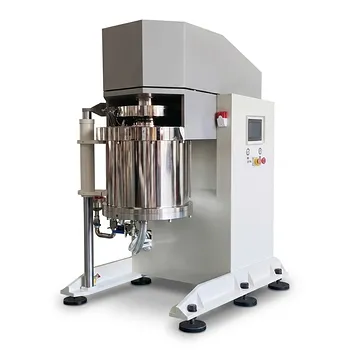
Vertical Nano Bead Mill for Ceramic Materials with Permanent Magnet Motor and High Efficiency Grinding
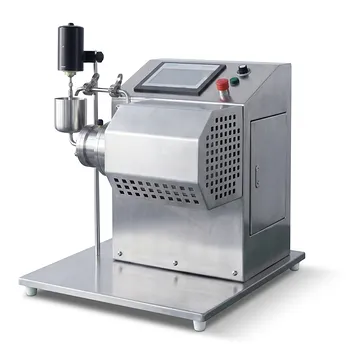
High Efficiency Laboratory Bead Mill Nano Powder Dispersion Sand Mill for Material Science Research
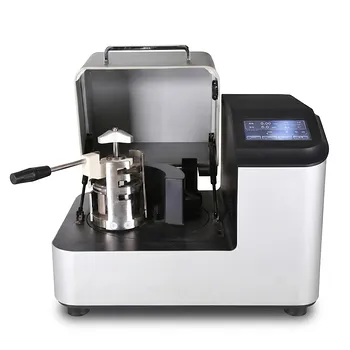
High Energy Laboratory Planetary Ball Mill for Nano Grinding and Material Science Sample Preparation
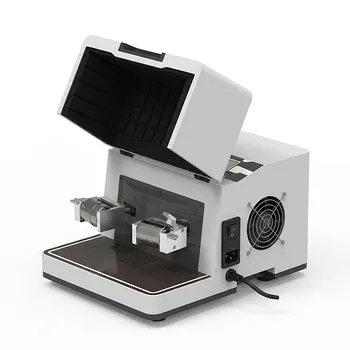
High Energy Hybrid Vibratory Ball Mill for Grinding Mixing and Cell Disruption

Nano High Energy Vibratory Ball Mill for Laboratory Sample Preparation

Multi-Platform Nanoscale High-Energy Vibratory Ball Mill
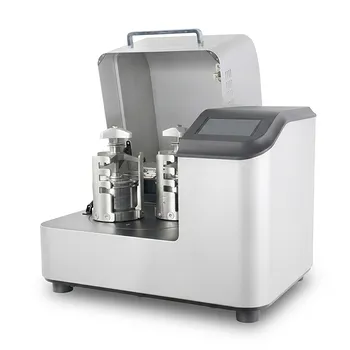
High Energy Planetary Ball Mill for Nano Scale Grinding and Mechanical Alloying
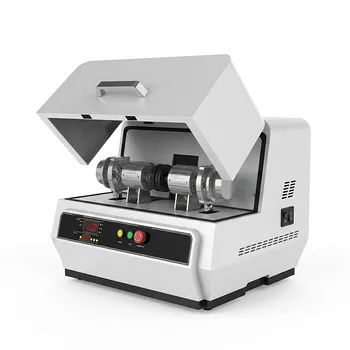
Dual Jar High Energy Vibratory Ball Mill
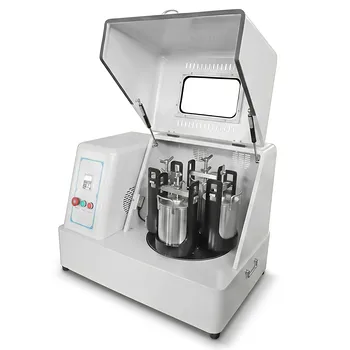
Vertical Square Planetary Ball Mill for Laboratory Sample Preparation and Nanoscale Grinding

Nano High Energy Vibratory Ball Mill with Heating and Temperature Control
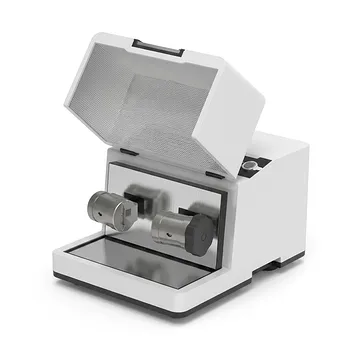
Heating Temperature Controlled High Energy Vibratory Ball Mill
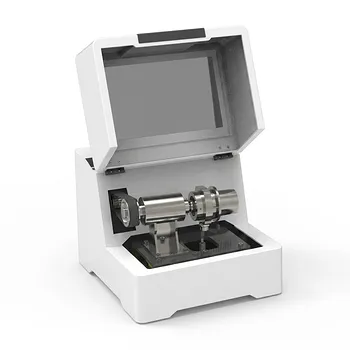
Single Tank High Energy Vibratory Ball Mill for Laboratory Grinding and Mixing
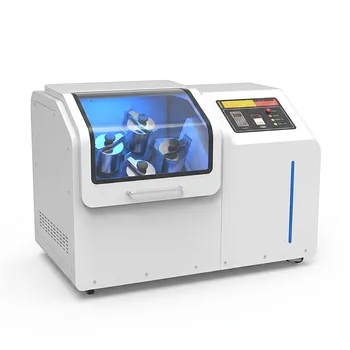
High Energy Omnidirectional Planetary Ball Mill 16L
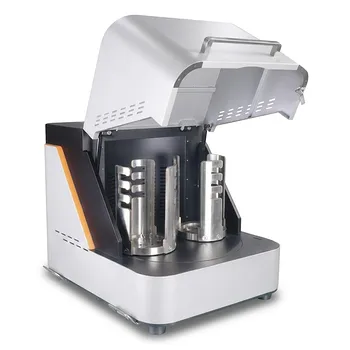
High Energy Laboratory Planetary Ball Mill for Nano Grinding and Colloidal Mixing of Hard and Brittle Materials
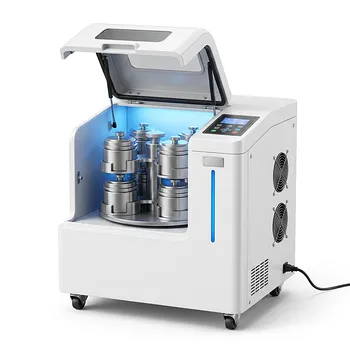
High Energy Omnidirectional Planetary Ball Mill 20L
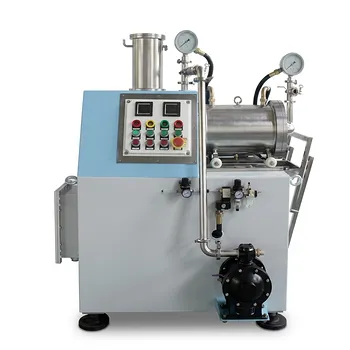
Horizontal Bead Mill for Nanoscale Grinding and Advanced Material Powder Processing

8L Planetary Ball Mill for Laboratory Grinding and Sample Preparation
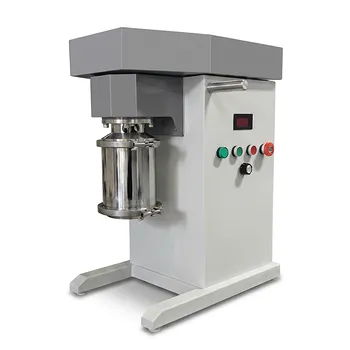
Nano Laboratory Bead Mill Desktop Sub Micron Sand Mill Screenless Seal Less Powder Grinder
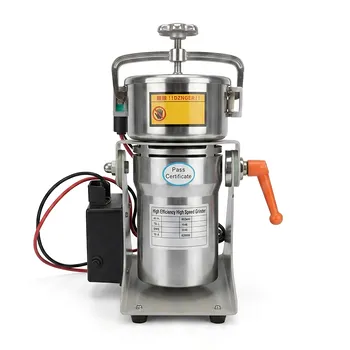
High Efficiency High Speed Grinder Laboratory Mill 1300W 25000rpm