Why is an external cooling circulation system necessary during the high-speed operation of a bead mill? Protect Integrity
Updated 4 months ago
Thermal management is the critical safeguard in bead milling, as the process inherently converts nearly all mechanical energy into heat through intense internal friction and particle collisions. An external cooling circulation system is necessary to dissipate this thermal energy, maintaining a stable process temperature that prevents chemical degradation, physical transformation, or the failure of stabilizing agents in the product.
Core Takeaway: Without active cooling, the rapid temperature rise in a high-speed bead mill will compromise product integrity. Cooling systems ensure process repeatability and protect the physical and chemical properties of sensitive materials like pharmaceuticals and biological samples.
The Physics of Heat Generation in High-Speed Milling
Mechanical Energy Conversion
During high-speed operation, the bead mill imparts massive kinetic energy to the grinding media. A significant portion of this mechanical energy is unavoidably converted into heat as beads collide with each other and the chamber walls.
Friction and Viscous Heating
The high-speed agitation of the slurry creates intense internal friction. In high-viscosity or high-solids applications, this frictional heat can cause the temperature within the grinding chamber to rise exponentially within minutes.
Preserving Chemical and Biological Integrity
Preventing Thermal Degradation
Many Active Pharmaceutical Ingredients (APIs) and specialty chemicals are heat-sensitive. An external cooling system, often using a water/glycol mixture, regulates the reaction temperature to prevent the thermal decomposition of these reagents.
Protecting Biological Samples
For biological materials, temperature control is even more critical to prevent protein denaturation. Effective cooling keeps the product temperature within a safe range—often below 40°C to 50°C—to maintain the biological activity of the sample.
Stabilizer Performance
Pharmaceutical nanosuspensions rely on stabilizers to prevent particle aggregation. Excessive heat can cause these stabilizers to fail or lose their effectiveness, leading to a complete loss of the desired formulation properties.
Maintaining Physical Stability and Particle Size
Inhibiting Ostwald Ripening
Temperature fluctuations can trigger Ostwald ripening, a process where smaller particles dissolve and redeposit onto larger ones. Maintaining a constant, low temperature ensures that the generated nanoparticles do not regrow, preserving the target particle size distribution.
Preventing Crystalline Transformation
High temperatures can induce polymorphic transformations, where the drug's crystal structure changes. Precision cooling keeps the mill outlet temperature within a safe window (typically below 35°C) to ensure the API remains in its intended crystalline form.
Understanding the Trade-offs
Cooling Media Selection
While water is a common coolant, high-precision processes often require water/glycol mixtures to allow for sub-zero cooling capabilities. However, using these mixtures requires specialized seals and pumps that can handle different viscosities and chemical compatibilities.
Energy Efficiency vs. Temperature Precision
Achieving extreme temperature precision often requires higher energy consumption from the external chiller. Operators must balance the cost of intensive cooling against the sensitivity of the product to find an economically viable process window.
Condensation Risks
In humid environments, cooling a mill chamber significantly below ambient temperature can lead to internal or external condensation. This moisture can contaminate certain dry-sensitive processes or cause corrosion on non-stainless components.
How to Apply This to Your Project
Recommendations for Implementation
- If your primary focus is Pharmaceutical Nanosuspensions: Prioritize a high-precision cooling system that maintains outlet temperatures below 35°C to prevent Ostwald ripening and polymorphic shifts.
- If your primary focus is Biological Sample Preparation: Ensure your cooling jacket is rated for rapid heat dissipation to keep product temperatures under 40°C, specifically to avoid protein denaturation.
- If your primary focus is High-Throughput Industrial Grinding: Focus on the flow rate capacity of your cooling circulation to ensure it can handle the continuous heat load generated by 24/7 high-speed operation.
Effective thermal control transforms a bead mill from a simple grinding tool into a high-precision reactor capable of producing stable, high-value nanomaterials.
Summary Table:
| Key Factor | Impact of High Heat | Benefit of External Cooling |
|---|---|---|
| Material Integrity | Thermal degradation & protein denaturation | Preserves chemical and biological properties |
| Particle Size | Ostwald ripening (particle re-growth) | Maintains stable nanometer distribution |
| Physical State | Undesired polymorphic transformations | Ensures consistent crystal structure (APIs) |
| Process Stability | Stabilizer and surfactant failure | Guarantees formulation repeatability |
Optimize Your Sample Preparation with Precision Thermal Control
At our core, we provide complete laboratory sample preparation solutions for material science, specializing in high-performance powder processing and compaction equipment. Whether you are handling heat-sensitive biological samples or precision pharmaceutical nanosuspensions, our specialized bead and sand mills are designed for maximum efficiency and thermal stability.
Our extensive product line includes:
- Advanced Milling: Planetary ball mills, jet mills, and rotor mills for every scale.
- Preparation & Sizing: Jaw/roll crushers and vibratory sieve shakers.
- Advanced Compaction: A full spectrum of hydraulic presses, including Cold/Warm Isostatic Presses (CIP/WIP), vacuum hot presses, and XRF pellet presses.
- Mixing Solutions: High-efficiency powder and defoaming mixers.
Ready to enhance your lab's efficiency and ensure process repeatability? Contact our experts today to find the perfect equipment tailored to your specific material requirements!
References
- Hironori Tanaka, Ken‐ichi Ogawara. Optimization of Milling Parameters for Low Metal Contamination in Bead Milling Technology. DOI: 10.1248/bpbreports.5.3_45
Mentioned Products
- Horizontal Bead Mill for Nanoscale Grinding and Advanced Material Powder Processing
- Vertical Nano Bead Mill for Ceramic Materials with Permanent Magnet Motor and High Efficiency Grinding
- Laboratory Horizontal Bead Mill for Nanomaterial Wet Grinding and Material Science Research
- High Efficiency Laboratory Bead Mill Nano Powder Dispersion Sand Mill for Material Science Research
- Nano Laboratory Bead Mill Desktop Sub Micron Sand Mill Screenless Seal Less Powder Grinder
People Also Ask
- How does the bead filling rate affect the grinding performance and equipment wear in a bead mill? Optimization Guide
- Why is it necessary to precisely control the grinding media loading ratio? Master Nanosuspension Yield & API Stability
- Why is a ceramic lining preferred over stainless steel for a bead mill? Protect Enzymes and Ensure Biomass Purity
- Why is the filling rate of grinding beads strictly controlled during the material milling process? Optimize Efficiency.
- What is the significance of the stirring speed in Budesonide nano-milling? Master Kinetic Energy for Drug Refinement

Tech Team · PowderPreparation
Last updated on Jun 03, 2026
Related Products
Horizontal Bead Mill for Nanoscale Grinding and Advanced Material Powder Processing
Vertical Nano Bead Mill for Ceramic Materials with Permanent Magnet Motor and High Efficiency Grinding
Laboratory Horizontal Bead Mill for Nanomaterial Wet Grinding and Material Science Research
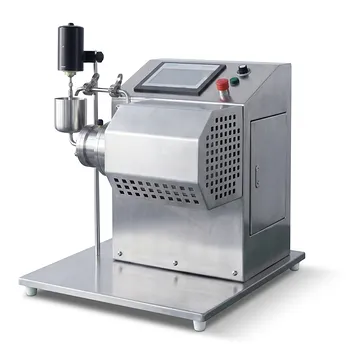
High Efficiency Laboratory Bead Mill Nano Powder Dispersion Sand Mill for Material Science Research
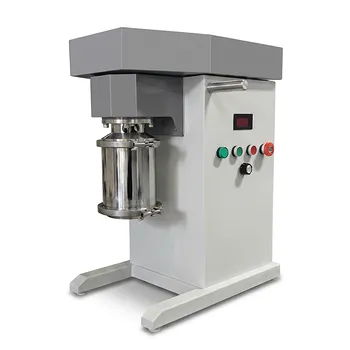
Nano Laboratory Bead Mill Desktop Sub Micron Sand Mill Screenless Seal Less Powder Grinder
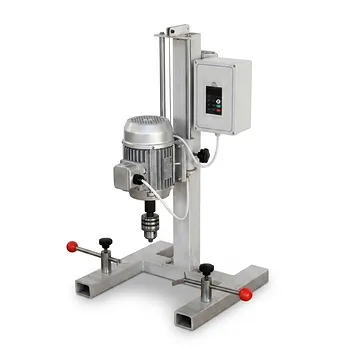
Laboratory Disperser and Sand Mill for Grinding Dispersing Emulsifying
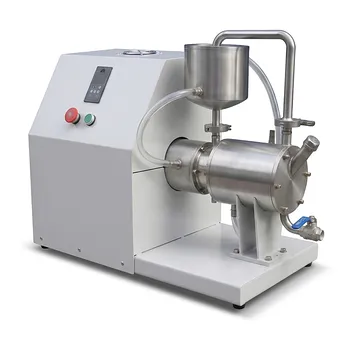
Laboratory Small Horizontal Sand Mill for Nano Materials Wet Grinding
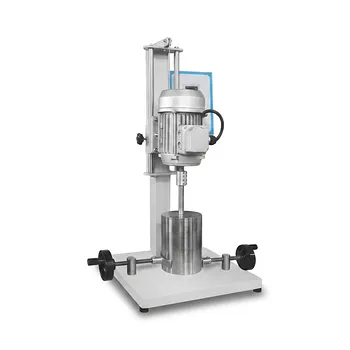
Laboratory Basket Sand Mill for Wet Grinding and Dispersion of Viscous Slurries
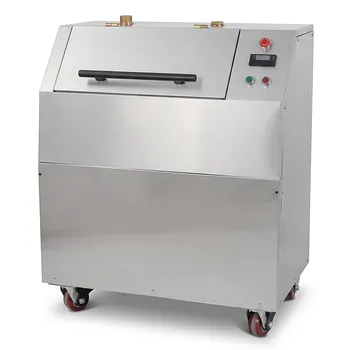
Vibratory Disc Mill for Rapid Fine Grinding and High Throughput Sample Preparation of Hard and Brittle Materials
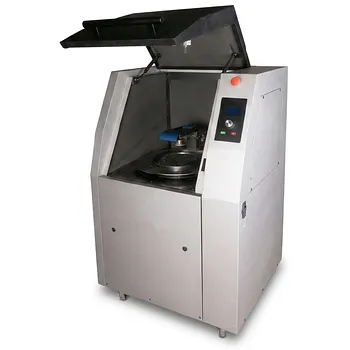
High Speed Vibratory Disc Mill for Spectral Analysis Sample Preparation and Rapid Powder Grinding
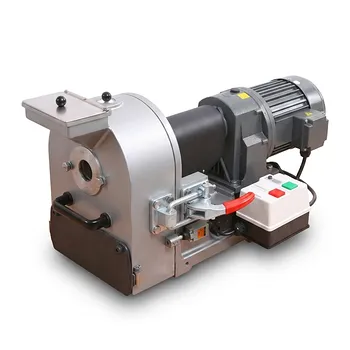
Laboratory Disc Mill for Fine Sample Preparation of Hard and Brittle Materials
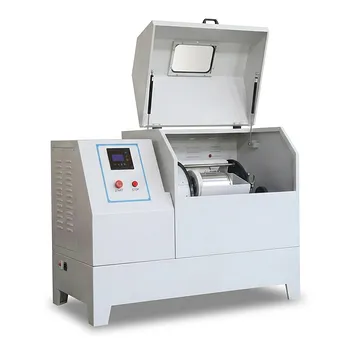
Heavy Duty Horizontal Planetary Ball Mill for Efficient Industrial Grinding and Sample Preparation
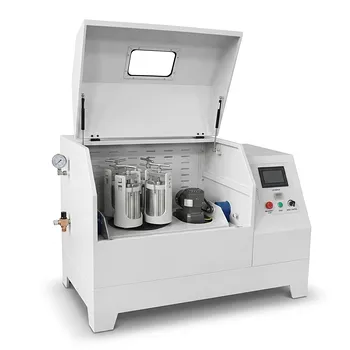
Vertical Production Planetary Ball Mill for High Throughput Powder Processing
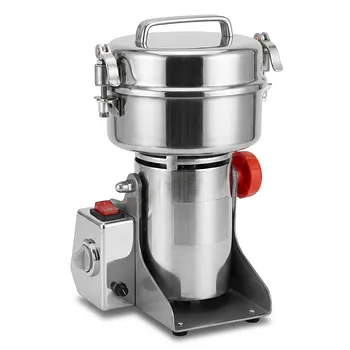
High Speed Laboratory Powder Grinder Small Batch Sample Preparation Mill
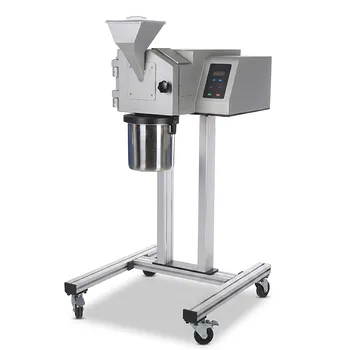
Cross Beater Mill for Brittle Material Grinding and Continuous Fine Crushing Industrial Sample Preparation
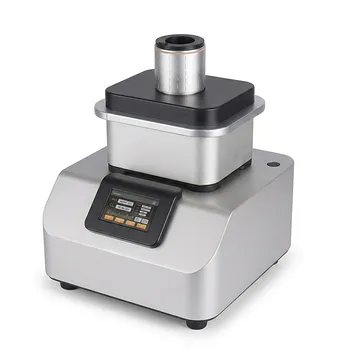
Ultra Centrifugal Mill High Speed Laboratory Grinder for Fibrous and Brittle Sample Preparation
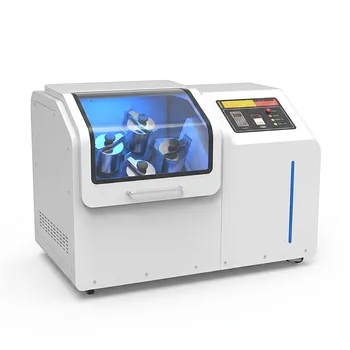
High Energy Omnidirectional Planetary Ball Mill 16L
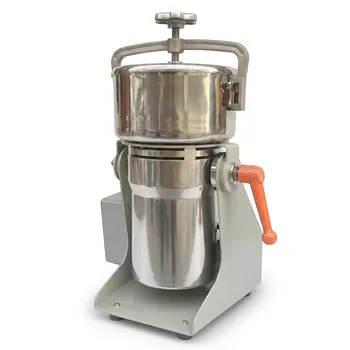
High Speed Laboratory Grinder Efficient Stainless Steel Powder Pulverizer Universal Material Science Mill for Sample Preparation
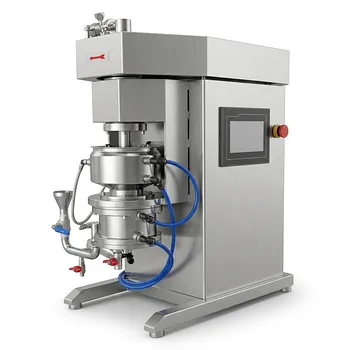
Small Ceramic Structure Laboratory Sand Mill Nanoscale Grinding Dispersion Equipment Seal-less Screen-less Design